

14 min 45 sec
Available in: English
 ไทย
EnglishไทยTribes: We Need You to Lead Us
By Seth Godin
Shows why ideas spread fastest through small, devoted groups instead of mass audiences, and how anyone with a cause and an internet connection can gather, connect and lead such a group without money or permission.
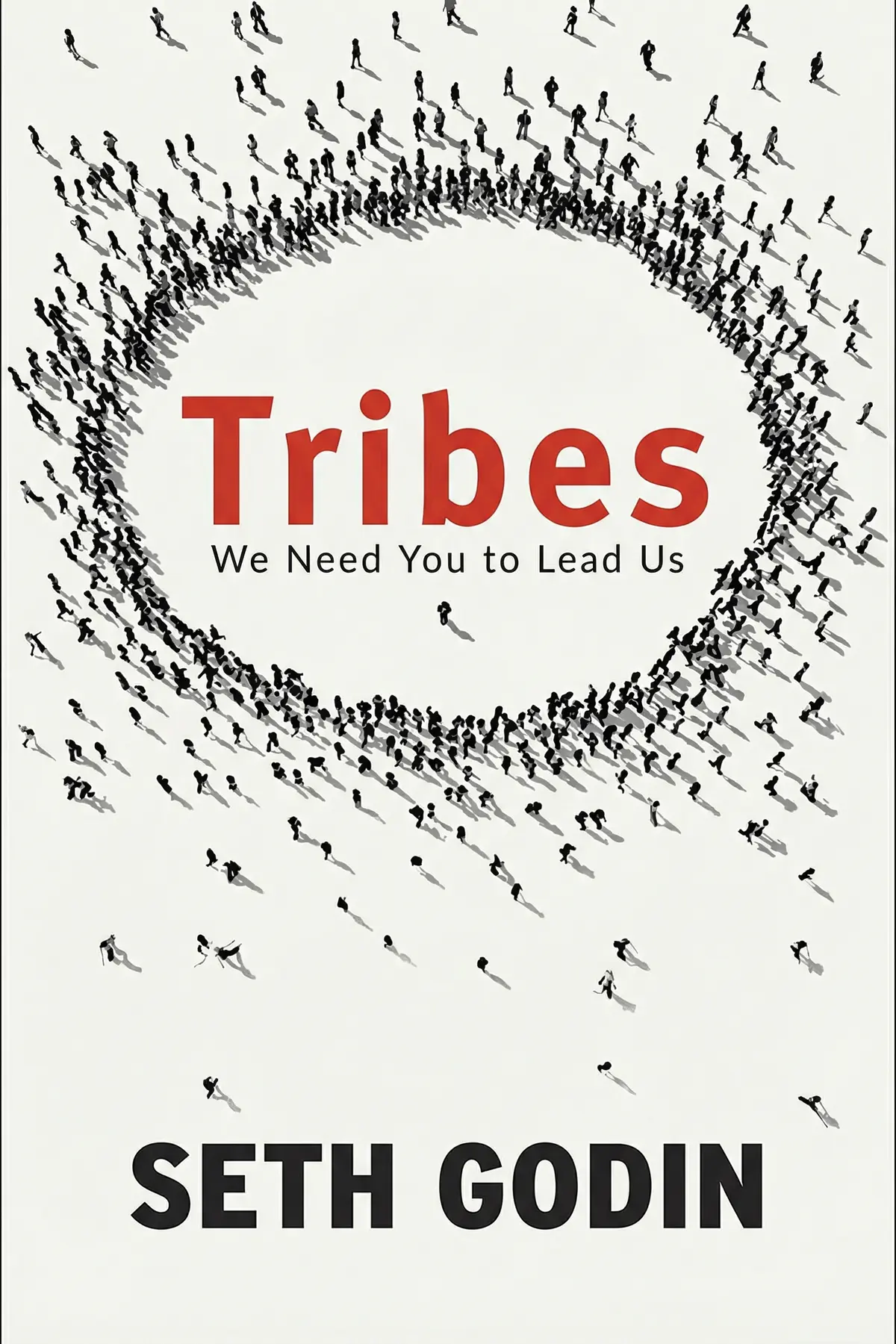
Table of Content
1. Introduction
1 min 00 sec
If you have an idea you care about but no title, budget or fame, it is easy to assume that leading belongs to someone else. In Tribes, author and entrepreneur Seth Godin argues the opposite: the internet now lets anyone gather people around a cause and lead them. His starting point is that humans have always needed to belong to something larger, and today those groups no longer depend on where their members live.
Godin’s case runs against the old marketing rule of pleasing everyone. A small group that truly loves an idea, talks about it constantly and feels like insiders will carry it further than a crowd that merely tolerates it. Leading such a group, he argues, takes generosity and nerve more than charisma. What follows is a working picture of how tribes form, why mass appeal breeds mediocrity, and how to move from quiet follower to the person who starts something.
2. See the tribes already shaping your choices
1 min 51 sec
You probably belong to several groups without ever thinking of them that way. One feature separates the groups that people merely join from the ones they would fight for, and the internet has changed how far it can reach.
3. Make something a few people truly love
1 min 48 sec
The world’s most successful phone maker did not lose to a better engineer. It lost because of a goal that sounds perfectly sensible in any boardroom, and many companies still chase that same goal today.
4. Turn a shared longing into a movement
1 min 50 sec
The facts behind one famous climate film were decades old before it caught fire around the world. What finally changed had nothing to do with new evidence, and everything to do with who stepped forward.
5. Get your followers talking to each other
1 min 52 sec
Most organizations speak to their people and then wait. A fitness coach built a following that fills courses months ahead by doing something different with one simple website, and the tools he used cost almost nothing.
6. A tight tribe beats a big one
1 min 54 sec
Growing the list feels like progress to almost every leader. Godin points to a different measure, and to one company whose habit of saying nothing about its products ended up pulling its fans closer together.
7. Earn trust by giving your best work away
1 min 46 sec
Many people rule themselves out of leading because they lack fame or a magnetic personality. Godin thinks they have the order wrong, and two people who handed over their most valuable work for free show why.
8. Find the nerve to start without permission
1 min 43 sec
If leading a tribe pays off so well, something must be stopping most people from trying. Godin names the habit school and society teach us, and the story that keeps us afraid of breaking it.
9. Conclusion
1 min 01 sec
Godin’s larger claim is that leadership has changed hands. It once belonged to people with budgets, broadcast time and titles. Now it belongs to whoever cares about a cause enough to gather the people who already share it. Nokia had the money and the reach and still lost to a phone few people liked at first. Al Gore had facts that were 30 years old and gained a worldwide following by giving them away.
The book supports a few concrete moves. Name the small group who would truly love your idea, and stop softening it for everyone else. Give those people a way to talk with each other, then judge your progress by how tight the bonds are before you start counting heads. And when something about the status quo bothers you, write down the future you want and publish it.
Tribes are already out there, Godin argues, waiting for someone to lead them. The manifesto you have not written yet may be the signal they are waiting for.
About this book
What is this book about?
People have always needed to belong to something bigger than themselves, and today the internet lets those groups form across any distance. Seth Godin calls them tribes: a group of people, a shared cause and a leader. His argument is that tribes, not mass audiences, now drive the growth of brands, ideas and movements. Godin takes aim at the old habit of designing for everyone, using Nokia's fall and Apple's rise to show how mass appeal produces products people use but never love. He then lays out how a tribe actually works: a story about the future, members who talk to each other as much as to the leader, an insider culture that pulls people closer, and leaders who earn trust by giving their work away. Readers get a practical picture of how movements start, drawn from cases such as Wikipedia, CrossFit and Al Gore's climate film, and a direct challenge: stop acting like an obedient sheepwalker and step forward to lead the change you want to see.
Book Information
Who it's for
Founders and marketers
Founders and marketers tired of chasing everyone and ready to build a devoted following.
Team and community leaders
Team leads and community organizers who want members talking to each other, not just to them.
Employees waiting for permission
Employees with an idea they care about who keep waiting for permission to start.
About the Author
Seth Godin
Seth Godin, born in 1960, is an American author, entrepreneur and blogger who also writes under the pen name F. X. Nine. He founded the early online company Yoyodyne, sold it to Yahoo!, and then served there as Vice President of Direct Marketing. He later founded Squidoo.com and the altMBA, an online education program. His books include Linchpin, Purple Cow and The Practice, and he has been inducted into the Marketing Hall of Fame.

Linchpin: Are You Indispensable?
Seth Godin


The Practice: Shipping Creative Work
Seth Godin
This Is Strategy: Make Better Plans
Seth Godin
Ratings & Reviews
Ratings at a glance
What people think
Listeners find this work to be a great, uncomplicated listen that stimulates the mind and offers useful leadership guidance. They value how easy it is to follow, with one listener mentioning it stays engaging from start to finish. There is varied feedback regarding its practicality; while some consider it simple, others note it is not a manual. Perspectives on the concepts are also split, with some admiring the big ideas while others find them intimidating.
Top reviews
Chamlong
This book is a total firecracker for anyone feeling stuck in a corporate rut. Godin argues that the world doesn't need more managers; it needs heretics who are willing to challenge the status quo and build something meaningful. I loved the emphasis on finding your 'tribe' and the idea that leadership is a choice rather than a title. It's an incredibly quick read, but the emotional resonance stayed with me long after I finished the last page. While it isn't a dense academic study, its simplicity is its greatest strength because it forces you to stop overanalyzing and start acting. If you are waiting for permission to lead, this is the sign you've been looking for. Truly transformative stuff.
Show moreOrathai
Finally got around to reading this, and I’m struck by how relevant the philosophy remains. The concept that you only need two things to form a tribe—a shared interest and a way to communicate—is deceptively simple yet profound. Godin’s writing is engaging from beginning to end, pushing the reader to abandon the safety of the 'sheep' mentality. Not gonna lie, some of the jargon like 'heretic' and 'apostasy' is a bit dramatic, but it serves the purpose of making the reader feel like they are part of something bigger. It’s a call to action that focuses on passion and connection over cold metrics. If you want to change the world, or even just your office culture, start here.
Show morePete
Ever wonder why some movements take off while others fizzle out? Godin attempts to answer this by focusing on the power of connection in the digital age. Frankly, the book is less of a manual and more of a manifesto. It focuses heavily on the 'why' rather than the 'how-to,' which might frustrate those looking for a specific checklist. However, the core message about 'sheepwalking'—mindlessly following old rules—is a powerful wake-up call for modern professionals. The writing style is punchy and direct, filled with short chapters that make it easy to digest during a commute. I deducted one star because I would have appreciated a few more concrete case studies to ground the abstract concepts, but the overall inspiration is undeniable.
Show moreMichael
Wow, Godin really knows how to strip away the fluff of traditional management. He draws a sharp line between managing a process and leading a group of people who actually want to be there. I found his take on 'true fans' and the necessity of being uncomfortable particularly insightful. In my experience, most business books are 300 pages of filler, so I appreciated the brevity here, even if some sections felt a bit like a series of tweets. It encourages you to find a niche and own it. It’s not a step-by-step guide, but it provides the psychological framework needed to step out of the shadows. Definitely worth a read for aspiring entrepreneurs.
Show moreEllie
Frankly, if you’re looking for a step-by-step manual on business growth, you should probably look elsewhere. This is more about changing your mindset. Godin wants you to realize that you don't need a massive audience to make an impact; you just need a dedicated tribe. I liked the focus on how technology has empowered individuals to bypass traditional gatekeepers. My only gripe is that it can feel a bit chaotic at times, jumping from one anecdote to another without much of a bridge. Still, the core ideas are bold and necessary. It’s the kind of book that makes you want to get up and actually do something different today. A solid choice for a quick hit of inspiration.
Show moreSumalee
Look, the truth is that Tribes isn't a long read, but its brevity is actually its greatest strength. It captures the essence of what it means to lead in a world that is increasingly connected yet more lonely than ever. Godin’s point about charismatic people not necessarily being leaders, but leadership making people charismatic, was a real 'aha' moment for me. It’s a polarizing book because it demands that you take a risk, which is a daunting prospect for most. There are moments where it feels a bit like a self-help book for the 'business class,' but if you can get past the terminology, the underlying message is vital. It’s about building something that matters.
Show moreViroj
Picked this up on a recommendation from a colleague who swore it changed her perspective on community building. I have to say, Godin has a knack for making you feel like anyone can be a catalyst for change. The book is essentially a series of mini-essays that challenge you to stop asking for permission. While I agree with other reviewers that it can be a bit repetitive and light on 'how-to' details, I think that's by design. He wants to spark a fire, not give you a map. The emphasis on communication between tribe members is a key takeaway that I’ve already started implementing in my own projects. It’s a refreshing, if somewhat simplistic, take on modern leadership.
Show moreMonthon
As someone who follows Seth’s blog, I expected something a bit more substantial than what essentially feels like a collection of short, unedited blog posts. The truth is, the book is a bit repetitive. Godin circles back to the same themes of fear and leadership over and over again. To be fair, he makes excellent points about the importance of 'heretics' and how the internet has lowered the barrier to entry for building a community. But the structure is fragmented, and it lacks the narrative flow of a traditional business book. It’s a decent motivational tool if you need a quick kick in the pants, but don't go in expecting a deep dive or a coherent blueprint for organizational change.
Show moreTakeshi
After hearing so much hype about Godin being the next Malcolm Gladwell, I found the lack of academic rigor in this book a bit jarring. It’s a very quick read, which is great, but that’s because it’s mostly composed of bite-sized chunks and motivational sound-bites. Personally, I found the 'sheepwalking' analogy clever, but the book never really goes beyond that initial premise. It tells you that you should lead, but it doesn't give you the tools to actually manage the conflict that comes with it. It’s a good manifesto, I suppose, but it lacks the depth required to be a truly great business book. It’s fine for a plane ride, just don't expect a masterclass in sociology.
Show moreWei
The chapter on 'heretics' felt more like a series of empty slogans than an actual strategy for business growth. I picked this up hoping for a study on social dynamics, but instead, I got what feels like snake oil for the digital age. Godin uses a lot of personal lingo and buzzwords that sound deep on the surface but offer zero practical value once you try to apply them. The sentences are incredibly short and repetitive, making the whole experience feel like reading a primer for children. Look, I get that he’s trying to be motivational, but the lack of substance is glaring. It’s essentially a collection of pep talks that ignores the actual difficulties of leadership. I’m genuinely surprised this became such a hit.
Show moreQuestions about this book
What is the main idea of Tribes by Seth Godin?
Godin argues that tribes, groups of people joined by a shared cause and a leader, now drive the spread of brands and ideas. Because the internet removes geography as a barrier, anyone can gather and lead such a group. He believes designing for everyone produces mediocrity, while a small group that loves a cause, talks about it and feels like insiders will carry it much further.
What are the three parts of a tribe according to Seth Godin?
According to Godin, each tribe needs people, a shared cause and one or more leaders who speak for it and organize it. Wikipedia fits the pattern: about 5,000 contributors and editors work toward cofounder Jimmy Wales’s vision of free, community-written information. Of the three parts, Godin considers the cause the most important, because members who adopt its values become believers instead of followers.
Why does Godin say a tight tribe matters more than a big one?
Early on, Godin argues, a tribe’s strength comes from its connections, not its size. He describes four channels of communication: the leader addressing the tribe, the tribe responding to its leader, members talking among themselves, and a member reaching an outsider. The member-to-member line matters most. Leaders tighten a tribe by setting one passionate goal, giving members an easy platform to connect and building an insider culture, as Apple’s secrecy did by spawning fan rumor sites.
How can I apply the ideas in Tribes?
Start by naming the small group who would love your idea and stop diluting it for everyone. Give members a place to talk with each other, not only with you. Lead by giving something valuable away, as Al Gore did with his climate presentation. Godin’s own suggestion is this: if the status quo troubles you, put down on paper a manifesto describing the improved future you envision and post it online.
Who should read Tribes?
It suits founders, marketers and anyone building a product, community or campaign who wants loyal supporters instead of a passive audience. Team leads will find ideas about getting people to talk with each other and push for change from within. It also addresses employees who were trained to stay quiet and out of sight and who want the courage to begin leading.
Readers also enjoyed




Acting with Power: Why We Are More Powerful Than We Believe
Deborah Gruenfeld

All In: How Great Leaders Build Unstoppable Teams
Mike Michalowicz



7 Powers: The Foundations of Business Strategy
Hamilton Helmer


A Bigger Prize: How We Can Do Better Than the Competition
Margaret Heffernan
AUDIO SUMMARY AVAILABLE
Listen to Tribes in 15 minutes
Get the key ideas from Tribes by Seth Godin, plus 5,000+ more nonfiction titles.
- 5,000+ titles
- Listen as much as you want
- 7-day free trial
- Cancel anytime









