
14 min 56 sec
Available in: English
 ไทย
EnglishไทยThe 5 Love Languages: The Secret to Love That Lasts
By Gary Chapman
Shows why two people who love each other can still feel unloved, and how learning your partner's way of receiving love, from praise and time to gifts, help and touch, keeps a relationship strong.
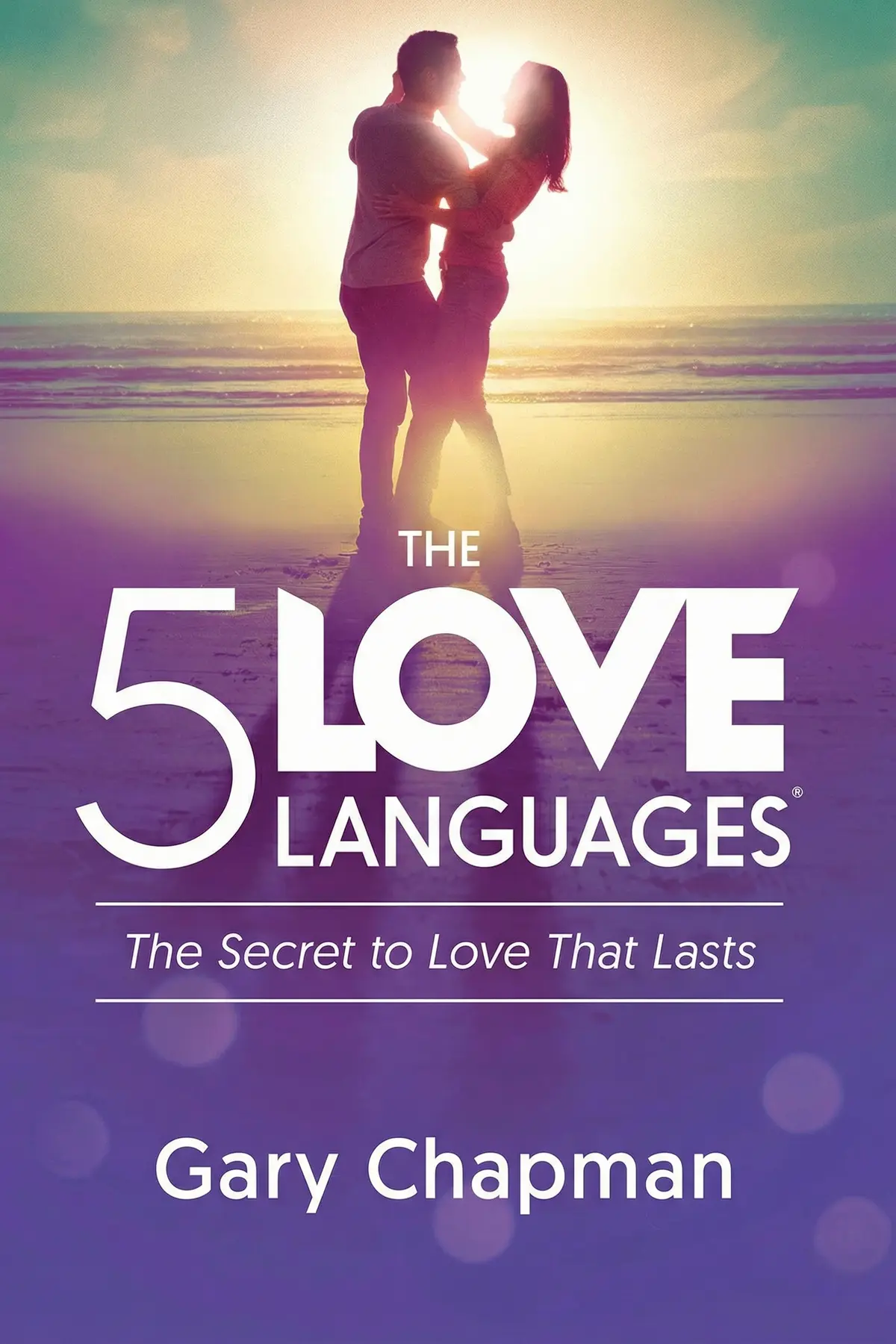
Table of Content
1. Introduction
59 sec
Many couples who keep fighting do not love each other less. They are sending love in a form the other person barely notices. In The 5 Love Languages, counselor and Baptist minister Gary Chapman argues that each of us has a primary way of giving and receiving love, and that partners rarely share the same one. A husband can work 50 hours a week for his family while his wife feels alone, because what she wants from him is his time.
Chapman names five languages: words of affirmation, quality time, gifts, acts of service and physical touch. His case is that once the first thrill of romance fades, a relationship lasts when each partner learns to speak the other’s language on purpose. What follows explains why the spark runs out, what each language sounds like on an ordinary day, and how to discover which one you and your partner speak, so the effort you already make starts to land.
2. Plan for the day the spark fades
1 min 36 sec
Every couple begins with a feeling that makes everything easy, and a psychologist who studied hundreds of couples found it has a short shelf life. What replaces it decides whether the relationship survives.
3. Loving harder can still miss the mark
1 min 39 sec
A hardworking father and a devoted mother agreed on almost nothing except their love for the kids. Both were trying. Both felt unloved. The reason had little to do with how much either of them cared.
4. Trade nagging for praise and see results
1 min 38 sec
A frustrated wife had asked her husband for nine months to paint the bedroom. The advice she got from a counselor sounded backward, and she doubted it. Within weeks, she had to admit it worked.
5. Give attention that truly counts as time together
1 min 43 sec
Plenty of couples spend whole evenings in the same room and still feel apart. One reluctant bookstore companion shows what changes when time together is shaped around the other person.
6. Show love with gifts that cost very little
1 min 33 sec
A new husband stopped giving presents after the wedding for a sensible reason, and his wife soon felt abandoned. The counselor’s explanation changed his mind about what a gift is actually worth.
7. Help that means more because nobody demanded it
1 min 28 sec
A man raised by a father who never touched housework had every reason to follow the same pattern. He chose otherwise, and his wife read the choice as something far bigger than clean floors.
8. Stay close through touch, even when apart
1 min 34 sec
For some people, a hand held on the way to the movies says more than any speech. And one military spouse found ways to keep that language alive while her husband served overseas.
9. Find the love language you speak
1 min 35 sec
A careless present grabbed from around the house on one childhood Christmas told a grown woman more about herself than years of guessing. Your own old hurts may hold a similar clue.
10. Conclusion
1 min 11 sec
Chapman’s book turns many marriage problems into translation problems. Two people can both be trying hard and still feel neglected, the way Mark felt untouched while Andrea felt alone. Seeing it this way makes the frustration workable, because the effort you already make can be pointed to where your partner will notice it.
Begin with yourself: what you ask for most, what has hurt you, how you felt loved as a child. Then guess your partner’s language and test it for a week. That might mean a compliment where you used to complain, an evening with full attention, a small surprise, a chore taken on without being asked, or a hand held on the walk home. Watch what lands, and keep doing it.
Chapman adds one gift that sits above all five. It is the gift of self: staying beside your partner when life gets hard, through a pregnancy or a career upheaval. No diamond or new car comes close.
The early rush lasts about two years. What follows is a choice, made daily, in your partner’s language.
About this book
What is this book about?
Many couples drift apart without anyone doing anything wrong. One partner works long hours to provide, the other feels alone, and both feel their effort goes unseen. Gary Chapman, a marriage counselor and Baptist minister, argues that the trouble is often translation: people give and receive love in different ways, and partners rarely share the same one. Chapman explains why the early thrill of romance fades after about two years and what has to replace it. He describes five love languages: words of affirmation, quality time, receiving gifts, acts of service and physical touch. He illustrates the languages with couples' stories, some drawn from his own counseling, such as a wife who got her bedroom painted by giving up nagging, and a husband who stopped giving gifts because he thought they cost too much. Readers get a simple way to find their own primary language by looking at what they ask for, what hurts them and how they were loved as children. They also get concrete ways to speak each language in daily life, so that the love they already feel reaches their partner.
Book Information
Who it's for
Couples feeling unappreciated
Couples past the honeymoon stage who love each other but keep feeling unseen or unappreciated.
Partners stuck arguing
Partners stuck in the same argument about time, chores or affection, looking for a fresh way to understand it.
Engaged and newlywed couples
Newlyweds and engaged couples who want a simple shared vocabulary for what makes each of them feel loved.
About the Author
Gary Chapman
Gary Chapman is an author, speaker, counselor, radio host and Baptist minister, born in 1938 in China Grove, North Carolina. He has done hands-on family counseling since the early years of his ministry and directs marriage seminars. The 5 Love Languages, one of his most popular books, has sold over twenty million copies, and his radio programs have aired on the Moody Radio Network and more than 400 affiliate stations.
Ratings & Reviews
Ratings at a glance
What people think
Listeners find this book to be an efficient and enlightening listen that aids in gaining a deeper understanding of themselves and those around them. Furthermore, they value the actionable tips and straightforward descriptions, which make the concepts easy to grasp and follow. Also, the book is praised for its power to enhance marriages and relationships, and listeners view it as an ideal present for couples.
Top reviews
Wipada
Picked this up after a particularly rough patch with my husband and it really gave us a new perspective. The concept of 'love tanks' sounds a bit cheesy at first, but once you start identifying how your partner receives affection, everything clicks. I am a Quality Time person, while he is all about Acts of Service. For years, I was waiting for him to sit and talk, while he was showing love by fixing the sink or doing the laundry. It's a quick read with very clear explanations that didn't feel bogged down by clinical jargon. To be fair, some of the examples are dated and lean heavily into traditional gender roles, which might annoy some readers. However, the core message about intentionality is what really saved our communication. It is an essential tool for anyone wanting to strengthen their bond.
Show moreOrawan
Finally got around to reading this classic and I totally get the hype now! It is such a simple concept—that we all speak different 'languages' of affection—but it makes so much sense when you apply it to your own life. My primary language is Words of Affirmation, and I never realized how much I was actually craving that until I read the descriptions here. The book is incredibly straightforward and doesn't waste your time with unnecessary fluff or complicated theories. Look, it is a bit dorky, and the cover looks like something from a bargain bin, but the advice is transformative. I have already bought copies for two friends who are getting married next month because it is the perfect gift for new couples. Every relationship could use a little more understanding.
Show morePor
Wow, I wish I had read this ten years ago before I got married. It would have saved us so many misunderstandings and unnecessary arguments over the years. The way Chapman explains that we naturally give love the way we want to receive it—rather than what our partner needs—was a total 'aha' moment for me. It is written in a way that is very simple to understand, which makes it feel less like a chore to get through. In my experience, even if you only take away twenty percent of what he says, your relationship will improve. It isn't just for struggling marriages either; it is great for keeping a good thing going. Simple, effective, and deeply insightful for such a short book. Definitely worth the read.
Show moreNaomi
The concept of 'love languages' is a total game-changer for anyone in a long-term commitment. It gives you a specific vocabulary to discuss needs that usually feel vague or hard to pin down in the heat of an argument. My wife and I read this together and it sparked some of the best conversations we have had in years. It is a quick read, very practical, and doesn't require a degree in psychology to implement immediately. In my experience, it makes a fantastic wedding or anniversary gift because it is so accessible. Some might find the tone a bit 'for dummies,' but when you are stressed and fighting, simple is exactly what you need. It helps you refill those empty love tanks before they hit critical levels.
Show moreElias
This book is basically a miracle worker for communication issues in my household. It is rare to find a self-help book that you can actually finish in one sitting and start using the same day without feeling overwhelmed. I loved how clearly the five languages were broken down with specific examples of how to 'speak' them to a partner. Even though I am not religious, I didn't find the Christian elements too distracting from the main advice; it is mostly about empathy. It has really enhanced our marriage in ways I didn't think were possible just from reading a single book. My partner is already responding so well to my efforts to use his primary language, Physical Touch. Highly recommend to anyone who feels like they are speaking a different language than their spouse.
Show moreEye
The chapter on physical touch really opened my eyes to how different people's needs can be in a relationship. I used to think my partner was just being needy, but I realize now it is just how he processes connection and security. Chapman’s writing style is definitely accessible, making it an easy weekend read for busy couples who don't have time for a massive textbook. Personally, I found the religious undertones a bit much at times, and the scenarios feel like they are stuck in the 1950s. If you can look past the 'breadwinner husband and homemaker wife' archetypes, there is actual gold here. We have started using the lingo in our daily lives to check in on each other’s emotional status. It isn't a miracle cure, but it provides a solid framework for understanding your spouse.
Show moreViolet
As someone who isn't usually into self-help, I found this surprisingly digestible and easy to finish. It avoids the usual 'psycho-babble' and gets straight to the point about how to make your partner feel seen and appreciated. The five categories—Gifts, Quality Time, Words of Affirmation, Acts of Service, and Physical Touch—cover most bases quite well. Truth is, I struggled with the overt religious references, but the practical applications are hard to argue with once you see them working. We have noticed a big difference in our household harmony just by making small adjustments to our daily routines. It is a very fast read, which is great because you can actually get your spouse to sit down and finish it with you. Not a perfect book, but a very useful one for the toolbox.
Show moreSupaporn
Ever wonder why you feel unloved even though your partner is constantly doing things for you? This book explains that disconnect perfectly through the lens of mismatched love languages. My husband thought he was being great by buying me small gifts, but I just wanted him to put his phone down and talk to me. Once we identified my need for Quality Time, everything shifted significantly. The writing is clear and the 'love tank' metaphor is a handy way to visualize emotional health. Gotta say, the gender roles are ancient and some of the success stories feel a bit too 'neat' to be real life. Relationships are messy, and Chapman brushes over the hard stuff a bit too quickly. Still, it is a solid starting point for better communication.
Show moreAnchalee
After hearing about 'love languages' for years on social media, I finally decided to go to the source and read the text. The core concept is brilliant in its simplicity and truly helps you decode your partner's behavior in a non-judgmental way. I finally understand that when my wife asks me to vacuum, she is actually asking for love through Acts of Service. Who knew? Not gonna lie, the author’s background as a 'Bible beater' is very apparent, and the book would benefit from a 21st-century update that includes diverse relationship structures. It is very heteronormative and leans on some archaic ideas about men and women. However, if you can filter out the preachy bits, the underlying psychology is sound and very helpful for any couple.
Show moreSurasit
Not what I expected given how many people recommend this as a 'must-read' for couples. Frankly, the advice feels like basic common sense wrapped in a lot of outdated, heteronormative 'traditional values' that just didn't sit right with me. The author talks to the reader like they have never had a basic human social interaction before, offering 'revelations' like... doing the dishes. Really? It is very much geared towards middle-class Christian couples, and the way he addresses the husband-wife dynamic felt archaic in several chapters. I found the section where he suggests a woman should ignore her own discomfort to save her marriage through sex particularly disturbing. If you are looking for a modern, inclusive take on relationship psychology, this isn't it. I wish I hadn't wasted the money on something so simplified and preachy.
Show moreQuestions about this book
What is the main idea of The 5 Love Languages?
Gary Chapman argues that people give and receive love in different primary ways, and partners rarely share the same one. Once the early in-love feeling fades, which one study he cites puts at about two years, couples need to learn each other’s language. The five are words of affirmation, quality time, receiving gifts, acts of service and physical touch. Speaking your partner’s language keeps their emotional love tank full.
How do I find out my love language?
Chapman suggests looking at what you ask your partner for most often, since requests point to what fulfills you. Notice what you picture when you imagine feeling truly appreciated. Then look at past hurts: if the ways people let you down fall into one category, that is likely your language. Childhood memories help too, as when a woman named Ella realized a careless Christmas present revealed her need for gifts.
What is the love tank in The 5 Love Languages?
The love tank is Chapman’s image for a person’s emotional need for love and affection. Just as a car cannot run without fuel, a person cannot function well when that need goes unmet. Keeping your partner’s tank full, by expressing love in the language they actually receive, is in his view essential to a healthy marriage. Even wealth, he notes through one client, cannot make up for an empty tank.
Do gifts have to be expensive to work as a love language?
No. Chapman says that for people whose language is receiving gifts, the value lies in the thought, the effort of getting or making something and the act of giving it. He tells of Doug, who stopped giving his wife Kate presents because of the cost. Once Doug learned price did not matter and began giving small, random gifts, Kate’s feeling of being abandoned disappeared.
How can I apply The 5 Love Languages right away?
Identify your partner’s likely language and act on it for a week. For words, replace complaints with specific compliments. For quality time, give undivided attention with no screen in the background. For gifts, offer small surprises. For service, take on a chore unasked. For touch, hold hands or hug more often. Chapman also stresses the gift of self: simply being there during hard times.
Readers also enjoyed

AUDIO SUMMARY AVAILABLE
Listen to The 5 Love Languages in 15 minutes
Get the key ideas from The 5 Love Languages by Gary Chapman, plus 5,000+ more nonfiction titles.
- 5,000+ titles
- Listen as much as you want
- 7-day free trial
- Cancel anytime









