
11 min 51 sec
Available in: English
We Are All Weird: The Rise of Tribes and the End of Normal
By Seth Godin
Shows why the idea of a normal customer is fading, how wealth and the internet let people choose their own odd tribes, and why honestly serving a dedicated few now beats chasing the mass market.
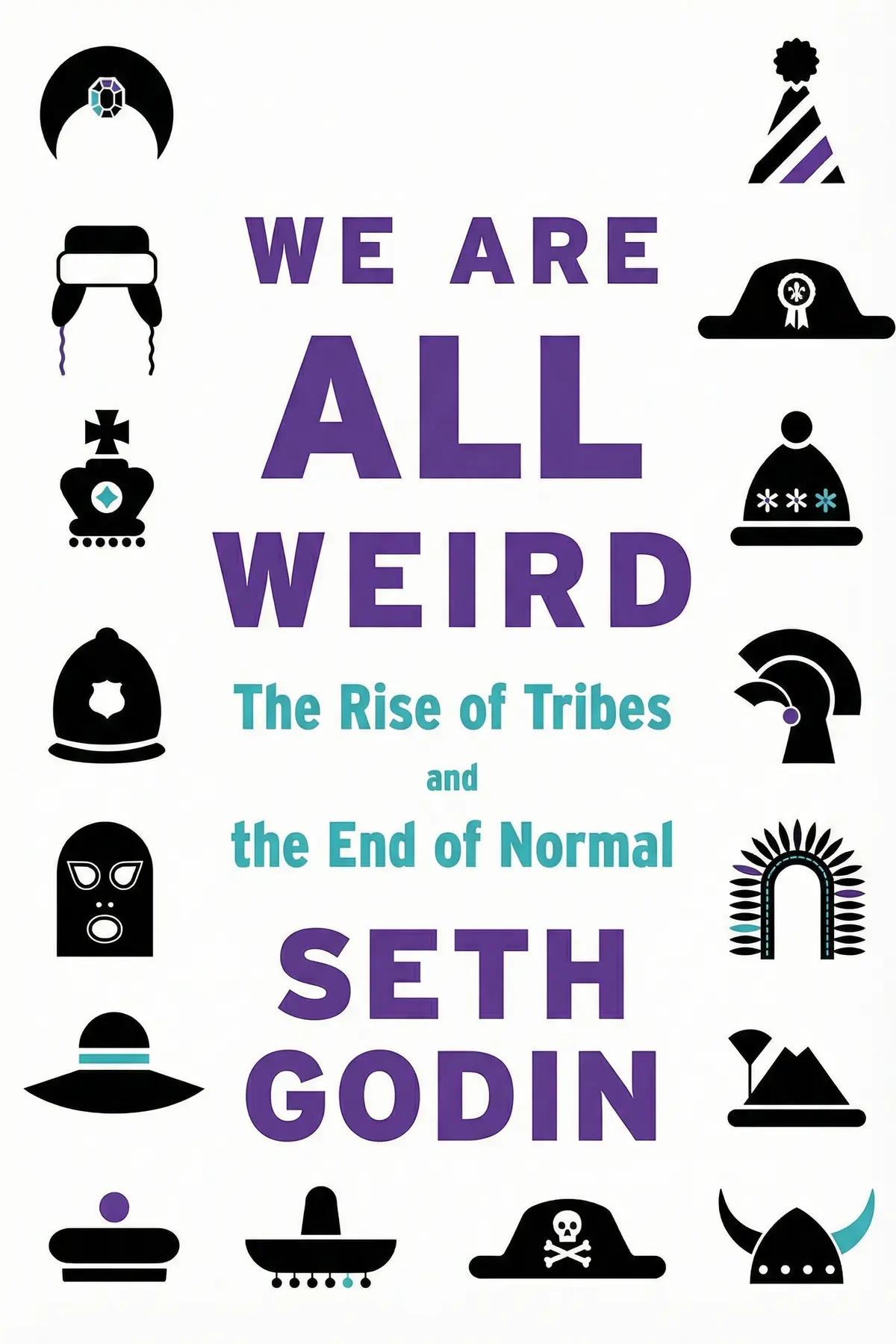
Table of Content
1. Introduction
1 min 06 sec
If your work depends on pleasing everyone, whether that means a product launch, an audience or a lesson plan, you are aiming at a target that keeps shrinking. In We Are All Weird, author and marketer Seth Godin argues that the mass market, built on the idea that normal people want normal things, is breaking apart. Three decades ago, nine in ten people watched the three main TV networks. Today the figure is closer to three in ten.
Godin’s case is that normal was never a fact about people. Mass producers invented it as a tool for selling identical goods cheaply. Now more of us have the time, money and online connections to follow our own odd interests, so people are choosing their tribes, and the winners will be those who serve a dedicated few honestly. Along the way come a pregnant elephant that rescued a zoo, a $1,000 stereo cable and a village fruit seller with a solar lantern. Each one shows where your own audience, or your own oddness, fits.
2. Stop chasing the one big hit
2 min 00 sec
A struggling Belgian zoo won back the whole country with a single ultrasound video. Godin finds the most telling part of that success in what it reveals about every other launch, and it is not an encouraging sign for the mass market.
3. See how the normal customer was invented
1 min 52 sec
Seven in ten American kitchens hold the same bottle of ketchup. Godin traces that sameness to a business problem from the last century, and to the advertising trick that turned a sales need into a social rule.
4. Sell to a dedicated few instead of everyone
2 min 04 sec
Most people would never spend a thousand dollars on a short length of cable, yet someone keeps making it and selling it. Godin explains what changed so that a tiny, devoted audience can now support an entire craft.
5. A shrinking middle hands buyers more power
1 min 49 sec
Today’s hit shows draw a small fraction of the audiences of decades past, and best sellers fade within weeks. Godin reads that decline differently from most worried executives, and a village fruit seller in India helps make his case.
6. Give odd students room to find their path
1 min 42 sec
The people we admire most rarely followed the rules they were taught. Godin asks what happens when schools keep rewarding the opposite, and he closes with a warning for any company hoping to cash in on weirdness.
7. Conclusion
1 min 18 sec
Godin’s manifesto comes down to a claim about history. Normal belonged to one particular era, an age of mass production, mass media and mass markets, when treating everyone the same was the efficient choice. Wealth and the internet have changed that math, and people are using their new freedom to be different on purpose. The bell curve is flattening, and anyone still aiming at its middle is aiming at fewer people each year.
That gives marketers, makers and educators the same task: serve real individuals and the tribes they form. In practice the first steps can be small. Stop describing your audience as average, and find the place where your committed few already talk to each other, the way audio lovers gather around Stereophile. Build for them without pretending, because tribes can spot an imitation and walk away from it. And wherever you judge other people, at school or at work, leave room for the person who does not fit, since that is often the one everyone admires later.
The Antwerp elephant filled a zoo once. Most of what succeeds from now on will be smaller, stranger and closer to the people it serves.
About this book
What is this book about?
For about a century, companies, media and schools were built around one assumption: most people are normal and want normal things. Seth Godin argues that this assumption was never a fact about people. It was a tool that mass producers created, with the help of advertising, to sell identical goods as cheaply as possible. In this short manifesto, Godin shows that tool losing its grip. Growing wealth gives people the time and money to follow their own interests, and the internet connects them with others who share those interests. The result is a flattening bell curve: hits draw smaller audiences, the popular middle shrinks, and the edges fill with tribes of enthusiasts, from bagpipe players to audio collectors who will pay $1,000 for a stereo cable. Readers get a clear way to see where their own market, audience or classroom is heading. Godin explains why serving a committed few can bring enough financial support for a niche craft, why more choice puts power in buyers' hands, why schools that reward conformity may leave students at a disadvantage, and why businesses that only pretend to be weird get rejected by the tribes they court.
Book Information
Who it's for
Building for average customers
Founders and marketers still building for an average customer who no longer seems to show up.
Niche creators
Creators with a niche passion wondering whether a small, devoted audience can sustain their work.
Wary of rewarding conformity
Teachers and managers who suspect their rules reward fitting in over real talent.
About the Author
Seth Godin
Seth Godin, born in 1960, is an American author, entrepreneur and blogger who has also written under the pen name F. X. Nine. He founded an early online company, Yoyodyne, sold it to Yahoo! and then served there as Vice President of Direct Marketing. He later founded Squidoo.com and the altMBA, an online education program. His books include Linchpin, Purple Cow and The Practice, and he has been inducted into the Marketing Hall of Fame.
Linchpin: Are You Indispensable?
Seth Godin

The Practice: Shipping Creative Work
Seth Godin

This Is Strategy: Make Better Plans
Seth Godin
Tribes: We Need You to Lead Us
Seth Godin
Ratings & Reviews
Ratings at a glance

What people think
Listeners find the book accessible and stimulating, with one review emphasizing how it redefines professional mindsets. They also appreciate the humor, with one listener noting its celebration of 'weirdness' in all its totality. The quality of the information is praised, as one listener finds the educational content especially helpful. However, feelings regarding the book's length are varied, with several listeners mentioning it is short, while views on the pacing and the way ideas are presented are also mixed.
Top reviews
Wichai
The chapter on education alone is worth the price of admission here. Godin argues that we shouldn’t waste time pushing students into directions they don’t care about, but should instead find the 'weirdness' they excel at and encourage it. It’s a powerful, punchy manifesto that celebrates the end of the mass-market era. While it’s a quick read—I finished it in one sitting—the ideas linger long after you close the cover. He’s writing about more than just selling products; he’s writing about human connection and the freedom to choose our own paths. My workplace thinking has been completely reset by his perspective on tribes. We are all weird, except for the people clinging to a 'normal' that no longer exists. If you want to understand where the world is heading, this is the guide you need.
Show moreHemp
Wow, what a refreshing way to look at the fragmented culture we live in today. I listened to the audio edition first and then immediately bought the Kindle version so I could mark up the quotes. Godin is a genius at distilling complex cultural shifts into simple, actionable thoughts. The idea that 'weird' is the new normal is so liberating for anyone who has ever felt like they didn't fit the mold. This isn't just for marketers; it's for anyone who wants to understand why the world feels so different now than it did twenty years ago. The goal isn't just commerce—it's connection. I found his take on 'the tribe that cares about you' to be deeply moving. It’s a cult classic for a reason, and it’s more relevant now than ever.
Show moreBond
Finally got around to this 'cult classic' and it’s a brilliant celebration of individuality. Godin manages to touch on everything from Beliebers to Paleo diets to explain why the middle of the curve is a dangerous place to be. I love how he resets your thinking about what it means to be successful in a world that no longer rewards 'standard.' It’s a quick, humorous, and deeply thought-provoking read that challenges you to stop building products for the masses. In my experience, most business books are 300 pages of fluff; this is the opposite. It’s a lean, mean capsule of politics, management, and marketing wisdom. If you’re tired of the status quo and want the guts to think out of the box, you need to read this manifesto. It’s a masterpiece of modern marketing thought.
Show moreLek
Ever wonder why companies still try to sell to a 'normal' audience that doesn’t actually exist? Seth Godin breaks down why the mass market is dead and why we should embrace our inner weirdness. I loved the humor throughout the book; he celebrates 'weirdness' in its totality, from Settlers of Catan players to extreme dieters. The information quality is solid, especially regarding how the internet has allowed these small groups to find each other and thrive. My only gripe is that it’s incredibly short. You can finish it in about an hour, which makes the price point feel a bit steep. However, the core message is a necessary wake-up call for anyone still trying to market to the 'average' person. It’s time to find your tribe and stop apologizing for being different.
Show moreAraya
Seth Godin writes in sound bites, and while that might annoy some, I found it incredibly easy to digest. This is a manifesto in the truest sense—it’s meant to provoke, not to provide a step-by-step manual. The pacing is fast, and the ideas are spread out in a way that keeps you turning pages. I particularly liked his take on how being 'rich' is actually about having the resources to make choices. It’s a refreshing perspective that ties marketing to human happiness and freedom. Look, it’s not a dense academic text, and it doesn't try to be. It’s a series of broad thoughts from a wide spectrum of influences. If you’re looking for a quick shot of inspiration to change your business strategy, this is a great pick.
Show moreLogan
Truth is, the world is changing faster than our institutions can keep up with. Godin’s argument that we need to stop pushing kids and employees toward a 'normal' center is spot on. I found the educational content particularly useful for my own perspective as a parent. We spend so much energy trying to fix 'weird' behavior when we should be encouraging it. The book is short, yes, but the ideas have a lot of potential if you actually take the time to cogitate on them. I enjoyed the scattershot approach because it felt like a conversation with a very smart, slightly caffeinated friend. It’s not his most polished work, but it’s definitely one of his most relevant manifestos for the modern era. Definitely worth a read if you feel stuck in a 'mass' mindset.
Show moreWoravit
Picked this up because the Kindle Lending Library made it an easy choice to finally dive into Godin’s work. It’s a decent enough reminder that the 'masses' are a myth we created for the sake of industrial efficiency. However, the writing style is very much 'blog-posty'—short, punchy, and a bit repetitive. He spends a lot of time defining 'weird' as anyone who makes a choice outside the standard bell curve, which is fine, but he doesn't go much further than that. I found the sections on how 'rich' people have the freedom to be weird quite interesting, yet he skips off to the next topic before the thought is ever fully developed. It’s a good mental reset for a Sunday morning, but don’t expect a deep dive into data or sociology. It’s more of a motivational pamphlet than a business book.
Show moreChamp
As someone who works in a library, I found myself pondering the 'tribe' concept quite a bit while reading this. Godin asks who our tribe is and how we help them achieve connection, which is a powerful question for any public institution. That said, the book itself is a bit of a mixed bag. It’s thoughtful but feels unfinished, like a first draft written at two in the morning. I appreciated the sentiment of celebrating individuality, yet I found the constant repetition of 'we are all weird except for the normal people' a bit confusing. Is he saying we are all weird or not? To be fair, it made me think, which is more than most marketing books do. I just wish he had explored the ramifications of his ideas with more rigor instead of just throwing out sound bites.
Show moreViolet
Frankly, I expected much more depth from someone touted as a marketing genius. Godin only seems to repeat the same core sentence in different ways without offering anything truly innovative. As someone deeply immersed in geek culture, all of these points about LARPers and vegans being the 'new normal' felt incredibly dated and obvious. It’s a very quick read, but that’s because there is almost no meat on the bones of his argument. He talks around his points, skimming across the surface of topics like education and politics without ever diving deep enough to be useful. It felt like a waste of my afternoon. Instead of sustained thinking, you get pointillism artwork made of thought splatters. It’s interesting for a moment, but it never quite amounts to a coherent whole that I can actually apply to my business.
Show moreSiriphen
This book is basically a three-page magazine article bloated into a repetitive, frustratingly short manifesto. I felt like the author was just recycling his blog posts to meet a word count that he barely even reached anyway. Not worth the pixels or the time it takes to click 'buy.' Godin keeps hammering the same point over and over: the era of 'mass' is over and 'weird' is the future. Okay, I get it after the first five pages. Why do I need a whole book that says the same thing in every single chapter? It feels like superficial 'google' writing rather than a deeply researched argument. To be fair, he has some clout, but this specific work is just scattershot and random. I honestly felt cheated. If you’re looking for substance, look elsewhere because this is all sizzle and no steak.
Show moreQuestions about this book
What is the main idea of We Are All Weird by Seth Godin?
Godin argues that the idea of a normal consumer was invented by mass producers and advertisers to sell identical goods cheaply. Rising wealth and the internet now let people follow their own interests and find others who share them, so the mass market is shrinking. Businesses, creators and schools that keep treating everyone the same will lose ground to those who serve specific tribes honestly.
What does Seth Godin mean by weird and rich?
For Godin, weird does not refer to unusual physical features or minority identities. It means differences people choose, such as an odd hobby or a rare passion. Rich means having the resources to act on those choices. That can be money, but it can also be free time or the support of a community. Rising riches of this kind are what let more people be weird.
How can a business apply the ideas in We Are All Weird?
Stop designing for an imagined average buyer and identify a committed group that cares deeply about what you make. Godin’s example is a maker of $1,000 stereo cables who reaches audio enthusiasts through Stereophile magazine and online forums. Reach your group where it already gathers, and be genuine: Godin warns that tribes recognize mass marketers pretending to belong and choose the real thing instead.
Why does Godin think the end of the mass market is a good thing?
A flatter bell curve means more choice, and more choice gives people more power. Godin points to a fruit seller in a village near Berelli, India, who can buy a D-light solar lantern online for three dollars, making his choices count in a global market. He also argues that schools should stop forcing students into one mold, since society admires people who break it.
Who should read We Are All Weird?
It suits marketers and founders whose audiences are fragmenting, creators deciding whether a small dedicated following can support their work, and educators or managers who question systems built on conformity. It is a short manifesto rather than a manual, offering a way to see why hits draw smaller audiences and why serving a committed few has become a realistic strategy.
Readers also enjoyed




AUDIO SUMMARY AVAILABLE
Listen to We Are All Weird in 15 minutes
Get the key ideas from We Are All Weird by Seth Godin, plus 5,000+ more nonfiction titles.
- 5,000+ titles
- Listen as much as you want
- 7-day free trial
- Cancel anytime









