

13 min 38 sec
Available in: English
 ไทย
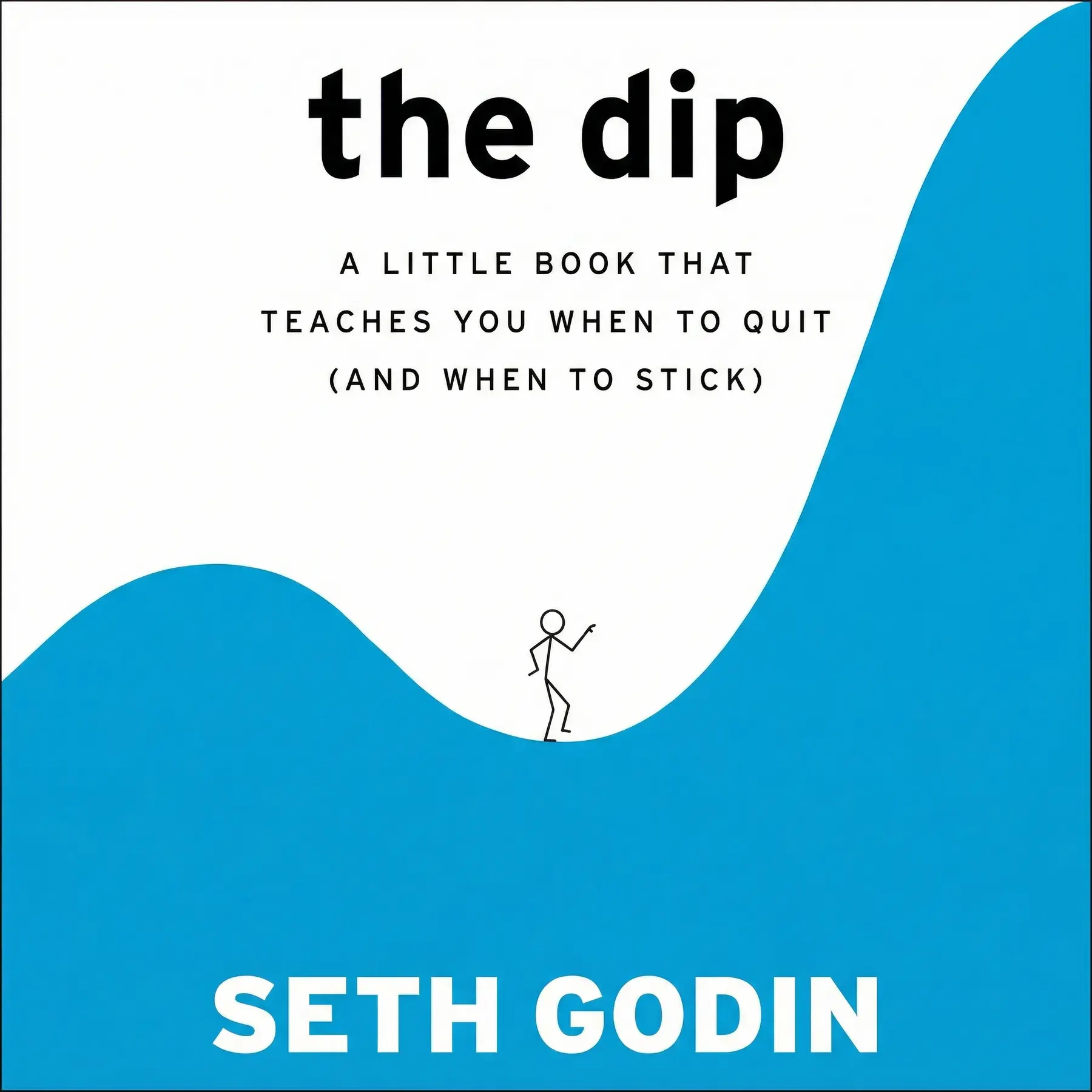
EnglishไทยThe Dip: A Little Book That Teaches You When to Quit (and When to Stick)
By Seth Godin
Shows why almost every worthwhile goal hits a long stretch of struggle after an easy start, and how to drop the wrong pursuits early so you can push through to the top in the one that counts.
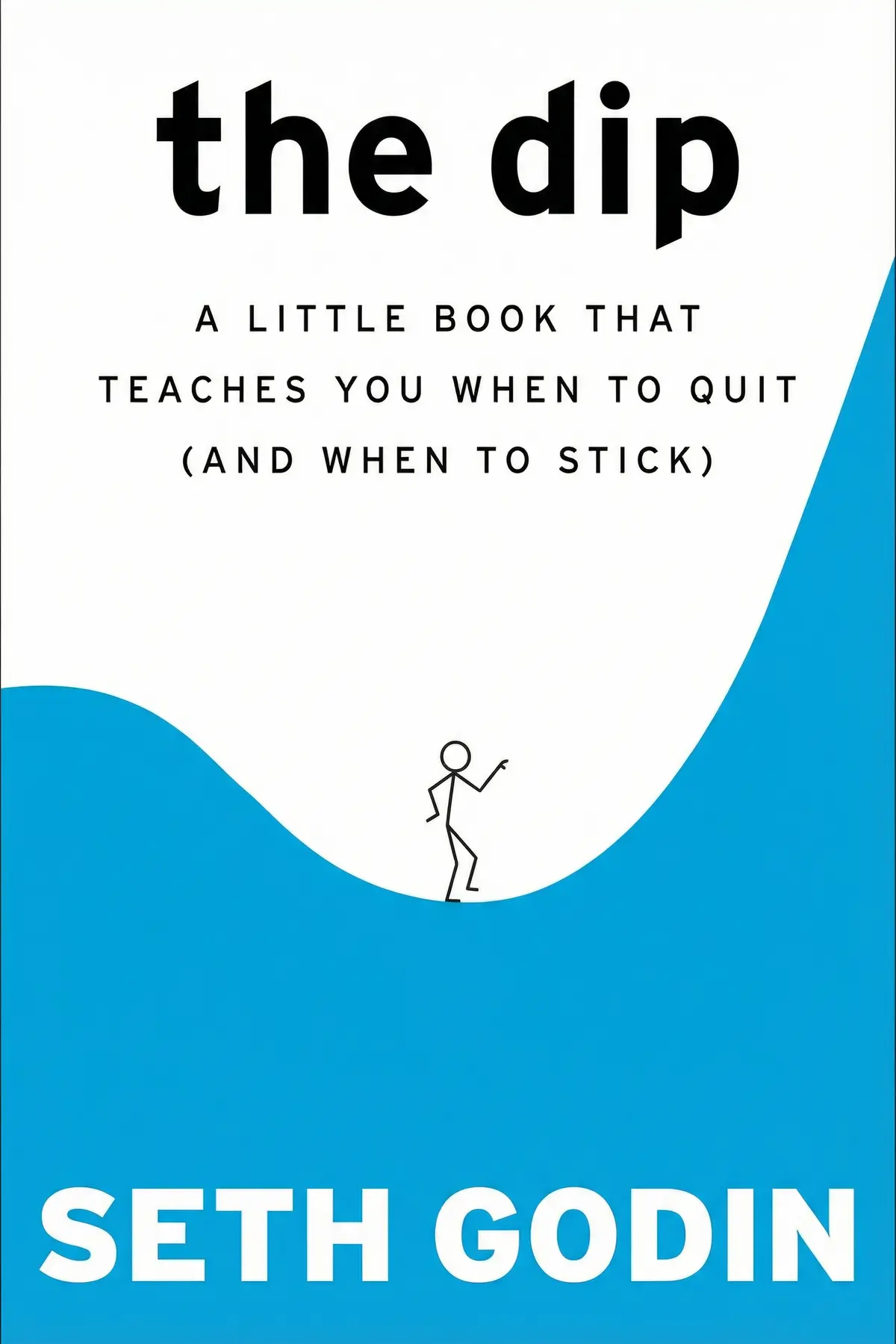
Table of Content
1. Introduction
58 sec
If a project that once excited you has stalled, that slump may be the most useful part of it. In The Dip, author and entrepreneur Seth Godin argues that nearly every worthwhile effort follows one curve: a quick, enjoyable start, then a long stretch where effort climbs and rewards disappear. He calls that stretch the Dip, and he sees it as the thing that separates the best from everyone else.
His case runs in a clear line. Pick the one pursuit where you could become the best, quit the distractions competing with it, and then stay patient through the Dip while others drop out. The evidence includes vanilla ice cream, a medical school course built to thin the class, Microsoft’s hold on office software and a shoemaker whose career only took off in his late thirties.
What you gain is a test for the next time progress stalls: is this a Dip worth crossing, or a project worth closing?
2. Spot your Dip before it arrives
1 min 45 sec
A skater learns to glide fairly quickly but needs a long stretch of hard work for one jump. The same curve hides inside garage workshops, sales teams, language classes and new romances, and seeing it early changes how the hard months feel.
3. What being number one is really worth
1 min 32 sec
One ice cream flavor outsells its nearest rival about three to one. That gap is no fluke, and the hidden perks of finishing first go well beyond the money the leader collects.
4. Drop good projects to protect your best one
1 min 42 sec
A would-be inventor also dreams of jazz trumpet and a green energy charity. All three are worthy, which is exactly the problem, and it forces a hard look at the advice never to give up.
5. Let the hard stretch filter out your rivals
1 min 36 sec
A chemistry course that isn’t the most important in the curriculum and Microsoft’s grip on office software share a hidden purpose. Understanding it can turn the obstacle you resent into the thing that later keeps competitors away.
6. Treat difficulty as the part worth having
1 min 39 sec
Windsurfers who curse the wind are cursing the very thing they came for. That small irony points to a different way of treating the exhausting parts of work, training and side projects.
7. Stay in line long enough to win
1 min 42 sec
Most salespeople stop after a certain number of pitches, and one study suggests they stop at exactly the wrong point. A famous shoemaker’s slow rise shows what waiting costs and what it can return.
8. Quit a project without quitting your field
1 min 39 sec
A heartbroken publisher wants to open a restaurant, and a promising presidential candidate walks away from a race. Both show that how and when you quit can matter more than whether you quit.
9. Conclusion
1 min 05 sec
The Dip turns a familiar feeling, the slump after an exciting start, into a piece of strategy. In Godin’s picture, the struggle is the toll that keeps the crowd away from first place, and first place is where the rewards collect, as vanilla’s 30 percent shows beside chocolate’s 10. Quitting and persisting become two halves of one decision. You drop, early and on purpose, the pursuits that cannot make you the best, so you have the strength to stay in the one that can.
Begin with your own commitments and choose the one you most want to lead in. When it stalls, remember the salespeople who stopped at five pitches while most buyers were more likely to purchase after seven, and give it a few more tries before you judge. If something truly is failing, close it without leaving the field, the way a former magazine publisher can become an editor. And never make the call on the day you feel most hurt.
Jimmy Choo had the skill at 11 and the recognition in his late thirties. The years between were his Dip, and he was still making shoes when it ended.
About this book
What is this book about?
Every promising project seems to stall at some point. The early excitement fades, progress slows, colleagues get promoted ahead of you, sales flatten or a relationship cools. Seth Godin calls this stretch the Dip, and he argues it appears in nearly every career, business and personal goal. His angle is that the Dip is useful. Because most people give up inside it, those who push through rise above the crowd. Godin shows how large the rewards for first place can be, from vanilla's share of ice cream sales to the word of mouth that sends travelers to a town's favorite restaurant. Getting there means specializing, which in turn means deliberately quitting worthy pursuits that compete with your main focus. Readers learn to recognize the Dip in manufacturing, sales, language learning and love, to treat difficulty as the source of growth, and to build the patience that a sales study and Jimmy Choo's late success illustrate. Godin also explains how to quit a failing project without abandoning the field you know, and why it pays to wait before deciding while you feel wounded.
Book Information
Who it's for
Stalled founders and builders
Founders and side-project builders whose early excitement has turned into a long, frustrating stall.
Professionals stretched too thin
Professionals spread across too many commitments who want to choose the one worth mastering.
Salespeople and job hunters
Salespeople and job seekers tempted to quit just before persistence would pay.
About the Author
Seth Godin
Seth Godin, born in 1960, is an American author, entrepreneur and blogger who also writes under the pen name F. X. Nine. He founded Yoyodyne, an early online company, and after selling it to Yahoo! served there as Vice President of Direct Marketing. He later founded Squidoo.com and the altMBA, an online education program. His books include Linchpin, Purple Cow and The Practice, and he has been inducted into the Marketing Hall of Fame.
Linchpin: Are You Indispensable?
Seth Godin
The Practice: Shipping Creative Work
Seth Godin
This Is Strategy: Make Better Plans
Seth Godin
Tribes: We Need You to Lead Us
Seth Godin
Ratings & Reviews
Ratings at a glance
What people think
Listeners find the book an effortless read and value its stimulating ideas, with one listener noting it offers an excellent strategy for navigating life's dilemmas. Furthermore, the work is praised for its ideal length, robust concepts, and concise nature. However, the tempo draws varied reactions; some appreciate the directness while others find the content self-contradictory. Similarly, views on financial value are split, as some find it exceptionally beneficial for their companies while others feel it doesn't justify the cost.
Top reviews
Pita
Picked this up during a career crisis and it genuinely shifted my perspective on persistence. We are constantly told that quitting is for losers, but Godin reclaims it as a powerful tool for the brave. The concept of 'The Cliff'—a situation where you can’t quit until everything falls apart—perfectly described my last relationship. It’s a scary realization, but a necessary one. The book is short, which I loved because it gets straight to the point without the usual filler you find in business self-help. It’s about focus. By quitting the things that don't matter and the projects that are going nowhere, you free up the resources to become a superstar in the area that actually counts. This isn't just a business book; it’s a manual for life's quandaries. Truly a wonderful approach to making hard decisions.
Show morePui
Truth is, we are often taught that quitting is a moral failure, but this book reclaims it as a superpower. Godin argues that pride is the enemy of the smart quitter, and he’s absolutely right. We stay in dead-end jobs or failing businesses because we’re too proud to admit we made a mistake. This book is the antidote to that ego-driven stubbornness. It’s incredibly fast to read—I finished it on a short flight—but the ideas have stayed with me for weeks. It’s not about being lazy; it’s about having the bravery to quit the wrong things so you can go all-in on the right ones. It’s a perfect length for the message it delivers. Some might call it a 'blog post in a book,' but I’d rather have 80 pages of gold than 300 pages of fluff.
Show morePla
Stop believing the old cliché that winners never quit. Seth Godin argues the exact opposite in this punchy little book, suggesting that strategic quitting is actually the secret sauce of successful people. The distinction between 'The Dip' and 'The Cul-de-Sac' changed how I view my current career frustrations. Frankly, I realized I’ve been stuck in a dead-end loop for months when I should have been leaning into a meaningful challenge instead. While the book is incredibly short and feels like a glorified blog post at times, the core message is potent. It’s a quick read that forces you to evaluate where you’re putting your energy. I did find the 'best in the world' requirement a bit extreme for every situation, but the logic holds up for business. If you’re feeling burnt out, this might help you decide if it’s time to double down or walk away.
Show morePatcharaporn
Ever wonder why you're working so hard but staying in the exact same spot? This book explains that you’re likely in a Cul-de-Sac, a dead-end job or project where effort doesn't translate into progress. Godin's advice is simple: quit immediately. I found this incredibly liberating. In my experience, we stay in bad situations because of pride or the fear of being labeled a 'quitter.' The author does a great job of dismantling that stigma. My only gripe is that the book is a bit self-contradictory at times regarding how you actually identify which curve you're on while you're in the middle of it. It’s easy to look back and see a Cul-de-Sac, but much harder in the moment. Still, the framework is a solid tool for anyone trying to navigate a difficult transition.
Show morePierre
The chapter on 'The Cliff' was a wake-up call for my current side project. I’ve been pouring time into something that felt addictive but was ultimately leading to a massive drop-off. Godin’s logic is cold and calculated: if there isn't a reward at the end of the long slog, why are you doing it? He challenges the reader to look at the opportunity cost of their time. I appreciated the brevity and the lack of fluff, though I can see why some readers find his 'best in the world' philosophy a bit arrogant. It’s a book written for people who want to dominate their niche, not for people looking to be well-rounded. If you can get past the repetitive sentences, there is a very solid, usable idea here that most people ignore to their own detriment.
Show moreTern
Look, the advice here is polarizing, but for anyone in a leadership role, it's essential reading. We spend so much time trying to save failing projects because we’ve already invested so much, which is just the sunk-cost fallacy in action. Godin gives you the permission to fail fast. I've been using the term 'The Dip' in my office all week to describe our latest product launch. It helps the team understand that the current struggle is a shortcut to mastery, not a sign of failure. The book is definitely overpriced for the length, but the mental shift it provides is worth the investment. It’s a quick, easy read that cuts through the noise of traditional inspirational writing. Just be prepared for a very singular, focused message that doesn't leave much room for nuance.
Show moreMay
Finally got around to this short read, and I appreciated how Godin cuts through the usual motivational fluff. The Vince Lombardi quote 'Quitters never win' is basically dismantled in the first ten pages. Winners quit all the time—they just quit the right stuff at the right time. That’s a powerful distinction. I’ve been guilty of 'reactive quitting,' giving up when things get painful rather than when it’s strategically sound. This book helped me see the difference. It’s a little repetitive, yes, and some of the examples feel a bit dated, but the core philosophy is sound. It’s about being intentional with your limited time. If you’re not willing to lean into the pain of the Dip to reach the top, you’re just wasting your life in a Cul-de-Sac.
Show morePim
Seth Godin has a knack for taking a single, brilliant insight and stretching it across eighty-something pages. The core idea here is fantastic: don't just quit because things are hard, but definitely quit if you’re in a dead-end 'Cul-de-Sac.' However, the book is incredibly repetitive, hitting the same three notes over and over until you feel like you’ve read it three times by page fifty. To be fair, the brevity is a plus because you can finish it in a single sitting, but I’m not sure it justifies the price tag of a full hardcover. I also struggled with his assertion that you shouldn't do anything unless you plan to be #1 in the world. What about hobbies? What about just being 'pretty good' at something for the joy of it? It’s a very hyper-competitive worldview that won't resonate with everyone, though it’s certainly thought-provoking for entrepreneurs.
Show moreHugo
To be fair, you could probably get the entire gist of this book by reading a three-page summary online, but there is something to be said for Godin’s punchy writing style. He has a way of making you feel a bit silly for your choices without being outright insulting. The idea that we should quit more often is a refreshing change from the 'hustle culture' that demands we never give up. However, the pacing is a bit odd; it feels like it’s building up to a big revelation that never quite arrives. You get the three curves—the Dip, the Cul-de-Sac, and the Cliff—and then a lot of filler about being a superstar. It’s a good mental reset, but don’t expect a deep dive into strategy. It’s more of a motivational nudge than a comprehensive guide.
Show moreAnchalee
Not every hobby or career path is about being the absolute best in the world, and Godin seems to miss that entirely. He suggests that if you aren't going to push through the 'Dip' to reach the top, you shouldn't even bother starting. That feels like a recipe for a very narrow, boring life. What happened to doing things for fun or personal wellness? I don’t need to be the world’s best snowboarder to enjoy a weekend on the slopes. The book is also remarkably thin on actual data or mathematical models to help you predict if you're in a Dip or a dead-end; it relies mostly on gut feeling and anecdotes. While the distinction between tactical and strategic quitting is a nice takeaway, the rest felt like elitist fluff. I finished it in forty minutes and felt like I could have gotten the same value from a tweet thread.
Show moreQuestions about this book
What is the main idea of The Dip by Seth Godin?
Godin argues that nearly every worthwhile goal hits the Dip, a long stretch of struggle after an easy start. Most people quit there, so those who push through become the best, and the best collect outsized rewards. The key is to quit early, on purpose, the pursuits that cannot make you the best, and then stay patient in the one that can.
When should you quit according to The Dip?
Godin says to quit intensive pursuits that compete with your main focus, since nobody can be the best at everything. He also accepts quitting a project that is clearly falling apart. Even then, he advises staying in the field you know, as a failed magazine publisher might become an editor, and he warns against deciding while you feel hurt, citing Joe Biden’s 1988 withdrawal.
What does Zipf's law have to do with The Dip?
Godin uses Zipf’s law to show that a wide gap separates first place from second. In the United States, vanilla takes 30 percent of ice cream sales while second-place chocolate takes 10 percent. Leaders also enjoy word-of-mouth momentum and can charge more, which is why crossing the Dip to become the best is worth the effort.
How can I apply The Dip at work?
List your heavy commitments and pick the one you most want to lead in. Expect a Dip and note what it will cost. In sales, keep following up: Godin cites a study where sellers gave up after five pitches, even though 80 percent of buyers were increasingly open to purchasing after seven. Before resigning, explore options, as Godin’s friend David did, winning a transfer and a promotion.
Who should read The Dip?
It suits founders, professionals and students who feel stuck after a promising start, whether in a business, a career, a skill such as learning Chinese or a relationship past its honeymoon. It also helps anyone spread across too many projects who needs permission to drop some, and salespeople who give up on prospects too soon.
Readers also enjoyed

A Guide to the Good Life: The Ancient Art of Stoic Joy
William B. Irvine


A High-Performing Mind: Strengthen Your Mind and Live Your Best Life
Andrew D. Thompson


Abundance: The Inner Path to Wealth
Deepak Chopra


60 Seconds & You’re Hired!
Robin Ryan



59 Seconds: Change Your Life in Under a Minute
Richard Wiseman
AUDIO SUMMARY AVAILABLE
Listen to The Dip in 15 minutes
Get the key ideas from The Dip by Seth Godin, plus 5,000+ more nonfiction titles.
- 5,000+ titles
- Listen as much as you want
- 7-day free trial
- Cancel anytime









