

14 min 26 sec
Available in: English
 ไทย
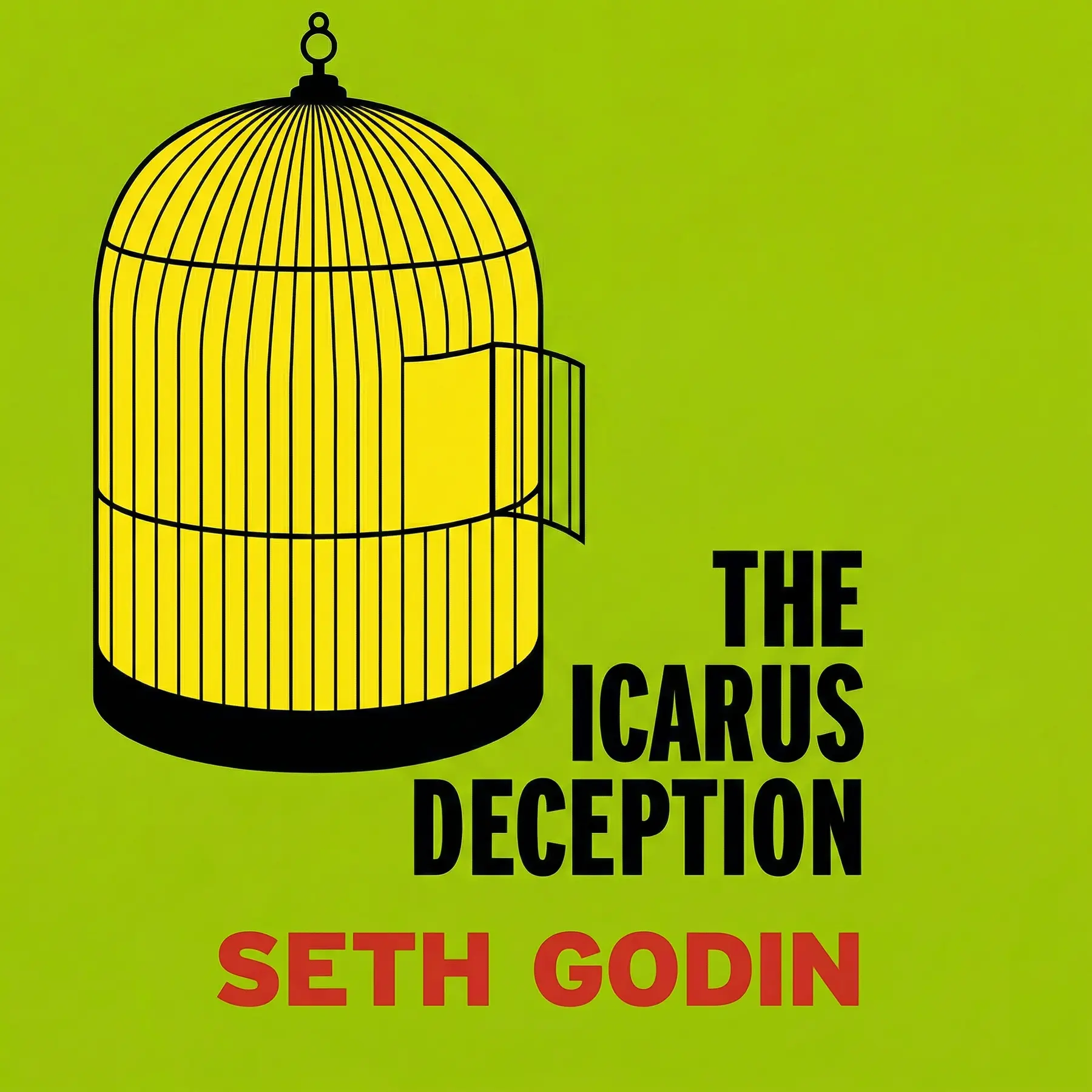
EnglishไทยThe Icarus Deception: How High Will You Fly?
By Seth Godin
Shows why playing it safe has become the bigger risk as machines absorb routine work, and how to thrive by treating your work as art: committing fully, building grit, ignoring shame and practicing daily.
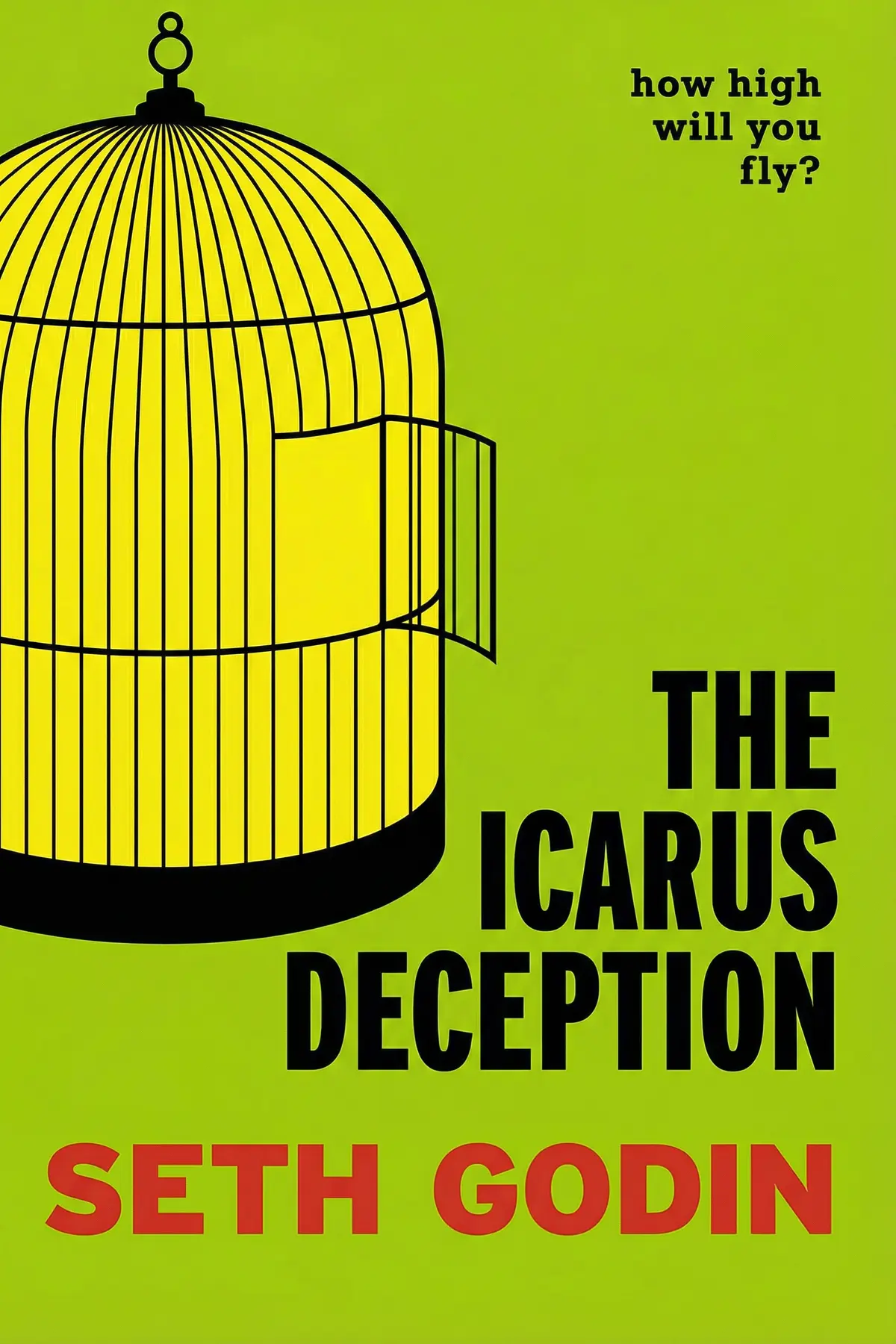
Table of Content
1. Introduction
56 sec
Boring, repetitive manual and administrative work is increasingly being handed over to machines, and the safe office job built on it is fading. In The Icarus Deception, author and entrepreneur Seth Godin argues that the answer is to become an artist. He means anyone who brings passion and fresh thinking to a task, whether a painting, a song or a new way of serving customers.
His starting point is an old Greek story we have been telling only halfway. Godin’s case is that playing small is now the riskier choice, and that the people who thrive will treat their work as art: fully committed, gritty, deaf to shame, sharp-eyed and steady in daily practice. Each idea ahead is one piece of that craft. By the end, a modest career plan will look like the trap it is, and you will have a daily routine for shipping work that only you could make.
2. Stop flying too low as safe jobs vanish
1 min 42 sec
Everyone remembers the boy whose wings melted near the sun. Few remember the second warning his father gave, and Godin thinks forgetting it explains why so many careers are sinking without anyone noticing.
3. Reach your audience without waiting for a gatekeeper
1 min 39 sec
A kitten and a baby monkey escape danger in completely different ways. One of them explains why so many talented people are still waiting for a phone call that will never come.
4. Going all in is the humble choice
1 min 49 sec
Throwing yourself completely into your work can feel arrogant, so many people hold back to stay modest. Godin turns that instinct upside down with a Japanese word that sounds anything but humble.
5. Outwork talent with obsession and a clear goal
1 min 56 sec
One of the most successful comedians alive spent years performing for three or four people, and by Godin’s account he was never especially funny. What carried him is something anyone can choose.
6. Shield your best work from shame and praise
1 min 46 sec
Superman has kryptonite, and creative people have a weakness that works just as fast. Godin explains where it comes from, who uses it against you and the simple habit that keeps it at bay.
7. Train your eyes to spot the opportunity others miss
1 min 48 sec
A venture capitalist, two magazine editors and a retail consultant all found success by doing something most people assume they already do well. Godin insists none of them was born with the skill.
8. A daily habit that ends creative block
1 min 40 sec
Writers talk about being blocked, yet nobody ever complains of being unable to speak. That odd difference points to a cure for creative paralysis and to a boss most of us treat far too harshly.
9. Conclusion
1 min 10 sec
Told whole, the Icarus story is the clearest picture Godin offers. The boy who climbed toward the sun became famous. The danger his father described at the waterline, wings growing heavy with spray, is the one most careers now face. Computers will keep taking the routine work. What remains belongs to people who make something new and care enough to keep making it, in any field, from painting to a small online shop.
Godin is honest that this path hurts. Art will not always be fun, and every artist meets stretches of struggle, challenge and even pain. His advice is to expect those moments, ask how much difficulty you can carry, and ask whether the finished work is worth it. He believes it usually is, and accepting the pain in advance makes giving up less likely.
So pick the work you would do even without applause, give it real hours, put something small into the world every day, and keep your critics, inner and outer, at a distance. The wings were built for escape, and they only work in the open air between the sun and the sea.
About this book
What is this book about?
Safe, predictable jobs are disappearing as computers take over manual and administrative work. Seth Godin argues that most people are reacting far too slowly, because they have absorbed only half of an ancient warning. Everyone remembers that Icarus flew too close to the sun. Almost nobody remembers that his father also told him not to fly too low. Godin's answer is to become an artist, a word he stretches to cover any creative work done with passion and ingenuity, from a song to a new customer service system. He explains why a connected economy with fewer gatekeepers opens doors for musicians, designers, teachers and therapists alike, and why real humility means committing fully instead of holding back. Readers get a portrait of what that commitment demands: obsession over raw talent, grit rooted in a clear goal, independence from both shame and applause, the habit of truly observing the world, and a daily practice that turns creative block into routine. The result is a case for aiming higher and a set of habits for doing it.
Book Information
Who it's for
Office workers wanting meaning
Office workers who sense their safe job is shrinking and want to do more meaningful work.
Would-be creatives and founders
Aspiring writers, musicians, designers and founders held back by gatekeepers, criticism or fear of failing.
Weighing a side passion
Career switchers deciding whether to turn a side passion into their main work.
About the Author
Seth Godin
Seth Godin is an American author, entrepreneur and blogger, born in 1960, who also writes under the pen name F. X. Nine. He started an early online company, Yoyodyne, sold it to Yahoo! and served there as Vice President of Direct Marketing. He later founded Squidoo.com and the altMBA, an online education program. His books include Linchpin, which asks readers to do work that matters, Purple Cow and The Practice, and he has been inducted into the Marketing Hall of Fame.
Linchpin: Are You Indispensable?
Seth Godin
The Practice: Shipping Creative Work
Seth Godin
This Is Strategy: Make Better Plans
Seth Godin
Tribes: We Need You to Lead Us
Seth Godin
Ratings & Reviews
Ratings at a glance
What people think
Listeners find this work both uplifting and intellectually stimulating, with one listener characterizing it as a "magical mystery tour of motivation." They also value how accessible the writing is, as one listener mentions its particular importance for those on a job hunt. The content is filled with excellent guidance and deep insights; notably, one listener points out how it helps individuals take charge of their creativity. Furthermore, listeners commend the prose, as one listener observes that it is specifically tailored for the business world.
Top reviews
Ellie
Seth Godin has this uncanny ability to make you feel like you're standing on the edge of a cliff, ready to fly. This isn’t just a business manual; it’s a manifesto for reclaiming your creative agency in a world that demands compliance. He brilliantly deconstructs the Icarus myth, arguing that we have been brainwashed to fly too low—staying safe and small—rather than too high. To be fair, his definition of 'art' is incredibly broad, encompassing everything from a well-run meeting to a bold marketing campaign. It’s a call to arms for anyone tired of the industrial-age mindset. If you are looking to do work that actually matters, this is your roadmap. It’s punchy, provocative, and absolutely essential for the connection economy.
Show moreDen
This felt like a whirlwind journey through psychological barriers designed specifically for those of us trapped in the grind. Godin’s work reminds me a lot of Steven Pressfield’s 'The War of Art,' but with a more distinct focus on the commercial world. He makes a compelling case that 'safe' is the new 'risky.' In my experience, most people stay in soul-crushing jobs because they fear the sun, but Godin proves that the water—settling for mediocrity—is what will actually drown you. The writing is incredibly accessible and tailored for a fast-paced business environment. It’s more of a spiritual guide for professionals than a technical manual. I walked away feeling like I finally had permission to fail, which is a rare and beautiful gift from an author.
Show moreRapee
After hearing about the connection economy for years, finally reading this book made the concept click into place. It’s an insightful look at why our traditional education system fails us by training us to be obedient cogs. Godin’s writing style is punchy and direct, which I find refreshing compared to the dense, academic prose of most business books. He challenges you to stop waiting for a map and to start drawing your own. The idea that your work is a 'gift' to your audience changed how I approach my daily tasks. It’s not just about getting paid; it’s about making a difference and having a point of view. This is the kind of book you’ll want to highlight and revisit whenever you feel your courage flagging.
Show moreRoo
Finally got around to this classic, and I’m genuinely surprised by how relevant it remains a decade later. The world has only become more connected, making Godin’s arguments about the 'connection economy' even more prescient. He writes in a way that is specifically tailored for the modern, distracted professional—short, high-impact sections that stay with you. I love the idea that every successful breakthrough comes from someone willing to break the rules that came before them. It’s a magical mystery tour of motivation that actually provides a framework for understanding the shift in our global economy. Whether you’re a freelancer or a CEO, there is something in here that will challenge your status quo. It’s a powerful reminder to pick yourself.
Show moreSaengdao
Picked this up during a career pivot, and the timing couldn't have been better for my mental state. Navigating the modern job market feels like a losing game if you follow the old rules of resumes and fitting in. Godin argues that the only way to survive is to be 'indispensable' by creating work that is unique and vulnerable. I appreciated the emphasis on the 'lizard brain' and how fear keeps us from shipping our best work. Some of the assertions felt a bit unsupported, particularly regarding how easily one can just 'start' creating, but the emotional resonance is undeniable. It’s a very readable, high-energy boost for anyone who feels stuck in a cubicle. I’d recommend it to anyone needing a nudge to take that first scary step.
Show moreSomporn
Look, Godin isn't for everyone, but he hits the nail on the head regarding the 'safety' trap. We spend our lives avoiding the sun, terrified of being too bold or too loud, while we completely ignore the danger of flying too low. This book is packed with great advice for anyone who wants to transition from being a 'cog' to being a 'linchpin.' I did find the demonization of 'industrialists' a bit heavy-handed at times; it’s not all black and white. However, the central thesis—that we are now in an economy that prizes human connection over efficient widget-making—is spot on. It’s a quick read that packs a significant punch. Definitely a must-read for creatives trying to find their footing in a corporate landscape.
Show moreJavier
The chapter on vulnerability alone justifies the price of admission for any aspiring creator or entrepreneur. Godin successfully argues that the 'Icarus Deception' isn't just a myth, but a systemic tool used to keep people compliant. To be fair, the book can feel a bit repetitive, as he hammers home the same few points across several hundred pages. But perhaps that’s what we need—constant repetition to unlearn decades of industrial conditioning. It’s a very motivating read that encourages you to step outside your comfort zone and embrace the friction of creation. I found it particularly valuable for framing my career as a series of experiments rather than a ladder to be climbed. It’s empowering, even if it is a bit idealistic at times.
Show moreOat
As someone who has always played it safe, the central thesis here was both terrifying and incredibly liberating. Godin argues that our comfort zones have actually become the most dangerous places to reside. The book is essentially a long-form pep talk, but it’s one that is grounded in a deep understanding of how markets are changing. I gotta say, some of the sections felt a bit like filler, and I wish there were more concrete examples of 'artists' who aren't just in the creative fields. Still, the emotional impact is heavy. It’s an excellent resource for job seekers who want to stand out in a sea of standardized candidates. You’ll walk away wanting to create something—anything—just to prove you can. It’s worth the read for the shift in perspective alone.
Show morePensri
Is this a book or a collection of blog posts bound together by a clever title? I struggle with the structure here because the chapters feel more like a series of disjointed insights rather than a cohesive argument. The truth is, Godin’s writing style is very 'love it or hate it' with its short paragraphs and lack of deep data. While I found the core message about the 'connection economy' versus the 'industrial age' fascinating, the execution felt repetitive. He uses the word 'art' so frequently that it starts to lose its meaning after the first hundred pages. It’s certainly a thought-provoking read for a weekend, but don’t expect a step-by-step guide. It provides plenty of heat but very little light on the actual mechanics of success.
Show moreMaksim
Not what I expected given the high praise from my manager, who seems to worship at the altar of Seth Godin. Frankly, my BS detector was buzzing from the first chapter. Godin makes these sweeping, poetic statements about 'art' without ever acknowledging the financial realities of most workers. It's easy to tell people to quit their jobs and 'make art' when you already have a massive platform and a safety net. The book is structured like a series of inspirational posters, which makes it hard to follow any logical progression. While there are a few nuggets of common sense, they are buried under layers of 'rah-rah' fluff that feels geared toward HR managers rather than actual workers. I found it quite frustrating and ultimately hollow.
Show moreQuestions about this book
What is the main idea of The Icarus Deception by Seth Godin?
Godin argues that we remember only half of the Icarus myth. Daedalus warned his son not to fly too high, but also not to fly too low, where sea spray would soak his wings. As machines take over routine work and safe office jobs fade, Godin says playing it small is now the bigger danger, and the way to thrive is to treat your work as creative art.
What does Seth Godin mean by being an artist?
For Godin, art is not limited to painting or music. It is any creative work done with passion and ingenuity that brings something new into the world, from a new form of abstract painting to a fresh customer service system. Being an artist demands full commitment, grit and a thick skin, and it carries risk, since there is no guaranteed salary.
Who should read The Icarus Deception?
It suits people who feel their stable job is becoming less stable and want to do more creative work, as well as musicians, writers, designers, consultants, teachers and therapists who could reach audiences directly online. It also helps anyone held back by criticism or by the belief that they lack talent, since Godin argues obsession and dedication matter more.
How can I apply the ideas in The Icarus Deception?
Godin suggests creating every day, for example writing about something meaningful daily and publishing it on a blog, so creative block fades the way it never affects speaking. He advises being a kind boss to yourself, praising small wins, avoiding negative comments, training yourself to observe the world closely, and accepting that struggle and pain are part of any work worth finishing.
Readers also enjoyed

A Room of One’s Own
Virginia Woolf



Be Obsessed or Be Average
Grant Cardone
Be Useful: Seven Tools for Life
Arnold Schwarzenegger
AUDIO SUMMARY AVAILABLE
Listen to The Icarus Deception in 15 minutes
Get the key ideas from The Icarus Deception by Seth Godin, plus 5,000+ more nonfiction titles.
- 5,000+ titles
- Listen as much as you want
- 7-day free trial
- Cancel anytime









