

14 min 16 sec
Available in: English
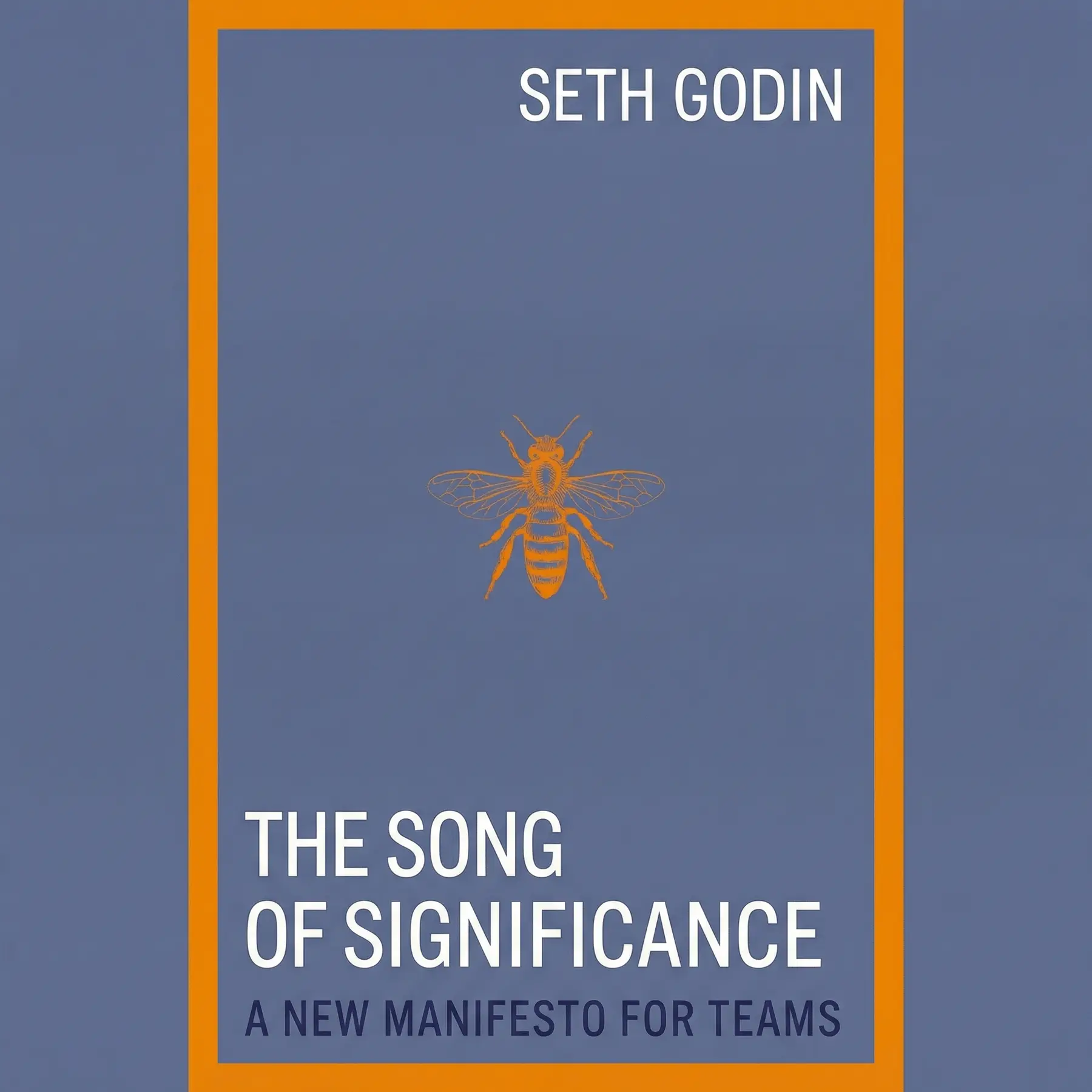
The Song of Significance: A New Manifesto for Teams
By Seth Godin
Seth Godin explains why the output-driven model of work leaves people drained, and how leaders can build teams that choose meaning over safety, quality over volume and shared ownership over control.
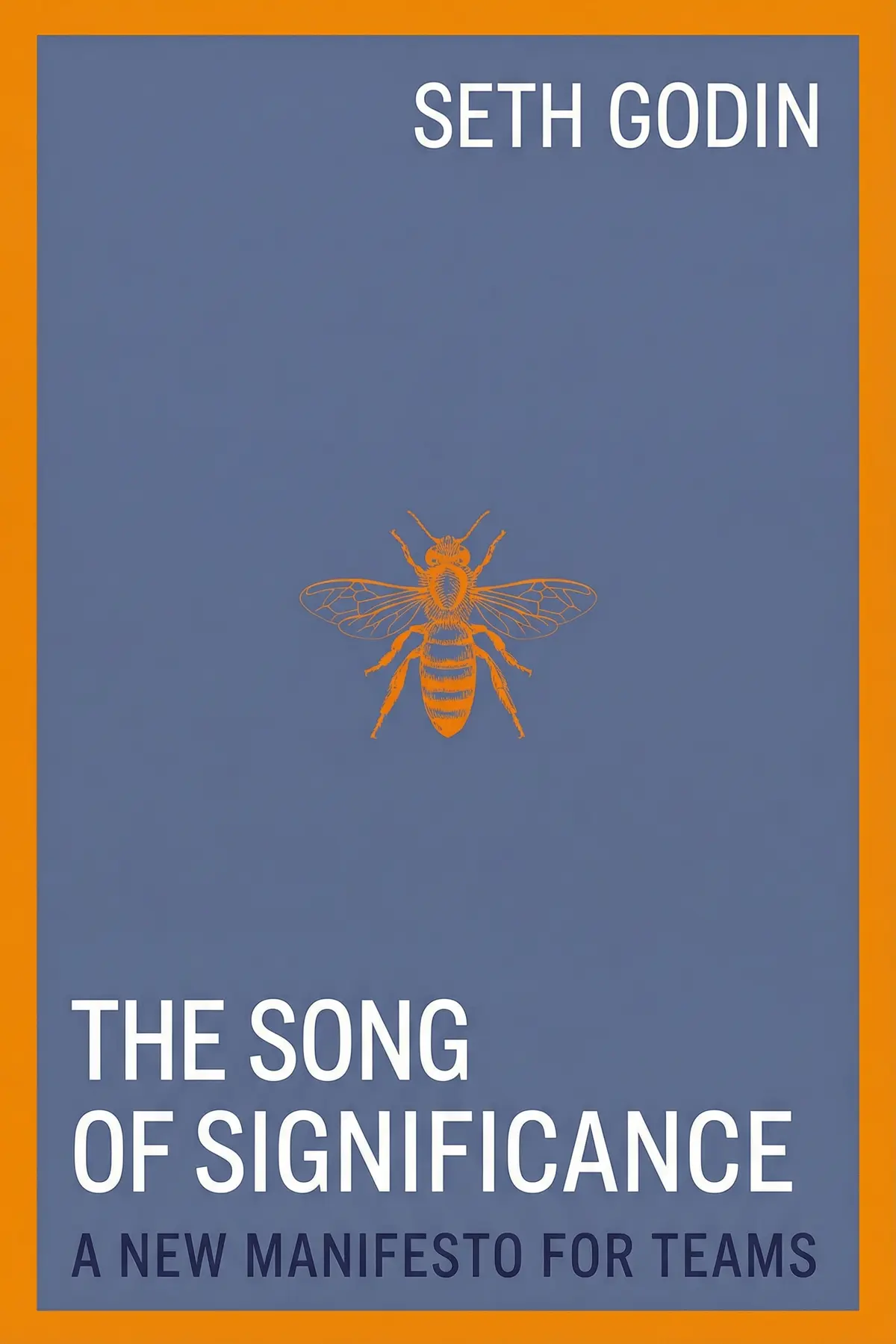
Table of Content
1. Introduction
1 min 00 sec
If your job leaves you a little more drained each evening, and you half suspect that is your own fault, Seth Godin says it is not. In The Song of Significance, the marketer and founder of the altMBA argues that the trouble lies in the model of work itself, built around paychecks, output and staying safe.
Godin’s case is that teams do their best work when they feel their contribution means something, and that this feeling can be designed for. It takes a different kind of capitalism, leaders in place of managers, an organization willing to commit first, and people who join by choice.
The stories range from a beehive at the end of winter to a carpet maker that now produces more energy than it uses, a car wash staffed by people with autism and a thirty-foot bark canoe built by a whole village. Each one turns into a decision a team lead can make next week: what to measure, how to run a meeting, whom to hire.
2. Trade the safe hive for work that matters
1 min 50 sec
Every spring, a group of honeybees walks away from a full pantry and a warm home, knowing they have only days to build another. Godin sees in that strange choice the thing most workplaces have lost.
3. Stop competing with machines on sheer output
2 min 05 sec
Most people think of capitalism as one system. Godin splits it in two, and argues that trying to live in both at once is exactly why so much effort at work feels wasted.
4. Four conditions where meaningful work can grow
2 min 07 sec
A thirty-foot canoe in a museum was built with no blueprint and no single boss, yet it can carry three tons. The way it came together says a lot about how most offices divide up work.
5. Lead with a cause your team can own
2 min 12 sec
A carpet company with healthy profits told its own staff to tear up the business model, and let them pick the deadline. Godin uses it to show what leaders do that managers cannot.
6. Make the organization commit before its people
1 min 56 sec
Leaders often wait for staff to show enthusiasm before changing anything, while staff wait for proof the change is real. Godin settles the standoff with one firm answer and a short list of promises.
7. Enroll your best people instead of coercing them
1 min 57 sec
The workers you most want to keep are the ones least afraid of losing their jobs. Godin explains what holds them instead, and why the hire you like best may be the wrong one.
8. Conclusion
1 min 09 sec
Godin’s book ends on the choice of significance over safety. The old Queen leaves a well-stocked hive behind for the younger bees and sets off with her workers to build a new home. His argument is that workplaces can make the same move, away from safety, volume and coercion and toward work people believe in, and that teams who do so carry their customers with them, as Interface and Rising Tide show.
None of this needs a grand reorganization on the first day. It begins with what you measure and how you spend the hours you control. Swap one count of volume for a judgment of quality. Give each meeting a single stated purpose, or drop it. Hand a team the whole project, the way the village shared its canoe, and let them set the deadline, the way Anderson did. When you hire, look for the person who brings useful tension, even if someone else would be easier company.
The Industrial Revolution happened more than 200 years ago. Godin believes a new one, a revolution of significance, is beginning now, and that it begins with whoever decides their team’s work should matter.
About this book
What is this book about?
Many people leave work each evening a little more drained than they arrived, unsure that anything they did mattered, and quietly blaming themselves. Seth Godin argues that the fault lies elsewhere. The modern workplace still runs on rules made for the assembly line: hit the numbers, stay safe, do as you are told. In The Song of Significance, Godin separates industrial capitalism, which chases output with machine-like efficiency, from market capitalism, which earns its living by solving problems with empathy and creativity. Significant work, he insists, belongs only to the second. From there he sets out what changes: managers become leaders, workers own whole projects, trust replaces surveillance, and success means better instead of more. The book's stories make the case concrete, from honeybees abandoning a full hive to Ray Anderson's carbon-negative carpet company, a car wash built around employees with autism and a village-built bark canoe. Readers get a set of promises an organization can make before asking anything of its people, along with practical moves on meetings, feedback, mistakes and hiring.
Book Information
Who it's for
Managers weary of metrics
Team leads and managers tired of chasing KPIs and running meetings nobody needs.
Founders wanting shared purpose
Founders who want a mission their staff and customers both believe in.
Drained workers questioning fit
Professionals who leave work drained and wonder whether the problem is them or the job.
About the Author
Seth Godin
Seth Godin, born in 1960, is an American author, entrepreneur and blogger who also writes under the pen name F. X. Nine. He founded the early online company Yoyodyne, sold it to Yahoo! and served there as Vice President of Direct Marketing. He later founded Squidoo.com and the altMBA online education program. His books include Linchpin, Purple Cow and The Practice, and he has been inducted into the Marketing Hall of Fame.
Linchpin: Are You Indispensable?
Seth Godin
The Practice: Shipping Creative Work
Seth Godin
This Is Strategy: Make Better Plans
Seth Godin
Tribes: We Need You to Lead Us
Seth Godin
Ratings & Reviews
Ratings at a glance
What people think
Listeners find the writing insightful and simple to digest, with one person noting how it speaks straight to the soul of organizational work. It also earns praise for its structure, flow, and inspiring message; specifically, one listener describes how the text brings a sense of purpose to daily routines. Furthermore, listeners appreciate its effectiveness and consider it a significant read, though views on its overall value for the price are varied.
Top reviews
Luckana
Godin has a way of cutting straight to the core of why we feel so drained by modern corporate life. This isn't your typical business manual with bulleted lists of productivity hacks. Instead, it feels more like a direct conversation with your soul about why our work matters. Frankly, it’s a bit idealistic, but that’s exactly what’s needed in a world obsessed with efficiency and bottom lines. While some might find the "song" metaphor a bit airy, the emphasis on human significance is powerful. It’s a short read that packs a punch, leaving you questioning your daily role. You’ll find yourself wanting to share these aphorisms with everyone in your office immediately.
Show morePensri
What a rallying cry for anyone tired of being treated like a replaceable cog in a giant machine! Seth Godin captures the soul of organizational work and reminds us that we have the power to choose enrollment over mere compliance. This book is a masterful composition that celebrates collaboration and purpose-driven tasks. I loved how he emphasizes that leadership is a choice, not a title. The storytelling is captivating, and the layout keeps you engaged without feeling overwhelmed by dense jargon. It’s a short read, but it really stays with you long after you’ve put it down. This is the anthem for the future of human-centric work.
Show moreCherry
Godin’s latest is less of a how-to manual and more of a why-to anthem for the modern age. It is immensely wise and surprisingly emotional for a business book. By focusing on the significance of our contributions, he shifts the conversation away from mere profit and toward genuine human connection. The aphoristic style works perfectly here, allowing each thought to breathe and sink in. It’s a masterpiece of simplicity that reminds us that we are more than just our output. This book is essential for anyone who wants to lead a team that actually cares about the work they do together.
Show moreJoseph
Finally got around to finishing this, and I’m mostly impressed by how Godin differentiates between leadership and management. He argues that management is about speed and authority, while leadership is a voluntary journey based on enrollment. That specific distinction shifted my entire perspective on my current project. The writing is punchy and aphoristic, making it easy to digest during a morning commute. My only gripe is that the bee metaphor feels a bit forced at times, as hive mindsets aren't usually synonymous with individual significance. Still, the focus on building a culture of trust is incredibly relevant for today’s disconnected workforce. It’s a solid rallying cry for better work.
Show moreManop
As someone who manages a small creative team, the specific sections on connection and meetings were worth the price of admission alone. Point #105 regarding true connection really changed how I view our weekly huddles. Many business books are filled with fluff, but these 147 provocative nuggets offer quick, digestible insights that spark actual reflection. I do wish there were more concrete case studies to bridge the gap between his philosophy and everyday corporate reality. Not gonna lie, some parts feel a bit repetitive if you read it all in one sitting. However, it successfully infuses daily work with a renewed sense of purpose and a fresh perspective on teamwork.
Show moreSven
Ever wonder why your office culture feels so hollow despite all the fancy perks management provides? Godin dives into the importance of creating an environment where individual talents are actually nurtured. He breaks down the barriers to effective teamwork and highlights the necessity of trust and open communication. I found the points on meetings particularly helpful, as most of us spend way too much time in useless ones. While it leans heavily into the idealistic side of things, it provides a much-needed vision for what work could actually look like. It’s a punchy summary of his best ideas updated for the post-pandemic world.
Show moreRung
Is it a manifesto or just a collection of blog posts? To be fair, Seth Godin is a master of the short-form insight, and this book delivers 144 points that provoke thought. However, I found myself longing for more practical, step-by-step guidance on how to actually implement these high-level ideas in a rigid corporate structure. The distinction between management and leadership is brilliant, yet the book often feels like it's preaching to the choir without offering a bridge for the skeptics. It’s a quick read, but I’m not sure the value for money is entirely there compared to his more meaty work like The Practice. It’s good, just not groundbreaking.
Show moreWipada
The structure of this book is quite unusual, consisting of nearly 150 short aphorisms and stories. While this makes it easy to read, it also makes it feel a bit disjointed. I appreciated the sentiment that we should strive for work that matters, yet it felt a bit like a fantasy at times. In my experience, the type of managers who need to hear this message the most are the ones least likely to pick up a book about "significance." It’s a beautiful ideal, but the practice of it is much harder than the book suggests. It’s a nice motivational boost, but don't expect a tactical blueprint for organizational change.
Show moreAroha
In my experience, Seth’s books are either a total hit or a bit of a repetitive miss. This one falls somewhere in the middle for me. The message about significance and dignity in work is incredibly important, but the delivery felt like a series of tweets expanded into a book. I found myself nodding along, yet I wasn't exactly surprised by any of the revelations. It’s a very quick read, which is great for busy people, but it lacks the deep research found in his other titles. To be fair, it’s an uplifting read, but the cost seems high for the amount of actual new content provided.
Show moreMia
Look, I love Seth’s previous work like Linchpin, but this one felt like it was written in a vacuum. The central bee metaphor falls flat because bees are literally the definition of rigid, non-autonomous workers who follow a script. This book beats the drum that all management is inherently oppressive and every employee is noble, which is just too simplistic for the real world. I found myself reading a few pages every morning and feeling like I was trapped in a loop of repetitive preaching. Truth is, it said nothing that couldn't have been a five-page article. If you want real substance, stick to his earlier books because this one lacks practical depth.
Show moreQuestions about this book
What is The Song of Significance by Seth Godin about?
Godin argues that today’s model of work, built on paychecks, productivity and safety, leaves people drained and disengaged. He separates industrial capitalism, which chases output, from market capitalism, which solves problems through empathy and creativity. Significant work belongs only to the second. The book explains how leaders and organizations can make that shift through shared ownership, trust, measuring quality over volume and enrolling people instead of coercing them.
What is the difference between a manager and a leader in The Song of Significance?
For Godin, management uses authority to drive efficiency and profit and promises rewards for obedience. Leadership creates significance. Leaders do not treat staff as human resources or customers as dollar signs, and they are willing to break old patterns. His example is Ray Anderson of Interface carpets, who asked his team to make the company fully sustainable and let them choose the deadline.
What does Seth Godin mean by the increase?
The increase is the process Godin borrows from honeybees. As winter ends, the aging Queen and the most experienced of her workers hand a well-stocked hive over to a new Queen and fly off to build a new home, with only days to survive. Godin uses it to contrast with people who cling to safety, and argues that meaningful work lets teams move from a safety mindset to one of increase.
How can I apply The Song of Significance to my team?
Start small. Give every meeting a clear intention, cancel those without one and end them once the goal is met. Show people the whole project before assigning parts. Critique the work and leave the person out of it, treat mistakes as steps toward change, and stop monitoring things like bathroom breaks. When hiring, favor people who bring productive tension over those who simply feel familiar.
Who should read The Song of Significance?
It suits managers and team leads frustrated with KPIs, surveillance and endless meetings, and founders who want a business built on a mission their staff and customers share. It also speaks to employees who feel depleted by their jobs and blame themselves. Godin’s point to them is that the fault often lies in the work model, which leaders and organizations can change.
Readers also enjoyed



A Year with Peter Drucker: 52 Weeks of Coaching for Leadership Effectiveness
Joseph A. Maciariello





Acting with Power: Why We Are More Powerful Than We Believe
Deborah Gruenfeld

All In: How Great Leaders Build Unstoppable Teams
Mike Michalowicz

AUDIO SUMMARY AVAILABLE
Listen to The Song of Significance in 15 minutes
Get the key ideas from The Song of Significance by Seth Godin, plus 5,000+ more nonfiction titles.
- 5,000+ titles
- Listen as much as you want
- 7-day free trial
- Cancel anytime









