
13 min 13 sec
Available in: English
 ไทย
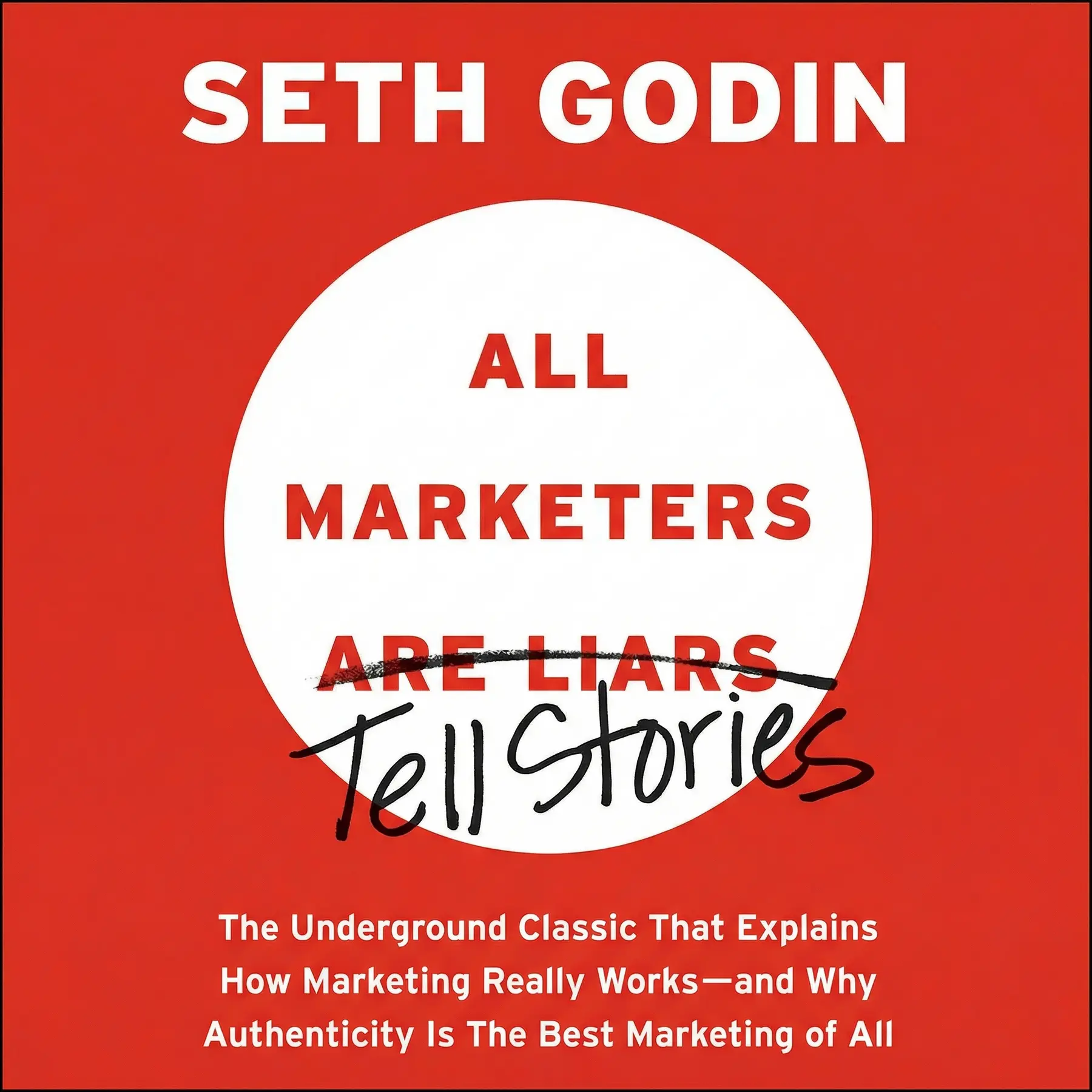
EnglishไทยAll Marketers Are Liars: The Underground Classic That Explains How Marketing Really Works – and Why Authenticity Is The Best Marketing of All
By Seth Godin
Explains why customers buy stories more than products. It shows how to find a group that already shares your view, shape a message they will believe, and keep it honest enough to earn lasting trust.
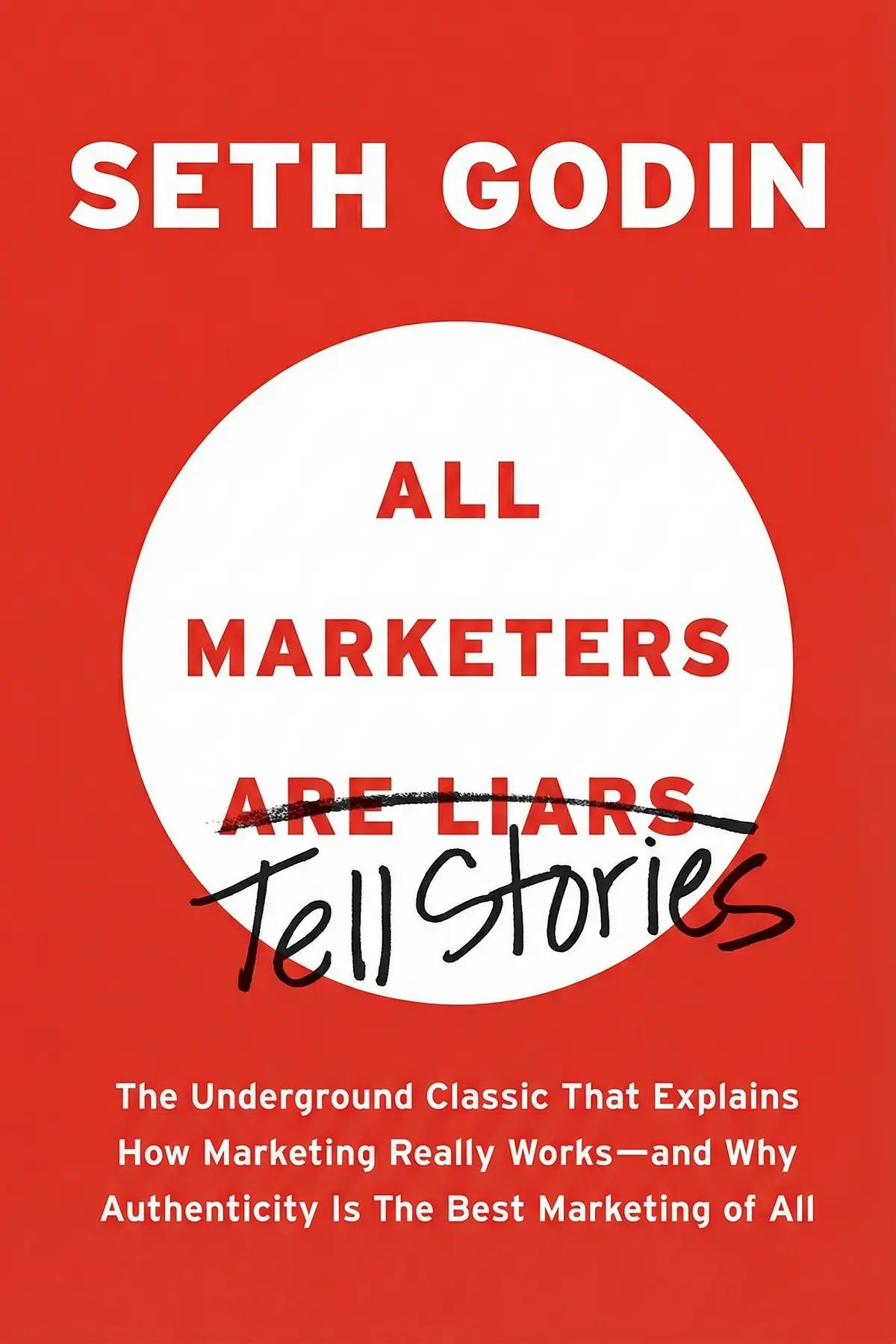
Table of Content
1. Introduction
56 sec
Most people who sell something, whether a product, a service or an idea, describe what it does and then wonder why nobody cares. In All Marketers Are Liars, entrepreneur and author Seth Godin argues that features rarely sell anything. People buy a story, and the story they buy is the one that fits what they already believe. A wine glass can make wine taste better to its owner even when lab tests find nothing different about it.
Godin’s case runs in a clear line. Find a group of people who see the world the same way, tell them a story framed for that view, and make every part of your business true to it. Small lies that improve the experience can belong in that story. Lies that hurt people never can. Follow his argument and you will know how to pick an audience, shape a message for it, spot the moments that form a first impression, and recognize the ethical line a marketer must not cross.
2. Sell the feeling your customer is buying
1 min 47 sec
Lab tests say one famous wine glass is no better than any other, yet experts around the world swear by it. The reason reveals what a $125 pair of sneakers is really selling.
3. Find the people who already see it your way
1 min 57 sec
Two buyers hear the same salesman say the same sentence and walk away with opposite conclusions. Understanding why explains how one company sold $150 million of baby videos that did almost nothing.
4. Reframe your story when customer beliefs shift
1 min 57 sec
A diet craze sent one famous bakery into bankruptcy while a rival cereal maker came out stronger, selling to the very same shoppers. What separated them was that General Mills reworked its cereals to fit the new worldview.
5. Catch attention with change, then explain it
1 min 41 sec
A frog catches a fly in under a second by ignoring almost everything around it. Your customers do the same, and they will even invent explanations for things that were never there.
6. Make every touchpoint tell the same story
1 min 51 sec
The moment that decides what customers think of you is rarely the one you planned. A forgotten email and a missing parcel show why a stylish logo cannot rescue a story that falls apart elsewhere.
7. Tell harmless fibs and never commit fraud
1 min 57 sec
Some marketing lies make customers happier, and Godin defends them. Others have cost lives. The difference is not how big the lie is, and one simple question shows which side a claim falls on.
8. Conclusion
1 min 07 sec
The title sounds like an accusation, yet Godin’s argument ends somewhere warmer. Every marketer tells stories and every customer buys them, because stories are how people make sense of a world full of noise. What matters is whether the story reaches the right people, whether the whole business lives up to it, and whether those who believe it end up better off. A Riedel glass makes its owner’s evening more pleasant. Nestlé’s bottle-feeding message hurt the people who trusted it, at a terrible cost.
Godin’s most practical advice is to aim small. A story meant for everyone gets watered down until it moves nobody, while a story built for one group with a shared worldview carries real force. So choose that group, learn what they already believe, and shape your product, packaging and placement to fit, the way General Mills reframed its cereals when low-carb thinking took hold. Then walk through your business as a stranger would and repair any moment that contradicts the story.
Done that way, marketing stops being a trick played on customers and becomes a relationship where both sides get what they came for. The wine really does taste better.
About this book
What is this book about?
Most people who sell something describe its features and then wonder why nobody responds. Seth Godin argues that features rarely decide a purchase. People buy stories, and they only believe the stories that fit the worldview they already hold. A wine glass can make wine taste better to its owner even when scientific tests find nothing special about it. Godin follows that idea through the whole work of marketing. He shows how to find a group of people who see the world in a similar way, how to frame a story for them, and why businesses rise or fall when customer beliefs shift, as Interstate Bakeries and General Mills did during the low-carb craze. He explains why people notice only what is new, why one careless moment can form a customer's first impression, and why a story has to hold together across product, staff and message. The book ends on an ethical line. Small fibs that improve a customer's experience are part of the craft. Lies that hurt people, as Nestlé's bottle-feeding campaign did, are fraud. Readers get a clear way to build a message that sells because it is believable and true to the business.
Book Information
Who it's for
Message not landing
Founders and small business owners whose products are good but whose message is not landing.
Wanting clearer campaign choices
Marketers and copywriters who want a clear way to choose an audience and frame a campaign.
Uneasy about persuasion's limits
Professionals uneasy about where persuasion ends and deception begins.
About the Author
Seth Godin
Seth Godin, born in 1960, is an American author, entrepreneur and blogger who also writes under the pen name F. X. Nine. He founded the early online company Yoyodyne and sold it to Yahoo!, where he became Vice President of Direct Marketing. He later founded Squidoo.com and the altMBA, an online education program. His books include Purple Cow, Linchpin and The Practice, and he has been inducted into the Marketing Hall of Fame.
Linchpin: Are You Indispensable?
Seth Godin
The Practice: Shipping Creative Work
Seth Godin

This Is Strategy: Make Better Plans
Seth Godin
Tribes: We Need You to Lead Us
Seth Godin
Ratings & Reviews
Ratings at a glance
What people think
Listeners find this marketing book extremely accessible and enjoyable, commending its vivid storytelling through genuine case studies and examples. The work is articulately written and simple to grasp, often requiring just a few hours to finish on an airplane. Listeners value the impactful takeaways and contemporary perspective on the field, while one listener mentions how it aids in the understanding of human psychology.
Top reviews
Nan
Finally got around to reading this on a short flight, and it was the perfect choice for a quick mental reset. Godin has a knack for distilling complex psychological triggers into digestible anecdotes that actually stick in your brain. He moves away from the 'features and benefits' grind to show how great marketing is actually about belief systems. The concept of the 'Purple Cow' is expanded here; it’s not just about being remarkable, but about the narrative that makes people feel something. Look, the examples are a bit dated now, especially since the world of social media has exploded since its release. However, the fundamental truth about human worldviews remains incredibly pertinent today. It’s an entertaining read that makes you look at your own purchasing habits through a much clearer lens. Every page feels like a conversation with a mentor who actually understands why people tick.
Show moreJai
Ever wonder why you'll pay five dollars for a cup of coffee that costs ten cents to make? This book answers that question by diving deep into the lies—or rather, the authentic stories—we tell ourselves to justify our desires. Godin explains that we don’t buy what we need; we buy what we want because of how the transaction makes us feel. I loved the distinction between being a 'fraud' and telling a story that helps the consumer achieve a certain feeling. Frankly, the writing style is so engaging that I finished it in one sitting without even trying. It isn't a textbook with step-by-step instructions, but it changes the way you perceive every advertisement you see. Every entrepreneur needs to understand that their story is the product, not the other way around. If you want to build a community, start with the story.
Show moreYulia
Wow, this completely flipped my perspective on how to communicate scientific concepts to a general audience. Even though it's technically a marketing book, the principles of storytelling apply to anyone trying to spread an idea or promote content. Godin shows that you cannot prove your way into a sale—or a belief—using just facts and figures. Instead, you have to hint at the facts and let the audience discover the conclusion for themselves. This process of discovery is infinitely more powerful than being told the right answer by an expert. I found the section on early adopters particularly helpful for building a movement from scratch. It’s a short, punchy read that packs a huge punch for anyone in the business of persuasion. It isn't just for people selling cars or watches; it's for anyone with a message they want to share.
Show moreKek
The title is a bit of a clickbait move, but the core message is surprisingly ethical. Godin isn’t telling you to scam people; he’s telling you to live an authentic story that matches what your audience already believes. He argues that people notice only the new and then make a split-second guess based on their first impression. If you can’t capture that moment, you’ve already lost the sale regardless of how good your product is. Personally, I appreciated how he focused on the idea that the consumer's worldview is the filter for everything they hear. It’s a modern take on marketing that values the community and the 'liar' who tells a truth people want to believe. While some parts felt repetitive, the lesson about consistent storytelling across every touchpoint—from packaging to customer service—is vital for any brand in a crowded market.
Show moreSeksan
Not what I expected after hearing so much hype about Seth Godin's brilliance, but I was pleasantly surprised by the simplicity. While the writing is certainly fluid and easy to get through, it feels like it’s missing a middle and an end occasionally. He starts with a great premise about worldviews but sometimes stays at a very high level with his anecdotes. I kept waiting for a 'how-to' portion that never actually arrived in a traditional sense. If you want a book that makes you feel smart while sitting on an airplane, this is it. To be fair, he makes some decent points about first impressions and why products fail, but those could have been a long blog post. Still, it’s a powerful lesson in human psychology that most business owners completely ignore to their own detriment.
Show moreEllie
Pick this up if you're tired of traditional marketing books that focus on spreadsheets and metrics. Godin treats marketing as an art form where the story is the most important feature you can offer. He emphasizes that humans make sophisticated judgments in a fraction of a second, and we rarely change our minds once they are made. This means your 'frame' has to be perfect from the very start. I especially liked the part about why releases fail—usually because no one noticed or they didn't feel compelled to tell their friends. It’s a very readable, entertaining guide to the psychology of choice. My only gripe is that it feels a bit dated in its specific examples, but the underlying logic is timeless. It’s a solid 4-star read for anyone starting their own business or creative project.
Show moreApichat
Honestly, the most valuable takeaway for me was the idea of targeting the extremes rather than the average. Most of us try to make something for everyone, but Godin argues that you should target early adopters who will then influence the masses. This book builds beautifully on the 'Purple Cow' philosophy by explaining the narrative engine behind remarkable products. It taught me that people don't buy pure design or features; they buy the way the process makes them feel about themselves. In my experience, most business owners are too afraid to tell a polarizing story, but that’s exactly what creates a loyal community. The book is short enough to read in an afternoon but offers enough food for thought to last a month. It’s a great reminder that facts are secondary to the emotional truth of your brand.
Show moreWatcharin
After hearing several colleagues quote this book, I decided to see if the hype was actually justified. It’s a very fast-paced read that manages to be both entertaining and deeply insightful regarding human nature. The author demonstrates that successful marketers are those who can honestly tell a story that people want to believe and share. This isn’t about lying in a malicious sense, but about fulfilling the emotional needs of the consumer. I found the section on how worldviews filter our experiences to be particularly enlightening. My only minor criticism is that the book can be somewhat repetitive, hitting the same drum beat about storytelling multiple times. Regardless, the core message is powerful enough to warrant the read. It’s an essential piece of the puzzle for understanding why some brands become cult favorites while others disappear.
Show moreRapee
As someone who works in digital ads, I found the theory here fascinating but the application a bit lacking. Godin is brilliant at identifying why certain brands fail or succeed based on their 'frames,' yet he rarely gives you the keys to the kingdom. I was hoping for more actionable steps on how to actually determine a customer's worldview before launching a campaign. The case studies are fun, though some feel like they were picked specifically to fit his narrative rather than being rigorous proofs. Truth is, it’s more of a philosophical manifesto than a marketing manual. It’s well-written and easy to understand, but you’ll probably finish it feeling inspired without knowing exactly what to do next. It serves as a great bridge between psychology and sales if you don't mind the lack of technical detail or modern digital metrics.
Show moreSavannah
Can we talk about how this is basically a 200-page pamphlet? Seth Godin is a master of saying very little with a lot of aesthetic flair, and this book is the prime example. He argues that marketers are artists rather than scientists, which sounds great on a coffee mug but offers zero substance for actual implementation. I found myself reading the same three sentences rephrased over and over again until the final page. It’s frustrating because the core idea—that consumers buy stories, not products—is solid, but it doesn't require a whole book. To be fair, if you’ve never thought about branding before, this might feel revolutionary. For the rest of us, it’s just a redundant exercise in ego that caters to existing worldviews without proving its own points. It follows the same tired pattern of his previous bestsellers: high on hype, low on evidence.
Show moreQuestions about this book
What is the main idea of All Marketers Are Liars?
Seth Godin argues that people rarely buy products for their features. They buy stories, and they believe only the stories that fit the worldview they already hold. Effective marketing means finding a group with a shared worldview, framing a story for it, and making sure every part of the business supports that story. Small fibs that improve the customer’s experience are acceptable, but lies that harm customers are fraud.
What does Seth Godin mean by worldview?
A worldview is the set of values, biases and assumptions each person brings to a purchase, shaped by parents, schools, places lived and other environments. It decides which stories someone will believe. A buyer cheated by a car salesman hears a dealer differently from one who has bought three cars there happily. People with similar backgrounds share similar worldviews, so marketers can find groups to speak to.
What is the difference between a fib and fraud in marketing?
Godin describes a fib as a small untruth that helps a company’s story come true without harming anyone. George Riedel’s claim that his glasses improve wine is his example: tests show no difference, but believers enjoy the wine more. Fraud is an open lie that hurts customers, like Nestlé promoting bottle-feeding over breastfeeding, which UNICEF linked to more than a million infant deaths.
How can I apply All Marketers Are Liars to my business?
Start by choosing a narrow audience, since Godin warns that a story aimed at everyone gets watered down. Learn what that group already believes, then shape your name, packaging and placement to fit it, as in his example of a soy snack for health-minded mothers. Check every touchpoint for coherence, and test each claim by asking whether a buyer who fully believes it is helped or harmed.
Why does authenticity matter so much in Godin's view?
You cannot predict which moment will form a customer’s first impression. It might be an email, a late delivery or a rude employee. Godin defines an authentic story as one that is coherent across the product, the staff and the message. If any part contradicts the rest, the story breaks, and he argues a company without a coherent story will not reach many people.
Featured in
Readers also enjoyed


AUDIO SUMMARY AVAILABLE
Listen to All Marketers Are Liars in 15 minutes
Get the key ideas from All Marketers Are Liars by Seth Godin, plus 5,000+ more nonfiction titles.
- 5,000+ titles
- Listen as much as you want
- 7-day free trial
- Cancel anytime









