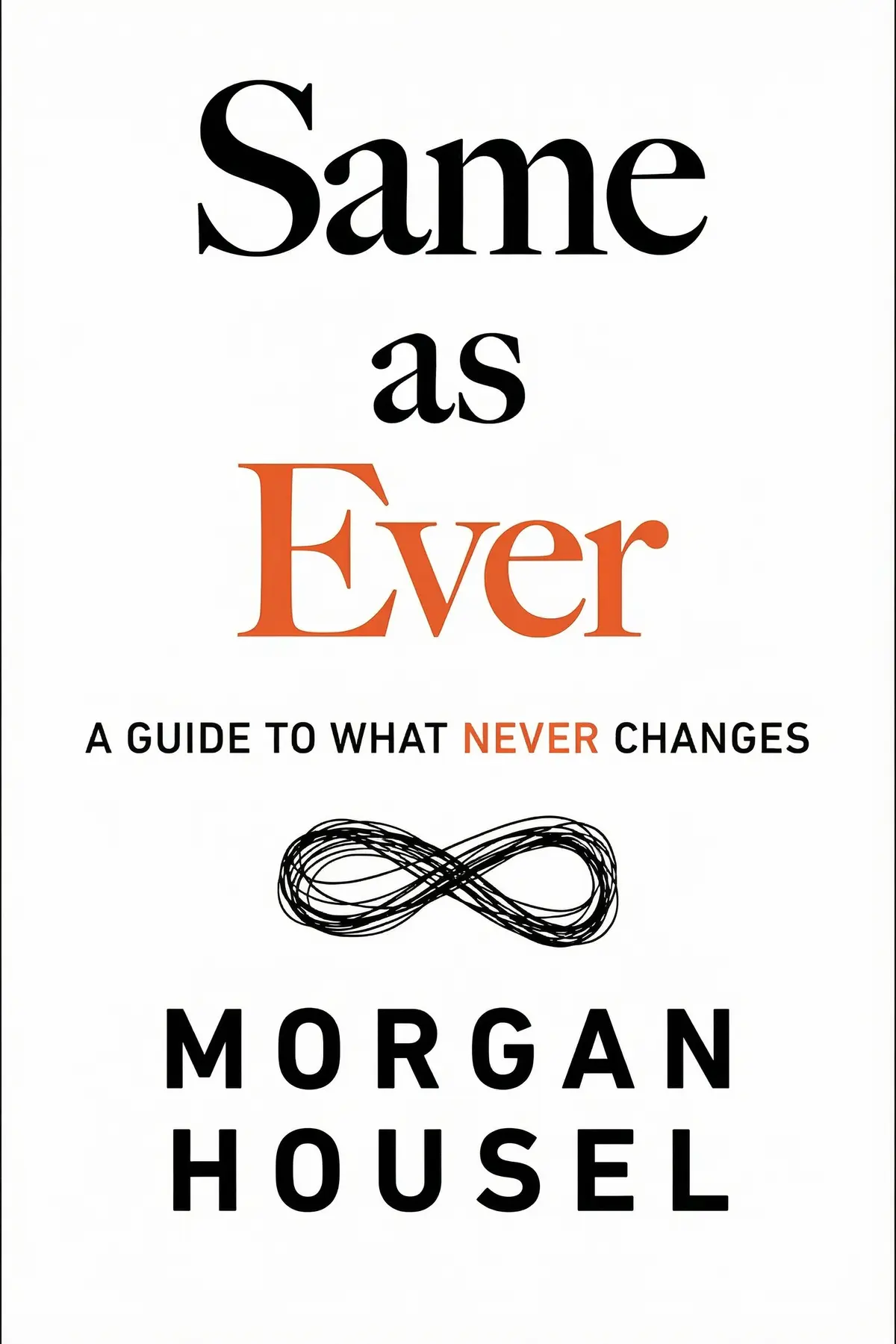
Same as Ever: A Guide to What Never Changes
Morgan Housel
 English
Shows why money choices depend more on personal history, luck, envy and fear than on spreadsheets. It offers simple rules for keeping wealth once you have it and for letting a few wins outweigh many losses.
1 min 03 sec
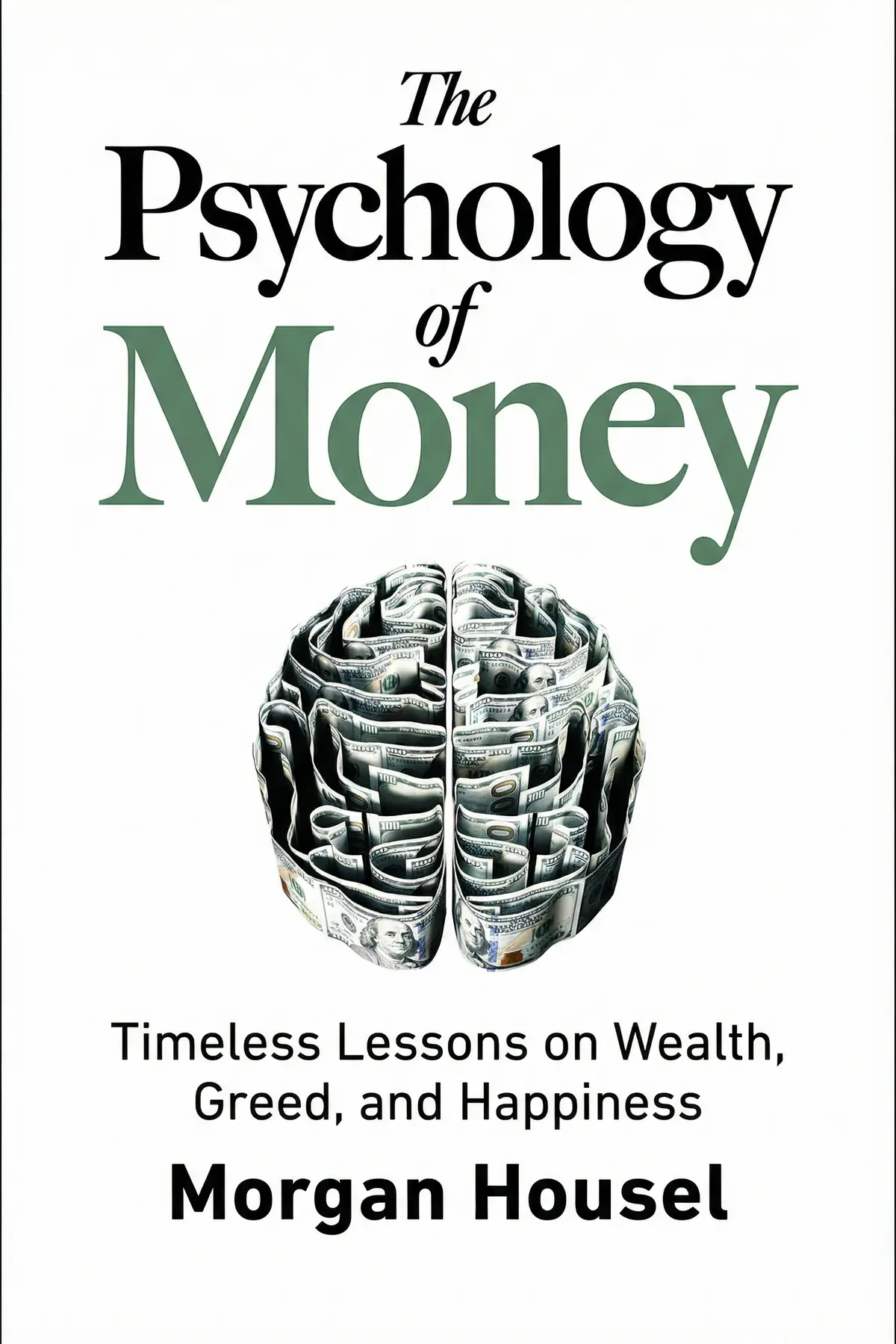
If your money choices keep surprising you, the trouble may not be your math. In The Psychology of Money, financial journalist and investor Morgan Housel argues that how people handle money depends more on personal history, luck and emotion than on interest rates or market models. Low-income households in the United States spend about $411 a year on lottery tickets, roughly the sum many of them could not find in an emergency, and Housel sees a kind of logic in it.
His case is that money is personal before it is mathematical. Getting better with it starts with the human forces behind every decision: the economy you grew up in, the luck nobody likes to credit, the envy that never says enough and the fear that keeps fortunes alive. Those forces come to life through John F. Kennedy, a jailed former McKinsey chief, a ruined Wall Street trader and an art collector who bought almost everything. The reward is a clear view of your own instincts and a few rules to guard against them.
1 min 45 sec
John F. Kennedy lived through the Great Depression and came out richer. His answer to a campaign question reveals why two people can watch the same economy and walk away with opposite beliefs about money.
1 min 37 sec
Two economists worked through fifty years of household finances to find what decides how people invest. The winning factor has little to do with today’s market, and it barely changes when the market does.
1 min 42 sec
A pet dog still chases squirrels after ten thousand years of taming. Our experience with retirement accounts, index funds and credit cards is a tiny fraction of that age, and it shows in our choices.
1 min 40 sec
A Nobel Prize-winning economist named the one thing about investing he most wished he could measure. An odd finding about brothers, height and income shows why most of us get it badly wrong.
1 min 32 sec
John D. Rockefeller broke the law and became a legend. A few different court rulings might have made him a warning instead, which raises an awkward question about whose example deserves copying.
1 min 45 sec
A man who rose from a Kolkata slum to retire with $100 million made one phone call that ended in prison. His sixteen-second decision shows what happens when there is no finish line.
1 min 42 sec
One trader made billions in today’s money by betting against the market in 1929 and was broke within a decade. The skills that build a fortune turn out to be poor guards for it.
1 min 37 sec
An art collector built one of the world’s great collections even though most of his purchases were duds. An investment firm’s research explains why being wrong often can still leave you far ahead.
1 min 07 sec
The Psychology of Money ends up portraying a person more than a market: someone shaped by the year they turned twenty, using money tools barely two generations old, blind to their own luck and tempted by a neighbor’s bigger number. Kennedy’s Depression and the farmhand’s were different events. Gupta had $100 million and risked it all for more. Livermore learned to win and never learned to keep.
The defenses the book supports are modest. Give luck a place in how you read every result, your own included, and learn from patterns many people share before copying one famous life. Settle what enough means while you are calm, so envy cannot settle it for you. Fear losing what you have, because staying in the game is what lets time work, and spread your bets knowing most will disappoint.
Berggruen never needed every painting to be a masterpiece. He needed to keep buying, keep holding and still be in the room when one Picasso proved its worth.
Personal finance advice usually focuses on markets, interest rates and savings targets. Morgan Housel argues that this leaves out the biggest factor: the person making the decision. To understand why people bury themselves in debt or lose fortunes, he suggests, you have to study envy, greed and optimism, not interest rates. Housel builds the case from a wide range of material. It runs from John F. Kennedy's comfortable Great Depression to a 2006 study showing that the economy people meet as young adults shapes how they invest for life. He explains why money habits are so new that most of us are still beginners. He shows why luck matters more than successful people admit, and how envy pushed a former McKinsey chief into insider trading. Readers get a sharper sense of where their own instincts come from and a short set of habits that follow from the book. Respect the role of chance and decide what enough means. Fear losing what you already have, and spread your bets widely so that a few big wins can carry many misses.
Young professionals deciding how much risk to take with their first savings and investments.
Investors and founders who have done well and want to avoid losing it through overconfidence or envy.
Anyone puzzled by their own money habits who wants to understand where those instincts came from.
Morgan Housel is a financial journalist, investor and advisor, and a partner at the Collaborative Fund. He has twice won the Best in Business Award from the Society of American Business Editors and Writers. He has also received the New York Times Sidney Award and has twice been a finalist for the Gerald Loeb Award for business and financial journalism. His other books include Same as Ever and The Art of Spending Money.
Morgan Housel
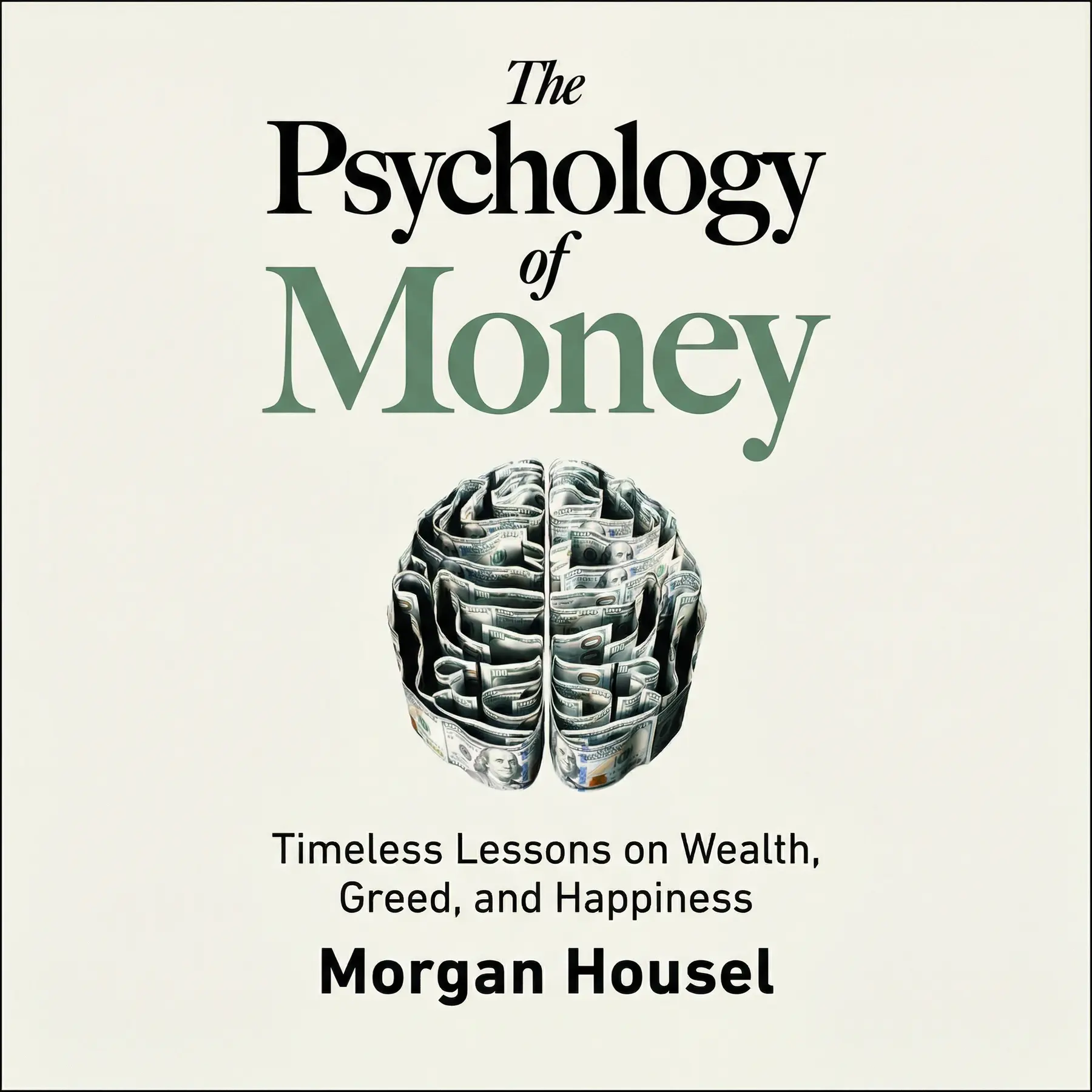
Listeners find this book to be a fast, pleasant experience that offers useful perspectives and practical tips. By examining money through a psychological lens rather than just standard fiscal guidance, it resonates with listeners who value its accessible narratives and simple, clear material. Listeners commend the way it's written, with one observing that the author employs engaging stories to illustrate key takeaways.
Finally got around to reading this after seeing it everywhere, and I have to say, the hype is mostly justified. It isn't a technical manual on stocks or bonds, but rather a deep dive into how our brains sabotage our bank accounts. Housel's writing style is punchy and digestible, using historical anecdotes to prove that behaving well is more important than being smart. I particularly loved the distinction between being 'rich' and being 'wealthy.' My only gripe is that some of the later chapters feel a bit repetitive, almost like he was trying to meet a word count. Still, for anyone wanting to understand their relationship with money, this is a must-read. It shifted my perspective on compounding from a math problem to a test of patience.
Show moreThis book doesn’t teach you how to pick stocks, but it teaches you how to keep your head while everyone else is losing theirs. Housel uses engaging storytelling to illustrate why we make such irrational financial decisions. The concepts aren't necessarily groundbreaking if you've read Munger or Graham, but the way they are packaged makes them incredibly accessible. I found the section on 'never enough' to be particularly poignant in our current culture of constant comparison. To be fair, if you are already a seasoned investor, you might find some of the advice a bit too basic. However, the psychological framework he provides is a great reminder that money is more about behavior than spreadsheets.
Show moreAs someone who usually avoids dry finance books, I was pleasantly surprised by how readable this was. The author frames money through the lens of human nature rather than just numbers and interest rates. I was gripped by the idea that luck and risk are essentially the same thing—two sides of a coin that we often misattribute to skill or failure. The book is divided into short, manageable chapters, which makes it perfect for a quick commute read. My only real criticism is that it feels a bit "LinkedIn-esque" at times, with very pithy, almost too-clean takeaways. But the core message about controlling your time as the ultimate dividend of wealth is something everyone needs to hear.
Show moreMorgan Housel has a gift for taking complex economic concepts and turning them into stories that actually stick. This isn't just about money; it’s about the messy, emotional reality of being human in a world governed by odds. I found the "Man in the Car" paradox to be a total gut punch—we spend money to impress people who are only thinking about themselves. The writing is incredibly smooth, and the short-form chapters make it easy to digest one lesson at a time. It’s rare to find a finance book that focuses so heavily on humility and the moving goalpost of "enough." This should be required reading for anyone starting their first job.
Show moreThe chapter on 'Luck & Risk' alone is worth the price of the book. It’s so rare to hear a financial expert admit that half of success is just being in the right place at the right time. Housel doesn't talk down to the reader; he writes like a friend sharing wisdom over coffee. I’ve read a lot of investing books, but this is the first one that made me feel better about my modest savings rate by explaining the power of time. It's fast, it's punchy, and it cuts through the jargon that usually makes finance feel like an exclusive club. Even if you think you know it all, the reminders here are vital for staying disciplined.
Show moreTruth is, I didn't think I needed another book telling me to save more, but Housel’s psychological approach changed my mind. He treats money as a tool for freedom rather than just a way to buy "stuff," which is a distinction that clicked for me for the first time. The storytelling is top-notch, keeping you engaged through topics that could easily have been dry or boring. It’s less about the math of compounding and more about the endurance required to let it work. While some might find it a bit light on technical details, that’s exactly what makes it so valuable for the average person. It’s a profound look at how our desires and fears drive our financial futures.
Show moreLook, if you're looking for a step-by-step guide to the stock market, keep moving. This book is a different beast entirely, focusing on the "soft skills" of finance that are often ignored. Housel argues that your personal experiences with money shape your worldview more than any textbook ever could. I loved the emphasis on being "unbreakable" rather than just chasing high returns. Personally, I think the author relies a bit too much on historical anecdotes which can feel a bit repetitive by the middle of the book. But the overarching theme—that wealth is what you don't see—is a powerful counter-narrative to our social media age. Definitely worth a read for the perspective shift alone.
Show moreAfter hearing about this book for months on every podcast, I finally bit the bullet. It is an exceptionally quick read, and Housel’s ability to distill big ideas into small sentences is impressive. I appreciated the focus on "reasonable" over "rational"—the idea that a plan you can actually stick to is better than a perfect one on paper. My one minor beef is that it can feel a bit repetitive, as several chapters circle back to the same core ideas about compounding and ego. However, the actionable advice is solid, and the tone is refreshingly humble compared to most finance gurus. It’s a great reality check for anyone prone to overthinking their portfolio.
Show moreEver wonder why some geniuses go broke while uneducated janitors die with millions? This book attempts to answer that, though it takes a very scenic route to get there. While I appreciate the psychological angle, many of the insights felt like common sense dressed up in fancy prose. For instance, telling me that spending money to show people how much money I have is the fastest way to have less money isn't exactly a revelation. It’s a good entry-point for absolute novices, but if you’ve spent any time on financial Twitter or reading blogs, you’ve heard this all before. It’s well-written, but I didn't find it particularly extraordinary as the blurb suggested.
Show moreNot what I expected at all based on the glowing reviews. To be blunt, I think this book is vastly overrated and seems to cater mostly to an American audience with its specific historical references. It's bloated with stories about the Great Depression and World War II that take forever to reach very simple conclusions. Frankly, you could just jump to chapter 19, read the summary, and save yourself four hours of reading. The central thesis is basically just "save money and be patient," which doesn't require 200 pages of repetitive anecdotes. It felt more like a collection of blog posts stitched together than a cohesive book. Not worth the investment if you already have a basic grasp of common sense.
Show moreMorgan Housel argues that money decisions are shaped far more by personal experience, luck and emotion than by the rational models in economics textbooks. People absorb lessons from the economy they knew as young adults, underrate the role of chance, and let envy push them into reckless choices. Doing well with money, in his view, means accepting luck, fearing the loss of what you already have and spreading your bets widely.
Housel says luck plays a bigger role than most people admit. He cites economist Bhashkar Mazumder’s finding that siblings’ incomes are more closely linked than their heights or weights, largely because they share the same opportunities. People credit their own wins to hard work and others’ failures to character flaws. He also uses John D. Rockefeller to show how a few different court rulings could have turned a legend into a warning.
Housel argues that the two require opposite traits. Making money takes risk, optimism and courage, while keeping it takes humility and fear of losing everything. Jesse Livermore made the modern equivalent of $3 billion betting against the market in 1929, then lost it all through ever larger bets. About 40 percent of listed companies eventually lose all their value, and the Forbes 400 list turns over by 20 percent each decade.
Ask whether your attitude to stocks or bonds comes from today’s market or from the one you saw as a young adult. Review results by asking how they would look if a few things had gone differently. Decide in advance what enough means so envy cannot decide for you. Avoid any bet that could wipe you out, and spread your investments widely so a few strong winners can carry many disappointments.
AUDIO SUMMARY AVAILABLE
Get the key ideas from The Psychology of Money by Morgan Housel, plus 5,000+ more nonfiction titles.