


10 min 55 sec
Available in: English
 ไทย
EnglishไทยMeditations
Marcus Aurelius explains how the Stoic belief in logos, a rational order behind every event, can free you from fear of death, resentment of duty and the extra pain that complaining adds to loss.
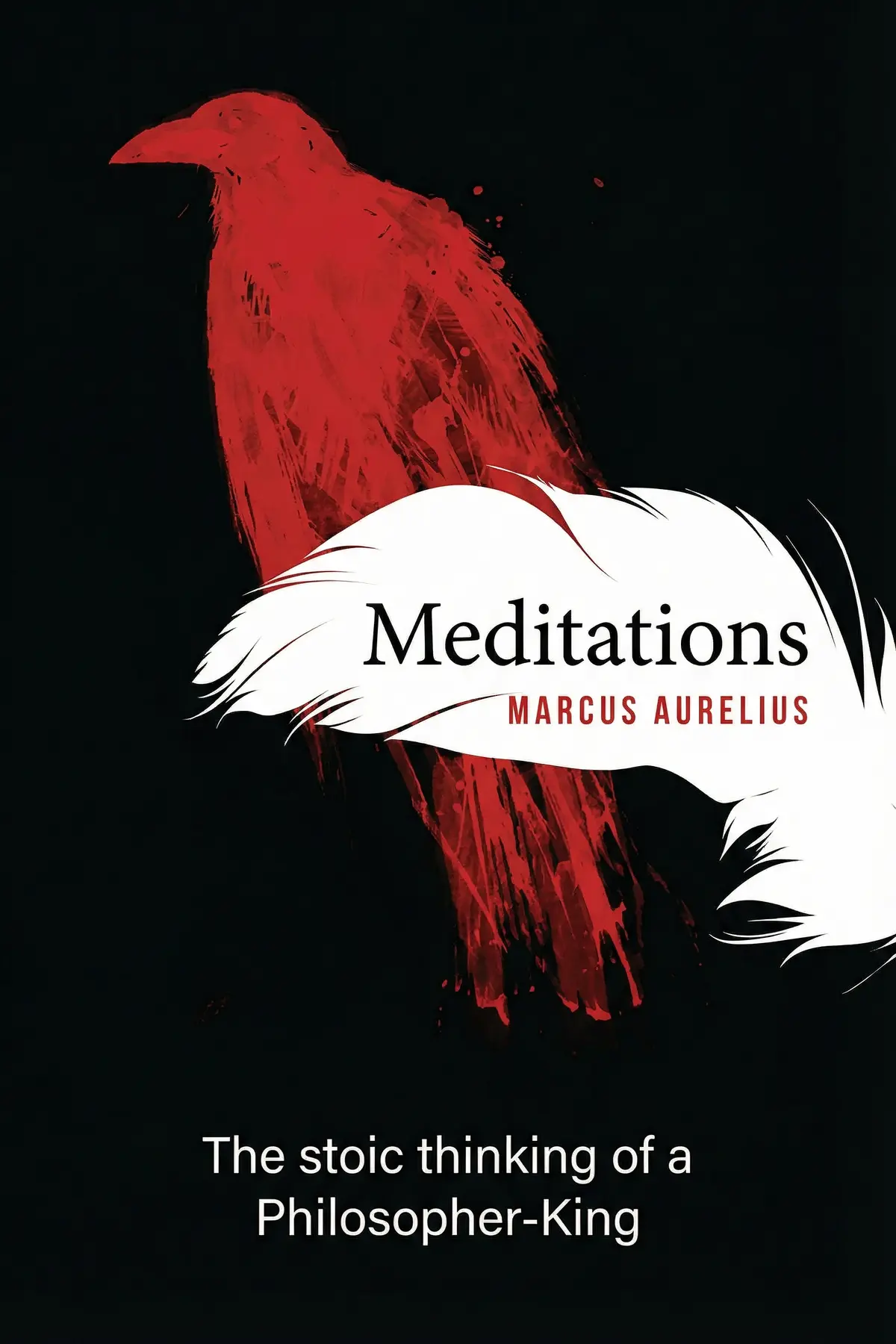
Table of Content
1. Introduction
59 sec
When bad news, small irritations or the thought of your own death keep pulling you off balance, Marcus Aurelius offers a steadier footing: how you judge an event matters more than the event itself. In Meditations, the Roman emperor and Stoic thinker builds that idea on a single concept, logos, the ordering reason he believed runs through everything. Marcus was the last of the rulers later called the Five Good Emperors, leading Rome in the second century when the empire stood at its height, and he became known as a philosopher king.
His throughline is easy to say and hard to live. If the world follows a rational order, then loss, pain and death are not reasons for fear or complaint, and your energy belongs to the duties in front of you. Ahead are his reasons, the personal griefs he tested them against, and a handful of habits of mind for the next time something goes badly wrong.
2. See every setback as part of a larger order
1 min 42 sec
Marcus lost most of his family and faced revolts against his rule, yet he refused to call any of it bad luck. His reason rests on an ancient word that changes how a crisis looks.
3. Keep a calm mind when strong emotions flare
1 min 51 sec
A house fire can be a catastrophe or the start of something better, depending on one thing you control. Marcus explains what usually stops people from seeing the second version.
4. Outside harm cannot truly hurt you
1 min 51 sec
Torture, poison and murder were real risks for a Roman emperor, and Marcus buried most of his children. He still claimed that the worst injuries are the ones we add ourselves.
5. Face your own death without dread
1 min 42 sec
Among the worries people in Marcus’s world most often brought to him was their fear of dying. His reply turns death from an enemy into a return, and it borrows comfort from Plato and the gladiators.
6. Stop losing your limited days to complaining
1 min 34 sec
Marcus found parts of his job tedious and some visitors a waste of his time. He did the work cheerfully anyway, and his reasoning applies to every dull meeting on your calendar.
7. Conclusion
1 min 16 sec
Meditations rests on one bold bet: that the universe is reasonable, and that whatever happens, from a fire to the death of a child, has a place in its order. Marcus did not make that bet from comfort. He tested it against the loss of nearly all his 13 children, the early death of his wife, uprisings against his rule and long days in a court he found tedious. What he gained in return was freedom from two habits that drain most people: fearing what cannot be avoided and complaining about what must be done.
The practical core follows from that. When harm comes from outside, separate the event from the story you keep adding to it. When dread of death rises, remember that Plato and the bravest gladiator met the same end. And watch how you treat others. Marcus held that you alone decide your actions, so even when people are unkind, refuse to sink to their level and treat them with dignity and justice. Then nothing you do will turn against you.
An emperor could not stop uprisings, save his children or choose the hour of his death. He could choose how to meet each of them, and he decided that was enough.
About this book
What is this book about?
Setbacks, grief and the thought of dying can knock anyone off balance. Marcus Aurelius, the Roman emperor remembered as a philosopher king, faced more of them than most. Nearly all of his 13 children died in infancy, his wife died young, and uprisings challenged his rule. Meditations records how he kept steady through all of it. His answer rests on logos, an old philosophical word that roughly means reason. For Marcus, logos gives the whole world its shape and its order, and it moves events forward in the best possible way. If that is true, then a burned house, a painful loss or an early death all have a place in the plan. Fear and complaint only add harm of our own making. Readers get the core of Stoic thinking in plain terms. That means seeing events through reason rather than emotion, separating outside harm from the damage we add ourselves, facing mortality without dread, and doing tiresome duties without grumbling. Marcus also asks us to treat others with dignity even when they are unkind.
Book Information
Who it's for
Professionals feeling worn down
Professionals worn down by setbacks, difficult people or duties they resent.
Grieving or fearing death
Anyone grieving a loss or troubled by fear of death who wants a calmer way to think about it.
Curious about Stoicism
Curious readers who want the core of Stoic thought from one of its most famous voices.
About the Author
Marcus Aurelius
Marcus Aurelius was born in 121 into an upper-class Roman family and was adopted by his predecessor, Antoninus Pius. He ruled as emperor from 161 until his death in 180, through wars with Germanic tribes, conflicts with the Parthian Empire, a plague and a revolt in the east. He studied philosophy from his youth and was shaped by the Stoic thinker Epictetus. He wrote Meditations in Greek while on campaign, never intending it for publication, and it is now treated as a key source for ancient Stoic thought.
Ratings & Reviews
Ratings at a glance

What people think
Listeners find this specific translation of Meditations to be an extraordinary resource that rewards multiple listenings, delivering profound pieces of wisdom on enduring principles for a meaningful life. The delivery is succinct, and listeners admire the translation's lean language, with one listener commenting that it is more poetic than other interpretations. Additionally, the work is commended for its self-reflective depth and its power to transform one's outlook on the world, with one listener emphasizing its useful advice for daily conduct. Finally, listeners appreciate its pertinence to the present day, with one listener noting its surprisingly strong link to contemporary society.
Top reviews
Valentina
Finally got around to reading the Hays translation and it truly lives up to the hype. While some translations feel like a slog through dusty archives, this version captures a sparse, almost rhythmic quality that makes the Stoic principles hit much harder. It’s wild to think that these were private journals never meant for our eyes, which explains the raw, repetitive nature of the text. Marcus is essentially yelling at himself to stop complaining about "busybodies" and "liars" every single morning. He’s an emperor, yet his struggles with ego and social anxiety feel incredibly modern, almost like he’s bracing for a bad day at the office. The recurring theme of life being a mere "cranny of the earth" is both humbling and strangely comforting in a world obsessed with legacy. This isn't just a history lesson; it's a manual for sanity that I'll be dipping back into whenever I feel overwhelmed. It really changes your perception of what actually matters.
Show moreRung
The beauty of this book lies in its profound vulnerability. It’s rare to find such an honest account of a leader’s internal battle with his own nature and the weight of his responsibilities. Every time I open a random page, I find a sentence that shifts my perception of whatever minor tragedy I’m dealing with. "The best revenge is not to do as they do," is a line I’ve had to repeat to myself more times than I care to admit lately. Marcus reminds us that we are just "little souls dragging around a corpse," a grim but necessary reminder that our time here is vanishingly small. This translation is remarkably clear and avoids the flowery, archaic language that often plagues older versions of Greek philosophy. It feels like a conversation with a wise, if somewhat grumpy, grandfather who has seen it all and wants you to just be a decent human being. A phenomenal read for a satisfying life.
Show moreBee
This book is a phenomenal testament to the strength of the human spirit under pressure. Writing while on military campaigns, Aurelius managed to distill the entire Greco-Roman philosophical tradition into a series of actionable, poetic observations. I found his reflections on the "universal soul" and our connection to nature to be surprisingly spiritual for a work of logic. The translation I read was crisp and didn't waste a single word, mirroring the emperor’s own disdain for luxury and excess. It’s a book that demands to be reread, as you’ll catch different nuances depending on where you are in your own life journey. Not gonna lie, some of it is a bit repetitive, but that repetition serves to drill the habits of mind into the reader. It has changed the way I view obstacles—now I see them as fuel for the fire of my own character. Truly a timeless masterpiece.
Show moreNutnicha
After hearing so much about Stoicism, I finally dived into the source material and was blown away by its uncanny connection to modern life. We live in an era of constant distraction, yet here is an ancient text telling us to look within and find our own "inner citadel." The poetic nature of the writing makes even the most difficult concepts easy to digest and remember. It's essentially a guide on how to be a person of high character in a world that often rewards the opposite. This isn't a book you read once; it’s a lifelong companion that offers new insights every time you’re feeling lost or overwhelmed by the chaos of society. Personally, I think it's the most introspective thing I've ever read. It strips away the ego and leaves you with a very clear, very logical path toward inner peace.
Show moreRuangrat
"Look within: do not allow the special quality or worth of anything to pass you by." This single quote summarizes the entire experience of reading Meditations for me. It’s a hauntingly beautiful look at a man trying to align his soul with the universe while managing the weight of an empire. The honesty with which he discusses his own mortality is moving, especially considering he was writing this as his health was likely failing him on the frontier. It encourages a life of intentionality and virtue that is sorely lacking in our current culture of instant gratification. I loved how he thanked his teachers in the first book; it sets a tone of gratitude that carries through even the darker passages. This is a must-read for anyone seeking a more satisfying and grounded life. I've already bought three extra copies to give as gifts to friends.
Show morePia
As someone who spends way too much time scrolling through endless social feeds, the concept of the "inner citadel" was a total wake-up call. Marcus Aurelius writes with a level of intentionality that we’ve almost entirely lost in the digital age. Most of the book is him repeating the same three or four core ideas—the brevity of life, the power of opinion, and the duty to the common good—like a mantra. To be fair, it can get a bit repetitive if you try to read it cover-to-cover in one sitting, as it’s basically a Roman LiveJournal. However, the brevity of his prose makes it perfect for a morning "wisdom nugget" to set your head straight before facing the world. It’s fascinating to see a man with absolute power struggle so deeply with the same insecurities we all face. I did find some of his detachment a bit cold, especially regarding loss, but the logic is sound and helpful for daily living.
Show moreSamroeng
Ever wonder what goes through the mind of a person who has everything? Meditations reveals that even an emperor deals with annoying neighbors, betrayal, and the crushing fear of death. The structure is fragmented and nonlinear, reflecting its origin as a personal diary rather than a polished philosophical treatise. I love the "morning routine" aspect where he prepares himself to meet liars and boors; it’s such a practical way to manage expectations for the day. My only gripe is that some sections feel a bit like he’s trying too hard to convince himself that pain doesn't matter, which feels a bit like toxic positivity in a Roman toga. Still, the core message of focusing only on what you can control is a timeless principle that everyone should internalize. It’s a slim volume that packs more punch than most 500-page modern leadership books.
Show morePrayoon
Picked this up for a philosophy class but ended up keeping it on my nightstand for daily inspiration. It’s basically Marcus Aurelius telling himself to "get it together" for twelve chapters straight, which is honestly very relatable. The advice on avoiding "circus contests" and not meddling in other people's affairs is just as relevant now as it was in the second century. While some parts are a bit "old man yells at cloud," the overall wisdom is undeniable. It’s a short, punchy read that challenges you to be better without being preachy. The sparse language used in this translation makes the heavier concepts of mortality and insignificance much easier to swallow. I especially appreciated the first book where he lists everything he learned from his family; it reminds you to be grateful for your own influences. Definitely worth the time for anyone looking for helpful hints on living with integrity.
Show moreChloe
Look, I get why this is considered a classic, but let’s be real for a second. If these exact same thoughts were posted on a modern blog today, we’d probably dismiss them as generic self-help or "grindset" philosophy. It’s essentially a 2,000-year-old version of "don't sweat the small stuff," and the only reason it carries so much weight is that the author happened to be the most powerful man in the world. He talks a lot about not desiring luxury or opulence while literally living in a palace, which feels a little tone-deaf at times. The writing is incredibly dry, and without the historical context of his military campaigns, it’s just a list of repetitive commands to himself. It’s worth a look for the historical significance, but don’t expect a life-changing epiphany on every page. It’s okay, but maybe a bit over-hyped by the modern stoic community.
Show moreNarongrit
Frankly, I found this incredibly boring and repetitive. I understand that he was an emperor, but reading a man tell himself "don't be afraid to die" and "people are annoying" for the hundredth time gets old very quickly. There is no narrative, no development, and very little that feels like actual philosophy rather than just a collection of disjointed aphorisms. It lacks the depth of Plato or the systematic approach of Aristotle, feeling more like a notebook of someone who was clearly struggling with their mental health. To be fair, the translation is clear enough, but the content itself just didn't live up to the massive reputation it has. I felt like I was reading a Roman version of a mediocre self-help blog from the early 2000s. The emperor might have been wise, but he definitely needed an editor to cut out about 60% of the repetition.
Show moreQuestions about this book
What is the main idea of Meditations by Marcus Aurelius?
Marcus Aurelius argues that the universe is governed by logos, a rational order that shapes and arranges everything. Because logos moves events forward in the best possible way, he believed that loss, suffering and death all fit a larger plan. That means fear and complaint are pointless and even harmful. The best response is a calm mind, cheerful attention to duty and fair treatment of others.
What does logos mean in Meditations?
Logos is an ancient philosophical term that roughly translates as reason, used by thinkers such as Heraclitus and Aristotle. For Marcus Aurelius it is present in the earth, in trees and in every person. It gives each thing its form and its place, and it acts as the unchanging plan behind all events. Since it always works toward the best outcome, he concluded that whatever happens is right.
How can I apply Meditations in daily life?
When something goes wrong, judge it with reason before emotion, the way a house fire might be seen as loss or as a fresh start. Separate harm done to you from the extra pain you add by complaining. When death or illness frightens you, remember that even the greatest people die. Do dull duties without grumbling, and treat people with dignity even when they are unkind to you.
Who should read Meditations?
It suits people who feel shaken by setbacks, grief or difficult colleagues and want a steadier way of responding. It also helps anyone who resents routine obligations or fears death. Marcus wrote from hard experience: as emperor he faced uprisings and constant danger, and he lost his wife and nearly all of his 13 children. That gives his advice on calm and duty unusual weight.
Featured in
Readers also enjoyed

A Guide to the Good Life: The Ancient Art of Stoic Joy
William B. Irvine

A Little History of Philosophy
Nigel Warburton

A Theory of Justice
John Rawls



Becoming Beauvoir: A Life
Kate Kirkpatrick
AUDIO SUMMARY AVAILABLE
Listen to Meditations in 15 minutes
Get the key ideas from Meditations by Marcus Aurelius, plus 5,000+ more nonfiction titles.
- 5,000+ titles
- Listen as much as you want
- 7-day free trial
- Cancel anytime









