

59 Seconds: Change Your Life in Under a Minute
Richard Wiseman
 English
Shows how to train your mind for hard moments: draw strength from past difficulties, set clear positive goals, give full effort when results are uncertain, act while afraid and recover from setbacks with a simple three-step loop.

1 min 03 sec
Many capable people work hard and still freeze before big moments, overthink small decisions or stall after one bad day. In A High-Performing Mind, coach Andrew D. Thompson argues that the missing piece is mental training, and that the mind can be strengthened through practice much as a body can. His first lesson is that every difficult moment you get through, even a small one, raises the level of difficulty you can handle next time.
The argument running through the book is simple. High performers are made by how they choose to respond to hard things, and those responses can be learned. The ideas below follow the order in which life tends to test you: ordinary hard days, goals that pull you forward, effort when results are uncertain, action while afraid, and recovery after a fall.
What you get is a handful of habits for the moments when your own head works against you, each one small enough to try this week.
1 min 48 sec
A missed workout alarm or a sour afternoon at work seems too small to matter. Thompson argues these ordinary tests decide how much you can carry later, and one sentence you tell yourself changes how they land.
1 min 54 sec
Wanting to be happier or fitter feels like a goal but rarely moves anyone. A few changes in wording and detail turn a foggy wish into something your mind can track and act on each week.
1 min 58 sec
Two people bomb the same presentation and walk away feeling very different. The gap between them comes from something they did long before the meeting started, and it also changes how much others trust them.
1 min 43 sec
Waiting until you feel brave is the surest way to stay stuck. Thompson offers a short sentence to say to yourself and one image that changes who is really in charge when nerves rise.
1 min 59 sec
A failed interview tempts you to replay every mistake on a loop. Thompson replaces that spiral with a repeatable routine short enough to remember on your worst day, and it begins with a picture of success.
1 min 06 sec
What Thompson describes is a set of learned replies. Life sends a hard morning, a vague wish, a dull task, a wave of nerves, a failed interview, and each time the high performer answers in a way anyone can practice. None of these replies asks you to become fearless or flawless. Each asks you to choose your response a little more deliberately than last time.
The replies also feed one another. Hard days survived make big moments less frightening, and full effort makes a setback easier to study instead of regret.
If you start anywhere, start small. Rewrite one goal you carry around as a positive, measurable sentence with a first step attached. When nerves rise before something that matters, name them out loud and keep your eyes on the result you want. And when something goes wrong, write the ugly thoughts down and choose one action before the day ends.
Fear will keep talking from the passenger seat. You are still the one driving.
Plenty of hardworking people still freeze before big moments, overthink decisions or stall after one bad day. Andrew D. Thompson argues that the problem is rarely laziness. Most of us were never taught to train the mind the way we train the body. Thompson, a coach to athletes and business leaders, sets out five shifts in how to respond to difficulty. Ordinary hard days can raise your baseline the way exercise builds muscle. Goals work when they are written down, phrased positively, made specific and tied to actions. Full effort matters even when results disappoint, because it cuts regret and shapes how you see yourself. Fear can be named, accepted and used as energy. And setbacks can be met with a short, repeatable reset. Readers get practical tools for everyday pressure: a sentence to say when nerves rise, a four-stage way to rebuild a vague goal, and a loop for the morning after a failure. The promise is modest and useful. You do not become fearless or perfect. You get better at doing hard things and more certain you can handle them.
Professionals and students who freeze before presentations, interviews or exams.
People whose goals stay vague and who want a simple way to make them specific and actionable.
Anyone who stalls after a setback and wants a short routine for getting moving again.
Andrew D. Thompson is a former professional athlete and hospitality industry executive who has coached elite athletes, business leaders and people from many walks of life for more than 25 years, helping them sharpen focus, gain clarity and build resilience. In 2016 a life-threatening illness left him bedridden for months, and his recovery took years. He says those experiences led him to identify 12 key attributes of high performers, and that these attributes helped him recover.
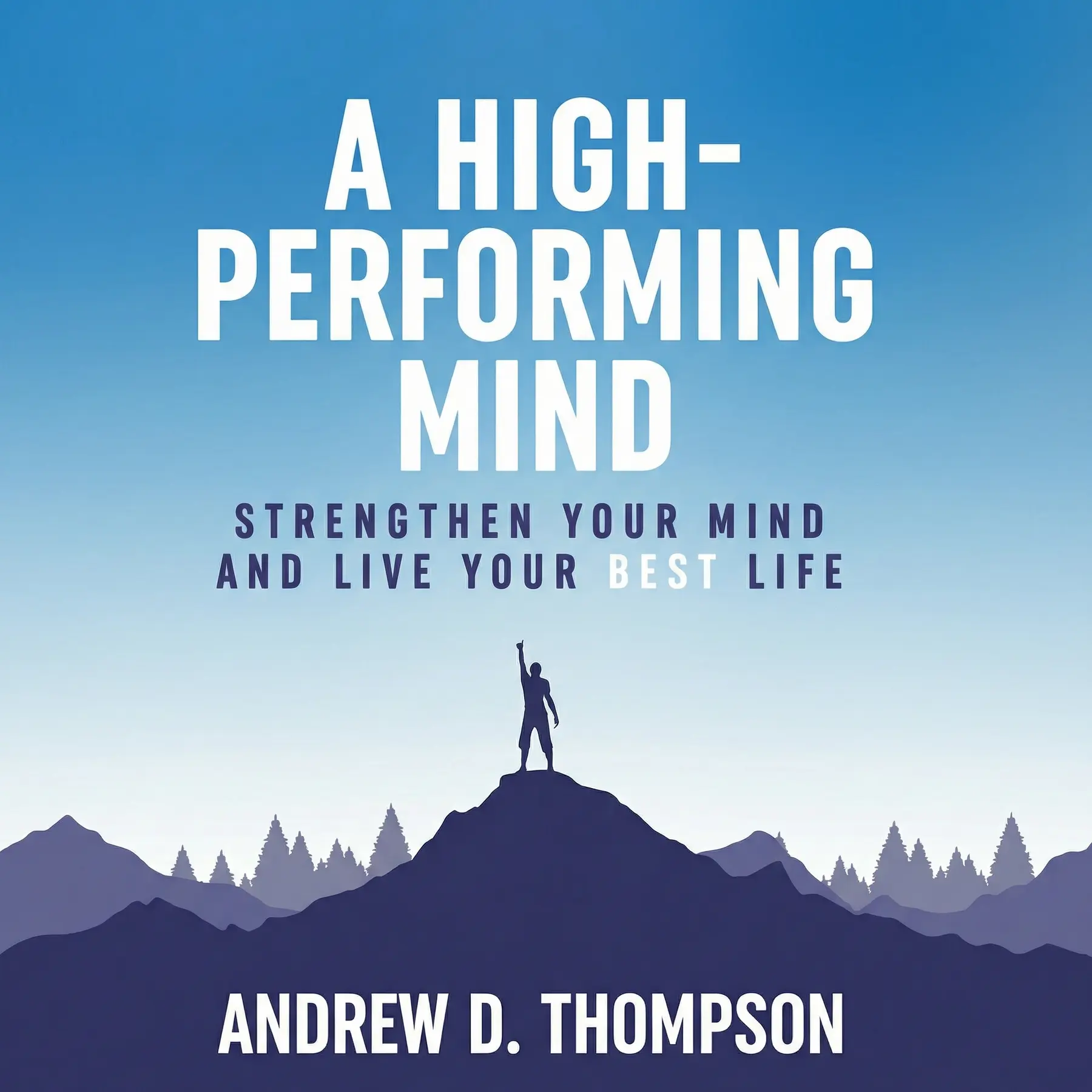
Listeners find this book to be an impactful manual for reaching success through mental framing, full of practical tips that are simple to grasp and use. Personal anecdotes serve to support the author’s framework, and listeners value the focus on conquering obstacles and developing emotional armor for social media. They appreciate the specific strategies for building resilience and consider the book an engrossing self-improvement resource.
Wow. This isn't just another dry manual on productivity; it is a visceral exploration of what it takes to survive and then thrive. Andrew D. Thompson shares a deeply personal health crisis that immediately grounds his advice in reality rather than just theory. I found the concept of 'mental armor' especially relevant for today’s social media age where we are constantly bombarded by external judgment. His writing is sharp, direct, and incredibly motivating without being preachy. The way he reframes setbacks as mere feedback loops changed how I approached a recent failure at work. If you feel like your mind is working against you, this book provides the tools to flip that script. It’t a heavy hitter that manages to stay accessible.
Show moreThe chapter on fear completely flipped my perspective on how to handle anxiety during high-stakes moments. Instead of telling readers to eliminate fear, Thompson teaches us to treat it as a form of fuel, a physiological boost that can actually sharpen our performance if we stop fighting it. This shift in perspective has been a game-changer for my public speaking. I also loved the idea of 'Dirty Discipline'—the notion that you don't have to be perfect to be disciplined. The book is packed with these kinds of actionable shifts. It is an inspiring read that I’ve already recommended to several colleagues who are struggling with burnout. This is easily one of the most practical mindset books I've picked up this year.
Show moreAndrew Thompson writes with an intensity that reflects his own harrowing health journey, and that authenticity makes all the difference. He doesn't just tell you to be brave; he shows you the framework he used to rebuild his own life from the ground up. I was particularly struck by the discussion on how our responses to small, daily obstacles shape our ability to handle major crises later on. The book is structured beautifully, moving from internal identity to external execution. Every time I put the book down, I felt like I had a clearer map for my own career goals. It’s rare to find a book that manages to be both emotionally raw and highly tactical. Truly a must-read for the ambitious.
Show moreFinally got around to reading this, and the timing couldn't be better given how draining the professional world has become lately. Thompson’s insights into building 'emotional armor' are brilliant and necessary for anyone trying to navigate modern stress without losing their mind. I loved the distinction he makes between the body’s need for conditioning and the mind’s need for a structured framework. It’s not about being a superhuman who never fails; it’s about having a system to get back up when you inevitably do. The prose is clean, the stories are engaging, and the advice is actually doable for someone with a busy schedule. This book definitely lived up to the hype I’ve been seeing online.
Show moreEver wonder why some people thrive under pressure while others crumble at the first sign of a setback? Thompson argues it isn't about natural talent but a deliberate, daily conditioning of the mind. I particularly appreciated the distinction between 'sporadic brilliance' and consistent effort. He makes a compelling case that showing up every single day—even when you’re only at sixty percent—builds a level of self-trust that is far more valuable than a one-time win. The writing style is punchy and direct, which keeps the momentum high throughout the book. It’s a powerful roadmap for anyone looking to build genuine resilience in a world that feels increasingly chaotic. This is staying on my desk for reference.
Show moreAs a lifelong skeptic of the self-improvement genre, I found Thompson's approach surprisingly refreshing and grounded. He moves past the typical 'just think positive' fluff and dives straight into the mechanics of discipline and what he calls a 'Warrior Mentality.' The focus on building resilience through small, daily discomforts like early workouts or difficult office interactions really resonated with me. I did feel that some of the sections on goal-setting were things I had heard before, but the specific way he structures positive framing made it click in a new way. It is a solid, practical guide for anyone needing to sharpen their focus. The advice is easy to digest and even easier to start implementing immediately.
Show morePicked this up during a rough patch, and the concept of consistent effort over sporadic brilliance was exactly what I needed to hear. Thompson argues that true high performers aren't waiting for the big moments to show up; they give their best to the mundane tasks, which builds an unshakable foundation of self-trust. I found the sections on goal specificity—making things measurable rather than vague—to be highly effective for my personal fitness journey. My only minor gripe is that the tone can get a bit repetitive when discussing resilience, but the overall message is so strong that it’s easy to overlook. It’s an empowering guide that pushes you to take full responsibility for your mental baseline.
Show moreWhat sets this guide apart from the clutter is the integration of reflection questions at the end of each section. Usually, I find these exercises tedious, but Thompson keeps them focused on bullet points and immediate actions rather than long-winded journaling. I’ve been applying his 'reframing setbacks' cycle to my business challenges, and it’s helped me move out of negative spirals much faster than before. The writing is supportive and feels like a conversation with a mentor who actually wants you to succeed. While some of the 'warrior' terminology felt a little intense for my personal taste, the logic behind the strategies is undeniable. This is a very helpful resource for building emotional strength and mental clarity.
Show moreTo be fair, many of the core tenets found in 'A High-Performing Mind'—like discipline and the importance of habits—have been covered extensively in other bestsellers. If you are a veteran of self-help books, you might find yourself skimming through the middle sections where the author reiterates the need for consistency. However, Thompson’s easy-to-read style and his vulnerable storytelling keep the pages turning. The reflection questions at the end of the chapters were a nice touch, even if they were a bit basic. It’s a decent entry point for someone new to the world of mindset training, but it might not offer much 'new' information for those who have already read the classics of the genre.
Show moreLook, the truth is that this book repeats itself quite a bit in the middle chapters, and if you've read a lot of stoic philosophy, you might find some of the themes very familiar. That being said, Thompson’s vulnerable account of his own medical crisis gives the advice a weight that many other authors lack. It isn't just theory for him; it's survival. While the 'Warrior Mentality' felt a bit cliché at points, the specific advice on setting measurable goals rather than vague aspirations like 'being happier' was genuinely useful. I didn't love the pacing, but the core message about building resilience is solid enough for a quick weekend read for those needing a push.
Show moreAndrew D. Thompson argues that high performers are shaped by how they respond to difficulty, and that the mind can be trained much like the body. He describes five shifts: drawing strength from hard times you have already survived, setting clear positive goals, giving full effort even when results are uncertain, using fear as fuel and resetting quickly after setbacks.
He uses four stages. Write a rough list of what excites you and who you want to become, and keep it visible. Rephrase each goal positively, so not wanting to fail becomes wanting to pass with confidence. Make it measurable, such as exercising three times a week. Then attach concrete actions, because even one small first step builds momentum.
Thompson recommends naming the feeling to yourself, for example admitting that you are nervous right now, which takes away some of its force. Then act without waiting to feel fearless. He pictures fear as a noisy passenger: it can comment, but you keep driving and focus on the outcome you want, using the adrenaline to sharpen your performance.
Thompson offers a three-step loop. First, reconnect with your goal and picture what success would have looked like. Second, write down your negative thoughts so you can examine them instead of feeding them. Third, take one small positive action, such as asking for feedback or making a better study plan. Repeat the loop as often as needed.
It suits people who work hard but freeze before big moments, overthink decisions or lose momentum after a failure. Students facing exams, professionals preparing presentations or interviews, and anyone rebuilding after a tough stretch will find practical tools, from rephrasing goals positively to a short routine for the day after something goes wrong.
Richard Wiseman





William B. Irvine



Deepak Chopra

AUDIO SUMMARY AVAILABLE
Get the key ideas from A High-Performing Mind by Andrew D. Thompson, plus 5,000+ more nonfiction titles.









