

A Force for Good: The Dalai Lama's Vision for Our World
Daniel Goleman
 English
 ไทย
Shows how attention works as a trainable muscle. Aiming it at yourself, at other people and at the wider world improves your performance, creativity, relationships and leadership.
1 min 07 sec
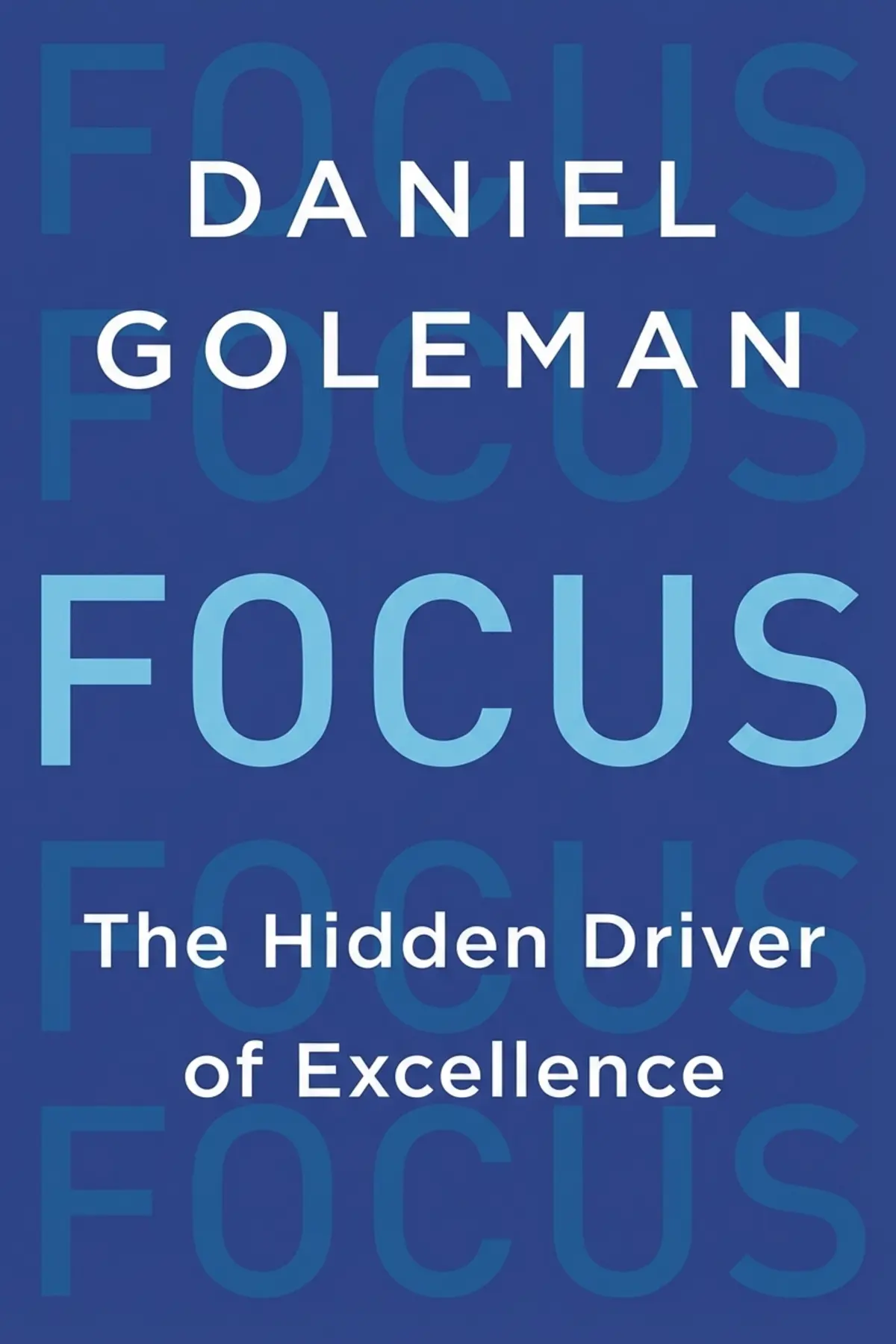
If your attention splinters each time your phone lights up, your work pays twice: it takes longer and it comes out shallower. In Focus, longtime New York Times science journalist Daniel Goleman argues that attention is a mental muscle. How you train it shapes how well you perform, relate to people and lead.
He aims that muscle in three directions. Inner focus tunes into your own mind, willpower and moods. Other focus reads the people around you. Outer focus takes in the wider systems you live inside, from markets to the planet. Excellence, in Goleman’s account, comes from strengthening all three and knowing when to grip attention tightly and when to let it roam.
The cast includes reporters who write through newsroom noise, a codebreaker who worked while sunbathing, a CEO who wanted his life back and a phone maker that lost three quarters of its value. From them you get a breathing drill, a sharper way to practice and the habit of spotting what you have stopped seeing.
1 min 24 sec
Reporters at the New York Times meet their deadlines in a noisy open-plan office, and none of them asks for quiet. Their edge is a mental ability most of us let weaken a little more every time the phone buzzes.
1 min 33 sec
A stranger once cut to the front of an office copier line with a weak excuse, and nobody objected. That same lapse explains why thousands of hours of practice can leave someone no better than when they started.
1 min 27 sec
Losing focus during a simple exercise turns out to be the point of it. Each lapse is a chance to build the skill that keeps you steady when your mind goes blank under pressure.
1 min 41 sec
A codebreaker did his hardest work while lying in the sun, and an experiment found that wandering minds produced more original ideas. Sometimes the most productive move is to stop concentrating.
1 min 48 sec
A test of more than 1,000 children predicted their health and wealth twenty years later. The good news is that the trait it measured can still be built in adulthood, and the method is surprisingly personal.
1 min 32 sec
Psychopaths read emotions well, and doctors who seem cold get sued more often. One kind of empathy sits between feeling nothing and feeling too much, and it is the one people need from you.
1 min 30 sec
Building more roads to end traffic jams can leave you with more traffic. Our minds are wired to miss slow-moving threats like this, but a simple trick of imagination can bring them close.
2 min 06 sec
One CEO turned a disaster into a public relations collapse with a single short sentence, while a phone giant lost most of its value by staring at its own success. Both failures began with where the leader looked.
56 sec
Goleman’s argument comes down to this: excellence goes to people who decide where their attention goes. The reporter on a loud floor, the golfer fixing one swing at a time, the codebreaker on his walk and the leader who senses how a careless sentence will land are all doing it. They aim attention inward, toward others or out at the wider world, and they know when to tighten it and when to let it drift.
The practice can start small. Sit with your breath for a few minutes, and each time your mind slips away, notice it and come back. That is one repetition. When simple words stop making sense, let your mind wander for a while instead of forcing it. When a distant risk feels unreal, imagine it arriving next month until it is close enough to act on.
Attention is the muscle behind every other skill, and it grows each time you bring it back on purpose.
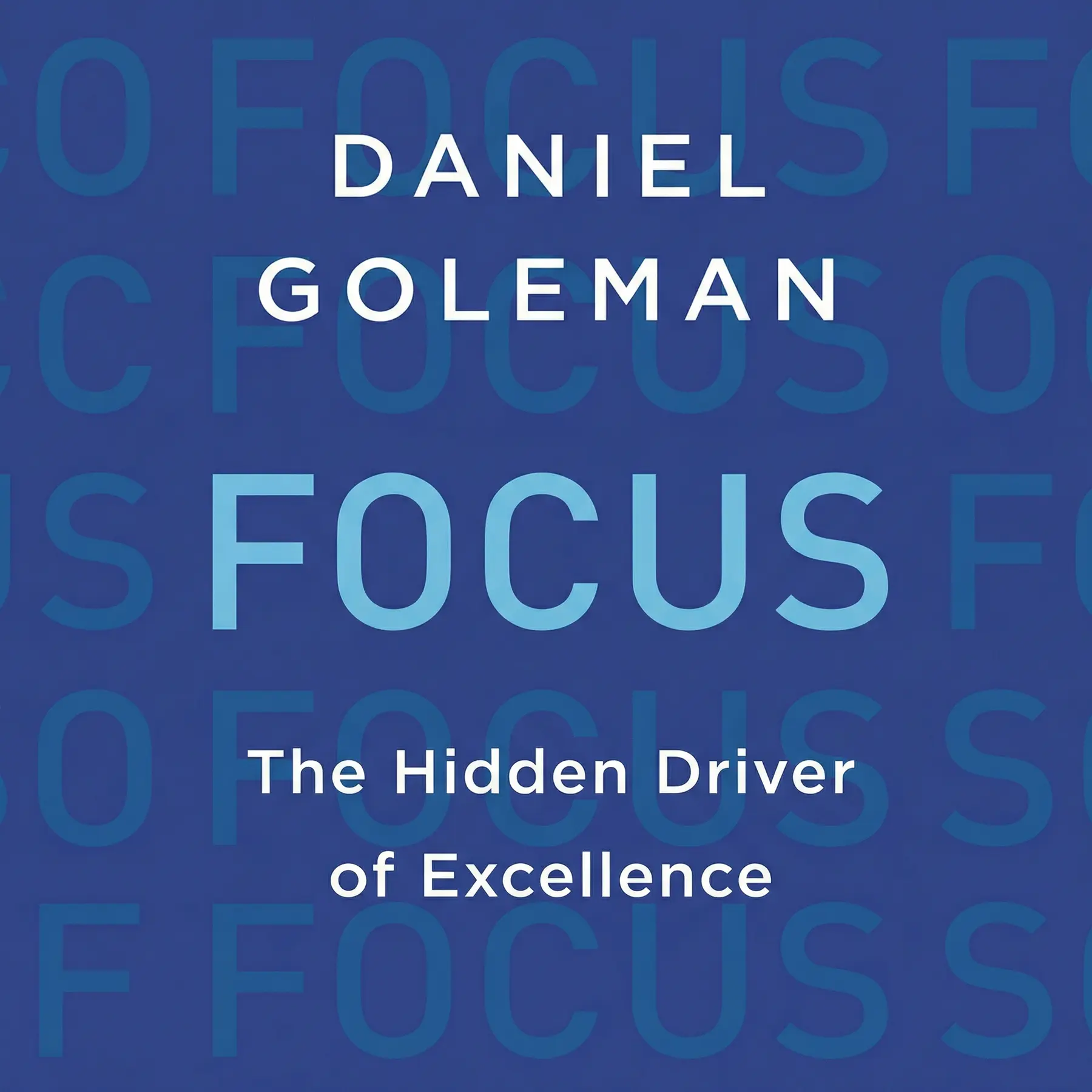
Phones, inboxes and wandering thoughts split our attention all day, and the work suffers for it. Daniel Goleman spent twelve years reporting on brain and behavioral science for The New York Times. He argues that focus is the hidden skill behind high performance and that it can be strengthened like a muscle. He looks at attention in three directions. Inner focus covers selective attention, the pull between the fast automatic mind and the slower deliberate one, willpower and mood. Other focus covers empathy, which runs from understanding people to feeling with them to actually caring about them. Outer focus covers the larger systems around us, from traffic to the planet's resources. He also shows when narrow focus helps and when a wandering mind finds the better idea. The book then turns to leaders, whose job is to direct a whole group's attention. Its cases include Tony Hayward at BP, the fall of BlackBerry and Isaac Singer's bet on housewives. Readers get practical tools: one-pointed breathing meditation, deliberate practice in place of blind repetition, restful mind-wandering and a way to make distant risks feel urgent.
Knowledge workers whose days dissolve into email, phone checks and half-finished tasks.
Managers and founders who want to read their people better and spot market shifts before competitors do.
Students and professionals who practice hard but stall, or who freeze under pressure.
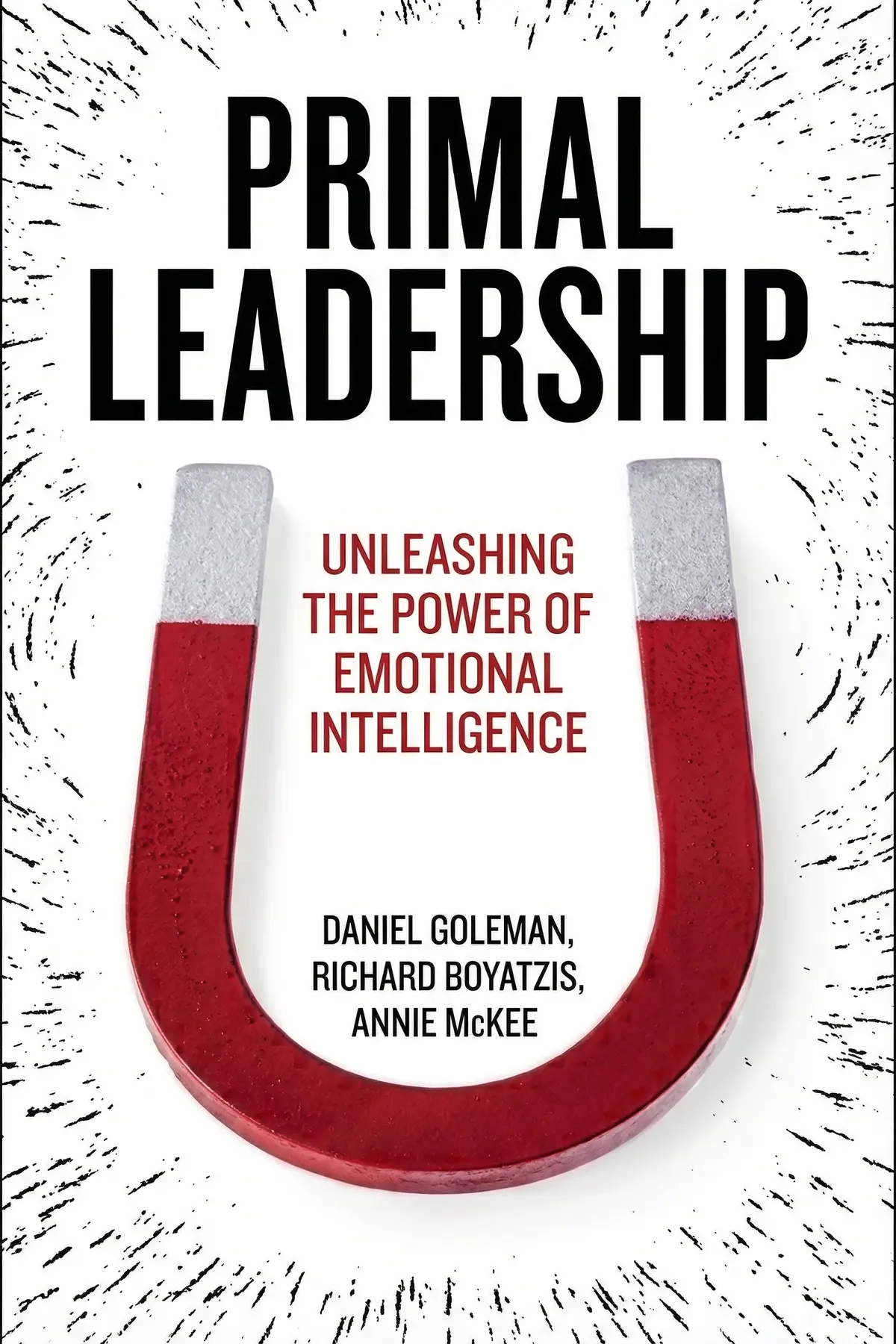
Daniel Goleman spent twelve years at The New York Times covering the brain and behavioral sciences. He was twice nominated for the Pulitzer Prize, and the American Psychological Association gave him a Lifetime Achievement Award for his media writing. His Emotional Intelligence spent eighteen months on the Times bestseller list and has been published in 40 languages. He also wrote Working with Emotional Intelligence and Social Intelligence and co-wrote Primal Leadership. His other books cover topics including meditation, creativity, self-deception and the ecological crisis.
Daniel Goleman
Daniel Goleman
Daniel Goleman
Listeners find this work offers practical insights into neurological functions and is quite easy to digest, suggesting it is essential reading for professionals in any industry. They value its profound exploration of self-awareness along with intriguing concepts and studies, with one listener highlighting how it assists in building individual attention frameworks. The text includes captivating stories, though some feel the writing becomes overly technical on occasion, and while many find it compelling, others view the narrative as lacking focus.
Daniel Goleman has a way of peeling back the layers of our own cognitive habits that feels both scientific and deeply personal. After the massive success of Emotional Intelligence, the bar was high, but I feel he managed to tackle the modern epidemic of distraction with real grace. He dives deep into brain chemistry and the circuitry that dictates how we interact with the world around us. Frankly, some of the sections on "top-down" versus "bottom-up" mental processing were eye-opening for my own self-awareness. It’s not a simple self-help book; it’s more of a deep dive into how we can cultivate a personal framework for attention in a world that wants to steal it. You’ll find yourself reconsidering how you spend your quiet moments.
Show moreThis book is a powerful reminder of what we lose when we surrender our attention to constant digital noise and the myth of multitasking. Goleman returns to the themes of his earlier work but applies them to the specific challenge of staying centered in a high-speed world. I was particularly moved by the description of 'wayfinding' and how we must learn to navigate the sea of distractions by looking for subtle internal signs. It’s an ambitious book that asks us to look inward before we can fix our outward habits. Not every chapter is a hit—I’ll admit I skimmed some of the more political sections—but the core message is vital for anyone feeling overwhelmed by modern life. Truly a must-read for everyone.
Show moreFinally got around to finishing this, and I'm left with a much deeper understanding of how my own brain filters out the world. Goleman successfully builds a framework for understanding how different types of focus—inner, other, and outer—determine our success in life. It’s not just about getting more work done; it’s about empathy and understanding the larger systems we live in. I appreciated the deep dive into self-awareness and how to recognize when our 'bottom-up' impulses are taking over our 'top-down' goals. Some might find the scientific terms like the prefrontal cortex a bit much, but I think it adds necessary weight to his arguments. This is an essential read for anyone serious about personal growth and professional excellence.
Show moreAs an educator, I found the sections on mindfulness in the classroom and developing empathy in young children to be the real highlights here. Goleman argues that we are raising a generation that is technically 'connected' but cognitively scattered, and his data supports that claim well. The application of emotional intelligence to the workplace and the school system is where this book truly shines. It isn't just about personal concentration; it's about how our collective attention shapes our society. While some chapters on business management felt a bit disconnected, the overall message about the importance of 'other-focus' is something every parent and teacher needs to hear. It provides a fascinating deep understanding of self-awareness.
Show moreEver wonder why some businesses thrive while others suffer from a total lack of long-term vision? Goleman’s take on Apple’s business strategy through the lens of concentrated attention was one of the more engaging parts of this volume. He explains how high-level leadership requires a specific type of triple-focus: on ourselves, on others, and on the wider world. Personally, I found the research on how we can improve our own relations by being more present to be incredibly practical. It’s a dense book, and I had to take breaks to digest the heavier sections on brain function, but the insights into pattern recognition were worth the effort. It’s a highly readable resource for anyone in a leadership field.
Show moreLook, if you've already devoured everything by Malcolm Gladwell or Daniel Kahneman, a lot of this material will feel like a retread of familiar ground. Goleman writes well, but he isn't exactly breaking new ground in the world of pop-psychology here. The concepts of 'flow' and 'executive function' are presented as if they are brand new, which might be frustrating for seasoned readers of the genre. To be fair, he does update the science with some newer brain imaging studies, which adds a layer of credibility. It’s a solid 4-star book if you’re new to the topic, but it might feel like a repeat if you’ve been keeping up with behavioral science for a while. Still, it helps develop personal frameworks for attention.
Show moreWhile the neuroscientific explanations of our internal attention systems are technically sound, the prose often gets bogged down in heavy academic posturing. Goleman is clearly an expert, but he sometimes struggles to translate complex brain regions into something the average reader can use on a Tuesday morning. The truth is, I enjoyed the parts about 'system blindness' and how we lose track of the big picture, but those gems are buried under a lot of jargon. It's a bit of a slog at times. If you have the patience to sit through some very dry chapters on brain circuitry, you’ll find some great insights into how we relate to others. Just don't expect a fast-paced or particularly 'focused' read.
Show moreThe irony of a book titled 'Focus' being so incredibly scattered is almost too much to handle. I walked into this expecting a tactical guide to improving my attention span, but instead, I was met with a disjointed collection of essays. One minute he is talking about the amygdala, and the next he is lecturing the reader on global warming or corporate empathy. There is no cohesive thread that binds these topics together. It felt like Goleman just emptied his notebook of 'interesting things' and hoped the title would do the heavy lifting. To be fair, some of the anecdotes are interesting, but they lack the context needed to make this a functional read for someone looking for actual strategies.
Show morePicked this up hoping for a manual on productivity, but instead found a rambling collection of thoughts on everything from corporate strategy to Polynesian wayfinding. Don't get me wrong, the story of Mau and the traditional navigators was fascinating, but what does it really have to do with my daily struggle to stay off my phone? The book lacks the 'focus' it preaches. It feels like a retread of pop-psychology tropes you’ve likely seen in better books. I kept waiting for the 'how-to' part, but it never really arrived in a meaningful way. If you want a scientific survey of what attention is, this might work, but as a guide for self-improvement, it largely falls flat.
Show moreNot what I expected at all. I managed to get through about half before I realized I was just reading a series of loosely connected facts without any real direction. I’ve enjoyed Goleman’s work in the past, but this one felt like it was written in a hurry or edited by someone who forgot the title. It’s dry, overly technical in parts that don’t matter, and surprisingly vague in parts where I actually wanted details. Frankly, it was a struggle to stay engaged, and I ended up putting it down to find something with more actionable advice. If you want to learn about the brain in a cohesive way, there are more accessible and better-organized options out there.
Show moreGoleman argues that attention is the hidden driver of excellence and works like a muscle you can train. He describes three directions for it: inner focus on your own mind and willpower, other focus on people through empathy, and outer focus on larger systems such as markets and the planet. High performers strengthen all three and know when to concentrate narrowly and when to let the mind wander.
Goleman recommends one-pointed focus meditation. Rest your attention on one target, such as your breath. When your mind wanders, notice it and bring it back. Each return works like a repetition in weight training. Over time this builds meta-awareness, the ability to catch your mind drifting. That helps when you procrastinate, check email on reflex or freeze during a test.
No. He argues that open awareness often leads to creative insight. In one experiment, people who let their minds wander produced 40 percent more original ideas for new uses of an object. The cryptographer Peter Schweitzer cracked codes while walking or sunbathing. Goleman also recommends letting your mind wander as a way to rest when tight focus gets tired.
Goleman separates cognitive empathy, which means understanding what others think and feel, from emotional empathy, which means physically feeling it with them. Neither one guarantees real concern. He reports that doctors who show no empathy are more likely to be sued after mistakes, but patients also do not want a doctor who falls apart. The ideal is empathic concern: caring while staying steady enough to help.
Goleman says leaders succeed by directing a group’s attention, and that takes self-awareness more than IQ. Tony Hayward’s remark during the BP oil spill shows the cost of missing how others see you. BlackBerry’s fall shows the danger of fixing on existing products. Leaders should praise small wins, communicate a clear vision as Isaac Singer did and keep exploring the wider context for new opportunities.

Deborah Gruenfeld


Anthony Pratkanis




Laura Vanderkam

Richard Wiseman
AUDIO SUMMARY AVAILABLE
Get the key ideas from Focus by Daniel Goleman, plus 5,000+ more nonfiction titles.









