
11 min 15 sec
Available in: English
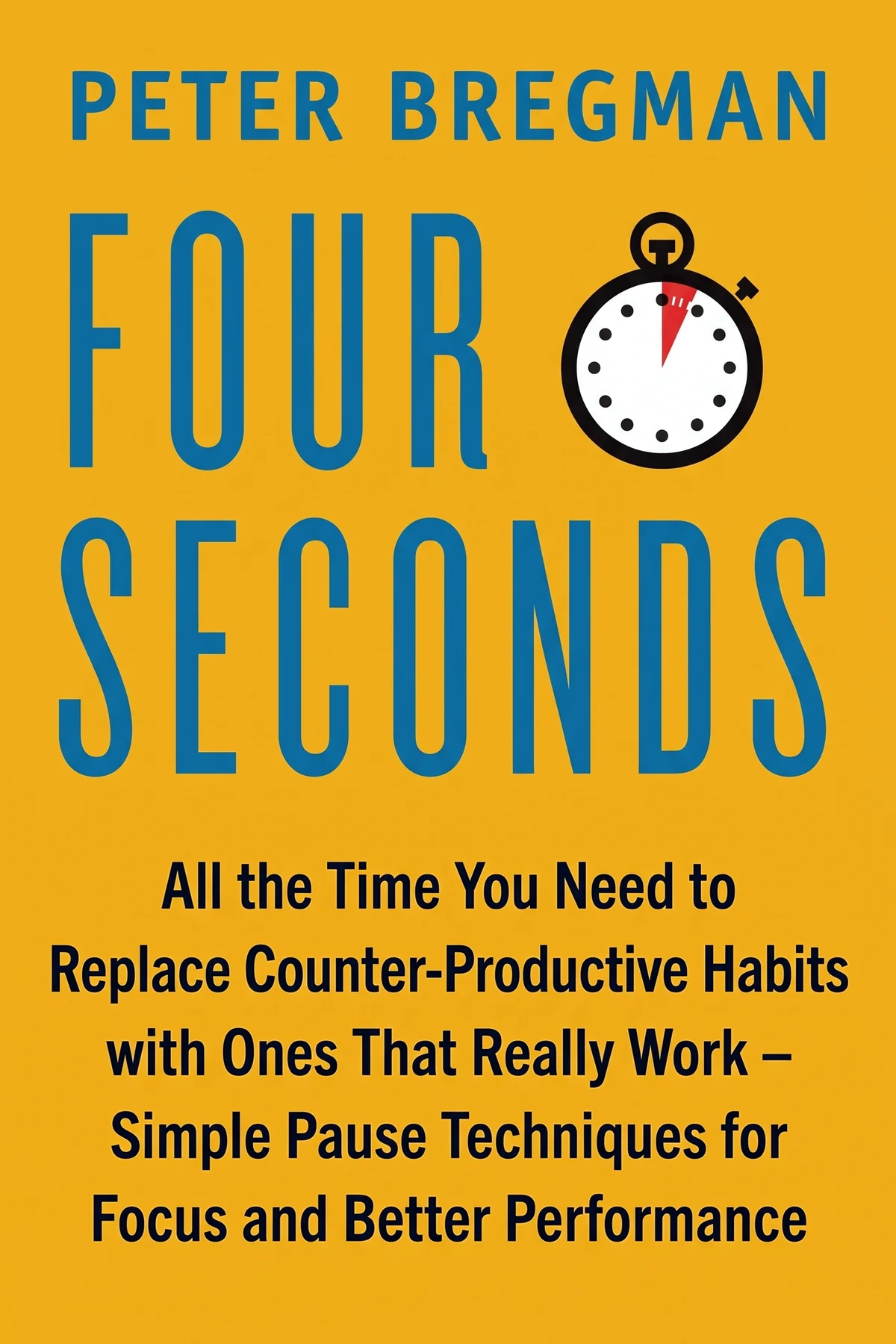
18 Minutes: Find Your Focus, Master Distraction, and Get the Right Things Done
Shows how short, regular pauses help you pick a handful of goals that suit your strengths and passions. A daily routine of just 18 minutes then keeps those goals ahead of every interruption.
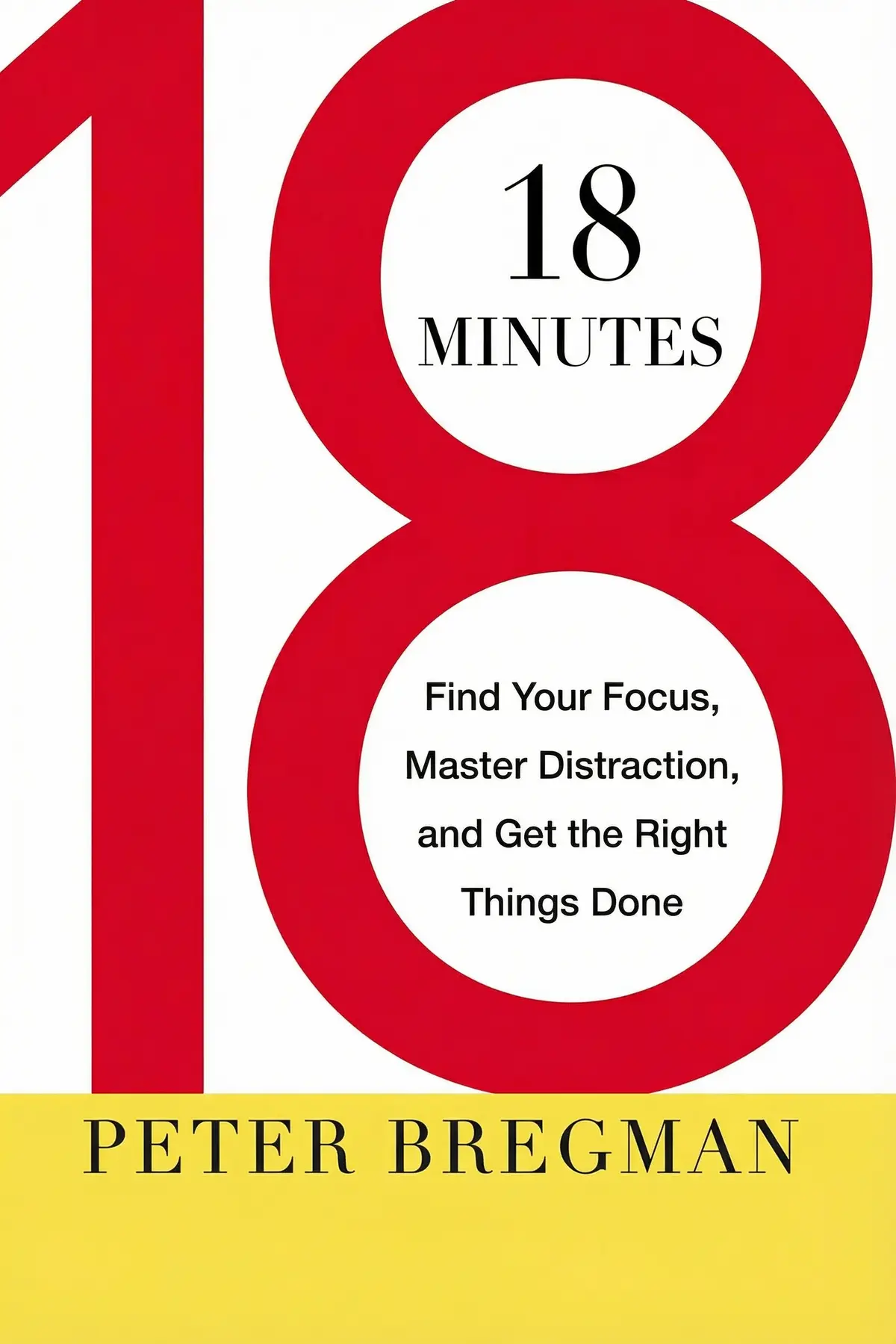
Table of Content
1. Introduction
1 min 01 sec
If your days end with a long to-do list and a short list of things that mattered, the problem may not be time at all. In 18 Minutes, consultant Peter Bregman argues that focus starts with a pause: a few seconds or minutes in which you stop reacting and choose what deserves your effort. His case runs in a clear line. Accept that you cannot do everything. Make sure the goals you chase are really yours, built on your strengths, your quirks and what you love. Then protect them with a daily routine of only 18 minutes.
The idea that ties it all together is simple: getting the right things done depends less on working harder than on stopping, briefly and often, to choose. Along the way, an email undo button shows what happens to impulse in five seconds, a black-and-white thinker turns into an asset in health reform, and you get workable ways to keep colleagues, children and your own phone habit from eating your day.
2. Pause a few seconds before you act
1 min 52 sec
An email feature built to rescue people from their own mistakes reveals something about how the mind reacts under pressure, and why marathon runners schedule days of doing nothing at all.
3. Pick about five goals that fit your strengths
1 min 44 sec
Wanting too much can leave you doing nothing. Bregman proposes a hard cut and a demanding share of your time, and he shows how even a trait that annoys people can become the reason you succeed.
4. Turn what makes you different into an edge
2 min 05 sec
Crowded markets reward the odd one out, and mastery takes thousands of hours. Two common traps can still wreck a well-chosen goal, and one of them hides inside a winning lottery ticket.
5. Plan each day in 18 minutes
1 min 47 sec
A good plan rarely survives the first hour of a busy morning. Bregman’s fix takes less time than a coffee break, and its most useful part is a list of things you deliberately refuse to do.
6. Shut out distractions, including the ones you create
1 min 43 sec
Interruptions come from the work itself, from the people around you and from your own restless habits. Bregman has a different answer for each, including one that sounds like it should make things worse.
7. Conclusion
1 min 03 sec
Bregman’s book rests on a modest idea with a wide reach. Most lost days, in his view, are lost to reacting: to the loudest email, to goals other people expect of us, to the buzz of a phone. Each of his tools puts a short stop between the trigger and the response. It might be five seconds before sending, a few minutes choosing five areas built on your strengths and quirks, or a minute each hour asking whether you are still on track. He asks you to do what is right for you, whatever others expect, and to count failures as lessons.
The first steps are small. Tomorrow morning, take five minutes to write what you will do and what you will ignore, and give each task a time and a place. Set a gentle alarm for every hour, and before you close the laptop, spend five minutes on what worked and what did not. Then, the next time a reply is half typed in anger, wait the five seconds an undo button would have given you. Eighteen minutes is a small price for a day that goes where you aimed it.
About this book
What is this book about?
Phones buzz, inboxes fill and to-do lists grow faster than anyone can clear them. Many people end the day busy and tired, yet unsure they worked on anything that mattered. Peter Bregman, a consultant to CEOs and their leadership teams, argues that the fix is to stop briefly and choose. Working longer or faster will not do it. His approach moves in clear steps. First pause, because first reactions are often emotional and mistaken. Then accept that you cannot do everything. Narrow your aims to about five areas built on your strengths, your quirks and what you love, and give them nearly all your time. Then protect that choice with a daily ritual: five minutes of planning in the morning, a one-minute check every hour and five minutes of review at night. Readers get a short, workable routine with an ignore list and a three-day limit on postponing tasks. They also get ways to handle interruptions from work, from other people and from their own impulses, plus a healthier way to think about failure.
Book Information
Who it's for
Busy professionals questioning priorities
Professionals who end busy days unsure they worked on what mattered.
Torn between many goals
Ambitious people with too many goals and no clear place to start.
Working amid interruptions
Anyone working from a home or office full of interruptions, from colleagues and children to their own phone.
About the Author
Peter Bregman
Peter Bregman advises CEOs and their leadership teams through Bregman Partners, the management consulting firm he founded in 1998. Before that he taught leadership on wilderness and mountaineering expeditions and worked in consulting at the Hay Group and Accenture. 18 Minutes became a Wall Street Journal bestseller and won a Gold Medal at the Axiom Business Book Awards. He writes regularly for Harvard Business Review, has appeared on PBS, ABC and CNN, and studied at Princeton and Columbia.
Ratings & Reviews
Ratings at a glance
What people think
Listeners find this book exceptionally accessible and superior to standard time management guides, offering outstanding advice within a practical system. Furthermore, the material is simple to track and listeners enjoy the inspiring themes, which assist them in re-centering on personal growth. They also prize the distinctive methods for daily planning, and one listener highlights how the text deconstructs the process of staying productive. Ultimately, the book successfully enables people to overcome distractions and achieve more while reducing stress.
Top reviews
Rungtip
Honestly, I wasn’t expecting much from another productivity book, but the 18-minute ritual is a total game changer for my morning routine. Most of these 'gurus' tell you to wake up at 4 AM and meditate for two hours, but Peter Bregman actually understands that some of us have real lives and limited bandwidth. I personally found the breakdown of the 5-minute morning plan, the hourly check-ins, and the end-of-day review incredibly easy to stick to. It’s not just about doing more work; it’s about making sure the work you’re doing actually aligns with your yearly goals. I’ve been using his '5 areas of focus' method for three weeks now, and for the first time in years, I don’t feel like I’m just spinning my wheels. It might feel a bit structured for some, but if you struggle with distractions, this is worth every second of your time.
Show morePenelope
Mastering distractions is my biggest hurdle, and this book gave me the tools to finally fight back. Bregman’s point about 'switch-tasking' versus multitasking really hit home—I realized I was losing so much efficiency just by jumping between emails and projects. I love the advice to never leave anything on a to-do list for more than three days; it forces you to either do it, schedule it, or just admit you're never going to do it and let it go. That alone reduced my stress levels significantly! The book is short, which I appreciate because I don’t have time for a 400-page tome on how to save time. It’s practical, it’s kind, and it encourages you to be yourself rather than some robotic version of a perfect employee. Highly recommend for busy parents especially!
Show moreCha
This is a terrific book for anyone who feels like their life is being driven by other people's priorities. I’ve always struggled with saying yes too often, and Bregman’s advice on boundaries was exactly what I needed to hear. He explains that people can only respect the boundaries they know are there—so true! I also loved the idea of 'transition time.' Taking just a minute to reset between a work call and hanging out with my kids has made me a much better parent and a less stressed professional. It’s full of these little 'aha' moments that seem small but make a huge difference in the quality of your day. Truly a worthwhile read that I’ll probably revisit every year just to keep myself on track.
Show moreTan
I'm a big fan of how this book breaks down the productivity process into something that feels manageable. It’s not about being a perfectionist; in fact, Bregman says the world rewards productivity, not perfection. That was a huge relief for me to read. The structure of the book is great—moving from the big picture (your year) down to the moment-by-moment decisions. I’ve found that the hourly check-in (the 8 minutes of the 18) really keeps me from falling down social media rabbit holes. I feel much more in control of my time and less like a victim of my inbox. If you’re looking for a way to find your focus without feeling like you’re joining a cult, this is the book for you.
Show moreJulian
A very readable and motivating guide for anyone feeling overwhelmed by their to-do list. I’ve read a lot of time management books—Covey, Allen, you name it—and what I liked about Bregman’s approach is the emphasis on the 'space between stimulus and response.' He argues that we shouldn't let events determine our reactions, which is something I definitely need to work on. The writing style is conversational and punchy, making it a quick read. I did find the hourly interruption a little bit difficult to maintain when I’m in deep work mode, as it can feel like a distraction itself, but the overall framework for prioritizing my day has been helpful. It’s a solid 4-star read that offers a workable system without being too clinical or demanding. Definitely better than the typical 'hustle culture' manuals.
Show moreIce
I picked this up during a particularly chaotic month at work and it really helped me settle down. The most useful part for me was the section on taking a kinder view of our 'weaknesses.' Bregman suggests that our quirks might actually be what sets us apart, which was a very refreshing take compared to most business books that tell you to fix every flaw. I’ve started applying the '5 focus areas' to my year, and it’s helped me say no to projects that don’t fit my goals. It’s a very human book. It acknowledges that failure is inevitable and that we shouldn't be paralyzed by an uncertain future. My only gripe is that it can feel a bit repetitive in the middle chapters, but the core message is strong enough to carry it.
Show moreTariq
The 18-minute framework is incredibly simple, which is exactly why it works. I’ve tried more complex systems before and they always fall apart after three days because they’re too much work to maintain. Bregman’s 'ritual' is actually sustainable. I particularly liked the part about creating an environment that compels you to do what you want to do. It’s about working with your nature rather than against it. The writing is clear and the chapters are bite-sized, so it’s easy to digest on a commute. While some of the stories about his consulting clients felt a little 'standard' for this genre, the overall takeaway is very practical. It’s helped me reclaim my mornings and actually get the right things done rather than just being busy.
Show moreSukit
This was a bit of a mixed bag for me. On one hand, the idea of spending 18 minutes a day to save hours of wasted effort is a great pitch, and some of the questions for the daily review are actually quite profound. I liked the focus on who I interacted with and what I learned. However, I can't help but feel that a lot of this is stuff we already know deep down. Do I really need a book to tell me to focus on my strengths and ignore the noise? Maybe I did. It’s a 'feel-good' kind of book that provides good reminders, but it isn’t exactly revolutionary. It might not be for everyone, especially if you’re already a highly organized person, but if you’re feeling a bit lost in the weeds, it’s a decent enough reset.
Show moreWan
I really wanted to like this, but it felt like a classic case of a decent blog post being stretched thin to justify a hardcover price point. The core advice is buried under endless, slightly irritating anecdotes about the author’s kids and their skiing lessons, which honestly felt a bit 'rich white guy' for my taste. It’s a very specific brand of productivity advice that assumes you have a high level of control over your corporate schedule. While the concept of pausing before reacting is solid, I felt like I was wading through a lot of fluff to get to the actual meat of the strategy. If you can skim it in an hour, do that instead of reading every word. There are a couple of gems in here about embracing your weaknesses, but they’re just padded with too much generic blather for me to recommend it fully.
Show morePan
If you can read this book in 18 minutes, it would still be a total waste of those 18 minutes. It’s just an endless collection of long-winded anecdotes that are ultimately insubstantial and frankly quite boring. I found myself rolling my eyes at the constant stories that felt more like humble-brags than actual teaching moments. The 'productivity tips' are basically common sense wrapped in fancy packaging. I was hoping for a deep dive into cognitive focus, but instead, I got a lot of generic advice about 'pursuing your passions' and 'embracing differences.' Honestly, save your money and just read a summary online. There is nothing here that justifies the length of a full book. It’s repetitive and, in my opinion, completely overhyped.
Show moreQuestions about this book
What is the main idea of 18 Minutes by Peter Bregman?
Bregman argues that focus comes from stopping briefly and often to choose what deserves your effort. You pause before acting, accept that you cannot do everything, and narrow your aims to about five areas that suit your strengths and passions. A daily ritual of 18 minutes, plus firm limits on distraction, then keeps those choices at the center of each day.
What is the 18-minute ritual?
It has three parts. Spend five minutes each morning planning the day, including an ignore list of things you will not spend time on. Take a one-minute pause every hour to check your progress and refocus. End with five minutes reviewing what worked and what did not. Bregman also advises giving tasks a specific time and place and never postponing one for more than three days.
How does 18 Minutes suggest dealing with distractions?
Bregman treats each source differently. To get started on hard work, change your surroundings or turn a big project into a game with levels and growing rewards. To handle other people, set boundaries such as a knock-first rule and enforce them every time. To handle yourself, distract yourself from your distractions, pausing when you want to snack or check social media and then returning to the task.
Does 18 Minutes say to focus only on strengths?
No. Bregman recommends building your goals around your strengths and giving about 95 percent of your time to roughly five key areas, but he also says to embrace weaknesses. He describes a friend whose black-and-white thinking helped him push health reform forward without getting stuck on gray areas. He adds that being different is an advantage in crowded markets.
Who should read 18 Minutes?
It suits busy professionals, managers and ambitious people who feel pulled in many directions and want a short, repeatable routine. It is also useful for anyone who fears failure or freezes when the future is uncertain, since Bregman encourages learning from mistakes, as he says Icelanders do, and focusing on the present.
Readers also enjoyed



AUDIO SUMMARY AVAILABLE
Listen to 18 Minutes in 15 minutes
Get the key ideas from 18 Minutes by Peter Bregman, plus 5,000+ more nonfiction titles.
- 5,000+ titles
- Listen as much as you want
- 7-day free trial
- Cancel anytime









