A Force for Good: The Dalai Lama's Vision for Our World
Daniel Goleman
 English
Shows why the ability to manage your own emotions and read other people's decides who rises at work, and how individuals, team leads and whole companies can deliberately build that ability.
1 min 11 sec
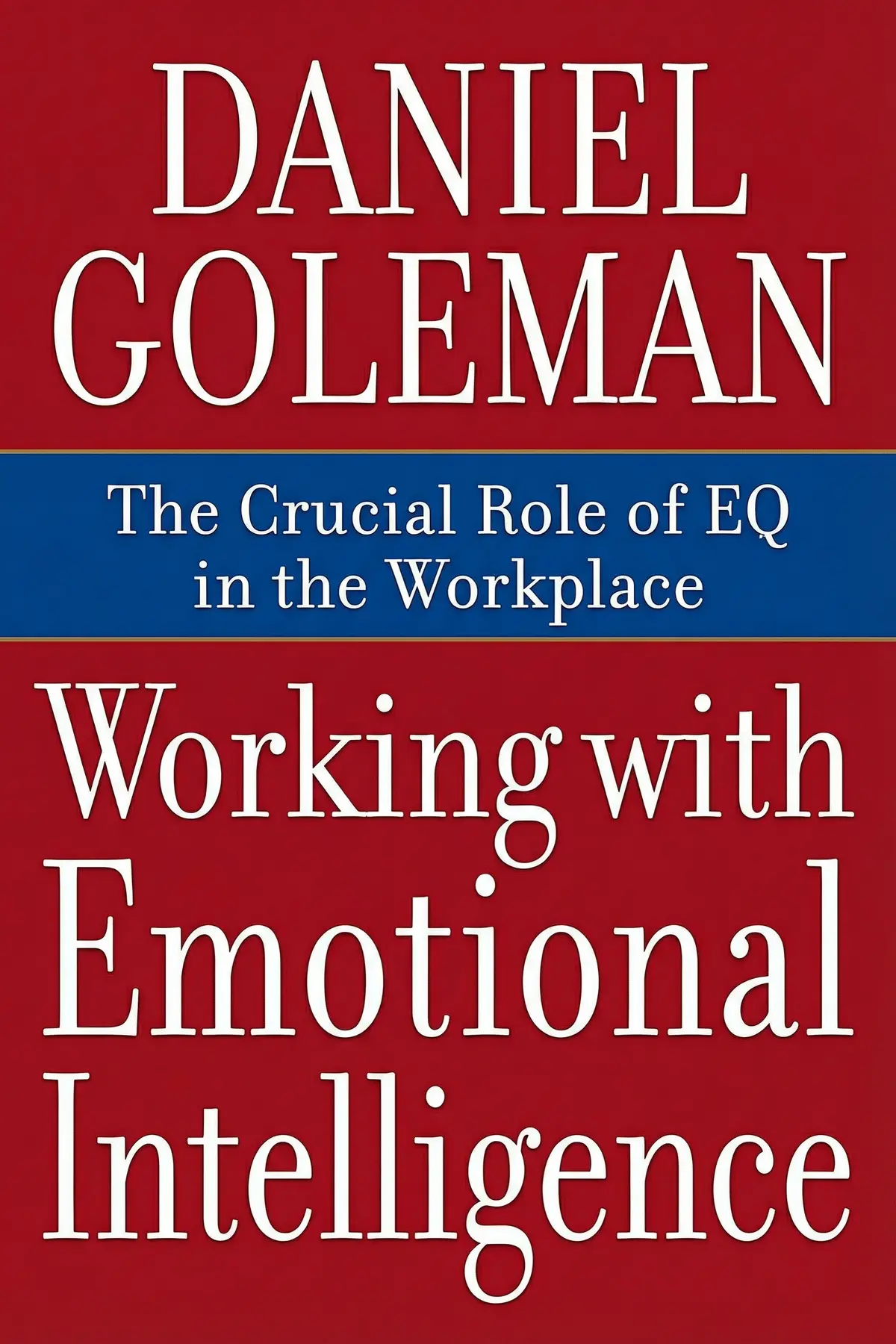
If your technical skills earned your last promotion, they may not earn the next one. In Working with Emotional Intelligence, Daniel Goleman argues that the best performers stand apart because they read and manage emotions well, both their own and other people’s. Goleman spent twelve years reporting on brain and behavioral science for The New York Times. The book cites research in which 71 percent of employers said they now value this ability more than technical know-how when judging candidates.
Goleman’s case is that emotional intelligence predicts success at work better than brainpower alone. He argues that it is a skill anyone can develop, and that a whole organization can build it too. The argument starts with a century of attempts to measure workers. It moves through the brain under stress and the way one person’s mood spreads through a silent room, and ends with a General Electric sales slump solved by a single conversation. Along the way you get a working picture of why calm, empathy and influence decide careers, plus concrete ways to build them in yourself and your team.
2 min 01 sec
For a hundred years, companies have tried to measure what makes someone good at work, and they kept changing their minds. The trait they settled on explains why the most brilliant person in the room is often not the one promoted.
2 min 02 sec
Freezing in an important meeting feels like a personal failure, yet the brain is doing exactly what it was built to do. Understanding that reflex, and one simple writing habit, changes how pressure affects your thinking.
2 min 04 sec
No one needs to say a word for a feeling to move through a room. Learn how moods travel between colleagues, and how the most effective people use that current deliberately instead of letting it run them.
2 min 11 sec
Companies spend heavily on workshops about emotional skills, and many of those workshops change almost nothing. Goleman points to the design choices that decide whether a program fades within a week or keeps working for years.
2 min 15 sec
A struggling sales line at a giant manufacturer was rescued by a remark from someone outside marketing. Goleman uses that moment, and a firm that pays its people in an unusual way, to show how companies think.
1 min 12 sec
Goleman’s argument begins with one person freezing in a meeting and ends with a company rethinking how it pays its staff, and the same skill connects them. Brainpower gets people in the door. What carries them further is the ability to notice what they feel, steady it, sense what others feel and shape the mood around them. That ability can be learned, so it is open to any person, and any organization, willing to practice.
The book supports a few modest moves. When stress spikes, name the feeling, even on paper, the way the laid-off managers who kept journals found work sooner. Walk into a tense meeting having chosen the mood you want others to catch, since two silent minutes are enough for it to spread. If you lead people, collect feedback from every direction, then choose one skill and rehearse it inside real work, week after week. When a problem resists the obvious fixes, ask someone from another part of the business how it looks to them, as GE did.
The two math students were equally brilliant. Only one of them was easy to work with, and that one became the leader.
Technical skill and intelligence get people hired, but they rarely explain who becomes a trusted leader. Daniel Goleman argues that the deciding factor is emotional intelligence: knowing what you feel, staying steady under pressure, sensing what others feel and shaping the mood of a group. He traces how employers moved from timing workers' movements and testing IQ toward the emotional competencies the psychologist David McClelland identified. He also explains what happens in the brain when stress takes over, and why one expressive person can shift the mood of a silent room within two minutes. The book then turns practical. It covers what makes EQ training work, from 360 feedback to daily practice, and how companies such as General Electric and Egon Zehnder International show emotional intelligence at the level of the organization. Readers get a clear account of why calm, empathy and influence shape careers, along with concrete ways to develop them in themselves, their teams and the places they work.
Professionals whose technical skills got them promoted and who now lead people for the first time.
Team leads and learning managers designing development programs that need to change behavior.
Anyone who loses focus under pressure or feels a team's mood slipping.
Daniel Goleman reported on the brain and behavioral sciences for The New York Times for twelve years. He was twice nominated for the Pulitzer Prize and received a Lifetime Achievement Award from the American Psychological Association for his media writing. His book Emotional Intelligence spent eighteen months on the New York Times bestseller list and is in print in 40 languages. He also wrote Social Intelligence and Focus, and he co-wrote Primal Leadership.
Daniel Goleman
Daniel Goleman
Daniel Goleman
Listeners find the material articulate and accessible, with one listener highlighting it as required reading for those in business school. Furthermore, the book delivers useful guidance for both professional and private life, and listeners praise the outstanding references. They describe it as a compelling study on emotional intelligence that enhances output, and one listener mentions it aids in regulating emotions.
Ever wonder why the smartest person in the room isn't always the one leading the team? This book provides the definitive answer by redefining what it actually means to be 'smart' in a professional environment. Goleman’s breakdown of the twenty-five emotional competencies is phenomenal and offers a clear roadmap for personal growth. I found the chapters on 'flow' and internal motivation especially inspiring for my own career path. It isn't just about being 'nice' at work; it’s about the sophisticated management of your own emotional state and the states of those around you to drive performance. The research cited is extensive, making this much more than your typical 'self-help' fluff. It’s mandatory reading for anyone who wants to transition from a technical role into a leadership position. I've already started applying the listening techniques at home too, and the results are immediate.
Show moreAfter hearing so much buzz about EQ, I finally delved into Goleman’s specific breakdown of the twenty-five competencies, and it’s truly a game-changer. The book goes way beyond the surface-level advice of most business books. It actually explores the neurological basis for how we react to stress and how we can retrain our brains for better outcomes. I loved the idea that at the highest levels of leadership, nearly 90% of the difference between success and failure is due to emotional intelligence. This shifted my entire perspective on what I should be focusing on for my professional development. It’s well-written, backed by phenomenal references, and provides a sense of conscience to the reader. It’s one of those rare books that makes you want to be a better person, not just a more productive employee.
Show moreAs a business major, I was assigned this text for a management seminar, and it actually lived up to the hype surrounding it. Goleman does a fantastic job of illustrating why a high IQ isn't the sole predictor of a successful career trajectory. The way he breaks down the five core dimensions of emotional intelligence makes the concepts feel accessible rather than just academic theory. I particularly appreciated the sections on self-regulation and how it prevents those career-stalling 'amygdala hijacks' we’ve all witnessed in the office. While some of the corporate examples feel a bit dated now, the fundamental lessons about empathy and social coordination are timeless. It’s a well-written guide that provides a solid framework for anyone looking to improve their professional interpersonal dynamics. It definitely helped me re-evaluate how I handle stress during group projects and internships.
Show morePicked this up on a recommendation from my mentor to bridge the gap between my technical skills and leadership potential. Working in IT, it’s easy to assume that your coding ability is everything, but Goleman proves that these 'hard' skills are actually the easiest to outsource or automate. The real value lies in the 'soft' skills—the ability to influence, communicate, and manage conflict within a team. I liked how he emphasized that emotional intelligence is learned, not just genetic like IQ. This gives a lot of hope to those of us who aren't natural social butterflies. The book is an interesting read that really helps you control your reactions during high-pressure deployments. My only gripe is that it’s a bit long-winded, but the insights into organizational culture made it worth the slog.
Show moreGoleman provides a fascinating look at how our internal mood and self-awareness dictate our outward success in the workplace. The distinction he makes between declarative knowledge and procedural knowledge was a total lightbulb moment for me. It’s one thing to know you should be a team player, but it’s another thing entirely to have the emotional maturity to put it into action when things go wrong. I found the sections on 'political awareness' within companies to be very practical for navigating office dynamics. Although the book was written in the late 90s, the core message about human connection remains incredibly relevant in our digital-first world. It’s easy to read and serves as a great reference guide for improving performance. I occasionally felt the statistics were a bit over-the-top, but they do help drive the point home.
Show moreThe chapter on 'social radar' and sensing the feelings of others was worth the price of the book alone. Personally, I struggled with reading the room during meetings, and Goleman’s advice on empathy and 'attunement' gave me some very practical things to work on. The book is quite thorough, maybe even a bit too thorough for some, but it provides a very complete picture of how an emotionally intelligent organization should function. It’s great for both work and home life because these skills are universal. I do agree with some other reviewers that it feels a bit dated in its specific corporate references, but the psychology is still sound. It’s a solid 4-star read that I would recommend to anyone feeling stuck in their middle-management role.
Show moreGotta say, I was skeptical about how much 'emotional intelligence' could actually be measured, but this book changed my mind. Goleman utilizes a wealth of statistical data and firsthand reports to prove that these aren't just 'touchy-feely' concepts—they are bottom-line drivers for any serious company. The book is easy to read, though it does get a bit repetitive when he tries to justify his thesis through various industries. To be fair, his close ties to the Hay Group do make some of the 'independent' studies look a bit biased, but the logic of the arguments is hard to dispute. It helped me realize that my technical expertise was only getting me through the door, but my ability to handle relationships was what was going to keep me in the room. A very interesting read for the modern professional.
Show moreWhile Goleman makes a compelling case for the 'soft' side of corporate life, the execution feels a bit like a broken record after the first hundred pages. To be fair, the central premise—that empathy and social skills matter more than technical expertise as you climb the ladder—is vital. However, the author tends to bash you over the head with endless anecdotal stories that all start to sound the same after a while. I found myself skimming through the repetitive case studies just to find the actual actionable advice. It’s a bit underwhelming if you're looking for a quick, punchy read, as the monotony of the 'star performer' examples can be exhausting. There is definitely a lot of good info here regarding organizational intelligence, but it requires a lot of patience to dig through the fluff to get to the real gems.
Show moreFrankly, the book could have been half its length without losing any of the core message or impact. Goleman is clearly a brilliant guy, but he falls into the trap of using twenty examples when two would have sufficed. It becomes very repetitive, very quickly. On the positive side, the framework of the five basic emotional competencies is a great tool for self-assessment. I used the 'Self-Awareness' chapter to reflect on my own career goals and realized I was chasing the wrong metrics for success. It’s a good traité on the subject, but it’s a bit 'pesantuccio' as the Italians say—heavy and a bit slow in sections. If you can get past the dry, academic tone of the research, there are valuable lessons about building bonds and collaboration that every manager should know.
Show moreNot what I expected from such a highly recommended 'classic' in the management genre. My primary issue is what some call 'professional nepotism' throughout the research sections. Goleman seems to rely almost exclusively on data from his own colleagues at Harvard and the Hay Group, which makes the whole thing feel more like a giant marketing brochure for his friends' consulting firms than an objective study. The ironies are rich when he talks about avoiding cronyism while his own book is built on it. Beyond the questionable validity of the findings, the writing is incredibly repetitive and could have been a long essay rather than a 300-page book. If you understand that being empathetic and self-aware is good for business, you’ve basically finished the book. Save yourself the time and just read a summary online.
Show moreDaniel Goleman argues that emotional intelligence, the ability to understand and manage your own emotions and other people’s, predicts success at work better than intellect or technical skill alone. He traces how employers moved from measuring physical efficiency and IQ toward the emotional competencies David McClelland identified. He also argues that EQ can be trained in individuals and built into organizations.
When pressure runs high, the emotional brain, the amygdala in particular, diverts resources from working memory and advanced reasoning so that survival comes first. That is why people freeze or act on impulse in a high-stakes meeting. Goleman says self-regulation and self-awareness help. One example is a Southern Methodist University study in which laid-off managers who journaled about their feelings found new jobs faster.
Goleman says a single seminar will not work. Programs should be long-term and tailored to each role, and they should start with a 360 evaluation that is delivered with care. They need to check people’s readiness early and let participants set their own goals in small steps. Above all, practice should be built into daily work, which he reports has produced results seven times more effective than conventional learning.
Goleman means a company’s ability to solve problems, adapt and innovate through its people, relationships and roles. General Electric showed it when a financial services colleague saw that slow appliance sales came from consumer debt, which led to financing plans. Informal social time and shared rewards build it. Egon Zehnder International pools profits among staff, for example, so they share candidates and insights.
It suits professionals moving from technical roles into leadership, managers who want calmer and more cohesive teams, and people who design training programs. It is also useful for anyone who struggles to think clearly under pressure. The book covers both personal skills, such as handling stress and influencing a group, and organizational practices, such as shared rewards and time for informal conversation.


Margaret Heffernan





Joseph A. Maciariello


Robin Ryan

AUDIO SUMMARY AVAILABLE
Get the key ideas from Working with Emotional Intelligence by Daniel Goleman, plus 5,000+ more nonfiction titles.