A Force for Good: The Dalai Lama's Vision for Our World
Daniel Goleman
 English
 ไทย
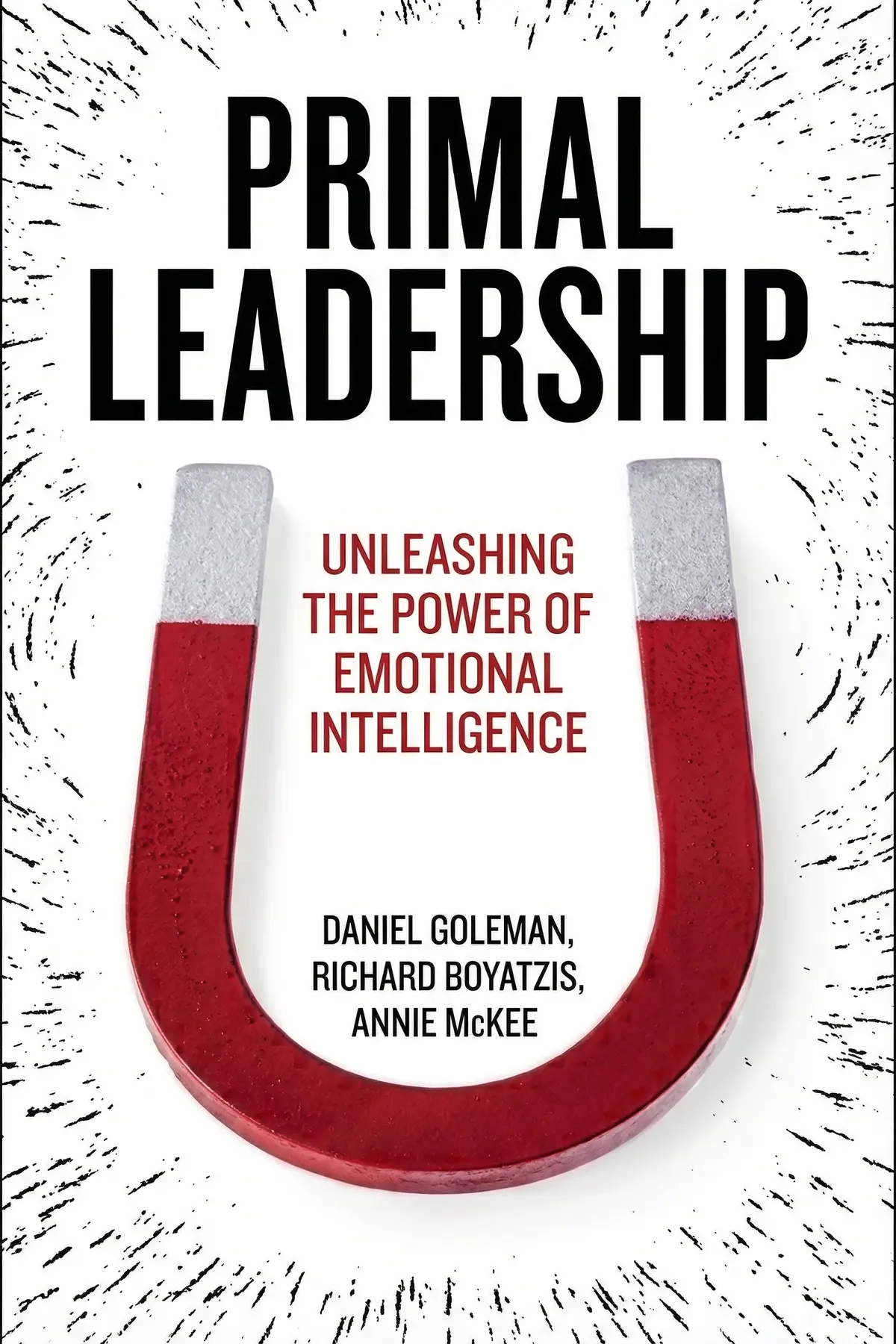
Shows why a leader's mood spreads through a whole team and decides how well it works. It also explains how to build the emotional skills and flexible styles that make people want to do their best.
1 min 01 sec
If you lead people, your plans and targets get most of your attention, yet your team is reading something else: your mood. In Primal Leadership, Daniel Goleman, Richard Boyatzis and Annie McKee argue that a leader’s first job is emotional, because feelings spread from the person at the top to everyone below. They call this primal leadership, primal in two senses: it was the first task leaders ever had, and it is still the one that matters most.
Their case is that a leader who gets strategy right but steers emotions badly will still fall short, while one who builds emotional intelligence can lift performance, keep talent and make hard work bearable. Better still, these skills are not a gift of birth. They can be built, one habit at a time. What follows is a map of the four skills at the center of the book, the six styles a skilled leader moves between, and the slow practice that turns a dissonant boss into a resonant one.
1 min 59 sec
Two executives faced the same room of journalists on back-to-back days. One left needing protection, the other left to cheers. The difference had nothing to do with the facts they delivered.
1 min 58 sec
Some bosses leave a team energized after hard news, while others drain it on an ordinary Monday. The authors borrow a word from music to explain the gap, and an image of drums to show how it spreads.
2 min 11 sec
Technical brilliance gets people promoted, yet it rarely predicts who leads well. The authors name the abilities that do, and they warn that most leaders misjudge how good they already are.
2 min 01 sec
Two of the six leadership styles, pacesetting and commanding, are best used rarely, since they can alienate people and even sour a whole team. A study of school heads hints at what a wider range of styles can do.
2 min 05 sec
A weekend workshop can leave a manager inspired on Monday and unchanged by Friday. The authors explain which part of the brain has to learn, and why it refuses to be rushed.
1 min 57 sec
One warm manager inside a cold company rarely changes much for long. The authors argue that whole teams can be emotionally intelligent, and that the usual goal of alignment misses what matters.
1 min 12 sec
What the book adds up to is a different picture of the job. Strategy, plans and ideas still matter, but they travel through people, and people take their emotional cue from whoever leads them. A leader is always setting a tone, whether they mean to or not. The only choice is whether that tone produces resonance or dissonance, like the two BBC executives facing the same room on back-to-back days.
The hopeful part is that all of this can be learned. These four abilities, knowing yourself, governing yourself, reading others, and handling relationships, do develop, but never during a weekend workshop. They grow through months of small, repeated choices.
That suggests where to begin. Find out how the people you lead actually experience you, because your own estimate is probably too generous. Pick one habit, such as hearing people out before you respond, and practice it every day until it becomes automatic. Notice how often you fall back on commanding or pacesetting, and try a coaching or visionary approach instead.
Think of the drum again. Beat yours with care, and the people nearby will start to resonate too.
Most leaders pour their energy into strategy, targets and plans. Daniel Goleman, Richard Boyatzis and Annie McKee argue that something more basic decides whether any of it works: the emotional tone a leader sets. Because the brain's emotional center picks up signals from the people around it, a boss's mood travels through a team and shapes its climate, its effort and its results. The authors call this primal leadership, since steering emotions was the first task of leaders and is still the most important one. They describe resonant leaders who bring out the best in people and dissonant ones who rule through fear. They divide emotional intelligence into four areas: knowing yourself, governing yourself, reading others, and handling relationships. They then show how these skills turn into six leadership styles that a good leader moves between as the situation demands. Readers also get a method for change. The authors insist these skills are learned, not inborn, and lay out a slow, practice-based path for rewiring habits, followed by advice on spreading emotional intelligence through teams and the culture of a whole organization.
New and experienced managers who sense their mood shapes the team but don't know how to steer it.
Founders and executives whose teams deliver under pressure yet seem drained or fearful.
HR and learning leaders designing leadership programs that need to produce lasting change.
Daniel Goleman reported on the brain and behavioral sciences for The New York Times for twelve years, was twice nominated for the Pulitzer Prize and wrote Emotional Intelligence, in print in 40 languages. Richard Boyatzis is a Distinguished University Professor at Case Western Reserve University, holds a doctorate in social psychology from Harvard and has written over 125 articles on leadership, emotional intelligence and coaching. Annie McKee helped found the Teleos Leadership Institute and teaches at the University of Pennsylvania's graduate school of education.
Daniel Goleman
Daniel Goleman
Daniel Goleman
Daniel Goleman
Listeners find this text to be a compelling and essential guide for corporate experts, delivering excellent guidance for cultivating leadership and blending emotional intelligence with self-awareness. The material provides in-depth explorations of management theories and remains accessible, with one listener pointing out how it harmonizes academic models with professional practices. Listeners believe it is well worth the cost.
Finally got around to reading this staple of management literature, and it is undoubtedly an essential foundation for any professional aiming to scale the corporate ladder. The authors do a phenomenal job of moving beyond the abstract concept of 'soft skills' to provide granular breakdowns of how emotional intelligence actually dictates the success of a team. I particularly appreciated the distinction between resonant and dissonant leaders; it explains so much about the toxic dynamics I've seen in past roles. While some sections regarding the neurological aspects of the brain are a bit dense, the way it balances scientific theory with actionable business principles justifies the cover price. It’s a must-read if you want to understand why some managers inspire fierce loyalty while others just breed resentment. To be fair, you have to be ready for some introspective work, but the payoff for your career trajectory is immense.
Show moreWow, I didn't expect a business text to make me re-evaluate my entire personality, but here we are. Unlike some reviewers who found the 'ideal self' exercises demeaning, I found the process of identifying my emotional gaps to be incredibly empowering and humanizing. The authors argue that great leaders aren't just born; they are made through a conscious effort to improve their social circuitry. That message of mind plasticity is so vital in today’s rigid corporate world. I loved the deep dive into how emotions are contagious. It changed the way I walk into meetings every morning. The book is well-referenced and provides a perfect roadmap for anyone serious about fostering a resonant culture. If you are a manager who actually cares about the people you lead, this is a top-tier resource.
Show moreAfter hearing about this in a leadership seminar, I was skeptical about how EI applies to my work in the public sector, but I was pleasantly surprised. The authors articulate a vision of leadership that is rooted in service and authenticity rather than just manipulation or hitting quarterly targets. It’s a refreshing change from the 'command and control' style that is still so prevalent. The way they describe 'collective mindfulness' helped me understand why my team has been struggling with certain ingrained habits. By surfacing the emotional reality of our organization, we’ve actually started to see real change. This book is a must-read for anyone who wants to lead with heart without losing sight of excellence. It’s detailed, easy to follow, and provides a language for leadership that feels both modern and deeply human. High marks from me.
Show moreAs someone who has navigated a few different corporate cultures, the core concept of 'limbic leadership' really hit home for me. By examining the way our limbic systems interact, the authors illustrate how a leader’s mood isn't just a personal matter but a broadcast signal that can either harmonize a team or completely shatter its productivity. It’s fascinating stuff. I found the six leadership styles—especially the contrast between the Pacesetting and Coaching models—to be incredibly practical for daily application. My only gripe is that the writing can feel a bit like a technical report in the middle chapters, making it a slower read than your average business bestseller. Still, the detailed explanations provided here offer a roadmap for building leaders who are actually self-aware. If you can push through the occasional dry stretch, the insights on relationship management are pure gold.
Show moreThe chapter on 'CEO disease' alone makes this a worthwhile purchase for anyone sitting in an executive chair or aspiring to one. It’s a stinging reminder of how easily leaders can become isolated in a bubble of their own making. This book offers more than just theory; it provides a comprehensive guide on how to stay attuned to the emotional reality of your organization. I’ve read plenty of management books, but few balance the psychological side of leadership with practical business outcomes as effectively as this one. Some of the real-life examples felt a bit truncated, leaving me wanting more depth on the specific turnarounds mentioned, but the overarching message is powerful. You’ll walk away with a much better understanding of how your own self-management—or lack thereof—is the primary driver of your team’s climate. Definitely worth the time for the self-reflection it triggers.
Show morePrimal Leadership serves as a fantastic primer for anyone who wants to operationalize their soft skills instead of just talking about them. Personally, I found the sections on 'relationship management' to be the most insightful part of the entire volume. It’s one thing to know you should be empathetic; it’s another to see the data on how empathy drives the bottom line. The book does a great job of showing how leaders can act as 'limbic attractors' to keep their teams focused and positive. While I agree that some chapters feel a bit like they were cut and pasted from different reports, the overall message remains cohesive. It’s an informative read that challenges you to look in the mirror before you try to change anyone else. A solid addition to any management library.
Show moreThis book feels like three different manuscripts stapled together, and frankly, the stitching shows quite clearly. While the opening chapters on the power of resonance are exciting and offer a fresh perspective on what makes a leader 'primal,' the later sections devolve into a mountain of study summaries that feel repetitive. It’s ironic that a book about emotional intelligence can occasionally feel as dry as a grocery list or a recycled PowerPoint presentation. I struggled to stay engaged during the deep dives into organizational theory, even though I recognize the value of the information. That said, the checklist of leadership competencies at the end is a fantastic tool for self-assessment. It’s a bit of a mixed bag: the ideas are groundbreaking, but the execution is often uninspired and takes a lot of discipline to finish.
Show moreEver wonder why a highly intelligent boss can still be a total disaster when it comes to office morale? This book answers that question by prioritizing empathy and social awareness over raw IQ, which is a perspective I think more companies need to adopt. However, the experience of reading it was a bit of a slog for me. The authors seem quite full of themselves at times, constantly name-dropping the multinational CEOs they’ve coached. It creates a bit of a barrier for those of us working in smaller firms or non-profits. The theory of self-directed learning is useful, but it’s buried under so much academic padding that I found myself skimming frequently. It’s a good book with great ideas, but it desperately needed a more ruthless editor to keep the energy high throughout.
Show moreTruth is, I opted for the audiobook version, which might have been a mistake because the narrator was exceptionally dry. The content itself is quite valuable, specifically the breakdown of the four domains of emotional intelligence, but the delivery made it hard to stay focused. It’s a relatively short book that should have taken two days, but it felt much longer. I did appreciate the practical advice on how to build a learning agenda that focuses on strengths rather than just fixing weaknesses. It’s a decent primer for someone who has never heard of EI, though seasoned managers might find some of the advice a bit elementary. It provides okay information for building leaders, but don't expect to be entertained. It’s strictly educational and a bit clinical.
Show moreNot what I expected from Goleman, as the writing here is incredibly uninspired and buried under piles of redundant study summaries. I was excited to learn more about emotional intelligence in leadership, but the result was a book that felt like a chore to finish. The real-life stories were far too brief to have any emotional impact, and the authors kept repeating the same few points about resonance until they lost all meaning. Look, the core idea is solid, but you could probably get everything you need from a twenty-minute summary online. It took me months to get through this because it was so dull and frustrating. For a book that preaches the importance of engagement and connection, it failed to connect with me as a reader. Disappointing.
Show moreGoleman, Boyatzis and McKee argue that a leader’s most basic task is emotional. Because the brain’s emotional center responds to the people around us, a leader’s mood spreads through a team and shapes its climate and performance. Leaders who create resonance bring out the best in people, while dissonant leaders who rule through fear bring out the worst. Emotional intelligence is the skill set that makes resonance possible.
The book lays out four capacities: knowing yourself, governing yourself, reading other people, and managing relationships. Self-awareness, understanding your own feelings, comes first and supports the rest. Self-management covers competences such as self-control, adaptability and optimism. Social awareness rests on empathy. Relationship management includes influence, conflict management, developing others and teamwork. The authors suggest effective leaders show at least one competence from each domain.
The styles are visionary, coaching, affiliative, democratic, pacesetting and commanding. The authors present them as a repertoire to draw on as situations change. The best leaders move among the first four, which build a positive climate, and use pacesetting and commanding rarely, since those tend to alienate people. Goleman suggests keeping the commanding style for emergencies or mixing it with other approaches.
Yes. The authors cite long-term studies showing people can develop these abilities, some keeping their gains for seven years. Learning works through practice rather than information: a leader notices a bad habit, deliberately tries a better behavior and repeats it for months until it becomes automatic. Goleman warns that one-off seminars or week-long off-sites are not enough for lasting change.




Joseph A. Maciariello



Deborah Gruenfeld

Mike Michalowicz


AUDIO SUMMARY AVAILABLE
Get the key ideas from Primal Leadership by Daniel Goleman, plus 5,000+ more nonfiction titles.