
14 min 08 sec
Available in: English
 ไทย
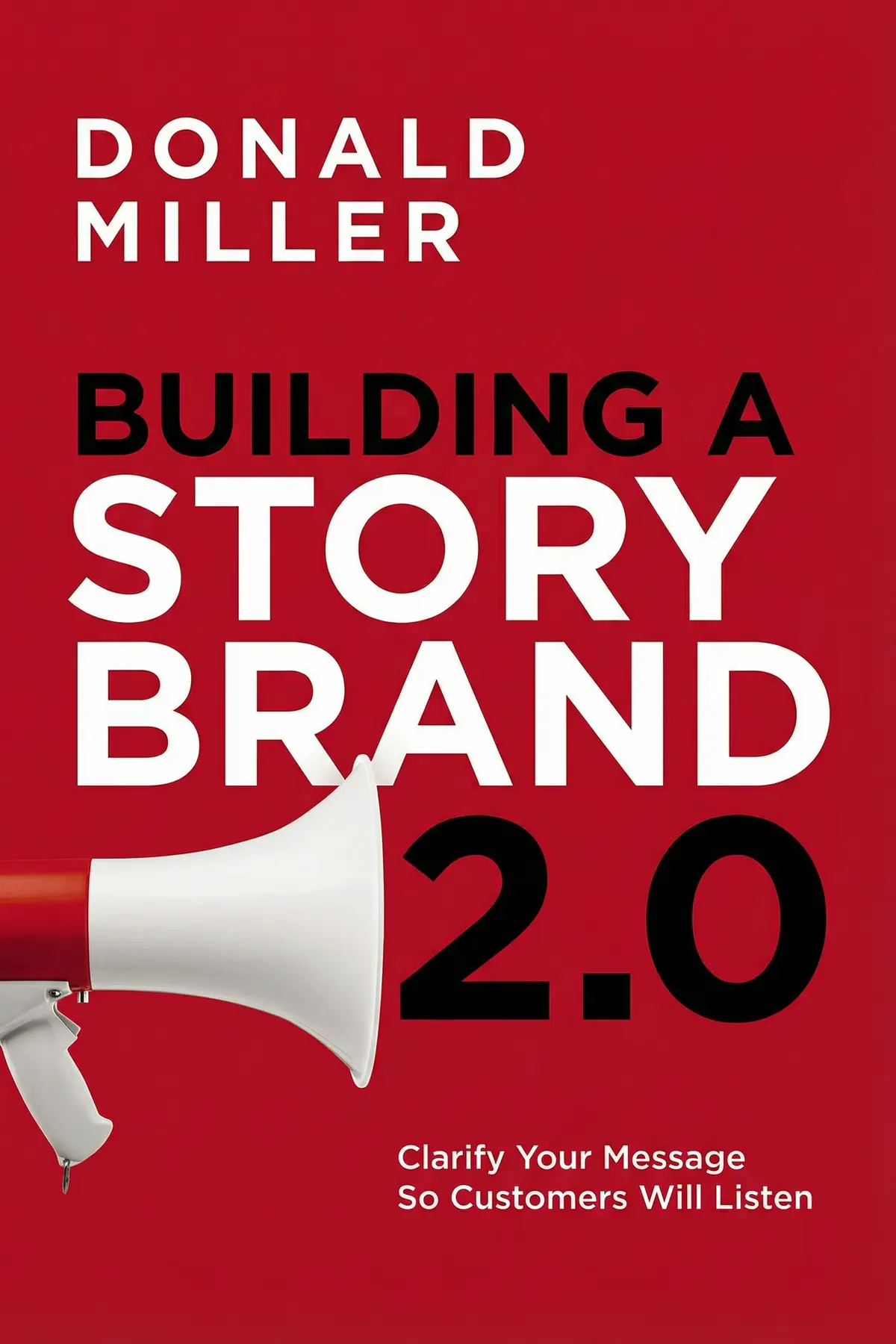
EnglishไทยBuilding a StoryBrand: Clarify Your Message So Customers Will Listen
Shows how to turn a confusing marketing message into a clear story in which the customer is the hero, their problem is the villain and your business is the guide with a plan.
Table of Content
1. Introduction
1 min 01 sec
Most business owners who want more sales reach for a new website, but Donald Miller argues the real problem is usually the words on it. In Building a StoryBrand, the writer and StoryBrand chief executive makes a plain case: if customers cannot tell in seconds what you offer and how it helps them, they leave.
His fix borrows from the story, a form of organized information that has held a central place in human life since Homer’s time. A story holds attention the way a melody stays in your head, because it follows a pattern the brain already knows. The throughline is simple. Customers listen when your message tells their story, with them as the hero, their problem as the villain and your company as the guide who hands them a plan.
Miller turns that pattern into seven parts, from character to success. Follow them and you can rewrite your homepage, your pitch or your next ad around a customer who wants one thing and needs your help to get it.
2. Tell customers what you sell in one line
1 min 39 sec
A painter with the skill of Michelangelo and a beautiful website can still lose the customer who came looking for him. The reason has nothing to do with talent or design.
3. Turn your message into a story that sticks
1 min 39 sec
Random car horns vanish from memory in minutes, yet a tune heard once can follow you all day. The difference explains why most marketing is forgotten and what to build instead.
4. Win attention by casting the customer as hero
1 min 37 sec
A luxury resort spent its website telling visitors about itself, and guests could not see what was in it for them. Then someone noticed what people actually came for.
5. Name the frustration your customer really wants gone
1 min 45 sec
Every painter can fix peeling walls, so why would a homeowner choose one over another? Miller’s answer lies in a feeling customers rarely say out loud.
6. Earn trust as a guide who understands and delivers
1 min 42 sec
Yoda and Gandalf never take the hero’s place, yet the story fails without them. Miller argues your business belongs in exactly that role, and two qualities decide whether customers believe you.
7. Lay stepping stones and ask for the sale
1 min 47 sec
Customers who trust you can still stand frozen at the edge, unwilling to commit. A creek, a garage and a used-car dealer show what gets them moving.
8. Show what customers lose and who they become
1 min 54 sec
Losing a sum of money stings more than winning the same sum delights. Miller turns that imbalance, and its opposite, a picture of a better life, into the last two parts of the story.
9. Conclusion
1 min 04 sec
Building a StoryBrand asks a business to step out of the spotlight. The company that talks about its history, its front desk and its long menu of services is telling its own story, while customers are busy living theirs. Miller’s framework is a way to hand their story back to them, with your business in the supporting role it was always meant to play.
The practical work can start with a single page. Read your homepage the way a stranger would and check whether the first line says what you do and which need it meets. Rebuild it around the customer’s one desire and the feeling underneath their problem, so they hear themselves in it. Then add a piece of proof, a short path of simple steps and a button that asks for the sale, with something free for people who are not ready yet.
The resort did not need better buildings. It needed to stop describing its lobby and start showing a towel, a bath and a massage. Customers listen once they can see themselves in the picture.
About this book
What is this book about?
Many businesses that want more sales start with a new website or a fresh ad campaign. Donald Miller argues that design rarely fixes the real problem, which is a message customers cannot follow. If people cannot tell quickly what you offer and how it helps them, they move on. Miller's answer is the story, which he treats as information arranged in a pattern the mind already knows. His StoryBrand 7-Part Framework takes the ingredients most stories share: a hero, a conflict, a guide who helps, a plan to follow, a push to act, and then the stakes of failure and the reward of success. The customer is always the hero. Their problem, especially the frustration they feel inside, becomes the villain. The business plays the guide, showing empathy and proof of competence, then offers a simple plan and asks for the sale. Readers get a way to rewrite a homepage, a pitch or an ad so customers recognize themselves in it, with examples from a resort that rebuilt its website, CarMax's promises to car buyers, Daniel Kahneman's work on loss and brands such as Nike, American Eagle and Red Bull.
Book Information
Who it's for
Business owners with websites
Small business owners whose websites get visits but few sales.
Marketers and company founders
Marketers and founders who struggle to explain in one sentence what their company does.
Freelancers and service pros
Freelancers and service providers writing pitches, ads or landing pages that need to be understood fast.
About the Author
Donald Miller
Donald Miller is an American writer, speaker and entrepreneur, born in Houston, Texas, in 1971. He is CEO of StoryBrand, a company that helps businesses sharpen how they communicate. He first became known for reflective books on faith and self-discovery, including the New York Times bestseller Blue Like Jazz, then turned to business communication with bestsellers such as Marketing Made Simple and How to Grow Your Small Business. He also founded The Mentoring Project, which supports fatherless youth.
Ratings & Reviews
Ratings at a glance
What people think
Listeners find this book highly practical and accessible, featuring a phased manual for beginning and straightforward materials to use. Furthermore, the content offers powerful concepts throughout, assisting in the development of precise messaging and the enhancement of narrative techniques. They also value the beneficial marketing insights and feel the purchase offers great value.
Top reviews
Pierre
Finally got around to reading this marketing staple, and the clarity it provides is genuinely impressive. Donald Miller breaks down the complex world of brand messaging into a seven-part framework that actually makes sense for the average business owner. Instead of hiding behind jargon, the book focuses on how you can help your customers survive and thrive in a noisy marketplace. I particularly loved the concept of the 'story gap'—it changed how I view our entire product line. While some might find the tone a bit repetitive, the sheer practicality of the advice justifies the time spent reading. Our team used the website checklist to overhaul our homepage, and the difference in user engagement was almost immediate. It is a vital resource for anyone who feels like their message is getting lost.
Show morePensuda
Why did no one tell me about the five-second rule for websites earlier? This book is packed with compelling ideas that challenge the way we traditionally approach advertising and digital copy. Miller insists that if a visitor can’t tell what you offer within five seconds of landing on your page, you’ve already lost them. That insight alone was worth the purchase price for me. The writing style is punchy and direct, which mirrors the very advice he gives about simplifying your message. I found the section on 'internal problems' vs. 'external problems' particularly enlightening because it addresses the emotional root of why people buy. It is an easy-to-understand manual that takes the guesswork out of storytelling. Truly, this is one of the most useful business books I have encountered in years.
Show moreHugo
Stop making your customer the sidekick in your brand's journey and start acting like the guide they actually need. This book is a game changer for anyone who feels like they are shouting into a void. Miller explains that customers are looking for empathy and authority, not a brand that brags about its own awards. The breakdown of the 'villain' in the story—the root cause of your customer's frustration—is brilliant. I spent an entire weekend refining our company's one-liner based on the exercises in the final chapters. The results were immediate; our sales team finally has a unified way to talk to prospects. It is a rare business book that is both high-level and deeply tactical. If you want to improve your storytelling abilities, buy this today.
Show moreNarongrit
Picked this up on a whim after a recommendation and it's easily the most actionable business book on my shelf. Most marketing materials are a cluttered mess, but this book gives you a literal blueprint to clean them up. I love how he defines success and failure so clearly; if there’s nothing at stake, there is no story. The advice to use 'negative' stakes sparingly was a great reminder to not overdo the fear-mongering. The resources provided, like the online BrandScript tool, make the whole process feel less daunting. It’s a quick read, but I’ll be coming back to it every time we launch a new product. This is absolutely worth the investment for anyone who wants a more effective way to connect with their audience.
Show moreNatalie
What struck me most was the emphasis on survival and thriving as the primary drivers of customer engagement. We often forget that people are scanning for information that helps them get ahead or avoid a problem. This book forces you to stop being cute with your copy and start being clear. The distinction between the process plan and the agreement plan was a huge 'aha' moment for our sales department. Miller writes in a way that is very easy to understand, even if you don't have a background in communications. Following the steps to create a lead generator has already helped us build a much stronger email list. If you are serious about growing your business, this book offers the specific tools you need to make it happen.
Show moreSuvannee
The core philosophy here—positioning your brand as the guide rather than the hero—is a complete perspective shifter. Miller argues that your customer should be the Luke Skywalker of the story while your business plays the role of Yoda. This makes so much sense when you realize people only care about their own problems, not your company's history. To be fair, the book does feel like a bit of a sales pitch for his workshops at times, which can be distracting. However, if you can look past the self-promotion, the actual strategy is gold. The step-by-step guide for creating a 'BrandScript' is easy to follow and incredibly logical. I would recommend this to any entrepreneur who is struggling to explain what they actually do for a living.
Show morePat
As someone who has struggled to find the right words for a new startup, I found the SB7 framework incredibly illuminating. The book provides a very straightforward look at why most marketing fails: it's simply too complicated for the human brain to process quickly. Miller’s advice to pare down your ambition to a single focus is difficult but necessary. I appreciated the practical tips on creating lead generators and automated email campaigns to keep the brand top-of-mind. My only gripe is that the tone can be a bit 'trendy marketing guru,' which won't appeal to everyone. Still, the action plan he proposes is much more applicable than the vague advice found in most branding books. It is a solid, helpful read that provides a clear path forward for any small business.
Show moreAdam
In my experience, branding books tend to be either too academic or too vague, but this lands in a very sweet spot. Miller’s focus on identity transformation is the most compelling part of the entire framework. He asks the crucial question: who does your customer want to become? By answering that, you aren't just selling a product; you're selling a better version of themselves. I found the chapter on company culture particularly interesting, as it applies the same story principles to employee engagement. The writing is hit-or-miss—sometimes it's a bit too 'salesy'—but the core message is undeniable. It provides a simple to follow structure that removes the confusion from your marketing. It’s a practical guide that delivers on its promise.
Show moreHemp
Look, the methodology here definitely works, but I felt like the author spent half the book trying to sell me on a certification or a workshop. The information is good, but it’s nothing you haven’t heard if you listen to marketing podcasts or follow people like Seth Godin. It’s a very 'standard' business book in terms of writing style—lots of short sentences and repetitive mantras. That said, the section on 'Agreement Plans' was actually very useful for alleviating customer fears. I also liked the focus on the philosophical problem, which gives a brand more meaning. It’s a fine introductory text for someone who is totally new to branding, but experienced marketers might find it a bit elementary. It serves as a decent refresher but didn't exactly blow my mind.
Show moreLevi
Frankly, I am shocked that a book about the importance of a clear message ended up feeling so convoluted and repetitive. Miller spends the first three chapters essentially telling you that he has a secret formula that he will eventually reveal, provided you keep reading. It felt more like a long-form sales letter for his consulting business than a substantive guide on marketing. He talks constantly about making the customer the hero, yet the book is filled with anecdotes about his own successes and accolades. If you cut out the fluff and the constant plugs for his website, you would be left with a pamphlet. If you want real depth on the mechanics of story, you are much better off reading Robert McKee. There are a few decent tidbits here, but the self-congratulatory tone was just too much for me to finish.
Show moreQuestions about this book
What is the main idea of Building a StoryBrand?
Donald Miller argues that customers ignore confusing messages and respond to clear stories. He recommends structuring marketing like a story in which the customer is the hero, their problem is the villain and the business is the guide. The guide offers a plan, asks the customer to act, and shows what failure and success would look like. A clear story, in his view, does more for sales than a new website design.
What are the seven parts of the StoryBrand framework?
Miller’s SB7 Framework relies on seven elements that most stories share: the character, the problem, the guide, the plan, the call to action, failure and success. A character wants something hard to get, a guide arrives with a plan and urges action, and the character avoids failure and reaches success. Written for a business, that arc becomes a BrandScript that shapes the website, ads and sales conversations.
Why does Donald Miller say the customer should be the hero?
When a brand story focuses on the customer’s needs and wants, the product comes to mind whenever the customer wants that thing. Miller describes a luxury resort whose website talked about its front desk, restaurant and history. After it rebuilt the site around one desire, relaxation, with photos of towels, a bath and a massage, its message finally spoke to what guests wanted.
How can I apply StoryBrand to my website?
Start with one clear line saying what you do and which need it serves. Lead with the customer’s single main desire and the inner frustration behind their problem. Show empathy and add proof such as user numbers or awards. Offer a simple plan of a few steps, place clear buy buttons in several spots, and give a free item, like a guide or webinar, to people not ready to buy.
Why does StoryBrand talk about failure and loss?
Miller cites a 1979 paper by Daniel Kahneman finding that a loss feels worse than an equal gain feels good, so losing $1,000 hurts more than winning $1,000 pleases. Customers try harder to avoid loss than to gain, so a message should make clear what it costs not to buy, as an insurer showing a fire or burglary does, and then pair it with a picture of success.

Readers also enjoyed






AUDIO SUMMARY AVAILABLE
Listen to Building a StoryBrand in 15 minutes
Get the key ideas from Building a StoryBrand by Donald Miller, plus 5,000+ more nonfiction titles.
- 5,000+ titles
- Listen as much as you want
- 7-day free trial
- Cancel anytime









