

13 min 57 sec
Available in: English
Lives of the Stoics: The Art of Living from Zeno to Marcus Aurelius
Seven ancient Stoics show how courage, wisdom, moderation and justice hold up under pressure. Their lives include a shipwreck, a tyrant's court, slavery and a plague, and some of them failed the test.
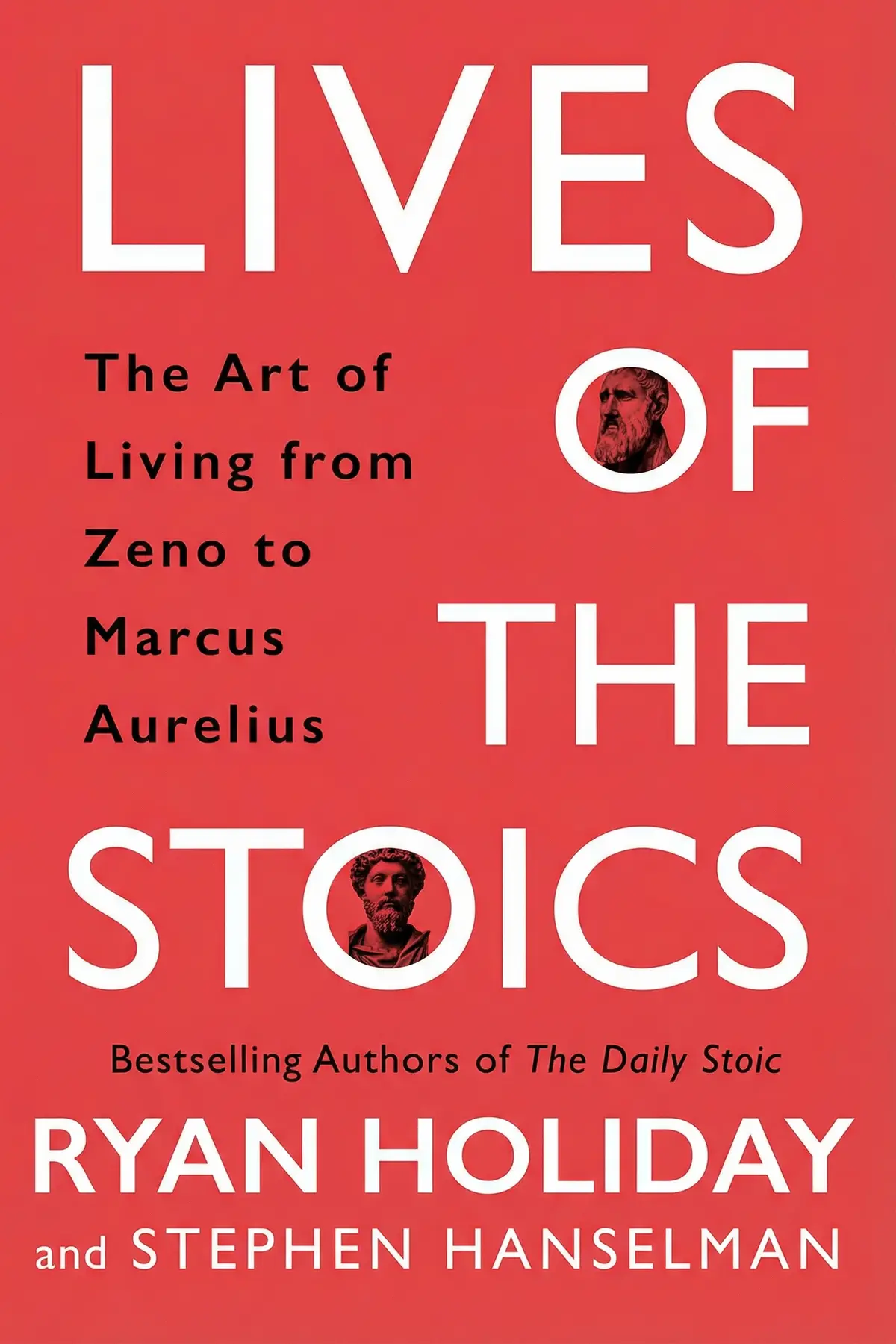
Table of Content
1. Introduction
58 sec
Most people know what they value. The hard part is acting on it when a fortune sinks, a bully threatens or a powerful boss asks you to look away. In Lives of the Stoics, Ryan Holiday and Stephen Hanselman argue that the ancient Stoics saw this as the only test that counts: a philosophy is proven by how the people who hold it behave. Zeno, who founded the school, named four virtues to live by. They were courage, wisdom, moderation and justice.
The authors test those virtues against real lives, and their throughline is simple. Stoicism is best learned by watching people practice it, and the lives where it broke down teach as much as the ones where it held. You’ll meet a water carrier who wrote on oyster shells, a senator who would not bend, a tutor who stayed too long beside a tyrant, a man born enslaved and an emperor who sold his palace treasures during a plague. Each one gives you a question to ask about your own choices this week.
2. Turn a sudden loss into a fresh start
1 min 31 sec
A rich merchant lost everything when a single ship went down, and how he responded started a school of thought. His first lesson, involving a pot of soup, still stings anyone who worries about looking foolish.
3. Use plain hard work as thinking time
1 min 41 sec
He was mocked as a lump of stone that nobody could shape, and he kept hauling water long after rich patrons offered to free him from it. His reasons change how a dull daily routine looks.
4. Know when standing firm starts to backfire
1 min 48 sec
He faced down a soldier at four years old and shamed a corrupt Senate as an adult. Then he turned down one marriage proposal, and that refusal helped hand Rome to the man he feared most.
5. See the Stoic women history left out
1 min 32 sec
Women endured the same wars and tyrants as the famous men, yet their stories mostly vanished. One survived, and it involves a hidden plot, a knife and a demand to be trusted.
6. Judge yourself by your deeds, not your words
1 min 46 sec
The most quoted Stoic of all spent fifteen years beside an emperor who murdered his own mother. He told himself it was his duty, and the authors look closely at that excuse.
7. Choose the handle you grab in every situation
1 min 49 sec
A man who spent his first thirty years enslaved ended up teaching crowds and impressing an emperor. His simplest idea fits any delayed train, lost deal or bad morning, and it costs nothing to try.
8. Hold great power and stay humble like Marcus
1 min 40 sec
The usual rule says absolute power corrupts. One Roman emperor seems to have escaped it, forgiving a man who tried to overthrow him and selling his own treasures when a plague emptied the treasury.
9. Conclusion
1 min 12 sec
The book is useful because it’s honest about failure. The same four virtues carried a water carrier to old age and a senator to his sword. They led a tutor into a tyrant’s palace and an emperor to auction off his own treasures. Holiday and Hanselman present Stoicism as a standard that real people met, missed and struggled with, and that’s why these lives teach more than any list of principles could.
The authors hold that deeds outrank words, so studying examples matters at least as much as studying ideas. That gives you a way to borrow from these lives. Pick one virtue, whether courage, wisdom, moderation or justice, and at the end of each day judge yourself only by what you actually did. When something goes wrong, look for the strong handle before you reach for the weak one. Every so often, ask what your comfort is built on, the question Seneca avoided for fifteen years.
Zeno lost a ship and found a porch. The porch is long gone, but the question first asked there still has the same answer: people show how to live by the way they live.
About this book
What is this book about?
Most of us know what we value. The hard part is acting on it when money is lost, when someone powerful leans on us, or when staying silent would be more comfortable. The ancient Stoics thought this was the only test of a philosophy that counted, and Ryan Holiday and Stephen Hanselman use their lives to show it. The book follows seven figures across Greece and Rome. Zeno founded the school after a shipwreck. Cleanthes carried water until he was old. Cato never compromised, and neither did his daughter Porcia. Seneca wrote beautifully while serving Nero. Epictetus was born enslaved, and Marcus Aurelius became emperor and stayed humble. Each life puts Zeno's four virtues, courage, wisdom, moderation and justice, to a different test. The authors don't turn these people into saints. Cato's rigidity helped Caesar rise, and Seneca grew rich beside a tyrant. Readers get vivid, memorable stories along with practical questions to ask about their own choices: how to answer a setback, when holding firm backfires, what their comfort is built on, and which handle to grab when things go wrong.
Book Information
Who it's for
Professionals under pressure
Professionals who know their values but struggle to act on them under pressure.
New to Stoicism
Readers new to Stoicism who want the people behind the ideas, told as vivid stories.
Weighing integrity and power
Leaders and managers weighing integrity, compromise and the pull of power.
About the Author
Ryan Holiday
Ryan Holiday left college at 19 to apprentice with the strategist Robert Greene. He became known for presenting Stoicism as a way of life for people today, in books such as The Obstacle is the Way and Ego is the Enemy, and he has hosted The Daily Stoic Podcast since 2018. Stephen Hanselman spent about forty years as a bookseller, publisher and literary agent. He studied at Harvard Divinity School and co-wrote The Daily Stoic.
Courage is Calling: Fortune Favors the Brave
Ryan Holiday
Discipline Is Destiny: The Power of Self-Control
Ryan Holiday

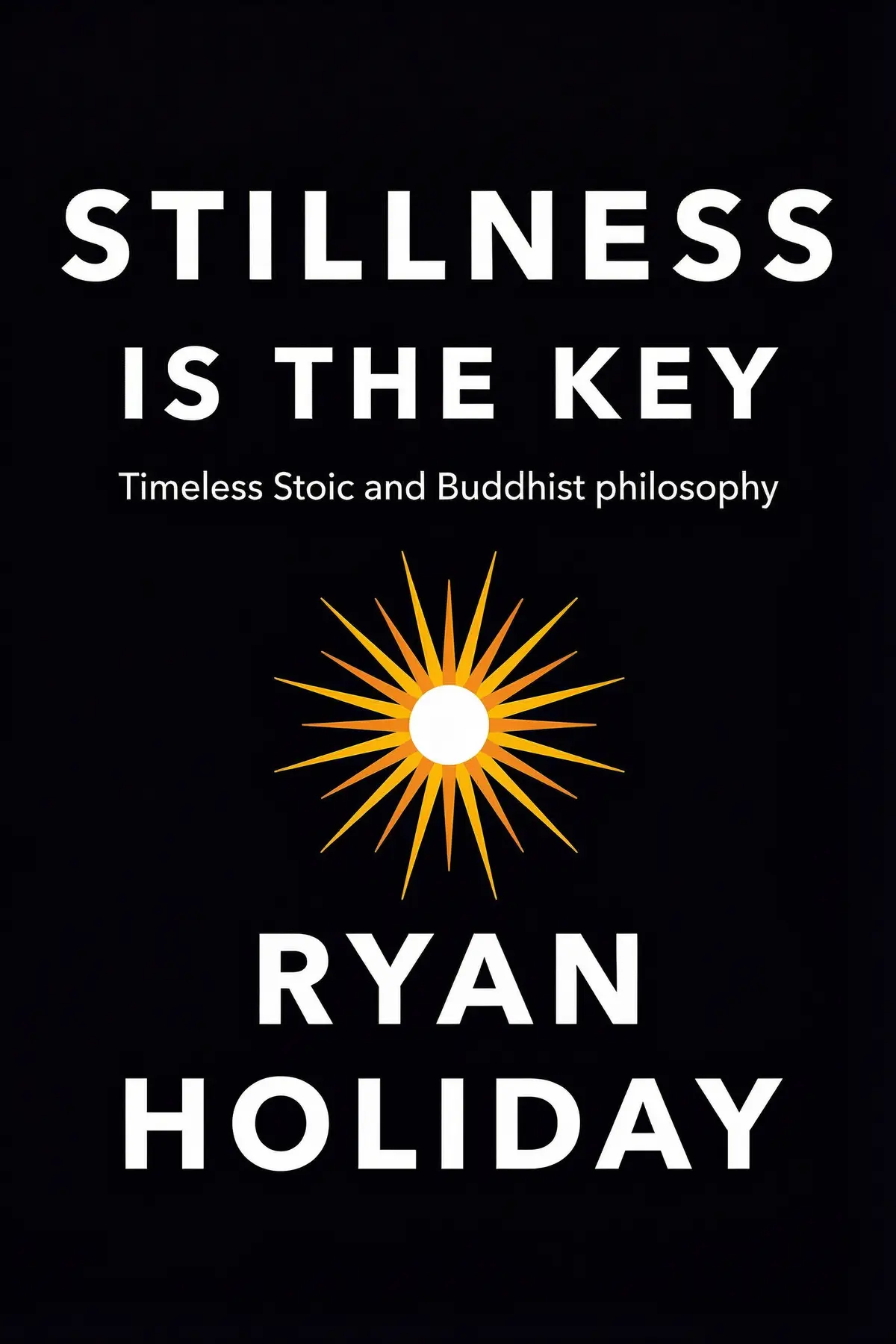
Stillness Is the Key
Ryan Holiday
Wisdom Takes Work: Learn. Apply. Repeat.
Ryan Holiday
Ratings & Reviews
Ratings at a glance

What people think
Listeners find this work on Stoic philosophy remarkably accessible and skillfully composed, aiding their understanding of how the ancient school evolved and using thorough research to animate central figures. They value the stimulating insights provided and feel the book is well worth their time and money.
Top reviews
Iff
Ryan Holiday has a knack for making ancient history feel like a conversation with a mentor, and this collaboration with Hanselman is no exception. By focusing on the lives of the Stoics rather than just their abstract theories, the authors successfully bring these dusty figures back to life. It is vibrant. I found the progression of the philosophy fascinating, moving from the early Greeks like Zeno to the Roman heavyweights like Seneca and Marcus Aurelius. The writing style is punchy and accessible. This makes it an easy recommendation for beginners who might find a traditional translation of the Meditations a bit daunting. To be fair, some chapters are definitely stronger than others, and the authors do take creative liberties to fill in the gaps. However, the overarching narrative of people trying to live with virtue in a chaotic world is incredibly inspiring. It’s a well-written guide that reminds us that philosophy was always meant to be a practical tool for survival.
Show moreMoon
This is exactly what the modern philosophy shelf has been missing: a bridge between abstract theory and the gritty reality of life. Holiday and Hanselman have clearly done their homework here, weaving together disparate sources to create a cohesive timeline of the Stoic school. I loved learning about the lesser-known figures like Cleanthes the boxer or the indomitable Porcia Cato. These stories prove that Stoicism isn't just about 'suppressing emotions' but about active service to the common good. The authors write with a sense of urgency that makes you want to get up and actually do something with your life. The research is extensive, yet the prose remains light and highly readable for a layman. It’s a rare book that manages to be both educational and genuinely moving. If you enjoyed 'The Daily Stoic,' this is the perfect companion piece to deepen your understanding of the lineage.
Show moreWorawit
Wow, the chapter on Marcus Aurelius alone makes the entire purchase worth it. I’ve read 'Meditations' dozens of times, but seeing the Emperor’s life placed in the context of his teachers and predecessors gave me a whole new perspective on his writings. The research is deep. You can tell the authors spent years combing through the fragments of lost texts to piece these lives together. It’s incredibly well-written and brings a sense of drama to what could have been a very dry subject. I was particularly moved by the story of Epictetus, the slave who became a world-renowned teacher. His life is the ultimate testament to the Stoic belief that our internal freedom is the only thing that truly matters. This book is a masterpiece of accessible scholarship. It’s thought-provoking, beautifully paced, and serves as a powerful reminder that we are all part of a long chain of people trying to do their best.
Show moreSarocha
Finally got around to reading this, and it’s arguably the most thoroughly researched work Holiday and Hanselman have put out yet. The book does a fantastic job of illustrating the chronological progression of the school, showing how the torch was passed from Zeno all the way to the Emperor's throne. It's rare to find a history book that feels this alive and relevant to modern struggles. They don't just give you the highlights; they dig into the messy politics and the human failings that made these men and women so remarkable. I especially loved the section on Porcia Cato, who proves that Stoic courage wasn't just for the men in the forum. The stories are brief but pack a punch. It’s a thought-provoking read that definitely justifies the price of admission for anyone serious about the 'art of living' in the modern age.
Show moreYulia
Ever wonder what the guys behind the famous quotes actually did for a living? This book provides those answers by offering a series of mini-biographies that humanize the giants of the Stoa. I particularly enjoyed the chapter on Cicero. He wasn't even a full-blown Stoic, but his 'sheisty' political maneuvering and eventual commitment to virtue made for a compelling read. The book does a great job of showing that these weren't perfect saints. They were flawed politicians, teachers, and soldiers who struggled with greed and ambition just like we do. My only gripe is that it can feel a bit repetitive if you read it all in one sitting. It's better to digest one life at a time. Overall, it’s a thought-provoking collection that bridges the gap between ancient history and modern self-help.
Show moreRania
Picked this up because I wanted to see how the school of thought actually evolved over centuries, and it didn't disappoint. The book moves chronologically, which helps you understand how later Stoics like Epictetus were influenced by the writings of those who came long before them. It was eye-opening to see how they handled power and wealth. Seneca, for example, was a billionaire advisor to the deranged Nero, which creates a fascinating tension between his words and his life. The authors don't shy away from these contradictions, which I appreciated. It makes the philosophy feel more attainable because these people were clearly struggling with their own hypocrisies. The short chapter format makes it easy to pick up and put down. While it lacks the dense philosophical analysis of a textbook, it excels at making the Stoics feel like real, breathing human beings.
Show moreWararat
After hearing so much about the 'big three' Stoics, it was fascinating to see how they fit into the larger Roman and Greek landscape. This book introduces you to about two dozen other philosophers who were just as instrumental in shaping the school. I had no idea that the early Stoics were so involved in politics or that the school almost died out several times. The writing is clear and avoids the academic jargon that usually makes philosophy books a chore to get through. Frankly, the authors do a great job of showing that Stoicism was a 'living' philosophy meant to be practiced in the streets, not just studied in a library. I would have liked a bit more detail on the specific differences between the various teachers, as they can start to blend together after a while. Still, it’s a solid 4-star read for anyone looking to expand their knowledge beyond the basics.
Show moreThawee
Truth is, I found this to be a bit of a mixed bag compared to Holiday's previous work. On one hand, it’s a very readable and handy reference for anyone interested in the chronological progression of the school. On the other hand, the historical layer feels very stripped down at times. The authors admit to cutting out the complex 'logic' and 'physics' of the ancients to focus on the 'ethics,' but that leaves the philosophy feeling a bit hollow. It starts to feel like a dry collection of short bios rather than a deep dive into the school's evolution. I also found some of the motivational segments a bit forced, especially when the historical evidence is thin. That said, it’s still worth your time if you want a quick overview of who was who in the ancient world. Just don't expect an academic level of depth.
Show moreBae
While I appreciate the effort to popularize these thinkers, the sheer amount of creative license taken here is jarring. The authors frequently fill in historical gaps with what can only be described as real person fiction, imagining thoughts and motivations that simply aren't in the record. It feels like they are viewing the ancient world through distinctly modern glasses. They project 21st-century values onto people who lived in a vastly different, much more brutal reality. For instance, the way they link figures just because they share a name—like the two Zenos or the Diogenes connection—is intellectually lazy and frankly confusing. I was hoping for a rigorous philosophical exploration. Instead, I got a series of motivational anecdotes that often miss the actual point of the original teachings. If you want to learn about Stoicism, you are much better off reading the primary sources like Seneca or Marcus Aurelius directly.
Show moreTim
Look, I get that Stoicism is trendy right now, but this feels like the authors are just mining the same historical vein until it’s bone dry. This book is a thin collection of mini-biographies that lacks any real depth or new observations. It's clear that Holiday is re-inventing these figures for the masses, cutting out anything complex that might scare off a casual reader. The result is a 'Stoic Fairy Tale' version of history where every flaw is turned into a shallow motivational lesson. The rhetoric would make a Roman cry. It’s frustrating to see modern philosophy dismissed as abstract while these highly edited, imaginative portraits are held up as perfect models. The scholarship levels are laughable at best. Save your money and just buy a good translation of the original texts instead of this RPF-style fluff.
Show moreQuestions about this book
What is Lives of the Stoics about?
Ryan Holiday and Stephen Hanselman tell the life stories of ancient Stoics, including Zeno, Cleanthes, Cato, Porcia, Seneca, Epictetus and Marcus Aurelius. They show how each one lived, or failed to live, by the four Stoic virtues of courage, wisdom, moderation and justice. Their main argument is that Stoicism is a philosophy of deeds, so you learn it best by watching how people practiced it.
What are the four Stoic virtues?
Zeno, the founder of Stoicism, split virtue into four kinds: courage, wisdom, justice and moderation, which is sometimes called temperance. The Stoics believed these were the surest path to a good life and that everyone should live by them. In the book, Cleanthes connects his love of hard work to moderation and courage, and Cato builds his political career around justice and incorruptibility.
Does the book present the Stoics as perfect?
No. The authors show their flaws openly. Cato’s refusal to compromise pushed Pompey into an alliance with Caesar, which helped Caesar take power. Seneca stayed beside Nero for fifteen years while the emperor murdered his rivals, and he grew richer than any philosopher in history. The authors treat these failures as lessons in their own right.
How can I apply the lessons of Lives of the Stoics?
Start with Epictetus’s idea that every situation has two handles, and choose the strong one when plans fall apart. Judge your day by what you actually did, not by what you intended. Treat routine work as time to think, the way Cleanthes did. And ask whether staying in a comfortable position still serves a real duty or has become an excuse, the trap that caught Seneca.
Who should read Lives of the Stoics?
It suits readers curious about Stoicism who want stories rather than abstract theory, and professionals trying to keep their integrity close to power or under pressure. It also suits people facing setbacks who want models of resilience, from Zeno, who lost his fortune at sea, to Epictetus, who was born enslaved and became a famous teacher.
Featured in
Readers also enjoyed

A Long Way Gone: Memoirs of a Boy Soldier
Ishmael Beah

All Creatures Great and Small
James Herriot


A Promised Land
Barack Obama


A River in Darkness: One Man’s Escape from North Korea
Masaji Ishikawa

A Spy Among Friends: Philby and the Great Betrayal
Ben Macintyre

A Guide to the Good Life: The Ancient Art of Stoic Joy
William B. Irvine

AUDIO SUMMARY AVAILABLE
Listen to Lives of the Stoics in 15 minutes
Get the key ideas from Lives of the Stoics by Ryan Holiday, plus 5,000+ more nonfiction titles.
- 5,000+ titles
- Listen as much as you want
- 7-day free trial
- Cancel anytime









