
13 min 46 sec
Available in: English
 ไทย
EnglishไทยThe Daily Stoic: 366 Meditations on Wisdom, Perseverance and the Art of Living
A practical guide to Stoicism as a daily habit: focus on what you control, read events without spin, turn setbacks into openings and let mortality sharpen how you spend each ordinary day.
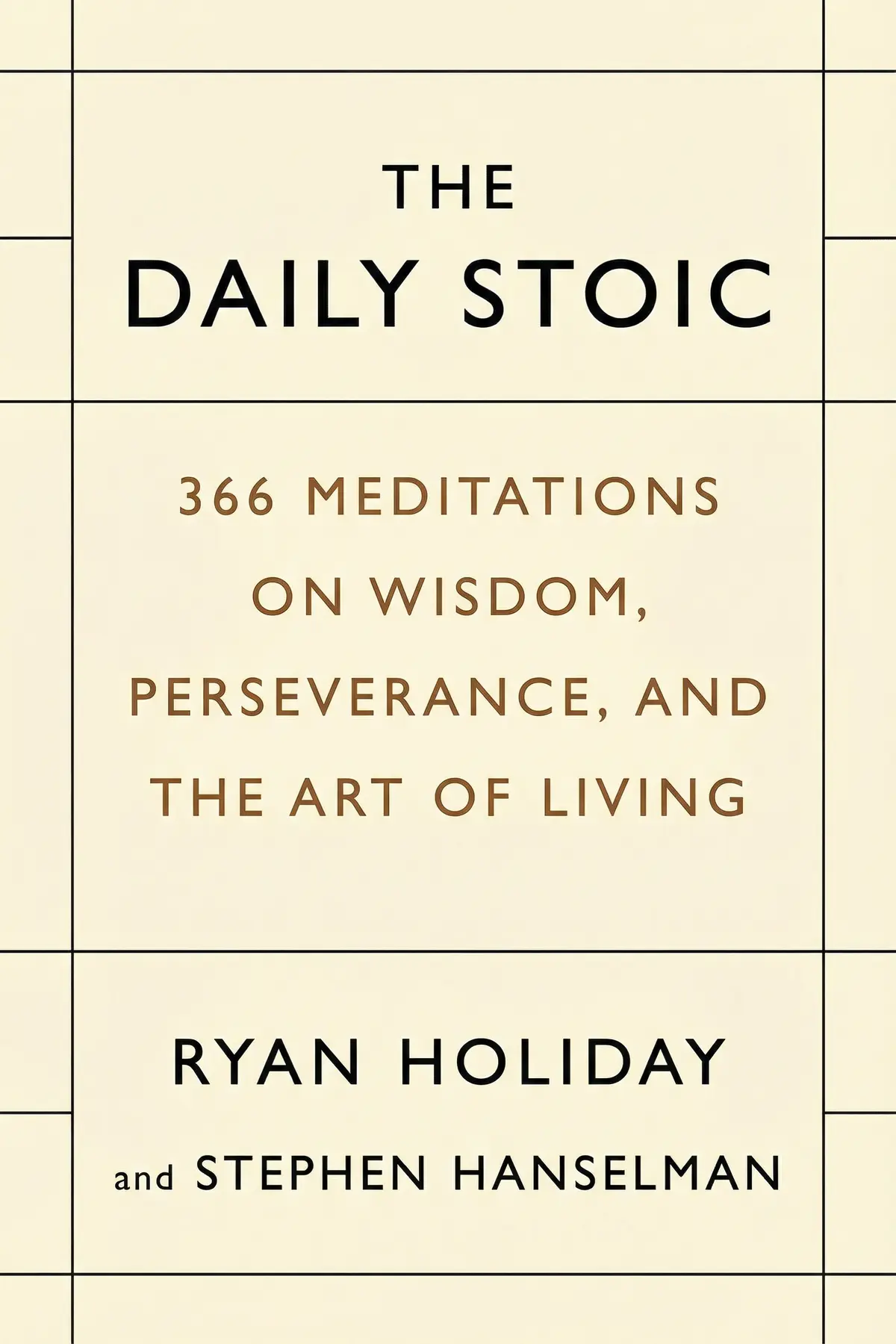
Table of Content
1. Introduction
1 min 06 sec
If your days feel run by things you can’t change, the Stoics offer a blunt correction: the one thing truly yours is your mind, and a good life can be built on it. In The Daily Stoic, Ryan Holiday and Stephen Hanselman pair a short passage of ancient Stoic writing with a brief reflection for every day of the year. Nearly all of those passages come from three figures: the Roman emperor Marcus Aurelius, the playwright Seneca, and Epictetus, a teacher who had once been enslaved.
The idea running through all of it is easy to say and hard to live: put your energy into your judgments, choices and reactions, and setbacks, other people and even death become material for living well. Along the way you’ll meet a journalist in a 1930s asylum, a pilot held prisoner for seven and a half years and a future president struck by polio. Each one shows a practice small enough to start this week, from a daily check on what you control to one question that settles hard decisions.
2. Spend your worry only on what you control
1 min 29 sec
Most daily stress comes from trying to manage things that were never yours to manage. A simple check, done morning, noon and night, shows where your attention leaks away and how to call it back.
3. See people and events without the extra spin
1 min 49 sec
A barking dog and a stranger at a party trigger the same mental shortcut, with very different results. A samurai swordsman offers a way to tell which version of your mind is doing the looking.
4. Pick up every problem by its better handle
1 min 34 sec
A journalist in a 1930s asylum was close to being thrown out when an old image from Epictetus changed his course. The same image can unstick a feud, a project or a stalled relationship.
5. Turn setbacks into material you can work with
1 min 41 sec
A lost file, a traffic jam and a polio diagnosis at 39 all look like plain bad luck. The Stoics read each one differently, and their reasons go further than simple patience.
6. Build an inner fortress no hardship can breach
1 min 41 sec
A Roman who refused to wear a hat and an American pilot held captive for years trained the same defense. It works best when it is built long before the real test arrives.
7. Let the person you want to be decide
1 min 45 sec
Chasing money alone has a trap built into it, and selfish wins often make people physically ill. An emperor with every excuse to cut corners points to a better target, and a single question for hitting it.
8. Remember death and make every day count
1 min 33 sec
Thinking about death sounds like a recipe for gloom. Marcus Aurelius and Seneca used it for the opposite purpose, and their practice can sharpen an ordinary workday as much as a whole lifetime.
9. Conclusion
1 min 08 sec
Strip away the 366 entries and The Daily Stoic is a training plan for attention. Each idea pulls your energy away from what the world does and toward the small territory that is truly yours: how you see, how you grip, how you respond and what you aim at. A prisoner of war and an overloaded emperor worked from that same territory, and it was enough for both.
The authors end with a warning about where people tend to look instead. Good clothes and a square meal are worth enjoying, but the more your happiness hangs on outside rewards, the less free you are. The next time you catch yourself chasing likes or buying something to lift your mood, ask what meaningful action you could take in its place; its effect will last longer.
Tomorrow morning, spend one minute sorting what you control from what you don’t. When a problem won’t move, look for its other handle. When a choice is hard, let the person you want to become make it.
Stockdale’s captors controlled every wall around him for seven and a half years. They never reached the one inside.
About this book
What is this book about?
Many people spend their energy on what they cannot change: other people's opinions, bad luck, a plan that falls apart. Ryan Holiday and Stephen Hanselman argue that a philosophy nearly 2,500 years old already offers a way out. Stoicism began in Athens with Zeno, who turned to philosophy after a shipwreck cost him his fortune, and it was built to answer a single question: how should you live? The book pairs a short Stoic passage with a brief reflection for every day of the year, mostly drawing on Marcus Aurelius, Seneca and Epictetus. Its core idea is that only your mind is truly yours, so your judgments, choices and reactions are where a good life gets made. From there come practical tools: a morning, midday and evening check on what you control, the two handles of every situation, a backup plan for every setback, and the habit of asking what your best self would do. Readers meet a journalist fighting addiction, a prisoner of war, an emperor and a future president with polio, and leave with daily practices for steadier focus, calmer reactions and clearer decisions.
Book Information
Who it's for
Professionals wanting calmer days
Professionals stretched thin by things they can't control who want a calmer daily routine.
Leaders needing steadier reactions
Managers and team leads who need steadier reactions when plans or people let them down.
Curious about the Stoics
Readers curious about Marcus Aurelius, Seneca and Epictetus who want their ideas in short, usable daily form.
About the Author
Ryan Holiday
Ryan Holiday dropped out of college at 19 to train under the strategist Robert Greene, then advised authors and musicians. He became known for showing how Stoicism can work as a modern way of living, in books such as The Obstacle is the Way, Ego is the Enemy and Stillness Is the Key, a New York Times number one bestseller, and he has run The Daily Stoic Podcast since 2018. Stephen Hanselman has worked for about forty years in books as a bookseller, publisher and literary agent. He holds a master's degree from Harvard Divinity School and co-wrote Lives of the Stoics.
Courage is Calling: Fortune Favors the Brave
Ryan Holiday
Discipline Is Destiny: The Power of Self-Control
Ryan Holiday
Stillness Is the Key
Ryan Holiday

Wisdom Takes Work: Learn. Apply. Repeat.
Ryan Holiday
Ratings & Reviews
Ratings at a glance
What people think
Listeners find this work to be essential reading that delivers exceptional insights and stimulating content, serving as a wonderful daily prompt. Additionally, the daily segments are briefly explained, and listeners value how these teachings shape their mindset throughout the day. The book also supports everyday life, with one listener remarking that it is a perfect way to introduce oneself to a way of thinking, while others share that it helps them remain balanced and centered every single day.
Top reviews
Tanawan
This book has become a non-negotiable part of my morning routine. Ryan Holiday manages to take these heavy, ancient philosophies from Marcus Aurelius and Epictetus and distill them into something you can actually use while drinking your coffee. Truth is, most of us don't have time to sit down with a dense academic text every single morning. The succinct layout of one meditation per day keeps me grounded and focused on what I can actually control versus what I need to let go of. Some might find the commentary a bit modern, but I think it helps bridge the gap between Roman history and 21st-century stress. It’s an amazing daily reminder that virtue is the only true good. If you want a way to keep your head level during a hectic week, this is a must-read for your bedside table.
Show moreNongnuch
Picked this up on a whim, but it’s far more than just a trendy manual for the 'Silicon Valley' crowd. The daily lessons are succinctly presented, making it easy to digest a little bit of wisdom before the day gets crazy. I love how it highlights the serenity prayer’s roots in these older traditions. Frankly, it’s refreshing to read something that doesn't promise a quick fix but instead asks for a slow, daily commitment to character. The book focuses on the four cardinal virtues—wisdom, courage, justice, and temperance—in a way that feels very practical for someone living in a polarized world. It’s a great way to introduce oneself to a way of thinking that values internal stability over external success. It’s definitely kept me more level-headed over the last few months.
Show moreSirirat
Wow, I didn't expect a book written centuries ago to feel so immediate and relevant to my current life. This isn't just a book you read; it's a book you live with. The daily format is perfect because it prevents you from binging too much information at once. Each page gives you just enough to chew on during your morning commute. The wisdom of Epictetus, who lived as a slave, is particularly moving when you realize he found freedom through his mind rather than his circumstances. Not gonna lie, some days the message hits harder than others, but that’s the beauty of it. It’s an amazing daily reminder that while we can’t control the world, we can control our reactions. This is a must-read for anyone feeling overwhelmed by the news or personal drama.
Show morePor
Look, if you're searching for a way to navigate the noise of the modern world without losing your mind, start here. This book has been life-changing for my mental health. It serves as an amazing daily reminder that my internal state doesn't have to be a reflection of the external chaos around me. The thought-provoking material from Seneca and Marcus Aurelius has taught me to stop and ask: 'Is this helping me feel better?' before I react in anger. It’s helped me with daily living in a way that few self-help books ever have. The truth is, most of us are just looking for a bit of serenity, and this book provides a roadmap to finding it. I've recommended it to everyone in my circle because it’s just that practical.
Show moreSaengdao
The chapter on managing perceptions changed how I view my daily commute and office politics. No longer do I let someone cutting me off in traffic ruin my entire morning. Instead, I use that moment to practice the self-control this book preaches. It’s incredible how much these ancient lessons on clarity and serenity apply to 21st-century problems. The daily lessons are succinctly presented, making it the perfect 'desk book' to flip through when you need a quick mental reset. Frankly, I think everyone should read this. It’s not just about philosophy; it’s about learning how to be a more resilient human being in a world that is constantly trying to upset us. This book provides excellent wisdom that stays with you long after you’ve put it down for the day.
Show moreElla
Ever wonder how to stay calm when everything feels chaotic? In my experience, 'The Daily Stoic' provides exactly the kind of mental armor needed for that. The way it’s organized into 366 days makes the wisdom of Seneca and others feel incredibly digestible. Each page features a powerful quote followed by an interpretation that helps apply the concept to modern life. Now, I’ll admit that sometimes Holiday’s analysis leans a little too heavily on 'productivity' and 'effectiveness' for my taste. It occasionally feels like it's trying to turn Stoicism into a corporate productivity hack, which might rub purists the wrong way. However, the core message of self-control and fortitude remains intact throughout the year. It has definitely informed my thinking and helped me introspectively assess my own reactions to stress.
Show moreDarius
After hearing about Stoicism for years, this felt like the most accessible entry point for a regular person like me. The book provides excellent wisdom and thought-provoking material without being overly academic or dry. I especially appreciated the sections on perception and how we label our own setbacks. My only real gripe is that some of the 366 lessons feel like padding to hit the calendar count, leading to some repetitiveness by the time you get to October. But then again, maybe we need to hear the same lessons over and over before they actually stick. Personally, I found it to be a helpful tool for daily living and keeping a clear, healthy head. It’s a solid 4-star read that I’ll likely keep on my desk for another year just to keep the reminders fresh.
Show moreTalia
Finally got around to finishing the full year cycle of meditations, and I’ve realized that the repetition is actually the point of the practice. Stoicism isn't something you learn once; it's a muscle you have to train every single day. Ryan Holiday does a great job of making these old Roman ideas feel fresh, even if his tone can be a bit preachy at times. I did find a few interpretations a bit too focused on personal gain and financial 'effectiveness,' which seems to miss the point of virtue being the only good. Still, the original quotes are gold. It’s a great way to stay grounded and keep things in perspective when life throws you a curveball. It’s succinctly written and easy to fit into a busy schedule, which I think is why it’s so popular among modern professionals.
Show morePrasarn
As someone who appreciates the original writings of Seneca, I found the bite-sized format both convenient and slightly frustrating at the same time. On one hand, it's a great way to start the day with a focused intention. On the other, the commentary can sometimes feel like it's over-explaining things that were already clear in the quote. Holiday has a very specific, modern style that prioritizes 'action' and 'pragmatism,' which is fine, but it lacks the poetic depth of the original sources. Regardless, it keeps me level and grounded every day. It’s a solid introduction to the philosophy, and I think it works best as a companion piece to the actual Meditations or Letters from a Stoic. Definitely worth having on the shelf for the convenience alone, even if you eventually move on to the source material.
Show moreSakura
To be fair, I have mixed feelings about the way these ancient texts are presented in this collection. I am a fan of Marcus Aurelius, so I was excited to explore deeper Stoic thinkers like Musonius Rufus. Instead, I found mostly the interpretations of the editor with just small snippets from the actual greats. Sometimes it's difficult to find the original Stoic quotes amidst the somewhat shallow and repetitive commentary provided by Holiday. It feels a bit like Stoicism Lite, designed for people who want a 'life hack' rather than a deep philosophical inquiry. That said, the format is convenient, and it does serve as a decent daily reminder to not sweat the small stuff. If you are a beginner, it's a fine starting point, but seasoned readers might find it a bit thin and overly focused on personal success.
Show moreQuestions about this book
What is the main idea of The Daily Stoic?
Ryan Holiday and Stephen Hanselman present Stoicism as a practical philosophy for answering one question: how should you live? Its core is that only your mind, meaning your judgments, choices and reactions, is fully in your control. Drawing mostly on Marcus Aurelius, Seneca and Epictetus, they show how putting your effort there turns setbacks, difficult people and even the fact of death into material for living well.
What are the four Stoic virtues in The Daily Stoic?
The Stoics treated virtue as the highest good and split it into four parts: courage, wisdom, moderation and justice. The authors contrast it with making money your only goal, which never feels like enough and can corrupt your character. Pursuing virtue lets money stay a side benefit, and for Marcus Aurelius it also meant helping others, since he saw people as bees in one hive.
What does The Daily Stoic say about what you can and cannot control?
The Stoics held that only your mind is truly yours. Your body, other people and events can all go wrong whatever you do. The authors suggest a daily routine: each morning, separate what you control from what you don’t and focus on the first; at midday, remember your power to choose; at night, let go of what lay beyond you.
How can I apply The Daily Stoic in everyday life?
Start with small practices from the book. When a conflict stalls, look for the other handle, the fact that makes it carryable, as Epictetus taught. Keep a backup option so a setback redirects your progress. Before hard choices, ask whether the person you want to become would do this. And when you reach for likes or a purchase to lift your mood, pick a meaningful action instead.
Who should read The Daily Stoic?
It suits busy people who feel pushed around by events they cannot change and want a steadier daily routine. Managers facing setbacks, people going through hard periods and anyone curious about Marcus Aurelius, Seneca or Epictetus will find short, usable lessons, backed by stories such as Franklin D. Roosevelt’s response to polio and James Stockdale’s years of captivity in Vietnam.
Featured in
Readers also enjoyed





A Guide to the Good Life: The Ancient Art of Stoic Joy
William B. Irvine


A High-Performing Mind: Strengthen Your Mind and Live Your Best Life
Andrew D. Thompson


Abundance: The Inner Path to Wealth
Deepak Chopra

AUDIO SUMMARY AVAILABLE
Listen to The Daily Stoic in 15 minutes
Get the key ideas from The Daily Stoic by Ryan Holiday, plus 5,000+ more nonfiction titles.
- 5,000+ titles
- Listen as much as you want
- 7-day free trial
- Cancel anytime









