
15 min 01 sec
Available in: English
 ไทย
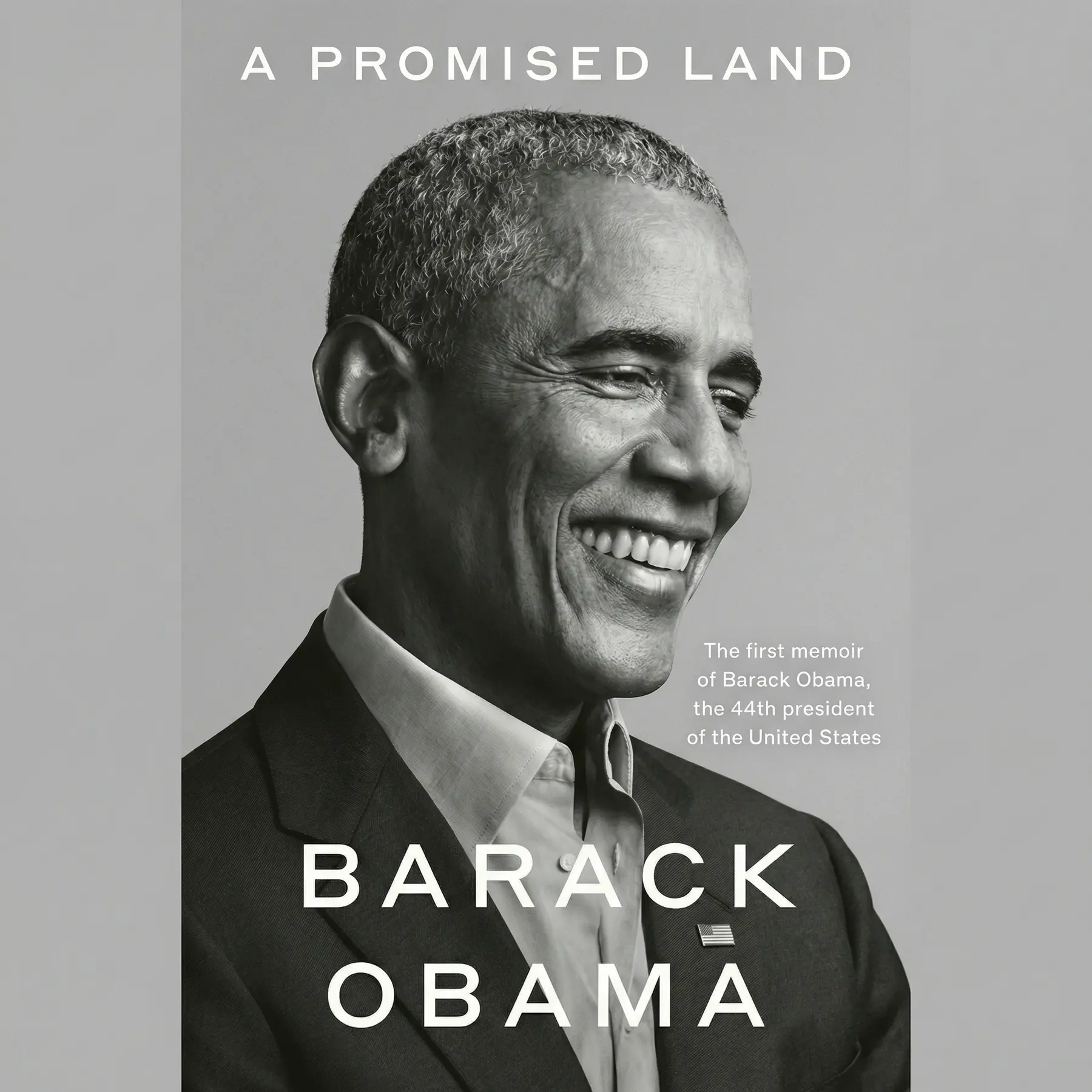
EnglishไทยA Promised Land
By Barack Obama
Barack Obama traces his unlikely path from a distracted Honolulu teenager to the White House, and the hard calls of his first term, showing how he learned when to compromise and when to hold firm.

Table of Content
1. Introduction
59 sec
Successful leaders look inevitable from a distance, which makes their paths seem useless as a guide for anyone else. In A Promised Land, Barack Obama takes that illusion apart. In 2000, fresh from losing a congressional race by 30 points, he flew to the Democratic convention in Los Angeles, had his maxed-out credit card refused at the rental car counter, was kept off the convention floor and went home early. Four years later he gave that convention’s keynote. Four years after that, he accepted its nomination for president.
His memoir follows him from a distracted Honolulu teenager to the Situation Room, and one problem runs through every stage: knowing when to bend and when to hold firm. He learned it slowly, through bad calls, painful compromises and moments of nerve. Here that lesson is traced through a lost race, a racial firestorm, a collapsing economy and a secret raid in Pakistan.
2. Turn unanswered questions into a sense of direction
1 min 50 sec
A teenager more interested in parties than grades started asking why the coaches were never Black. Where those questions led, including a detour through Foucault and Marx, explains the kind of leader he became.
3. What a 30-point defeat can teach about ambition
1 min 48 sec
A maxed-out credit card, a crushing loss and a wife asking him to come home. Obama nearly quit politics in 2000, and the deal he struck with himself shaped everything that followed.
4. Seize the right moment before you feel ready
1 min 53 sec
Obama kept insisting he was not ready to run for president. One conversation with Ted Kennedy ended the argument, and the crowds in Iowa soon showed what waiting might have cost.
5. Answer a crisis by telling the whole story
1 min 50 sec
A looping video of a pastor’s sermons looked like the end of a historic campaign. Obama’s response was a gamble on honesty, and it reached a million viewers within a day.
6. Push big change through even against flat refusal
2 min 04 sec
An economy in free fall, a Senate leader who would not even talk, and a health bill critics branded a takeover. Obama won two historic fights in two years, and then voters sent their own verdict.
7. Know when to bend and when to stand
1 min 45 sec
Sending more troops to war earned Obama a Peace Prize he could not explain. In Egypt, following his conscience ended an era, and the full cost only arrived years later.
8. Make a high-stakes call on incomplete odds
1 min 40 sec
The CIA’s estimate left real room for error, and a single leak would ruin everything. A strange man nicknamed The Pacer and twenty agonizing minutes show how Obama decided without being sure.
9. Conclusion
1 min 12 sec
A Promised Land reads as an argument against destiny. The first Black American president had been a partying teenager, an arrogant candidate humbled by 30 points and a newcomer who answered interview questions like a professor. What carried him, as he tells it, was learning to reconcile the competing parts of himself: Black and white, working-class values and Ivy League idealism. That balance became a working method for deciding when a compromise serves the goal and when it betrays it, a struggle he says he still faces.
The method shows at every turn. He kept his dream after 2000 and changed the race. He sent more troops to Afghanistan because the alternatives were worse, yet backed Egypt’s protesters because his conscience demanded it. Before your own next hard choice, separate the goal you will not give up from the route you are willing to change. When a crisis threatens to define you, tell the fuller story yourself.
On the night bin Laden died, Obama flew back over the shimmering Potomac knowing the battles with Congress and a hard reelection still lay ahead. He let himself breathe for one night, then went back to deciding what to give and what to keep.
About this book
What is this book about?
Looking back, presidents can seem destined for the job. Barack Obama's memoir shows how far that is from the truth. In 2000 he lost a congressional race by 30 points, had his credit card refused in Los Angeles and nearly left politics for good. Eight years later he was the first Black American elected president. Obama tells the story with its doubts left in: the arrogant run that strained his young family, the pastor whose sermons almost sank his campaign, the Senate leader who refused even to talk, the Peace Prize that arrived while he was sending more troops to war. Running through it is one question he had to keep answering, in campaigns, in Congress and in the Situation Room: when to bend and when to stand firm. Readers get an inside view of the 2008 campaign, the fight to stop an economic collapse, the battle for the Affordable Care Act, the dilemmas of Afghanistan and Egypt, and the secret raid that killed Osama bin Laden. Along the way, Obama offers a model of judgment that anyone who leads, or hopes to, can study.
Book Information
Who it's for
New managers and leads
New managers and team leads facing their first hard calls who want to see how a president weighed compromise against conviction.
Curious about Obama's doubts
Readers who know the headlines of the Obama years and want the doubts, setbacks and private moments behind them.
Recovering from public failure
Anyone recovering from a public failure and deciding whether to try once more.
About the Author
Barack Obama
Barack Obama was born in Honolulu and graduated from Columbia University in 1983. He worked as a community organizer in Chicago, then attended Harvard Law School, where he became the first Black president of the Harvard Law Review. He practiced civil rights law and taught constitutional law at the University of Chicago. After serving in the Illinois Senate and the US Senate, he won the presidency in 2008 as the first African American to hold the office, was re-elected in 2012 and received the 2009 Nobel Peace Prize.
Ratings & Reviews
Ratings at a glance
What people think
Listeners find this account compelling and skillfully crafted, with one observer highlighting how the prose reflects the author's own speaking voice. The memoir delivers thorough observations on the complicated demands of the presidency and provides helpful background throughout. Listeners admire the author's striking candor and heart, calling it an incredible tale recounted by a president.
Top reviews
Sirichai
This memoir is exactly what you’d expect from Obama: measured, intellectual, and deeply introspective. I was struck by how much it feels like he’s speaking directly to you, almost as if he’s still in the Oval Office explaining the impossible choices of his first term. The sections on the 2008 financial crisis were particularly illuminating, stripping away the jargon to show the human weight of global decisions. While it’s certainly a dense read, his self-deprecating humor about his own "magic beans" phase in the early Senate run keeps the narrative grounded. You really get a sense of a man trying to maintain his integrity while navigating a system designed to frustrate change. It’s a masterclass in political writing that doesn’t just focus on the wins but dives into the messy, compromise-filled reality of governing. I found the ending, centered on the Bin Laden raid, to be a gripping conclusion to this first volume.
Show moreRose
Picked this up as an audiobook and I cannot recommend that format enough because hearing Obama narrate his own journey adds a layer of authenticity that text alone can't capture. His voice is steady and reassuring, even when he’s describing the "Star Trek klaxon bells" of a campaign on the brink of financial ruin. I loved the behind-the-scenes look at the Iowa caucus and the origins of the “Fired up! Ready to go!” chant. It reminded me of why so many people felt a sense of limitless possibility back in 2008. The book doesn't shy away from the frustrations of dealing with a stonewalling Congress, yet it remains surprisingly hopeful throughout the entire 700-page run. It’s rare to find a political memoir that feels this honest about the self-doubt that comes with being the leader of the free world. Definitely worth the 29-hour listen if you want to understand the man behind the myth.
Show moreLuke
The chapter on the 2004 DNC keynote address was a total highlight for me because it captured that lightning-in-a-bottle moment so perfectly. I remember watching that speech and wondering "who is this guy?" so reading his internal monologue from that night was fascinating. This book is a deep dive into the "magic beans" of hope and how they translated into the gritty reality of the Oval Office. He has this way of summarizing complex issues like the Middle East conflict without sounding condescending or overly simplistic. Look, he’s a policy wonk at heart, and that shows in the level of detail he provides for the passage of the ACA. But it’s the quiet moments—like him hiding his smoking habit from Malia or the description of the Rose Garden—that stayed with me. It’s a beautiful, sprawling testament to a time when it felt like we were moving toward a more perfect union.
Show moreSomporn
Not what I expected from a typical politician's autobiography, mostly because it feels so much more literary and reflective than the usual formula. Obama explores the "dream-like quality" of his rise while remaining grounded in the everyday struggles of a father and husband trying to keep his family life stable. His descriptions of the White House as a "sanctum of democracy" are truly poetic and made me miss the reverence he held for the office. I particularly enjoyed the sections on his early life in Hawaii and the way his mother’s idealism shaped his worldview. The book is definitely a commitment due to its size, but his storytelling ability makes the pages fly by once you get into the rhythm of his prose. It’s a vivid portrait of a man who truly believed in the possibility of America, even when the political reality was working against him.
Show moreRotjanee
Look, I’m biased because I’ve always admired the man, but this book really is a stunning achievement in the genre of presidential memoirs. It’s not just about the policy wins; it’s about the philosophy of leadership and the importance of empathy in a functioning democracy. I loved the "Dirty Harry" anecdote in the Oval Office and the way he describes the "magic" of the 2008 campaign trail. The truth is, reading this in our current political climate feels like a breath of fresh air, even when he’s describing the most stressful moments of his administration. His writing is sharp, witty, and surprisingly self-aware for someone who reached such heights of power. The ending left me wanting the next volume immediately, particularly to see how he handled the challenges of the second term. If you want to feel a sense of hope again, this is the book you need to pick up.
Show moreHang
Ever wonder what it’s like to walk the promenade to the West Wing every single morning? This book gives you that sensory detail alongside heavy policy discussions on the Affordable Care Act and the BP oil spill. Truth be told, there were moments where the sheer volume of information felt a bit overwhelming, especially when he gets deep into the weeds of international climate treaties. However, the anecdotes about Michelle and the girls provide a necessary emotional anchor that prevents the narrative from becoming a dry history lesson. He writes with a remarkable sincerity that makes even his political opponents seem like real people rather than just caricatures. My only real gripe is that it ends in 2011, leaving so much of his legacy for a second volume that isn't out yet. It’s a hefty investment of time, but for anyone interested in the inner workings of the American presidency, it is indispensable.
Show moreClara
Wow, the level of detail in this memoir is staggering and it really highlights the complexity of modern leadership. I was particularly moved by the way he discusses the burden of being the Commander in Chief and the emotional toll of writing letters to the families of fallen soldiers. Not gonna lie, I expected more "bombshell" revelations about his rivals, but instead, I found a thoughtful analysis of how he tried to bridge the partisan divide. The book captures that specific brand of optimism that defined his early career, even as he faces the "dark spirits" emerging in the opposition party. He’s very open about his mistakes, like the "cling to guns or religion" gaffe, which makes him feel much more human than your average politician. It’s a long journey, but it’s filled with enough wit and grace to keep you engaged through the denser policy sections.
Show moreChokdee
After hearing so much hype, I finally dived in, and I have to say that the behind-the-scenes campaign stories are the real stars of this book. The way he describes the grassroots energy in Iowa and the stress of the debates with John McCain was genuinely exciting to relive. In my experience, most political books are ghostwritten and bland, but this one is clearly his own voice—cerebral, slightly detached, but always deeply thoughtful. He is surprisingly candid about his frustrations with the Republican leadership’s "party over country" strategy from day one. I did find the sections on the global financial system a bit sluggish, though I appreciate the transparency regarding the bank bailouts. It’s a reminder of how much was on his plate the moment he stepped into the Oval Office. A very strong four stars for a book that manages to be both a history lesson and a personal confession.
Show moreSau
As someone who usually enjoys political biographies, I found this particular volume to be a bit of a slog in several places. To be fair, Obama is an incredible writer, but he sometimes spends twenty pages explaining a policy nuance that could have been handled in five. I wanted more of the personal stories—the bits about Bo the dog or the private family dinners—and less of the exhaustive play-by-play of the G20 summits. It felt like he was trying to justify every single decision he made to future historians rather than just telling his story to the reader. While I respect his intellect and the transparency he offers regarding the bank bailouts, the pacing often ground to a halt during the legislative chapters. It’s a significant historical document, but not exactly a page-turner for the casual reader. I'll probably wait a while before diving into the second volume whenever it eventually arrives.
Show moreStella
Finally got around to finishing this massive tome and I have some very mixed feelings about the overall experience. On one hand, the prose is elegant and he is clearly one of the most articulate presidents we have ever had in the history of this country. On the other hand, the book feels incredibly long-winded, and his tendency to provide a defensive "context" for every single perceived failure got a little tiring after 500 pages. Frankly, I would have preferred a single, tighter volume that covered the entire eight years rather than this hyper-detailed look at just the first term. It feels less like a memoir and more like a legal brief for his administration’s legacy at times. There is some great stuff about the primary battle with Hillary Clinton, but you have to wade through a lot of dry bank-regulation talk to get to it.
Show moreQuestions about this book
What is A Promised Land by Barack Obama about?
It is Obama’s memoir of his path from an average student in Honolulu to the presidency, and of his first years in office. It covers his 30-point congressional loss in 2000, the 2004 keynote, the 2008 campaign, the fight against the financial crisis, the Affordable Care Act, decisions on Afghanistan and Egypt, and the raid that killed Osama bin Laden. Throughout, he describes learning when to compromise and when to stand firm.
How did Obama come back from losing his 2000 House race?
He admits the run against a popular incumbent was arrogant and hard on his young family. He kept his belief in uniting Americans across party, race and class, but decided it fit a national race better. He gave himself one last try, for the US Senate, with Michelle’s reluctant blessing, hired David Axelrod, gave the 2004 convention keynote and won the seat by a landslide.
How did Obama decide on the bin Laden raid?
CIA analysts found a man they called The Pacer living in a compound in Abbottabad, Pakistan, and rated the chance he was bin Laden at 60 to 80 percent. Because any leak would let bin Laden vanish, Obama kept the secret within a tiny circle, did not tell Pakistan and approved a Navy SEAL helicopter raid from Afghanistan. He watched it live for 20 tense minutes before learning bin Laden had been killed.
What leadership lessons does A Promised Land offer?
Obama’s story suggests keeping your core goal while staying willing to change the route, as he did after 2000. When a crisis threatens your reputation, tell the fuller truth, as his speech on race did after the Jeremiah Wright tapes. Expect principled choices to carry costs, as in Egypt, and accept that urgent change, like health care reform, may cost popularity even when it succeeds.
Who should read A Promised Land?
It suits readers who want an insider’s view of a modern presidency, from campaign strategy to the Situation Room. It also speaks to anyone building a career after a setback, or anyone in a leadership role who must choose between compromise and conviction. Obama’s candor about his arrogance, his self-doubt and his smoking habit makes the lessons feel personal rather than ceremonial.
Readers also enjoyed

Age of Anger: A History of the Present
Pankaj Mishra


Age of Propaganda: The Everyday Use and Abuse of Persuasion
Anthony Pratkanis

A River in Darkness: One Man’s Escape from North Korea
Masaji Ishikawa

A Spy Among Friends: Philby and the Great Betrayal
Ben Macintyre


21 Lessons for the 21st Century
Yuval Noah Harari

A Year in the Life of William Shakespeare: 1599
James Shapiro

AUDIO SUMMARY AVAILABLE
Listen to A Promised Land in 15 minutes
Get the key ideas from A Promised Land by Barack Obama, plus 5,000+ more nonfiction titles.
- 5,000+ titles
- Listen as much as you want
- 7-day free trial
- Cancel anytime









