

A Life Decoded: My Genome: My Life
J. Craig Venter
 English
A novelist and former public defender logs a month of taking tiny doses of LSD to steady her moods. She weighs the drug's safety record and argues that drug laws punish the wrong people.

52 sec
Years of therapy, meditation and a long list of prescriptions can still leave someone losing their temper at breakfast and hating themselves by dinner. That was the life of novelist and former federal public defender Ayelet Waldman, until she tried two tiny drops of LSD, far too little to cause hallucinations, once every three days for a month. In A Really Good Day, she reports what happened: fewer explosions, more patience, and children who noticed the change before she told them anything.
The book is a personal experiment, recorded day by day, and a lawyer’s case against drug laws that, in her view, have things backwards. Follow her month and you will know what microdosing is, what the evidence does and does not show, and why a handful of calmer mornings became an argument about justice.
1 min 52 sec
Decades of therapy, a frightening moment on a bridge and a long run of prescriptions failed to steady one writer’s moods. The clue that finally made sense of them had been there all along.
1 min 53 sec
A dose a tenth the size of a recreational one, taken once every three days. The first morning brought jasmine and patience, but the author also had to face an awkward possibility about what she was feeling.
2 min 05 sec
Flashbacks, rooftop leaps and psychotic breaks: the stories about LSD are vivid. Set them beside a hospital emergency in San Francisco and the long life of the chemist who made the drug, and a different picture appears.
1 min 47 sec
An Apple founder and a Nobel chemist both gave LSD credit for their best ideas. A forgotten experiment with scientists who later shaped computing suggests a reason, before the authorities shut the research down.
1 min 49 sec
A former public defender with a few drops of LSD at home could have faced three years in prison. She explains why she was never really worried, and who has every reason to be.
1 min 55 sec
Fifty people wrote back about microdosing, and only two reported problems. That sounds decisive, until you ask about the 250 who stayed silent and what a real trial would need.
1 min 45 sec
Her own notes said the month went well, but the most convincing verdict came from her children. Then came a contradiction that no doctor could prescribe her way out of.
1 min 14 sec
A Really Good Day starts as one woman’s search for calmer mornings and ends as an indictment. Waldman spent decades on therapists’ couches and on prescriptions that worked briefly or came with costs. Then she found relief in a substance her own country treats as a serious crime. Her children saw the difference. The law saw only the drops.
Her larger point is about consistency. Society, she argues, hands out large quantities of often addictive, sometimes harmful medication, while locking up millions of people for drugs that are no more dangerous. As long as LSD microdosing stays illegal, she believes, many people may be denied the chance at more good days.
You do not need to share her conclusions to use her habits. Track your moods closely enough to see their shape. Weigh any substance or policy by its record and by who it punishes. And when you try to change, let the people closest to you be the judges.
Waldman’s hope was modest: to arrive at nightfall and be able to tell herself it had been a good day. Her book asks why a goal so humble should be so difficult to reach.
For decades, Ayelet Waldman's moods ran her life. On good days she was warm and productive. On bad ones she fought with her husband and sank into shame. Years of therapy, meditation and a long list of prescriptions brought brief relief and unwelcome side effects. One of her diagnoses later turned out to be wrong. Then she read about James Fadiman's microdosing protocol: about ten micrograms of LSD, far too little to cause hallucinations, taken once every three days. Waldman tried it for 30 days and kept careful notes on her mood, her work and her family life. Her children's verdict was clear. She yelled less and seemed more in control. Around her own experiment, Waldman builds a larger case. She sets LSD's frightening reputation against its safety record and looks at what inventors and scientists have said about it. She also reviews the early reports gathered by Fadiman. Drawing on her years as a defense lawyer, she shows how drug laws fall hardest on poor people and people of color. Readers come away understanding what microdosing is, what the evidence does and does not show, and why one calm month turned into an argument about justice.
People who have tried therapy and medication for mood swings and want an honest account of an alternative.
Readers curious about psychedelic research who want the safety record and its limits.
Anyone questioning how drug laws are enforced and whom they hurt most.
Ayelet Waldman was born in Jerusalem in 1964. She spent three years as a federal public defender and taught a course at the University of California, Berkeley law school on the legal side of the War on Drugs. She writes the Mommy-Track Mysteries series and novels such as Love and Treasure and Red Hook Road. Her essay collection Bad Mother was a New York Times bestseller, and her novel Love and Other Impossible Pursuits became a film starring Natalie Portman.
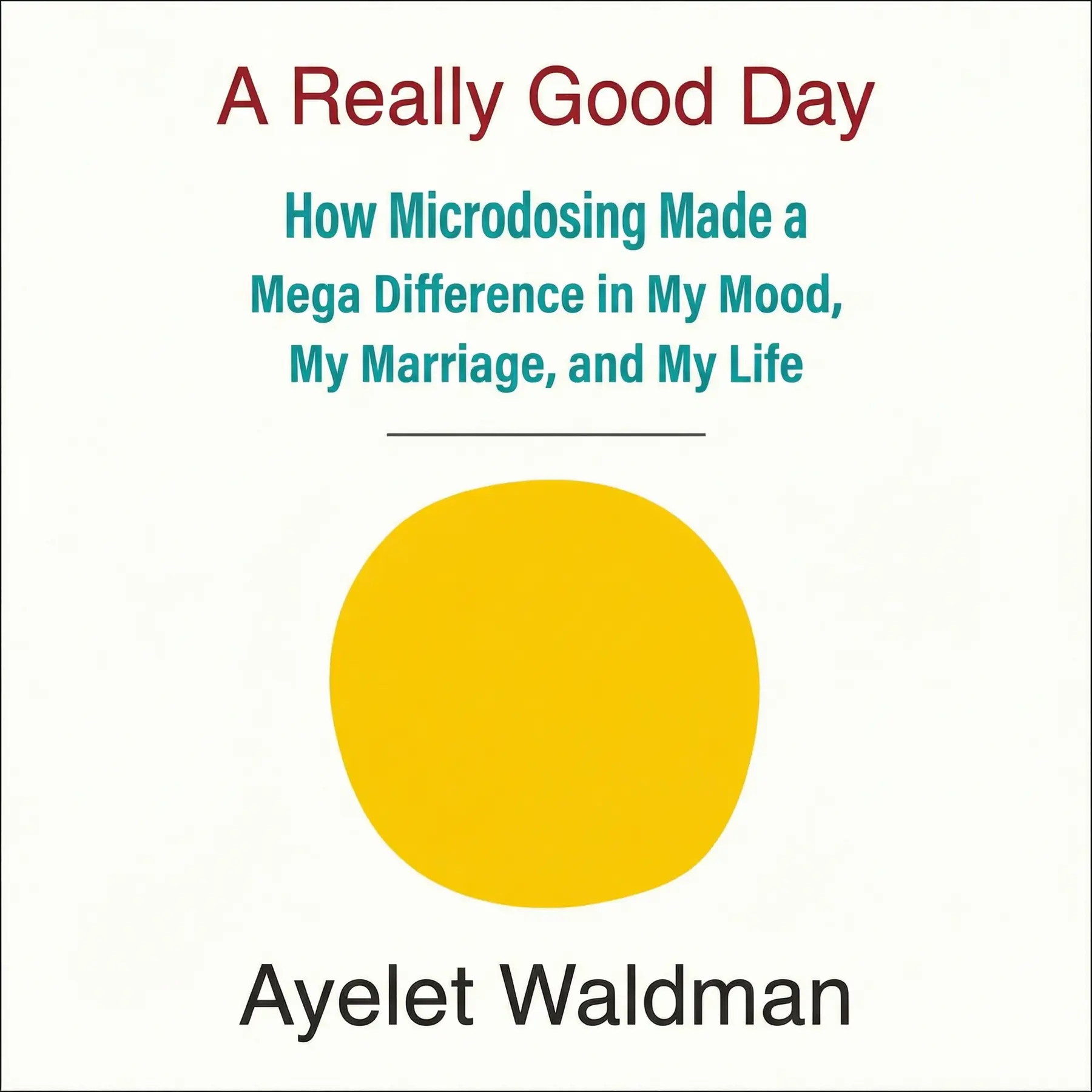
Listeners find this work extensively researched yet very easy to digest, with one note that it avoids being a heavy listen. They value the humor, which frequently causes them to laugh out loud, and the thought-provoking details that offer much to reflect upon. The writing is relatable and engaging, as one listener emphasizes its moving stories about mental health and another describes how it transformed their outlook on several issues. Listeners view the book as bold and uplifting, with one individual mentioning it is especially beneficial for those managing mood disorders.
Ayelet Waldman is a force of nature, and her writing style reflects that energy perfectly. This isn't just a clinical study; it’s a hilarious, fast-paced journey through the psyche of a woman who is tired of feeling like a "bad mother." Frankly, I was impressed by how she managed to make drug policy reform sound so engaging and necessary. The humor is sharp, sometimes biting, but always relatable to anyone who has struggled with their own mental health. It made me reconsider everything I thought I knew about LSD. You might not agree with all her conclusions, but you can't deny the courage it takes to put this all on paper. This book gave me so much to consider regarding my own approach to wellness.
Show moreAs a former public defender herself, Waldman brings a much-needed legal perspective to the conversation around psychedelics. She dismantles the racist origins of the war on drugs with surgical precision. But the heart of the book is her own brain—her quest to find a baseline of stability that her usual meds couldn't provide. I found the stories about her "frozen shoulder" and the immediate relief she felt from microdosing to be incredibly moving. It’s a powerful testament to the need for better mental health options. This book is a must-read for anyone who feels trapped by their own biology. It's courageous, inspiring, and changed how I view controlled substances.
Show moreRarely do you find an author this nakedly honest about her own brain. Waldman doesn't hide her flaws; she puts them center stage and then asks why our society makes it so hard to treat them. The way she blends her personal anecdotes with the history of the "war on drugs" is incredibly effective. Personally, I found the chapters on the racial disparities in drug sentencing to be the most impactful part of the whole narrative. It’s a courageous book that challenges the stigma surrounding mental health and substance use. I'm still thinking about it weeks later. If you want a book that is both educational and deeply human, this is it.
Show moreThe way Waldman weaves together policy and personal struggle is masterful. She manages to be both a meticulous researcher and a vulnerable storyteller. I was particularly struck by her exploration of how the pharmaceutical industry has failed people with complex mood disorders. This book isn't just about LSD; it's about the right to own your own consciousness and find a way to be a better spouse, parent, and human. It’s one of those rare books that is both deeply educational and incredibly entertaining. I’ve already recommended it to several friends who struggle with similar issues. Truly an enlightening and powerful read.
Show moreAfter hearing about microdosing on a podcast, I wasn't sure what to expect from a memoir about it, but Waldman's account is surprisingly grounded. She doesn't just talk about her 30-day experiment; she dives deep into the legal history and the science behind the "war on drugs." Truth is, her background as a public defender gives her a unique authority that most drug-culture books lack. I found myself giggling at her interactions with her husband, Michael Chabon, and their kids, which balanced out the heavier sections on her PMDD and mood swings. It’s a brave look at how far someone will go to find a "really good day." While some might find her tone a bit much, I appreciated the vulnerability. The research is thorough but doesn't feel like a textbook.
Show moreEver wonder what it's like to live with a literary power couple? Waldman gives us a front-row seat to her marriage with Michael Chabon, and it’s not all sunshine and roses. Her honesty about her temper and her "bad mother" moments is refreshing, if a little intense. The microdosing experiment provides the framework, but the book is really about the search for peace. I loved how she used her 30-day trial to explore broader themes like addiction and pharmaceutical failure. It’s funny, smart, and totally different from any other memoir I've read this year. A very readable account of a very controversial topic.
Show moreLook, I’ve never even touched a joint, let alone acid, but this book completely shifted my perspective on drug legalization. Waldman makes a compelling case for why we need to move past the "just say no" era. Her research is thorough without being dry, and her voice is consistently engaging. I found myself laughing out loud at her descriptions of her kids' reactions to her "experiment." It’s an inspiring read for anyone dealing with mood disorders who feels like they’ve run out of options. She shows that there might be another way, even if the legal system hasn't caught up yet. Definitely a conversation starter.
Show moreIt’s a strange hybrid of a book that doesn't quite know if it's a memoir or a legal manifesto. On one hand, you have Waldman's very personal struggles with her marriage and her temperament. On the other, you have dense chapters on the history of drug research. I actually preferred the research! Not gonna lie, the personal stuff felt a bit repetitive after the first fifty pages. Still, it’s a quick read and offers some thought-provoking insights into why certain substances are vilified while others are shoved down our throats by big pharma. Decent, but the structure is a bit messy and her privileged perspective can be grating at times.
Show morePicked this up on a whim after a podcast episode mentioned microdosing. It’s a very fast read, almost like a long-form article stretched into a book, but I enjoyed the ride. Waldman is definitely a "character"—she’s opinionated, loud, and doesn't care if you like her. Some might find that annoying, but I thought it made the book feel more authentic. My only gripe is that it feels a bit light on actual data compared to some other psychonaut literature. It’s more of a personal anecdote than a scientific study, so manage your expectations accordingly. Interesting, but I’m not sure I’d read it a second time.
Show moreI really wanted to like this, but I struggled to get past the constant navel-gazing. While the sections on the history of LSD and the systemic failures of our prison system were genuinely informative, they felt shoehorned into what was essentially a month-long diary of her own neuroses. To be fair, she’s a talented writer, but the "whining" mentioned in other reviews isn't entirely an exaggeration. It’s hard to stay sympathetic when the narrative feels so self-indulgent. I wanted more science and less about her specific mood on a Tuesday afternoon. Not for me. It felt more like a long Rolling Stone article that got stretched out too thin.
Show moreIt records Waldman’s 30-day experiment with microdosing LSD to manage severe mood swings after years of therapy and medication had failed her. Around that diary she builds a broader argument. She reviews LSD’s safety record and its link to creativity, as well as early reports from microdosers. She also uses her experience as a former public defender to argue that drug laws punish the wrong people, especially poor people and African Americans.
Waldman followed a protocol published by psychologist James Fadiman. She took about ten micrograms of LSD, roughly a tenth of a recreational dose, on the first day of a three-day cycle. She took nothing on the next two days and kept notes on her mood, body and work throughout. The aim is a better mood without any hallucinations or high.
Waldman argues that LSD is far safer than its reputation suggests. She cites a 2008 review that found no documented overdose deaths, and a 1972 case in which eight people who snorted huge amounts all recovered within twelve hours. She acknowledges that a very small number of users, mostly people with existing psychiatric illness, have had psychosis or other bad reactions. She also stresses that the drug remains illegal.
She sometimes felt dizziness, nausea or irritability on dose days, but she felt happy, optimistic and relaxed on the days after. After a major fight with her husband, she recovered from shame faster than usual. Her children noticed she was calmer, nicer and yelled less. She saw the month as a clear improvement, though she also considered whether a placebo effect played a part.
It suits readers who have struggled with mood swings, irritability or depression and want a candid first-person account of an unconventional approach. It also suits readers interested in psychedelic research or criminal justice. Waldman ties her personal experiment to the history of LSD, early evidence from microdosers and the racial and class patterns in drug arrests.
J. Craig Venter

James Herriot

Alcoholics Anonymous World Services

Ishmael Beah


Barack Obama

Masaji Ishikawa

Ben Macintyre


Steven C. Hayes
AUDIO SUMMARY AVAILABLE
Get the key ideas from A Really Good Day by Ayelet Waldman, plus 5,000+ more nonfiction titles.









