
15 min 04 sec
Available in: English
Right Thing, Right Now: Good Values. Good Character. Good Deeds.
By Ryan Holiday
Shows how to live justly in daily life: keep a personal code of honesty, act as if the world were watching, give generously now, and widen your concern to strangers and even opponents.
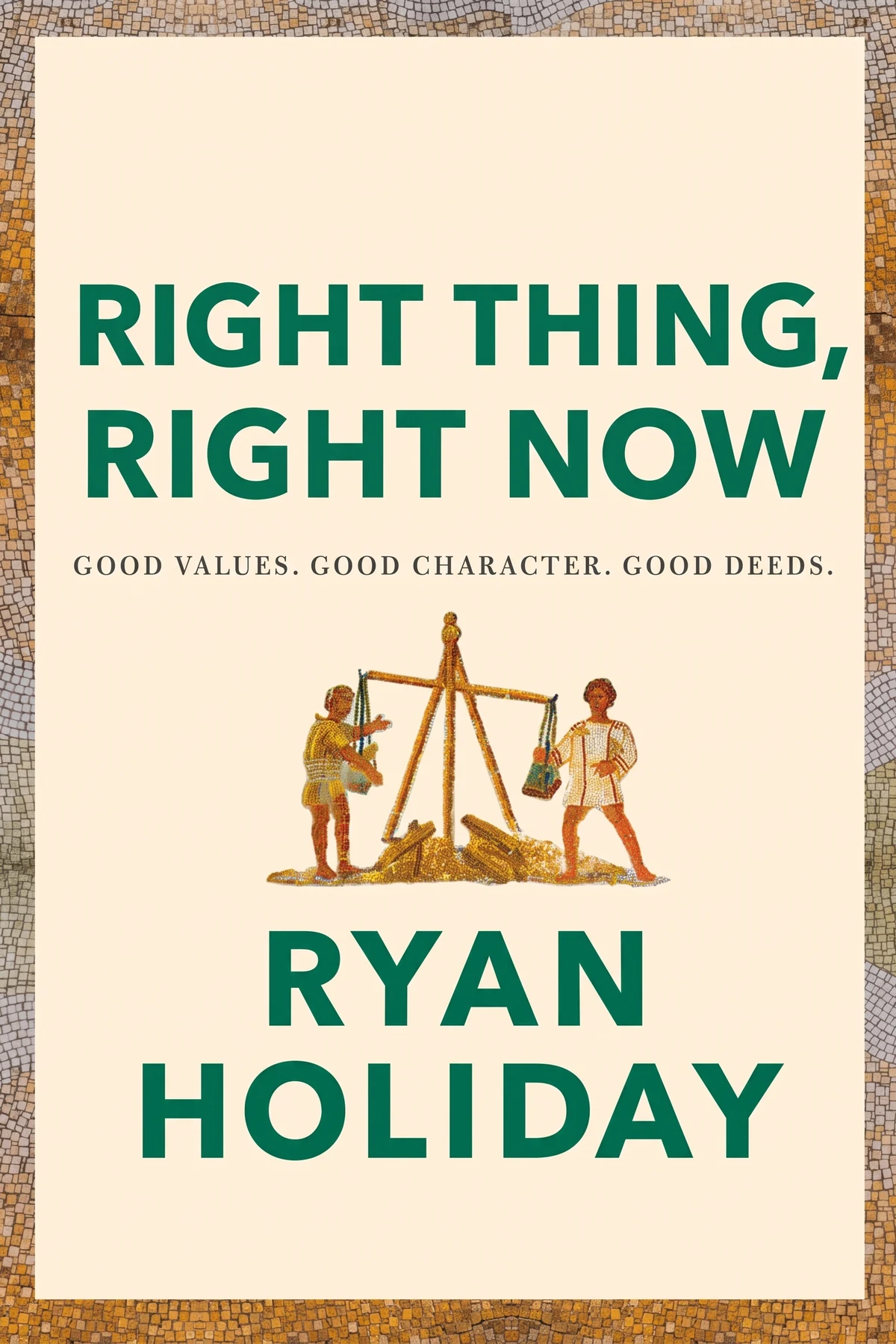
Table of Content
1. Introduction
1 min 01 sec
Most people want to be good, but they treat goodness as something for later: after the promotion, once money is less tight, or when a big moment finally asks for it. In Right Thing, Right Now, Ryan Holiday argues that justice does not wait for big moments. It lives in daily choices about honesty, fairness and keeping your word. It is the third of the four cardinal virtues that Plato, Aristotle and the Stoics prized, alongside courage, temperance and wisdom.
Holiday is not talking about courtrooms. He means a way of living that starts with a private code and spreads outward, from how you treat a colleague to how much of the world you decide to care about. His examples range from Harry Truman refusing bribes to Thomas Clarkson taking on the slave trade with a school essay. What you get is a simple test for hard choices, several ways to give that cost no money, and a wider sense of who you are responsible for.
2. Write your personal code before you need it
2 min 05 sec
A future president turned down money his family badly needed and left office deeply unpopular. Holiday argues that this is exactly what a settled code is for, and that it makes life easier rather than harder.
3. Act as if the whole world were watching
2 min 12 sec
Something can be perfectly legal and still be wrong, and many careers drift into trouble in that gap. A flawed Thomas Jefferson and the Roman Stoic Cato the Younger offer a test that closes it.
4. One determined person can topple an industry
2 min 11 sec
A routine school assignment in 1785 became the start of a campaign against one of history’s most profitable cruelties. The story answers anyone who suspects their own choices are too small to count.
5. Treat every encounter as a chance for kindness
1 min 58 sec
Cynicism looks like realism, and a hard shell feels like protection. Holiday argues the opposite takes more nerve, and an English sociologist shows how living among working people can upend what you believe.
6. Give now, in ways that cost more than money
2 min 13 sec
Waiting until you can afford generosity sounds sensible. A Hebrew word, a teenage diarist’s family motto and a chancellor’s controversial decision all suggest that the waiting is part of the problem.
7. Widen your circle to include your opponents
2 min 08 sec
Astronauts looking back at Earth report a sudden sense of shared fate. One politician lived that idea with people who despised him and paid for it with his life, and Holiday still calls his approach the right one.
8. Conclusion
1 min 16 sec
Holiday’s version of justice begins in a small room and ends with the whole planet. It starts with a code you keep when no one is checking, as Truman did when he turned down money his family needed. It grows through honesty you would be willing to see published, kindness in tense moments and giving that does not wait for a better year. At its widest, it reaches strangers, future generations and even opponents, as it did for Harvey Milk.
Kurt Vonnegut once said that what made life worth living were the saints he had met: people who acted decently in a society that was deeply indecent. Holiday insists such people are not superhuman. Their commitment to justice changed them, and anyone who makes the same commitment can change too.
Start close to home. Write down the few rules you will keep even when they cost you, and put your next hard decision through the test of the whole world watching. Then give something this week that is not money: an hour of your time, a word of praise, or an open door for someone who started with less than you did. The right thing is rarely dramatic. Mostly it is just available, right now.
About this book
What is this book about?
Most people want to be good, but they postpone it. They tell themselves they will give once they are better off, speak up once it is safer and act once a big enough moment arrives. Ryan Holiday argues that justice is something we practice in ordinary choices, today. It is the third of the four cardinal virtues, after courage and temperance. Holiday is not writing about courts. He means fairness, honesty, keeping your word and caring for people beyond your own circle. He follows that idea outward from one person to the whole world. It begins with a private code, which Harry Truman kept even when it cost his family money. It then grows into public action, as when Thomas Clarkson turned a student essay into a fight against slavery. At its widest, it means reaching out to opponents, which Harvey Milk did at the highest price. Readers get a simple test for hard decisions and practical ways to give that go beyond money. They also get a case for mentoring, empathy and kindness as everyday forms of justice.
Book Information
Who it's for
Professionals seeking clear ethics
Professionals who want a clear ethical code for gray areas at work.
Managers and mentors
Managers and mentors looking for practical ways to give others a chance and treat people fairly.
Drawn to Stoicism
Readers drawn to Stoicism who want to see its idea of justice applied to everyday life.
About the Author
Ryan Holiday
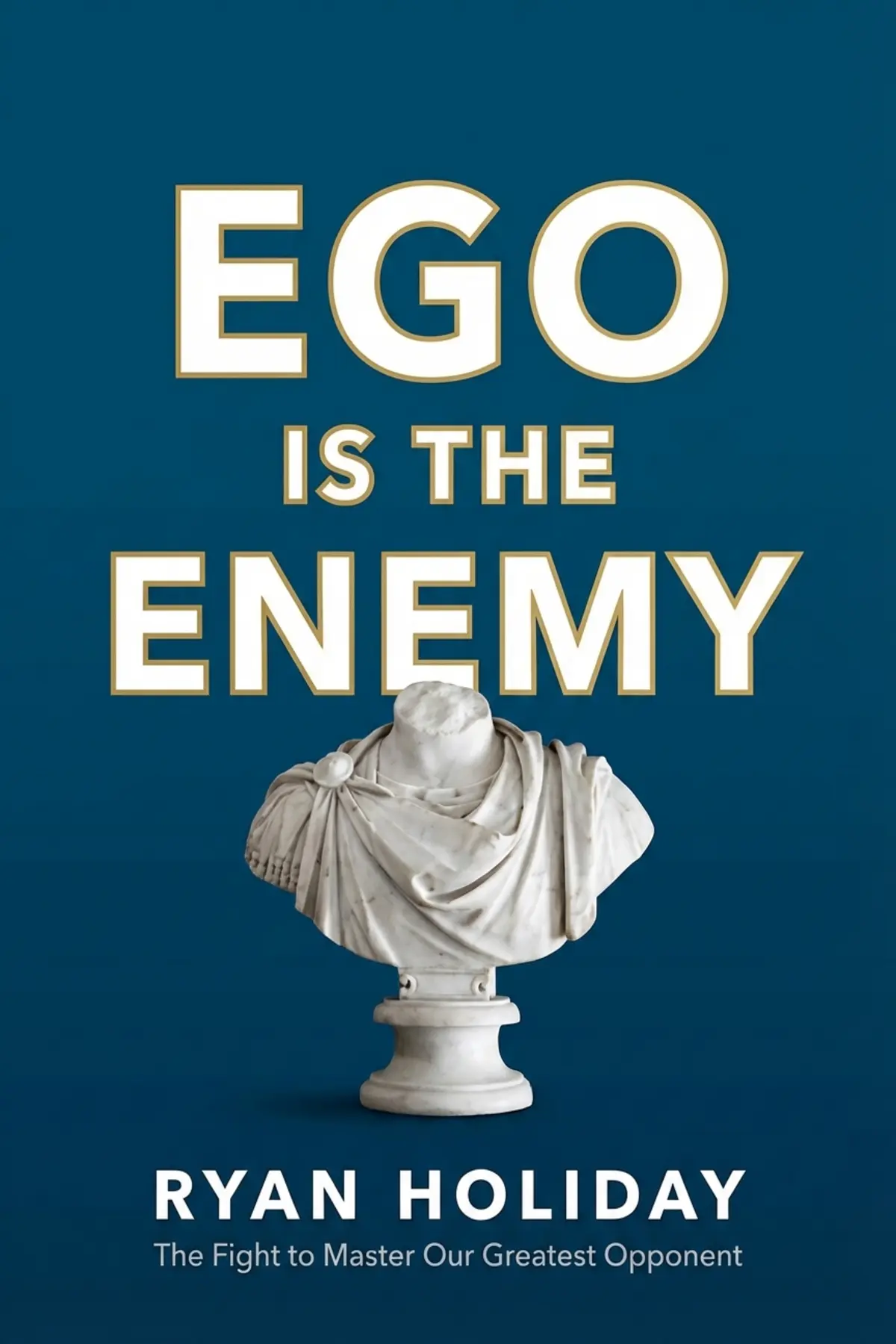
Ryan Holiday left college at 19 to apprentice with the strategist Robert Greene and went on to advise authors and musicians. He became known for presenting Stoicism as a practical way of life. His books include The Obstacle is the Way, Ego is the Enemy and Stillness Is the Key, which reached number one on the New York Times bestseller list. He has hosted The Daily Stoic Podcast since 2018, and his books appear in more than 40 languages.
Courage is Calling: Fortune Favors the Brave
Ryan Holiday
Discipline Is Destiny: The Power of Self-Control
Ryan Holiday
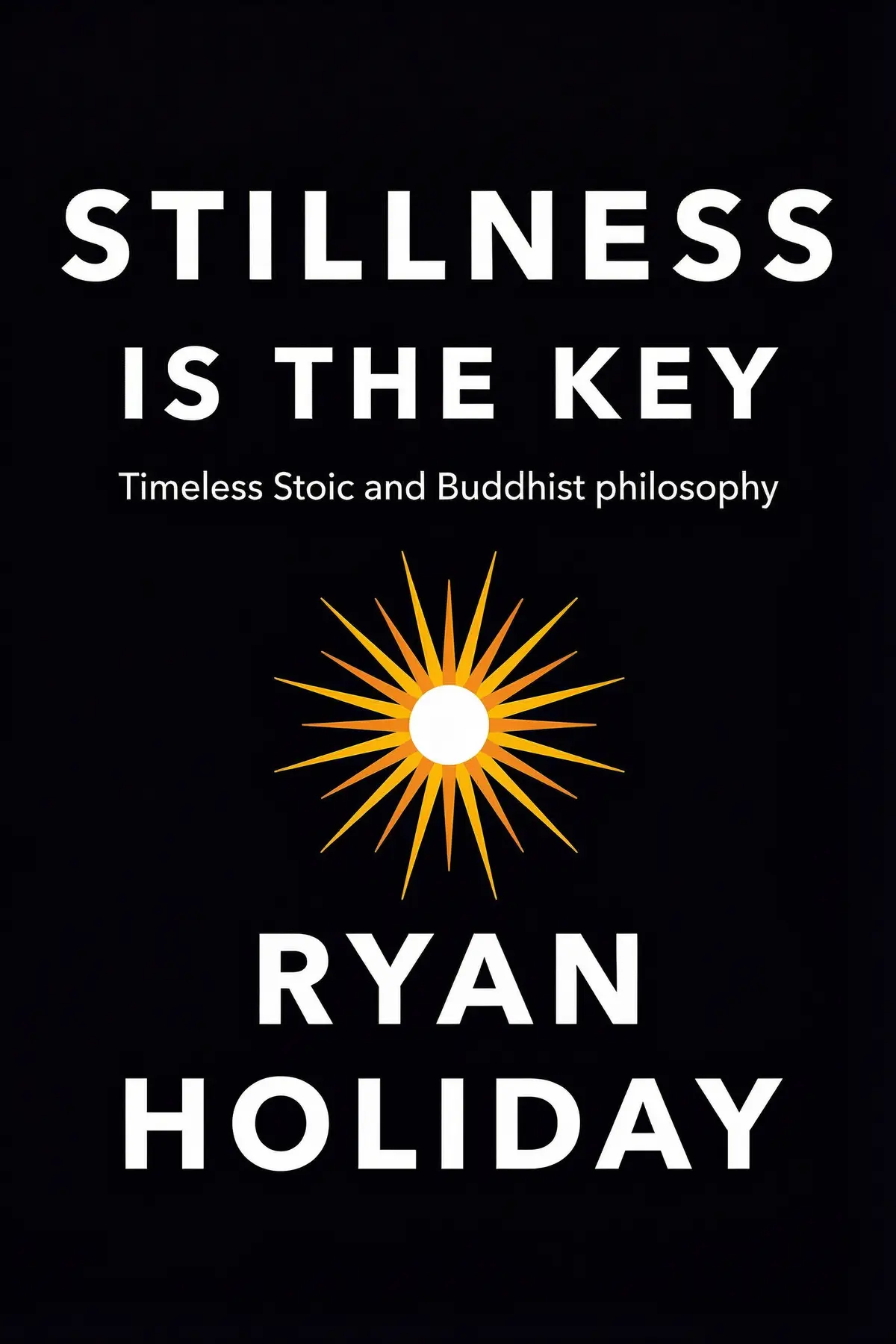
Stillness Is the Key
Ryan Holiday
Wisdom Takes Work: Learn. Apply. Repeat.
Ryan Holiday
Ratings & Reviews
Ratings at a glance
What people think
Listeners consider the work intellectually stimulating, and one listener highlights how it offers a roadmap for leading a moral existence. Furthermore, the prose is lauded as exceptional, with listeners valuing the book's timeliness and its useful historical examples. They also appreciate the Stoic viewpoint, as one listener calls it a powerful volume on the subject of virtue. Nevertheless, opinions on accessibility are divided, as some find the text straightforward while others find it difficult to navigate.
Top reviews
Surasit
This book serves as a definitive blueprint for anyone trying to navigate the messy moral landscape of the 21st century. Holiday has a singular talent for taking ancient Stoic principles and polishing them until they shine with modern relevance. While some might find the heavy focus on historical anecdotes repetitive, I found the deep dive into characters like Marcus Aurelius and various unsung heroes to be incredibly grounding. It isn't just a collection of abstract theories; it’s a call to action that forces you to look in the mirror and ask if you’re actually living your values. Truth is, we need more of this kind of moral clarity right now. The chapters are punchy and short, making it easy to digest one virtue at a time during a morning commute or before bed. It’s easily his most challenging work yet because it demands so much from the reader. If you want to be a better person, start here.
Show moreEthan
Ever wonder why it’s so hard to just do what’s right when no one is looking? Holiday’s third entry in his virtues series doesn't pull any punches in answering that question. This isn't just some dry history lesson; it's a moving, thought-provoking exploration of what it means to be a person of integrity in an unjust world. I found myself tearing up at a few of the stories, especially the ones highlighting small, quiet acts of courage that never made the history books. The writing is probably his best yet—crisp, urgent, and deeply sincere. He doesn't just tell you to be better; he shows you the roadmap through the lives of people who actually did the work. To be fair, it’s a lot to live up to, and it might make you feel a bit like a moral underachiever at times. But that’s the point, isn't it? To push ourselves further.
Show moreKasemsan
Wow. This is easily the most important book Ryan Holiday has written to date. While his previous books focused on the self—ego, stillness, discipline—this one turns the lens outward toward our responsibility to each other. It’s a powerful, challenging read that doesn’t let you off the hook. The way he weaves together stories of figures like Gandhi, MLK, and less-known heroes creates this rich tapestry of what human goodness actually looks like in practice. The writing style is punchy and accessible, yet it carries a weight that lingers long after you close the cover. Some people might find the political undertones uncomfortable, but isn't justice supposed to be uncomfortable? It’s a blueprint for a more virtuous life that doesn't shy away from the complexities of our modern world. I’ve already bought copies for three of my friends. Highly recommended.
Show moreSupatra
Reading this book hit me at exactly the right moment. I’ve been struggling with a lot of office politics and feeling like my efforts to be a decent person were just getting ignored. Finding these historical figures who stood their ground against much worse odds was exactly the perspective shift I needed. Holiday’s writing is at its best here—urgent and deeply moving. He makes the ancient concept of Justice feel like something we can actually strive for in our errands and daily interactions, not just in some grand revolutionary sense. The Afterword alone is worth the price of admission; it’s one of the most beautiful pieces of writing I’ve encountered in a long time. It’s a tough mirror to look into, but the growth is worth the discomfort. If you’re feeling cynical about the world, read this.
Show moreKaen
Picked this up after finishing Discipline is Destiny and I have to say, the vibe is definitely different. Holiday moves away from personal productivity and into the much heavier territory of justice and our communal obligations. The storytelling is top-notch as usual, though I’ll admit some of the transitions between historical figures felt a bit abrupt, almost like reading a series of high-quality blog posts strung together. That said, the audiobook version is fantastic and Ryan’s narration really brings the "Make Good Trouble" ethos to life. It’s not a perfect "how-to" guide—you won’t find a 10-step list for solving world peace—but it acts more like a moral compass. Some parts felt a bit US-centric, which is typical for him, yet the core message of doing the right thing despite the cost is universal. It’s a solid addition to the series.
Show moreAroon
Finally got around to reading this and I’m torn between four and five stars. On one hand, the historical accounts are absolutely fascinating and Holiday has a way of finding gems that other self-help authors completely miss. On the other hand, I felt a little bit left out in the cold when it came to the practical "how-to" for daily life. How do I apply these lofty ideals when I’m exhausted after a ten-hour shift and just want to be left alone? The book lives in the world of saints and martyrs, which is inspiring but sometimes feels disconnected from the mundane struggles of laundry and emails. Still, the section on incremental change was a highlight for me. It’s a strong book about virtue that makes you think, even if it doesn't always provide a step-by-step manual. Definitely worth a read for the perspective alone.
Show moreMatteo
The chapter on "Make Good Trouble" really set the tone for the rest of my experience with this book. It’s classic Holiday: high-energy, historically dense, and unapologetically moral. I appreciate how he doesn't just stick to the "greatest hits" of history but finds these obscure figures who embodied justice in their own small ways. Personally, I found the readability to be a major plus; I flew through it in two sittings. However, I can see why some readers might struggle with the lack of a formal framework for what "the right thing" actually is. He assumes a lot of shared values that might not be as universal as he thinks. Despite that, the book is incredibly thought-provoking and serves as a much-needed reminder that our choices matter. It’s a strong addition to the series, even if it feels a bit less "Stoic" than the previous entries.
Show moreTaweesak
After hearing Ryan talk about this on his YouTube channel, I was curious to see how he’d tackle the concept of justice. In my experience, most modern books on ethics are either too academic or too fluffy, but Holiday hits a nice middle ground. He provides a solid blueprint for living a virtuous life by looking at history’s most courageous figures. The book is essentially a museum tour of moral excellence. My only real gripe is that it can feel a bit repetitive after a while; the "story-lesson-conclusion" formula is one he’s used for years, and it's starting to feel a little formulaic. That said, the content is so relevant to today’s chaotic world that it’s hard not to find value in it. It’s a great way to re-center your moral compass when the world feels like it’s losing its mind.
Show moreSam
As someone who enjoys the Daily Stoic podcast for its bite-sized wisdom, I found this full-length volume a bit hit-or-miss. The premise is great: justice is the crowning virtue. However, the execution felt a bit scattered. Ryan Holiday utilizes his typical style of five-page chapters, which is great for readability, but it prevents any real analytical depth into the figures he’s profiling. He defines justice in a way that feels very fluid, sometimes bordering on whatever the popular social cause of the day happens to be. Not gonna lie, I was hoping for more actual quotes from the Roman Stoics and less commentary on 19th-century politics. It’s a decent enough read if you want some moral motivation, but it lacks the grounded, practical punch of his earlier work. It feels more like a collection of essays than a cohesive philosophy book.
Show moreSebastian
Look, I really wanted to like this because I’ve been a Daily Stoic subscriber for years, but this felt like a massive departure from actual Stoicism. Where is the logic? Where is the focus on the internal citadel? Instead, Holiday seems to have pivoted toward using "justice" as a catch-all term for modern political activism. When he started arguing that "outrage" is a tool for justice, he lost me completely, as the ancient Stoics were famously wary of such passions. The research is there, sure, but the connective tissue is missing, and the biographies feel cherry-picked to fit a very specific, modern narrative. Frankly, it felt more like being preached at than being taught a philosophy. If you’re looking for a deep dive into Epictetus or Seneca, you won’t find much of that here. It’s more of a museum tour of 20th-century activists than a book on Stoic virtue.
Show moreQuestions about this book
What is Right Thing, Right Now by Ryan Holiday about?
It is Holiday’s book on justice, the third of the four cardinal virtues after courage and temperance. Justice here does not mean courts. It means fairness, honesty, keeping your word and caring for others. Holiday shows how it starts with a personal code and grows outward through transparency, kindness, giving and mentoring. At its widest, it means caring about strangers, future generations and even opponents.
What does Ryan Holiday mean by justice?
For Holiday, justice is a shared virtue, not a private one. It means working for the common good, standing up for people with less, making room for different views and protecting the vulnerable. He links it to kindness, noting that the Stoics saw every interaction as a chance to be kind. He also points out that the Hebrew word for charity, tzedakah, means justice.
How can I apply Right Thing, Right Now in daily life?
Write down a short personal code while things are calm, so hard choices become easier, as they did for Harry Truman. Use the Jefferson test and act as if the whole world were watching. Give in ways beyond money, such as time, praise or mentoring. Ask yourself whom you have helped get ahead in your career, and how much they were like you.
Which historical examples does Holiday use?
Harry Truman refused bribes and later desegregated the armed forces, even though it was unpopular. Thomas Clarkson turned a 1785 student essay into a campaign against slavery. Beatrice Webb lived among working-class people and became a social reformer. Angela Merkel took in a million Syrian refugees. Harvey Milk built bridges with people who opposed him, including the man who murdered him.
Is Right Thing, Right Now part of a series?
Yes. Holiday has been writing a book on each of the four cardinal virtues that Plato, Aristotle and the Stoics considered essential. Courage is Calling covered courage, Discipline is Destiny covered temperance, and Right Thing, Right Now turns to justice. The fourth virtue in the set is wisdom.
Readers also enjoyed
A Little History of Philosophy
Nigel Warburton

A Theory of Justice
John Rawls



59 Seconds: Change Your Life in Under a Minute
Richard Wiseman





A Guide to the Good Life: The Ancient Art of Stoic Joy
William B. Irvine
AUDIO SUMMARY AVAILABLE
Listen to Right Thing, Right Now in 15 minutes
Get the key ideas from Right Thing, Right Now by Ryan Holiday, plus 5,000+ more nonfiction titles.
- 5,000+ titles
- Listen as much as you want
- 7-day free trial
- Cancel anytime









