

14 min 30 sec
Available in: English
 ไทย
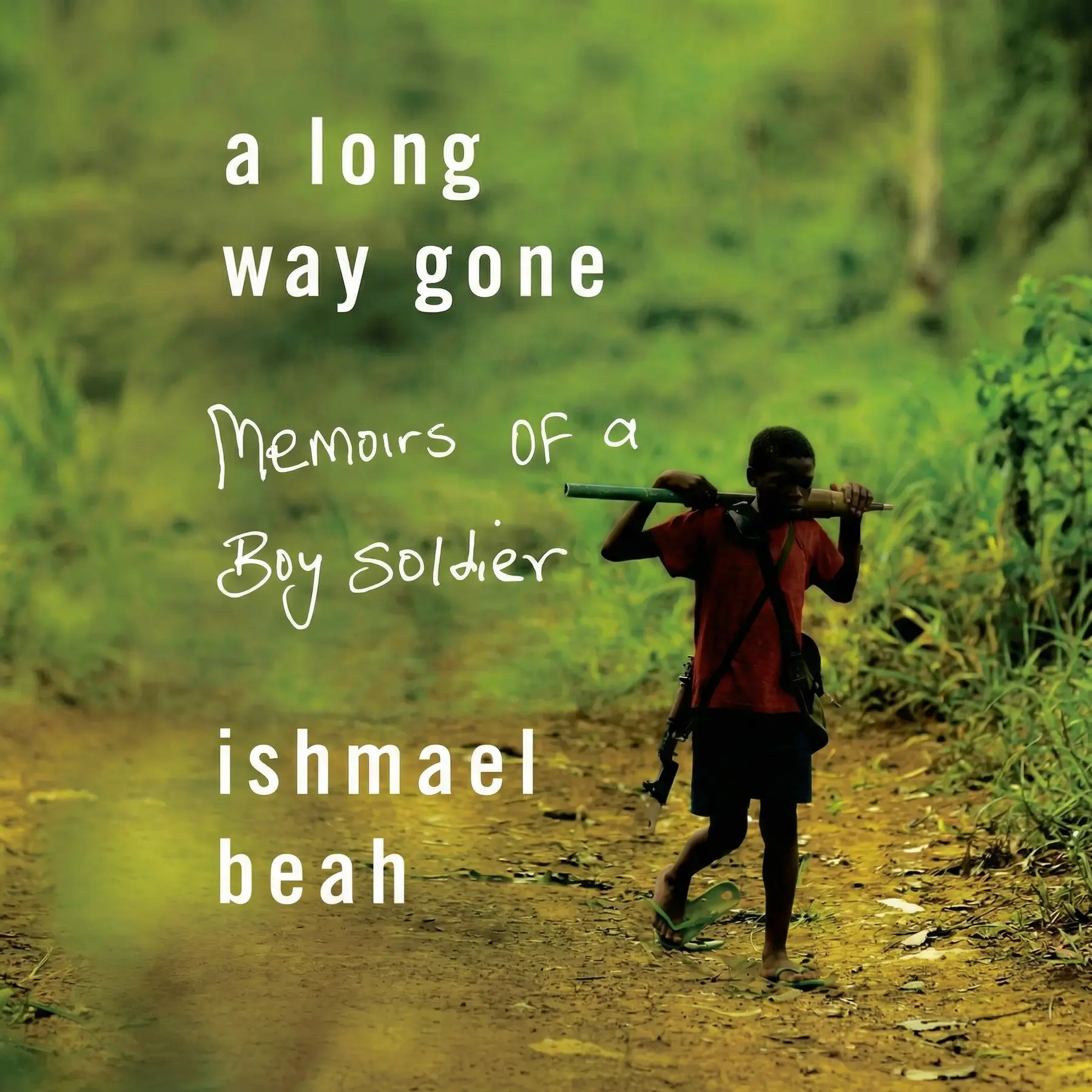
EnglishไทยA Long Way Gone: Memoirs of a Boy Soldier
By Ishmael Beah
Ishmael Beah's memoir shows how Sierra Leone's civil war turned an ordinary boy into a drugged, brainwashed soldier, and how patient kindness from strangers and family slowly brought him back to a normal life.

Table of Content
1. Introduction
1 min 03 sec
Most people meet child soldiers as a line in a news report, faceless and hard to picture as anyone’s son. In A Long Way Gone, Ishmael Beah shows that the boys drawn into Sierra Leone’s civil war were ordinary children, some as young as seven, and that the national army fighting the rebels used them too. Beah was one of those boys. In January 1993 he loved hip-hop and talent shows. Soon afterward he was cut off from his family, and before long he was carrying a gun for the government.
His memoir follows a single line from start to finish. War builds a child killer step by step, through loss, fear, coercion, drugs and lies, and only patient kindness can take that work apart. Follow his story and you will understand how a society turns its children into weapons, why rescue is only the start, and what it truly took to bring one boy back.
2. See how fast an ordinary peace can collapse
1 min 46 sec
A trip to a talent show in a nearby town was supposed to be the highlight of a boy’s week. Before he could get home, the road was crowded with people carrying everything they owned.
3. See how children pay the first price of war
1 min 36 sec
No phones, no shelters, no plan. When attacks scattered families across Sierra Leone, children suddenly had to feed and protect themselves, and the strategy that kept one boy alive carried a risk he could not yet see.
4. Understand how fear turns neighbors against lost children
1 min 45 sec
Villagers who might once have fed a hungry boy began chasing boys away, and worse. A rumor and a brutal rebel tactic explain how ordinary people came to fear barefoot children.
5. Spot the false choice that drafts children into armies
1 min 52 sec
An army officer told a group of frightened boys they were free to walk away. The very next morning, he showed them what walking away looked like.
6. The two tools that turn boys into killers
1 min 46 sec
Courage and training were not what kept boys as young as seven fighting. Two things handed out by their officers did that work, and one of them turned up again on the rebel side.
7. Learn how the war goes on after the shooting stops
1 min 47 sec
Rescue arrived with aid workers, clean beds and regular meals. Yet the boys at a rehabilitation center near Freetown fought, burned supplies and refused orders, and a single overheard word could send one of them back.
8. Patient kindness can bring a broken child back
1 min 38 sec
The staff at Benin Home were cursed and hit by the boys they cared for. What they did next, and what one nurse and one uncle gave, changed the course of a former soldier’s life.
9. Conclusion
1 min 17 sec
Beah’s story opens and closes with a talent show. In January 1993 a boy traveled 16 miles to see one, and before he could get home, his family had vanished into the chaos of war. Years later, at a show staged by the center that took him in, he performed again, and soon he was speaking for Benin Home and, after that, in New York. Everything between those two stages is the book’s real subject: how a child is taken apart, and what it takes to put him back together.
As Beah tells it, making a boy soldier required no special cruelty in the boy. It took a country unready for war, adults too frightened to help, an offer that was no offer, and drugs and lies to finish the work. Undoing it took just as many hands: staff who never hit back, a nurse who listened, an uncle who opened his door.
So when someone’s behavior seems beyond reach, ask what was done to them before deciding what they are. When a leader hands out a ready-made enemy for every grief, remember Yele. The boys there were never born killers. They were taught, and with enough patience, one of them learned to be a boy again.
About this book
What is this book about?
Ishmael Beah grew up in a peaceful corner of Sierra Leone, watching his mother cook and dancing to hip-hop at talent shows. Then a civil war, inspired by the conflict in neighboring Liberia, reached his hometown, and he was suddenly cut off from his family. He wandered with other lost boys, was attacked by fearful villagers and was finally recruited by the national army, which armed children as young as seven. Beah's memoir explains, from the inside, how a child becomes a soldier. Each loss narrowed his choices, until drugs such as brown brown and the army's propaganda about the rebels made killing feel normal. The book then follows what came after: rescue by UNICEF in 1996, months of withdrawal and rage at a rehabilitation center near Freetown, and the slow work of healing. Readers get a clear view of how war uses children, why freedom alone does not end their war, and how a nurse named Esther, an uncle named Tommy and staff who refused to hit back helped one boy rebuild his life and tell the world his story.
Book Information
Who it's for
Curious about child soldiers
Readers who know child soldiers only from headlines and want to understand how a child is pulled into fighting.
Teachers, counselors, aid workers
Teachers, counselors and aid workers supporting young people who have lived through violence or trauma.
Students wanting firsthand testimony
Students of African history and human rights looking for a first-person account of Sierra Leone's civil war.
About the Author
Ishmael Beah
Ishmael Beah was born in Sierra Leone in 1980 and moved to the United States in 1998. He completed secondary school in New York, spending his final two years at the United Nations International School, and earned a political science degree from Oberlin College in 2004. His books have appeared in more than 40 languages, including the novels Radiance of Tomorrow and Little Family. He is a UNICEF Goodwill Ambassador, serves on an advisory committee for children's rights at Human Rights Watch, and has addressed the United Nations and the Council on Foreign Relations on the plight of children caught in war.
Ratings & Reviews
Ratings at a glance
What people think
Listeners find this memoir riveting and compelling, noting that the author’s remarkably detailed prose keeps them hooked from start to finish. This heart-wrenching account has moved listeners to tears on occasion, while offering deep perspective on the experiences of a child soldier. They value its genuine nature, calling the story unbelievable but true, and view it as a vital piece of writing that helps shape one’s outlook.
Top reviews
Witthaya
Wow. This isn't just a book; it's a gut-wrenching survival story that stays with you long after the final page is turned. I was struck by the sheer resilience of Ishmael, who went from a boy obsessed with rap music and dance moves to someone forced into the darkest corners of humanity. The descriptions of the war in Sierra Leone are brutal and unflinching, making it hard to read at times, but that's exactly why it's so necessary. Seeing how the military used drugs like 'brown-brown' to brainwash these children was absolutely terrifying to contemplate. Yet, the sections on his rehabilitation with UNICEF provide a flicker of hope that is desperately needed after so much carnage. It’s an essential read for anyone who needs a perspective shift on the privileges we often take for granted. This memoir is haunting, beautiful, and deeply human.
Show moreMats
The imagery in this memoir is so vivid it feels like a physical blow to the chest. Ishmael Beah doesn't sugarcoat anything, from the scent of burnt villages to the sound of AK-47s echoing through the bush. I found myself particularly moved by the rehabilitation section, where the nurses and staff at the center showed such incredible patience with boys who had been taught only to kill. It’s a miracle that someone can experience that much blood and terror and still find a way back to their humanity. Personally, I think the way he describes his friendship with the nurse who gave him music was the turning point of the whole story. It reminds us that even in the most broken souls, there is a piece of the original child waiting to be found. This book is a reminder of how fragile peace really is. Truly an unforgettable piece of writing.
Show moreBoss
Ever wonder what it's like to have your childhood stolen in a single afternoon? This book answers that question in the most painful way possible. I was captivated by Ishmael’s journey and his ability to recall the smallest details of his life before the war. The way he describes the loss of his family is just soul-crushing, especially since he never really gets the closure he deserves. What really stood out to me was his trip to New York for the UN conference. Seeing his reaction to snow and the giant buildings after everything he’d been through in the jungle was such a poignant moment. It’s a story of survival, yes, but also a story about the incredible capacity for a human being to start over. I finished this in two sittings because I simply couldn't put it down.
Show moreBoy
This is one of those books that should be mandatory reading in every high school. It offers such a profound perspective on the world outside our own comfortable bubbles. Ishmael’s voice is authentic and raw, capturing the confusion of a child caught in a political nightmare he doesn't understand. I was particularly impressed by the descriptions of the UNICEF workers who refused to give up on the boys, even when they were being violent and ungrateful. It shows the power of compassion in the face of absolute darkness. While it's a quick read in terms of page count, the emotional weight of the story makes it feel much larger. I came away from this feeling both devastated and inspired by the strength of the human spirit.
Show moreMind
Finally got around to reading this, and I'm honestly floored by how much I learned about the Sierra Leone civil war. The contrast between Ishmael’s childhood innocence—carrying those hip-hop cassettes everywhere—and the sudden arrival of the rebels is just heartbreaking. One moment they are practicing dance routines, and the next they are running for their lives through the forest. Truth is, some of the violence is quite graphic, and I had to put the book down a few times just to catch my breath. The scene where the boys see the ocean for the first time was a rare, beautiful moment of levity amidst the chaos. My only minor gripe is that the pacing felt a bit rushed toward the end when he was moving to the United States. Still, this is a powerful testament to the fact that children should never be pawns in adult wars.
Show moreFang
As someone who usually sticks to fiction, this was a massive wake-up call about the realities of global conflict. Beah’s writing style is surprisingly accessible, which makes the horrors he describes feel even more immediate and shocking. I was fascinated by the psychological tactics used by the army to turn kids into killers, especially the way they used movies and drugs to desensitize them. Gotta say, the parts where the boys would fight other child soldiers even after being rescued were some of the most difficult to read. It shows that healing isn’t just about stopping the fighting; it’s about deprogramming the hate. While I wish there was a bit more historical context about the political causes of the war, the personal focus makes the story feel intimate. It’s a heavy lift emotionally, but definitely worth the time.
Show morePairot
Ishmael Beah’s journey from a hip-hop loving kid to a soldier and back again is nothing short of miraculous. This memoir provides an eye-opening look at the life of a child soldier, stripping away any Hollywood-style glorification of war. I liked the focus on the cassettes and how music served as a bridge back to his past self. However, I did find the middle section where they were constantly moving from village to village to be a bit repetitive after a while. I understand that was his reality, but it did make the middle of the book drag slightly. Regardless, the second half regarding his rehabilitation and his move to America is where the book truly shines for me. It’s a testament to the fact that with the right support, recovery is possible.
Show moreSamuel
It’s rare that a book makes me cry, but the ending of this one absolutely got me. After hundreds of pages of suffering and loss, seeing Ishmael find a new mother in New York felt like a light at the end of a very long tunnel. To be frank, I wasn't prepared for how much the violence would affect me, but the author’s honesty is what makes it so powerful. He doesn’t try to make himself look like a hero; he shows how the war turned him into someone he didn't recognize. While the transition to his life in the US felt a bit quick compared to the rest, the emotional payoff was huge. It’s a harrowing read, but I think everyone should read it at least once to understand the human cost of these conflicts.
Show moreClaire
I struggle with how to rate this because the subject matter is so heavy and important, but the execution felt a bit uneven to me. To be fair, Beah’s account of his time wandering the countryside as a refugee is incredibly detailed and immersive. However, once he actually becomes a soldier, the narrative becomes strangely brief and detached. I wanted more insight into his internal state during those years of fighting, but perhaps the trauma or the drugs made those memories too hazy to articulate fully. The ending also felt quite abrupt, leaving several loose ends about his transition to life in New York that I was curious about. While I deeply respect his courage in sharing this, the book felt like it was missing a middle chapter that would have made the transformation more visceral. It's a significant historical document, but as a narrative, it left me wanting a bit more depth.
Show moreAnna
Look, I recognize the immense importance of this story, but the writing style just didn't click for me at all. It felt very repetitive at points, with a rhythm of 'and then this happened, and then that happened,' which created a distance that prevented me from fully connecting with Ishmael’s emotional journey. For such a traumatic subject, the prose often felt flat or overly journalistic, lacking the lyrical quality I’ve found in other memoirs about similar hardships. Also, the transition from being a victim to becoming an active participant in the violence happened so quickly in the text that it was hard to follow his psychological shift. I appreciate the bravery it took to write this, but as a reader, I felt like I was watching the events through a foggy window rather than experiencing them alongside him. It’s an important testimony, but not necessarily a well-paced book.
Show moreQuestions about this book
What is A Long Way Gone about?
It is Ishmael Beah’s memoir of Sierra Leone’s civil war, which began in the early 1990s and lasted more than ten years. Separated from his family after a rebel attack on his hometown in 1993, Beah wandered with other boys, was attacked by fearful villagers and was recruited by the national army. He describes the atrocities he took part in, his rescue by UNICEF in 1996 and his slow recovery.
How did the army turn boys into soldiers in A Long Way Gone?
Beah describes three forces. Coercion came first: at the Yele base, a lieutenant told the boys they were free to go, then showed them the corpses of a man and a boy who, he said, rebels had ambushed. Drugs came next, including white capsules, marijuana and brown brown, a mix of cocaine and gunpowder. Propaganda finished the job, blaming the rebels for every lost village and family until the boys believed it themselves.
How did Ishmael Beah recover after the war?
Recovery began at Benin Home, a rehabilitation center near Freetown, where drugs took months to leave the boys’ bodies and violence continued long after. Staff answered abuse with kindness and told the boys their behavior was not their fault. A nurse named Esther listened to Beah’s memories and gave him a Walkman and music, and his uncle Tommy eventually took him into his home.
Who should read A Long Way Gone?
It suits readers who want to understand war from a child’s point of view, and anyone working with young people who have lived through violence, such as teachers, counselors and aid workers. Its lessons reach beyond Sierra Leone: fear can turn neighbors cruel, a choice offered to the desperate is rarely free, and patient care can help even deeply traumatized people change.
Readers also enjoyed


A Promised Land
Barack Obama
Age of Anger: A History of the Present
Pankaj Mishra


A River in Darkness: One Man’s Escape from North Korea
Masaji Ishikawa

A Spy Among Friends: Philby and the Great Betrayal
Ben Macintyre
1491: New Revelations of the Americas Before Columbus
Charles C. Mann


1929: Inside the Greatest Crash in Wall Street History--and How It
Andrew Ross Sorkin
AUDIO SUMMARY AVAILABLE
Listen to A Long Way Gone in 15 minutes
Get the key ideas from A Long Way Gone by Ishmael Beah, plus 5,000+ more nonfiction titles.
- 5,000+ titles
- Listen as much as you want
- 7-day free trial
- Cancel anytime









