
15 min 48 sec
Available in: English
The Bulletproof Diet: Lose up to a Pound a Day, Reclaim Energy and Focus, Upgrade Your Life
By Dave Asprey
Dave Asprey's high-fat eating plan for steadier energy and sharper focus. It cuts sugar, mold and processed food, adds grass-fed butter and clean fats, and pairs morning fasting with short workouts and better sleep.
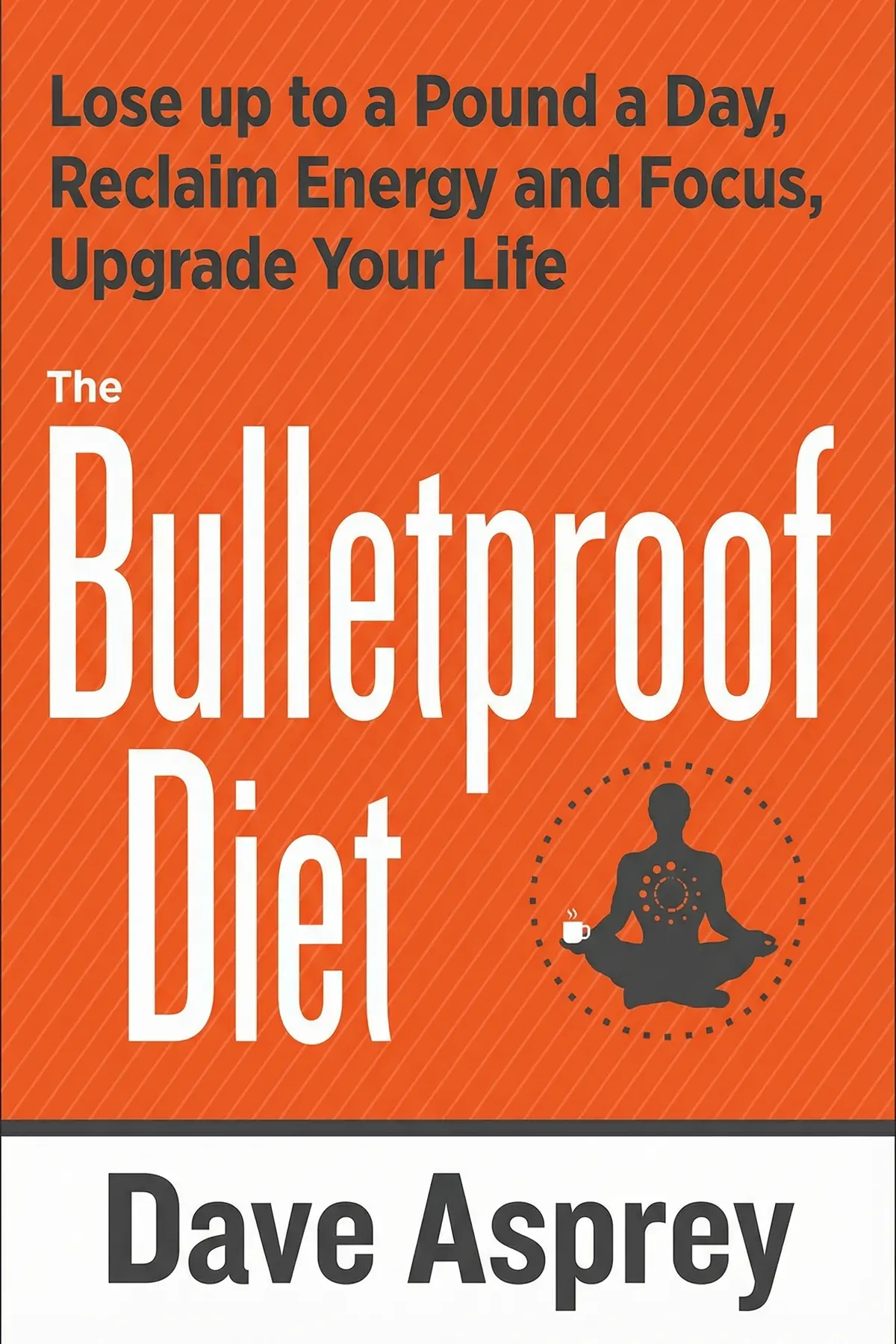
Table of Content
1. Introduction
1 min 01 sec
If your energy drops by mid-afternoon and every diet you try runs on willpower until it breaks, Dave Asprey’s first instruction sounds odd: put butter in your coffee. In The Bulletproof Diet, the technology executive turned biohacker argues that grass-fed butter in a morning cup can push the body into burning fat, and in his own test it did so within half an hour. His plan leans on fat and vegetables, keeps protein and carbohydrates moderate, and keeps toxins, sugar and starch low.
Behind the coffee sits one argument. Steady energy and sharp focus, Asprey claims, come from removing what drains the body, such as sugar, processed food and mold, while feeding it fuels it burns cleanly, such as stable fats and grass-fed protein. Fasting, short hard workouts and good sleep then multiply the effect. Each step below is something you can test at your next breakfast.
2. Cut the foods that leave you hungrier
1 min 42 sec
A chemical first used to rescue spoiled food may be behind the headache and sweet craving that hit after lunch. Asprey traces how certain foods keep you eating while leaving you more tired than before.
3. Choose coffee with fewer hidden toxins
1 min 32 sec
The world’s favorite morning drink often carries a contaminant you cannot see, and the version many careful drinkers choose turns out, by Asprey’s account, to be the riskiest of all.
4. Turn your morning cup into fat-burning fuel
1 min 48 sec
After a rice-heavy sushi dinner, Asprey’s blood showed no sign of fat burning. Thirty minutes and one unusual cup of coffee later, the reading had jumped past a threshold low-carb dieters wait days to cross.
5. Fuel your brain with stable fats and grass-fed protein
2 min 13 sec
A diet theory from the 1950s still shapes what people fear on their plates. Asprey argues it got fat backwards, and that the color of meat fat tells you more than its label does.
6. Feed the gut bacteria linked to lean bodies
1 min 36 sec
Move the gut bacteria of a heavy mouse into a lean one and its appetite changes. Asprey uses that finding to explain which everyday foods feed the microbes he links to staying thin.
7. Fast through the morning with steady energy and focus
1 min 35 sec
Skipping breakfast sounds fine until a mid-morning meeting. Asprey designed a fasting routine that fits a working day, built around a single drink and a muscle-building signal he says it amplifies.
8. Get fitter with short, hard, infrequent workouts
1 min 43 sec
Some athletes collapse mid-marathon, and Asprey thinks long cardio is part of the problem. His alternative takes under 20 minutes, yet it asks for more patience between sessions than most people expect.
9. Better sleep starts on your dinner plate
1 min 30 sec
Asprey claims a good night lifts mental performance by half and that six and a half hours can be enough. What you eat at dinner, he argues, decides whether those hours actually restore you.
10. Conclusion
1 min 08 sec
Set aside the novelty of butter in coffee and Asprey’s plan gives you one filter for every meal, workout and bedtime: does this drain me or fuel me? Sugar, MSG, moldy beans and grain-fed meat land on one side. Stable fats, grass-fed protein, bright vegetables and resistant starch land on the other. Fasting, brief hard training and real recovery decide how well that fuel gets used. His promise reaches past the scale to steadier energy and a clearer head in the afternoon. These are his claims, drawn from studies he cites and tests he ran on his own body, so treat them as experiments to run on yours.
The easiest experiment is the one he opens with. Buy single-origin coffee from a shop that roasts its own beans, stir in grass-fed butter where the milk used to go, and see whether you reach early afternoon without the usual slump. If that holds, drop sugar for a week and watch what happens to your cravings.
Asprey measured his own blood to find out what worked. Your own afternoons can be the measurement.
About this book
What is this book about?
Many people eat what they are told is healthy and still crash every afternoon, crave sugar and struggle to lose weight. Dave Asprey, who spent years in technology before turning to health, argues that the problem lies in what the standard diet lets in and what it leaves out. His Bulletproof Diet leans on fat and vegetables, keeps protein and carbohydrates moderate, and keeps toxins, sugar and starch low. Asprey makes the case against what he calls kryptonite foods, such as sugar and MSG. He warns about mold toxins in cheap and decaf coffee, and he defends stable saturated fats against a theory he traces to Ancel Keys. His signature move is coffee blended with grass-fed butter and MCT oil. In his own test, that cup pushed his body into ketosis within 30 minutes. Beyond food, the book lays out his version of intermittent fasting, short weight and interval workouts with long recovery, and evening habits for better sleep. Readers get a clear set of experiments to try, from the next coffee they buy to tonight's dinner, with Asprey's reasoning for each one.
Book Information
Who it's for
Professionals with afternoon slumps
Professionals who hit an energy wall every afternoon and want to test whether food is the cause.
Curious about diet trends
People curious about ketosis, intermittent fasting or butter coffee who want the reasoning behind them.
Exercisers short on time
Busy exercisers looking for shorter workouts, better recovery and deeper sleep.
About the Author
Dave Asprey
Dave Asprey was born in 1973 and spent years in technology, holding executive and director roles at Trend Micro, Blue Coat Systems and Citrix Systems, before moving into health and wellness. In 2013 he founded Bulletproof 360, Inc., and created Bulletproof Coffee and the Bulletproof Diet, a low-carbohydrate, high-fat eating plan. He hosts the podcast The Human Upgrade, formerly called Bulletproof Radio, and started the Biohacking Conference. His other books include Head Strong and Smarter Not Harder. Dietitians have criticized some of his claims about the diet as pseudoscientific.
Ratings & Reviews
Ratings at a glance

What people think
Listeners find this nutritional guide extensively researched and simple to grasp, especially regarding its explanations of metabolic processes. They value the unique perspective on ketogenic eating and find it efficient for shedding weight, with many reporting losing 20 pounds quite rapidly. Listeners appreciate the included health data, noting it aids in boosting general wellness, and one listener even labels it the "bible for their weight loss journey."
Top reviews
Olivia
This book is essentially the bible for my weight loss journey. I’ve dropped twenty pounds in just a few weeks, and for the first time, I actually understand how my metabolism works. Asprey breaks down the science of how fats act as fuel instead of just making you soft. It feels counterintuitive to eat so much butter and salt, but the mental clarity is undeniable. I no longer crash at 3 PM, and my cravings for sugar have completely vanished. While some of the supplement recommendations feel a bit over the top, the core principles of avoiding 'kryptonite' foods like soy and moldy grains are game-changers. If you’re tired of the old 'eat less, move more' lie, this is the blueprint you need. It’s not just about looking better; it’s about feeling like a high-performance machine every single day.
Show moreEleanor
Ever wonder why you feel sluggish even when you're eating 'healthy' grains and fruits? This book completely flipped my understanding of nutrition on its head. I used to eat brown rice and whole wheat thinking I was doing my body a favor, but Asprey explains how those 'antinutrients' were actually draining my energy. Switching to a diet rich in grass-fed butter and MCT oil has been a revelation for my focus at work. I’m no longer reaching for a snack every two hours because my body is finally fueled by stable fats. The 20-pound weight loss was a nice bonus, but the real win is the mental clarity. This isn't just a diet; it's a manual for taking control of your own biology. If you're ready to stop following the herd and start feeling amazing, buy this book now.
Show moreWoramet
Finally, a health manual that prioritizes brain function alongside physical fat loss. Most diets just focus on the scale, but Asprey cares about how your mitochondria are performing. I’ve been struggling with brain fog for years, and the 'Bulletproof' approach to fats has been the only thing that actually cleared it up. The book is an incredible resource for understanding how to use food as a drug to enhance your performance. I love the detailed breakdown of which fats are stable and which ones cause inflammation. Even the section on 'earthing' and light exposure was eye-opening for someone who spends all day in an office. If you want to lose weight while simultaneously becoming the smartest version of yourself, this is the way to do it. It’s been a life-changing read for my entire family.
Show moreGung
After hearing about biohacking for years, I finally decided to see what the hype was about. The book is thoroughly researched and offers a unique perspective on how inflammatory 'antinutrients' like lectins and oxalates affect our energy levels. I’ve been following the protocol for a month and have already seen a significant drop in my systemic inflammation. The chapter on sleep hacking was particularly helpful, even if I’m not ready to buy a cranial electrical stimulation device just yet. My only gripe is that Asprey tends to overstate the dangers of certain foods, making it feel like every bite is a potential poison. Look, you don't have to follow it 100% to see benefits, but the information on saturated fats and hormone health is top-notch. It’s a solid resource for anyone wanting to optimize their biology.
Show moreViroj
Dave Asprey is clearly a polarizing figure, but you can't argue with the results I've seen. Within the first two weeks of switching to high-fat and low-carb, my brain fog lifted almost entirely. The metabolic explanations are clear and provide a great foundation for understanding why traditional low-fat diets often fail us. I appreciate the 'Bulletproof Roadmap' graphic, as it makes it easy to categorize what I should be buying at the grocery store. Truth is, some of his claims about mold are a bit extreme, and the recipes in the back are somewhat bland without more spices. But if the goal is rapid weight loss and sustained energy, this book delivers. I've lost 15 pounds and my skin has never looked better. It’s a practical, if slightly intense, approach to modern wellness.
Show moreSam
Picked this up because everyone was talking about putting butter in their coffee. I’ll admit, the Bulletproof Coffee concept actually works for intermittent fasting; I’m way less hungry in the mornings now. However, the rest of the diet is pretty restrictive and difficult to maintain if you have a social life. Avoiding almost all fruit and specific vegetables because of 'mycotoxins' makes dining out a total nightmare. To be fair, the book is an easy read and explains complex metabolic processes in a way that doesn't put you to sleep. I've lost a few pounds, but the constant pressure to buy his specific brand of beans and oils feels a bit like a multilevel marketing scheme. It’s a decent guide for keto-adjacent eating, but take the 'kryptonite' food list with a huge grain of salt.
Show moreCameron
Is it possible to be both inspired and annoyed at the same time? That was my experience reading through this guide. On one hand, the advice on avoiding processed sugar and toxic vegetable oils is absolutely spot on and easy to follow. On the other hand, the author's obsession with his own brand of 'upgraded' products is a bit much to swallow. I don't believe for a second that I need special 20-dollar coffee beans to avoid 'toxic' mold. Personally, I found the exercise advice to be a bit misguided, as he basically tells you to stop doing any cardio. I've settled into a middle ground where I use the intermittent fasting tips but ignore the more extreme supplement protocols. It’s a useful book for people who want to experiment with their health, but keep your skepticism handy.
Show moreDao
The metabolic explanations in the first half are actually quite fascinating. Asprey does a great job of explaining how leptin and ghrelin control our hunger signals. However, once he gets into the specific 'kryptonite' foods, things get a bit weird. To be fair, cutting out MSG and artificial sweeteners is common sense, but banning kale and spinach unless they’re cooked a specific way feels like overkill. I also found the 'expensive pee' comment about his supplement routine a bit off-putting; most people can't afford 50 pills a day. The writing style is fast-paced and engaging, which makes it a quick read. It’s a decent introduction to the keto lifestyle with a very specific 'biohacker' twist. I’d recommend it to friends, but with a warning to ignore the constant sales pitches for Bulletproof-branded gear.
Show moreAom
Not what I expected from a standard diet book. It’s less about calories and more about how different foods interact with your hormones and gut bacteria. The concept of mold toxins in coffee was new to me, though I suspect it’s more of a marketing angle than a widespread health crisis. Not gonna lie, the recipes are a bit greasy for my taste—lots of oil and butter on everything. I did notice that my energy levels remained very stable throughout the day while following the meal plan. Still, the tone can be quite condescending toward anyone who follows traditional medical advice. It’s worth a read if you want to understand the science of ketosis, but don’t feel obligated to buy all the high-tech gadgets he recommends. It’s a 3-star read that has some 5-star ideas buried under a lot of hype.
Show moreFinn
The amount of pseudoscience packed into these pages is genuinely staggering. Dave Asprey calls himself a biohacker, but a lot of this feels like a long-form sales pitch for his expensive branded coffee and supplements. To be fair, I appreciate the focus on healthy fats, but his fear-mongering about mold toxins in every vegetable is exhausting. He labels things like garlic and onions as 'suspect' based on very flimsy evidence or personal anecdotes. I tried the butter coffee for a week and felt like I was drinking a greasy oil slick every morning. Frankly, the tone is incredibly arrogant, dismissing decades of nutritional research while citing obscure studies that support his pet theories. If you want to lose weight by spending hundreds on 'upgraded' products, go for it, but most of this is just rebranded keto with a heavy side of marketing hype.
Show moreQuestions about this book
What is the main idea of The Bulletproof Diet?
Dave Asprey argues that steady energy, focus and weight loss come from removing foods that drain the body, such as sugar, processed meals, MSG and mold-contaminated coffee. In their place he puts clean fuel: stable fats like grass-fed butter and MCT oil, moderate grass-fed protein, colorful vegetables and resistant starch. Intermittent fasting, short intense workouts and good sleep complete the plan.
Why does Dave Asprey put butter in his coffee?
Asprey says swapping milk for unsalted grass-fed butter gives 3.4 times more antioxidants, because milk makes coffee’s polyphenols harder to absorb. Butter also supplies butyric acid, which he links to lower inflammation and gut healing. With added C8 MCT oil, the drink helps the body reach ketosis. In his own test, his blood ketones rose from 0.1 to 0.7 within 30 minutes, the morning after a dinner with rice.
What is Bulletproof Intermittent Fasting?
It is Asprey’s workday-friendly version of fasting. Instead of eating nothing until after two in the afternoon, you drink a butter coffee in the morning and eat nothing more until the afternoon. He says the fat keeps you full, boosts muscle building through a pathway called mTOR, and supports ketosis, which keeps blood sugar steady for better focus. When you do eat, he recommends pairing protein with fat.
What exercise does The Bulletproof Diet recommend?
Asprey favors short, intense, infrequent workouts. That means weight training under 20 minutes to muscle failure, with moves like the seated row and chest press, plus interval sessions of 30-second sprints and 90 seconds of rest, repeated for 15 minutes. He warns against chronic long cardio and overtraining, recommends four to seven days of recovery between hard sessions, and suggests beginners start on machines.
How can I start applying The Bulletproof Diet?
Asprey’s plan suggests small first steps. Buy single-origin coffee from a shop that roasts its own beans and add grass-fed butter in place of milk. Cut sugar and processed foods, and choose grass-fed meat and low-mercury fish such as sardines or trout. At night, eat some fat at dinner and avoid bright lights, violent films and exercise for two hours before bed.
Readers also enjoyed









AUDIO SUMMARY AVAILABLE
Listen to The Bulletproof Diet in 15 minutes
Get the key ideas from The Bulletproof Diet by Dave Asprey, plus 5,000+ more nonfiction titles.
- 5,000+ titles
- Listen as much as you want
- 7-day free trial
- Cancel anytime









