
13 min 55 sec
Available in: English
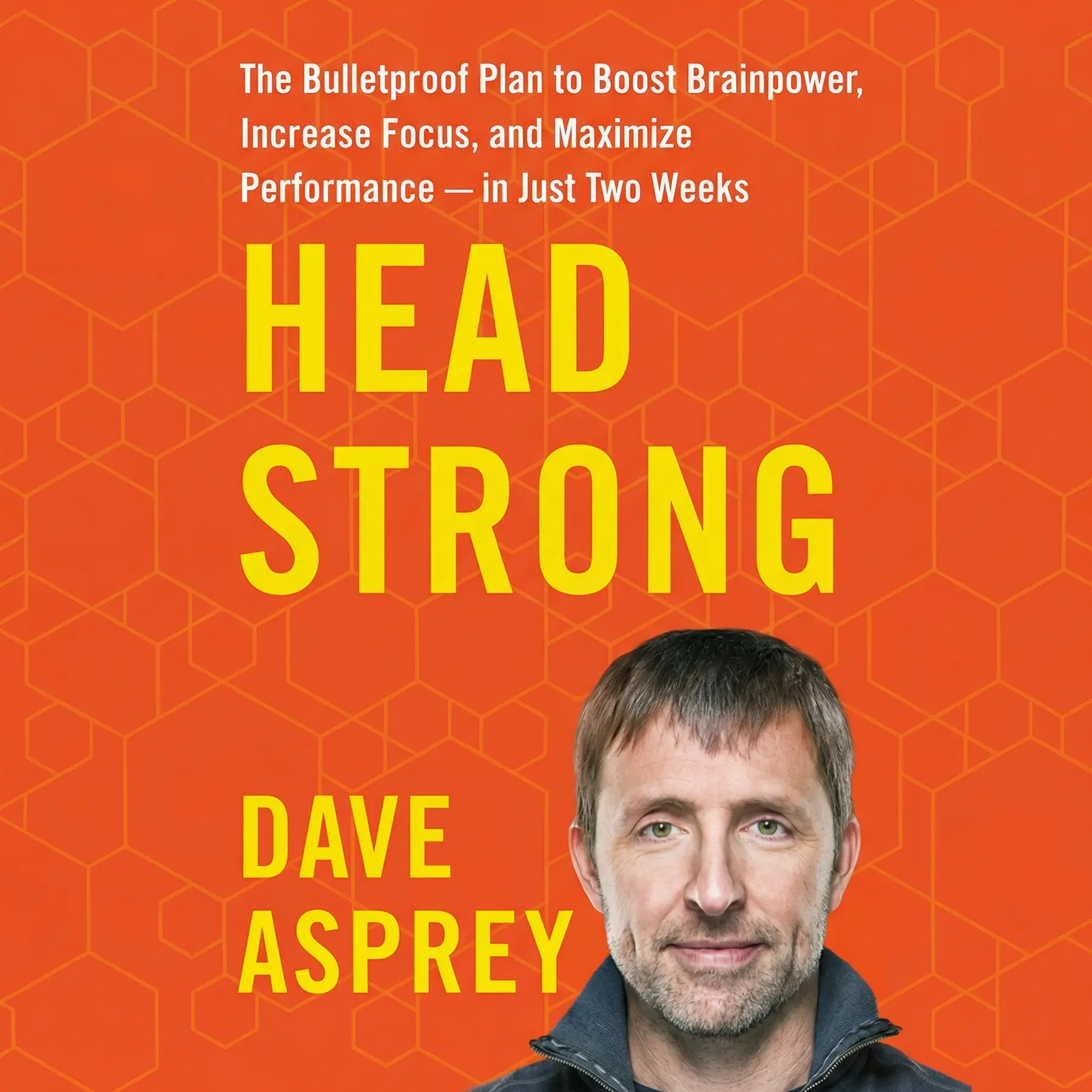
Head Strong: The Bulletproof Plan to Activate Untapped Brain Energy to Work Smarter and Think Faster-in Just Two Weeks
By Dave Asprey
A diet and lifestyle plan for brain fog. Asprey explains which fats, foods and kinds of light he believes feed or drain the cells that power your thinking, and what to change first.
Table of Content
1. Introduction
1 min 02 sec
Maybe your afternoons fade into brain fog, names slip away and your mind runs slower than your to-do list. Dave Asprey thinks the cause may lie in your cells, not your character. In Head Strong, the technology executive turned biohacker points out that the brain burns up to 20 percent of the body’s energy. The tiny structures that make that energy, the mitochondria, wear down under everyday toxins in food and light.
His claim is that mental sharpness can be rebuilt. Give your mitochondria and neurons what they need and take away what exhausts them, and clearer thinking follows, within the two weeks his plan sets out. That one idea runs through every recommendation here, from butter to blueberries to the screen on your phone. Along the way you will hear why Asprey keeps butter but drops milk, which fats he says push the body toward inflammation, where chocolate and exercise fit into learning, and which settings to change on your devices tonight.
2. Trace brain fog back to your energy supply
2 min 00 sec
You can sleep a full night and still feel slow by mid-afternoon. Asprey traces that dullness to the most energy-hungry organ you have, and to a hidden cost your body keeps paying without asking you.
3. Build a memory that holds what you learn
2 min 03 sec
Rereading the same page three times is not proof you are getting older or less clever. Asprey points to two physical features of your brain cells that respond to what you eat, and one of them is made of fat.
4. Cool the inflammation that dulls your focus
1 min 51 sec
The body’s defense against injury and infection can turn against your thinking when it refuses to switch off. Asprey argues that much of what we call normal aging is really this, and that the fix starts in the kitchen.
5. Stock up on foods your brain builds with
2 min 00 sec
Feeding your brain well sounds like a job for specialty stores and expensive powders. Asprey’s list is mostly ordinary groceries, chosen for two jobs: protecting the energy system and supplying the brain’s chemical messengers.
6. Cut three foods that drain mental energy
2 min 01 sec
One of the foods on Asprey’s list to remove is something most people consider wholesome and harmless. His reasoning explains why he keeps butter while dropping its source, and why your healthy breakfast may be cancelling itself out.
7. Fix the light around you to sharpen your thinking
1 min 47 sec
You can eat perfectly and still spend every evening bathed in what Asprey calls junk light. He explains what the bulbs and screens around you do to your cells, and which two-minute changes to make tonight.
8. Conclusion
1 min 11 sec
What Asprey offers, more than any single food rule, is a different question to ask on a foggy day. The question stops being why you cannot focus and becomes what your brain’s energy system is being fed and what it is being forced to clean up. In his picture, mitochondria are the power supply and neurons wrapped in myelin are the wiring. Inflammation, trans fats, milk protein, gluten and junk light are the drains. Clear thinking is what remains when the supply is strong and the drains are few.
That makes the plan easier to start than it first sounds. Cook with less vegetable oil, eat more salmon and grass-fed butter, and trade some of the sugar for chocolate, berries and coffee. Leave milk out of your coffee for two weeks and see whether the afternoon slump changes. Put your devices on their night setting, step into the sun when you can, and sleep in a room with no light at all.
Some of these rules will sound strange at the dinner table. The test Asprey invites is your own: give your brain better fuel and darker nights, then pay attention to how it runs.
About this book
What is this book about?
Brain fog, forgetfulness and afternoon slumps are so common that most people treat them as normal. Dave Asprey disagrees. In Head Strong he argues that a sluggish mind usually signals a brain short of energy, and that much of the shortage comes from everyday choices about food and light. His explanation centers on mitochondria, the tiny structures that make energy in our cells and crowd the brain's planning center. Asprey says toxins from food, air and artificial light force the body to spend energy on cleanup, leaving little for thinking. From there he builds a plan: saturated fats such as grass-fed butter to support the myelin around neurons, polyphenols from coffee, chocolate and dark berries, more omega-3 and less vegetable oil to calm inflammation, and protein foods that supply the building blocks of dopamine and GABA. The plan also asks you to cut things. Asprey targets trans fats, milk protein and gluten, along with the blue light from LEDs and screens. He ends with sunlight and a pitch-black bedroom. Readers get a clear picture of how he connects cells to focus, plus specific swaps and device settings to try within two weeks.
Book Information
Who it's for
Students and office workers
Office workers and students who hit a wall of brain fog every afternoon.
Curious about biohacking
People curious about biohacking who want a clear tour of Asprey's ideas on fats, food and light.
Willing to test changes
Anyone willing to test small changes to diet, screens and sleep for two weeks.
About the Author
Dave Asprey
Dave Asprey, born in 1973, spent his early career in technology, in executive and director roles at Trend Micro, Blue Coat Systems and Citrix Systems. In 2013 he founded Bulletproof 360, the company behind Bulletproof Coffee and the low-carbohydrate, high-fat Bulletproof Diet. Dietitians have called some of his diet claims pseudoscientific. He hosts the podcast The Human Upgrade, formerly Bulletproof Radio, and started the Biohacking Conference. His other books include The Bulletproof Diet and Smarter Not Harder.
Ratings & Reviews
Ratings at a glance
What people think
Listeners find this an excellent guide filled with scientific research that offers actionable advice for improved wellness. They appreciate the way it boosts mental clarity through dietary changes and enhances both vitality and physical output, with one listener describing it as a life-changing book. Listeners also prize the emphasis on neurological and mitochondrial well-being, with one review pointing to its comprehensive approach to mitochondrial function.
Top reviews
Owen
This book completely shifted how I view my afternoon energy crashes. Asprey dives deep into the world of mitochondrial health, explaining how these tiny power plants in our cells dictate our mental sharpness and overall longevity. I appreciated the actionable steps, like switching out my LED bulbs for halogens and being more mindful of blue light exposure in the evenings. While some of the biohacking techniques seem a bit extreme for a beginner, the logic behind reducing inflammation to boost brain power is sound. It’s a comprehensive guide for anyone looking to optimize their cognitive performance through targeted nutrition and environmental tweaks. My focus has improved significantly since implementing just a few of the protocols mentioned.
Show moreTalia
Wow, the level of detail regarding mitochondrial function is actually quite impressive compared to your standard diet book. Dave Asprey has a way of making complex biological processes feel accessible, even if his methods are a bit unconventional. I’ve been struggling with brain fog for years, and focusing on the 'energy producers' of my cells has been a total game-changer for my mental clarity. Not gonna lie, the bulletproof coffee routine is a bit of a chore to blend every morning, but the steady energy it provides is worth the extra effort. This isn't just a book; it's a manual for anyone who wants to operate at a higher level. I feel like I've finally found the missing piece to my health puzzle.
Show moreWatcharee
As someone who has struggled with chronic fatigue for years, the focus on mitochondrial health in this book was a total lightbulb moment for me. In my experience, most doctors just tell you to sleep more, but Asprey explains the 'why' behind the exhaustion. I’ve started the nightcap routine with honey and collagen, and I’m finally sleeping through the night without waking up at 3 AM. The book is dense with information, but it’s written in a way that makes you want to go out and change your entire life immediately. It’s been a life-changing resource for me, and I’ve already recommended it to several friends who are dealing with similar brain fog issues. Truly impressive stuff.
Show moreThanit
After hearing about biohacking for months, I finally dove into Head Strong to see what the hype was about. Truth is, there’s a lot of 'woo-woo' nonsense to wade through, like the suggestion to walk barefoot on grass after flying to 'ground' yourself. However, if you can filter out the weirdness, the core advice on managing inflammation is incredibly valuable for modern professionals. I started taking cold showers and using MCT oil in my morning routine, and I’ve noticed a subtle but real difference in my morning productivity. The writing style is a bit arrogant, which might turn some people off, but his drive to find the 'perfect' human state is undeniably contagious. It's a solid four-star read for the practical tips alone.
Show moreSaowalak
To be fair, I was skeptical of the 'bulletproof' lifestyle at first, but the cognitive clarity I’ve gained from these suggestions is hard to ignore. The book is packed with research on how our environment—from the water we drink to the wifi signals in our homes—affects our brain's ability to perform. I’ve implemented the phone-on-airplane-mode rule at night and started using Krill oil as suggested. It’s a lot of information to digest, and some of it feels like a stretch, but the overarching theme of reducing stress and inflammation is spot on. If you can get past the author's ego, there are some life-changing gems in here. It’s definitely more than just your average fitness guide.
Show morePun
Finally got around to reading this and I’m currently typing this while wearing my new TrueDark glasses. Asprey’s relentless drive to optimize every second of his life is actually quite inspiring, even if it borders on the obsessive. He provides a roadmap for repairing the brain that goes way beyond just 'eating your veggies' and actually looks at cellular energy. I especially liked the tips on using grape seed extract and addressing potential mold issues in the house, which are often overlooked by mainstream doctors. It’s a bit of a sales pitch for his brand at times, but the information is valuable enough that I don't mind the marketing too much. My brain definitely feels sharper.
Show moreBrahim
Picked this up hoping for a rigorous scientific manual, but found something much more anecdotal and lifestyle-oriented. Asprey is clearly passionate about longevity, but he writes with a 'trust me, I'm smart' tone that gets exhausting after a hundred pages. He frames every single health benefit through the lens of mitochondria, which feels like an oversimplification of complex biology. That said, I did find the sections on mold toxins and the importance of healthy fats to be quite eye-opening. I’ve started being more careful with how I cook my eggs and which oils I use for high heat. It’s a decent collection of health tips, but take the more extreme claims with a grain of salt.
Show moreTitiluck
The chapter on lighting and blue light exposure was probably the most practical takeaway for me. I’m currently wearing orange-tinted glasses while writing this, and I have to admit my eyes feel much less strained at night. However, as a vegetarian, a huge portion of the dietary advice in this book is basically useless to me. He pushes grass-fed butter and collagen so hard that there isn't much room for those of us who don't eat meat. It’s a very tech-bro approach to health—expensive, slightly obsessive, and heavily reliant on buying specific gadgets and supplements. I appreciate the research, but the execution feels like it was designed for a very specific, wealthy demographic.
Show moreAir
Look, if you can get past the constant product mentions, there is some genuine wisdom buried in these pages. It’s essentially a massive compilation of every health hack currently trending in the Silicon Valley scene. I found the science to be a bit hit-or-miss, and some of the advice seems to contradict itself if you look too closely. I’m giving it three stars because while the 'head strong' program is intensive, it’s not particularly original if you’ve been following the health world for a while. It’s a good entry point for beginners, but seasoned biohackers might find it a bit repetitive. Still, it’s a fast read with a few interesting experiments to try on yourself.
Show moreYuki
Is Asprey a scientist or just a really good salesman? Frankly, I felt like half the book was an elaborate advertisement for his own line of supplements and coffee products. I was looking for peer-reviewed studies on brain function, but instead, I got a lot of anecdotal evidence and assertions that felt scientifically thin. My cousin is a biologist and she laughed when I told her about some of the mitochondrial claims he makes in these chapters. It also repeats a massive amount of content from his previous work, so if you’ve already read the Bulletproof Diet, you can probably skip this one. It's frustrating because there are a few decent tips on sleep hygiene hidden under all the fluff and sales pitches.
Show moreQuestions about this book
What is the main idea of Head Strong by Dave Asprey?
Asprey argues that a sharp mind depends on energy, and that energy comes from mitochondria, tiny structures packed into the brain’s planning region. Toxins from food, air and artificial light force the body to spend energy on cleanup, which leaves you foggy and tired. His plan feeds mitochondria and neurons with the right fats and plant compounds and removes the foods and light he believes drain them.
Why does Head Strong say to avoid milk but eat butter?
Asprey’s problem with milk is its protein, not lactose. He says milk protein causes inflammation, which weakens mitochondria, and that it binds to polyphenols so the body cannot use them. Butter contains almost no milk protein, and he values the saturated fat in grass-fed butter as raw material for myelin, the fatty membrane that helps neurons communicate.
What foods does Dave Asprey recommend for brain health?
He recommends saturated fats from grass-fed butter and meat, polyphenol-rich foods such as coffee, chocolate, grapes, blueberries and dark red, purple or blue vegetables, and grape-seed extract. For omega-3s he points to wild-caught salmon. To supply the building blocks of dopamine and GABA, he suggests beef, turkey, almonds and salmon. He advises cutting sugar, vegetable oils, trans fats, milk and gluten.
How does light affect the brain according to Head Strong?
Asprey says mitochondria are highly sensitive to light and that modern lighting stresses them. LEDs, in his account, emit five times the blue light found in nature, pushing mitochondria to produce harmful free radicals. He recommends the f.lux app on laptops and Android phones, Night Shift on iPhones, more time in sunlight and a pitch-black bedroom for sleep.
How can I start applying Head Strong this week?
Begin with changes that are easy to see. Turn on the night setting for your phone and laptop. Swap a sugary snack for chocolate or blueberries. Leave milk out of your coffee and cook with less vegetable oil. Eat salmon a couple of times. Take a break outside in daylight, and block every source of light in your bedroom, using blackout curtains or extra fabric.
Featured in
Readers also enjoyed





AUDIO SUMMARY AVAILABLE
Listen to Head Strong in 15 minutes
Get the key ideas from Head Strong by Dave Asprey, plus 5,000+ more nonfiction titles.
- 5,000+ titles
- Listen as much as you want
- 7-day free trial
- Cancel anytime









