
13 min 57 sec
Available in: English
Fast This Way: Burn Fat, Heal Inflammation, and Eat Like the High-Performing Human You Were Meant to Be
By Dave Asprey
Shows how to fast without feeling starved: start with a daily eating window, vary fast lengths, time meals around sleep and training, adapt the plan for women, and treat slips as lessons.
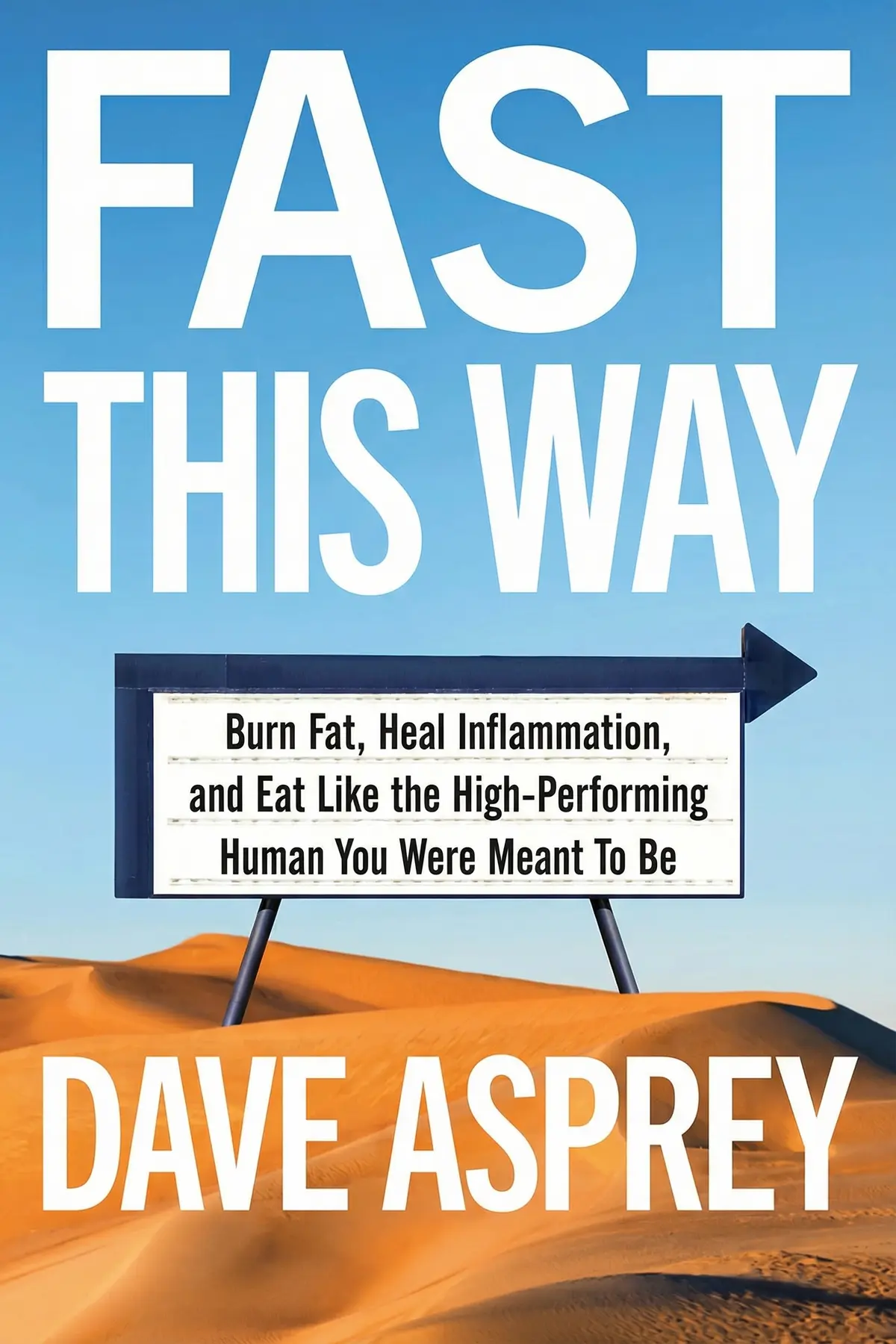
Table of Content
1. Introduction
52 sec
If fasting sounds like a plan to feel hungry and miserable, Dave Asprey thinks you have it backwards. In Fast This Way, the tech executive turned biohacker treats fasting as a skill: telling what your body actually needs from what you merely want, and giving it that at the right time. He applies the same skill to phones, sleep, exercise and even your mood, backed by more than ten years of his own fasting.
His case is that going without, done gently and on a varied schedule, gives you more control over your body and mind. The ideas below move from that mindset to a first eating window, then to varying your fasts, timing sleep and training around them, adjusting the plan for women, and handling the day you give in. By the end, you will have a schedule to try this week and a sharper sense of which cravings are really hunger.
2. Tell a real hunger from a craving
1 min 32 sec
The pull toward french fries at four in the afternoon feels like a body asking for food. Asprey says it often is something else entirely, and the same pull explains why your thumb keeps finding Instagram.
3. Ease in with an eight-hour eating window
1 min 54 sec
Early on, fasting can feel like losing something, but that first discomfort is temporary. Asprey’s way in is gentle enough to fit a normal workday, and he believes it changes far more than your waistline.
4. Mix up your fasts to keep your body sharp
1 min 46 sec
Eating once a day can look like the fastest route to results. Asprey warns that doing it every day backfires in ways most people never connect to food, and he offers a deliberately messy week instead.
5. Let a good night's sleep carry the fast
1 min 37 sec
Most people would sooner lose an hour of sleep than skip dinner. Asprey thinks that trade is upside down, and he points to a study finding that leaving three hours between your last meal and bed lowers blood sugar.
6. Train hard on fasting days without crashing
1 min 47 sec
Working out on an empty stomach sounds like a fast route to collapse. Asprey argues the opposite, and he adds a cold-water habit that most people hate for exactly a few days.
7. A gentler fasting plan built for women
1 min 38 sec
Most fasting advice was shaped around men’s bodies. Asprey describes what can go wrong when women follow it unchanged, and the small adjustments he suggests to keep the body from sounding an alarm.
8. Treat a broken fast as something to learn from
1 min 38 sec
Halfway through an ambitious fast, a cookie ends up in your mouth. What happens next decides whether the habit survives, and Asprey’s response is far kinder than most diet advice.
9. Conclusion
1 min 13 sec
Fast This Way adds up to an argument about control. Asprey’s fasts are short pauses that quiet two kinds of noise: the biological kind inside your cells, and the mental kind that keeps reaching for food, screens and comfort. What remains when the noise drops is a clearer view of what you actually need.
His own closing exercise shows how far the idea stretches. Spend one day fasting from hate. Aim no hateful thoughts at anyone or anything, and when one arrives anyway, deliberately think something positive about its target. He expects the day to reveal how much negativity surrounds you, online and off.
With food, the place to begin is modest. Choose an eating window, perhaps 16:8, finish dinner three hours before bed, and let the night carry much of the fast. Once that feels ordinary, vary the week instead of tightening it, and if you are a woman, start gentler and talk to a doctor first. When a cookie interrupts the plan, eat it and notice what it showed you.
Hunger, in Asprey’s telling, is information. Learning to read it is the whole practice.
About this book
What is this book about?
Fasting has a reputation as a test of endurance: skip meals, feel miserable, hope for results. Dave Asprey argues that this picture is wrong. In his view fasting is a mindset of going without for a while, so that you learn the difference between what your body needs and what you have simply been trained to want. Drawing on more than ten years of his own fasting, Asprey lays out a practical path. Beginners start with a 16:8 eating window, then move toward a deliberately varied week that mixes one-meal days, intermittent fasts and cheat days. He explains how sleep, late dinners and evening screens shape a fast, how switching up your fasting routine trains what he calls metabolic flexibility so you can get through workouts on fasting days, and why women need a gentler, tailored plan and a doctor's advice before they begin. Readers get a concrete starting schedule, clear warnings about overdoing it, and a forgiving attitude toward the day the plan breaks. The same principle, Asprey suggests, applies to phones, habits and even hateful thoughts.
Book Information
Who it's for
Professionals wary of hunger
Busy professionals curious about intermittent fasting who fear constant hunger and low energy.
Diets keep failing
People whose diets keep failing because of cravings, late dinners or poor sleep.
Women hoping to fast
Women who want to try fasting without disrupting their hormones, cycles or sleep.
About the Author
Dave Asprey
Dave Asprey, born in 1973, worked in technology, holding executive and director roles at Trend Micro, Blue Coat Systems and Citrix Systems, before turning to health and wellness. In 2013 he founded Bulletproof 360 and created Bulletproof Coffee and the Bulletproof Diet, a low-carbohydrate, high-fat plan; dietitians have criticized some of his claims about that diet as pseudoscientific. He hosts the podcast The Human Upgrade, started the Biohacking Conference, and wrote The Bulletproof Diet, Head Strong and Smarter Not Harder.
Ratings & Reviews
Ratings at a glance

What people think
Listeners find the material both educational and simple to grasp, with one individual noting that it clarifies otherwise muddled health data. Furthermore, the book functions as an all-encompassing fasting manual that is particularly ideal for newcomers, and one listener characterizes it as a one-stop shop for every element of the technique. Additionally, listeners value its clear prose, health advantages, and overall worth, with one review pointing out the thorough instructions regarding various fasting modalities.
Top reviews
Amy
Picked this up after hearing Dave on a podcast and I’m glad I took the plunge into his specific methodology. Before reading this, I thought fasting meant absolute deprivation, but his "Fast This Way" hacks make the transition so much smoother. The book functions as a comprehensive manual that covers everything from sleep quality to cellular autophagy without getting bogged down in overly dense jargon. I’ve started incorporating the Bulletproof Coffee approach into my mornings, and my mental clarity has never been sharper. It’s an empowering read that reframes fasting from a chore into a high-performance tool for your everyday life. Highly recommend for the energy boost alone!
Show moreGrace
Finally got around to reading this and I was surprised by the deep synergy between the spiritual and physical aspects of fasting. Most nutrition books are dry and clinical, but Asprey manages to weave in a sense of purpose that makes the lifestyle change feel more meaningful. The guidance on using specific fats to maintain a fast without triggering an insulin response was exactly what I needed to get over the hump. I’ve tried the "purist" water-only method before and failed miserably, so these "hacks" are a total lifesaver for my productivity. It’s a fast-paced, engaging read that I’ve already recommended to several friends who want to feel better.
Show moreAnthony
After hearing so much conflicting health advice online, this book felt like a breath of fresh air because it provides a clear, actionable plan. It’s rare to find a health guide that you actually want to read from cover to cover, but Dave’s storytelling kept me hooked. The way he breaks down the benefits of different fasting lengths—from 16 hours to multi-day water fasts—is incredibly comprehensive. I’ve noticed a significant improvement in my sleep quality and overall energy levels since following his roadmap. It’s definitely a one-stop shop for anyone looking to optimize their body and mind without feeling like they are starving.
Show moreLandon
Ever wonder why some people make fasting look so effortless while you’re stuck counting down the minutes until lunch? Asprey’s approach focuses heavily on "hacking" the hunger response so you don't have to suffer through the process. I really appreciated the one-stop-shop feel of this guide, especially the parts covering how to pair specific exercises with your fasting window. While the self-promotion is definitely present, the advice on using fats to bridge the gap is a game-changer for beginners. It simplifies complex biological processes into something that feels achievable for the average person. My joint pain has actually decreased since implementing some of these strategies.
Show moreAraya
The chapter on how fasting needs to be adjusted for women based on their hormonal cycles was the standout for me. Most health books treat every body the same, so seeing a nuanced discussion about "hormonal seasons" was refreshing and necessary. Truth is, Dave’s writing style is very conversational—almost like a professor rambling during a coffee break—which makes the information accessible. I did find the index a bit frustrating to navigate in the digital version, and some of the science felt a bit anecdotal. Regardless, the roadmap provided for building "fasting stamina" is practical and easy to follow even if you are totally new to this.
Show moreJack
This book offers a really solid attempt at demystifying the various modalities of fasting for a general audience. It isn't just about skipping breakfast; it’s a deep dive into how we can use time-restricted feeding to actually heal inflammation. Look, the guy loves to talk about himself, but his personal stories of "biohacking" in remote caves actually help illustrate his points. I particularly liked the sections on "bonking" and how to avoid the typical afternoon energy crash. Even if you don't buy into every single supplement he recommends, the core strategies for metabolic flexibility are worth the price of admission. It makes sense of a lot of confusing health data.
Show morePick
Direct and accessible, this book serves as an excellent introduction for those who find the idea of fasting intimidating. I appreciated the specific tips on how to use exercise to enhance the autophagy process, which is something I hadn't seen explained so clearly elsewhere. Not gonna lie, some of the more "out there" spiritual anecdotes felt a bit like fluff, but the practical advice is top-notch. It makes sense of confusing data and turns it into a manageable routine that doesn't require suffering. Whether you want to lose weight or just clear the brain fog, there’s something useful in these pages for almost everyone.
Show moreSomboon
As someone who has dabbled in intermittent fasting for years, I found this volume to be a bit of a mixed bag. The spiritual narrative about his time in the desert adds a unique "personality" to the text that you don't usually get in clinical health books. However, it can feel a bit repetitive when he hammers home the same points about "bonking" or hunger suppression. To be fair, the breakdown of how different vitamins and supplements interact with a fasted state was actually quite useful. I wouldn't call it the definitive guide, but it’s a decent companion if you’re already a fan of the Asprey lifestyle and want something light to read.
Show moreNook
Honestly, if you stripped away the endless mentions of Bulletproof products, this would be a much shorter and more effective book. Dave Asprey has a lot of opinions, and while his personal journey is somewhat entertaining, the "narcissistic" tone can be a bit much at times. I did find the "Stages of Fasting" chapter in the middle to be genuinely insightful for tracking what’s actually happening in my cells. It’s a good jumping-off point for those who are brand new to the concept of IF. However, if you are a seasoned practitioner, you likely won't find many revolutionary revelations here that justify the filler.
Show moreBua
Not what I expected from a supposed health manual. While Dave Asprey is certainly a pioneer in the biohacking world, this felt more like a 300-page advertisement for Bulletproof Coffee than a rigorous scientific exploration. If you are looking for deep biological mechanisms, you are better off sticking with Jason Fung or Gin Stephens. The constant references to his "vision quest" in a cave were interesting at first but eventually felt like filler to justify the book's length. Frankly, the lack of citations for some of the bolder claims regarding women's fasting cycles made me skeptical. It’s an easy enough read, but the signal-to-noise ratio is unfortunately quite low for an experienced intermittent faster.
Show moreQuestions about this book
What is the main idea of Fast This Way by Dave Asprey?
Asprey argues that fasting is a mindset of going without for a while, which teaches you to tell real hunger from cravings and gives you more control over body and mind. He recommends starting with a 16:8 eating window, then varying fast lengths through the week, timing meals around sleep and training, and applying the same idea to phones and even hateful thoughts.
What fasting schedule does Dave Asprey recommend for beginners?
He suggests intermittent fasting on the 16:8 plan, with meals confined to an eight-hour window such as 10 in the morning until 6 in the evening. Later he recommends a varied week: a high-protein, high-fat breakfast to open it, a mix of one-meal days and intermittent fasts in the middle, and cheat days at the weekend. He warns that eating one meal every single day can lower sex hormones, disturb sleep and thin hair.
Is fasting different for women according to Fast This Way?
Yes. Asprey says women tend to be more sensitive because the body can read fasting as a threat to reproduction and restrict hormones. He reports that women who overdid it experienced poor sleep, hair loss, irregular periods and, at times, temporary infertility. He suggests fasting every other day or starting at 14 hours, saving hard workouts for eating days, watching iron, consulting a doctor first and never fasting while pregnant.
How does sleep affect fasting in Fast This Way?
Asprey treats sleep as part of the fast. He credits six and a half to eight hours with repair and lower inflammation, and says extending the fast after waking raises growth hormone. Eating late disrupts the body’s clock and sleep, so he cites a University of California, San Diego study on leaving three hours between dinner and bed, and suggests dimming lights and switching off screens in the evening.
What should I do if I break a fast early?
Asprey advises against self-criticism. If an overambitious plan or a stressful day ends with a cookie in your mouth, he suggests enjoying it and asking what the slip revealed, such as perfectionism or rigidity, which he calls a spiritual toxin. Then simply carry on with the next fasting window instead of abandoning the practice.
Featured in

Readers also enjoyed









AUDIO SUMMARY AVAILABLE
Listen to Fast This Way in 15 minutes
Get the key ideas from Fast This Way by Dave Asprey, plus 5,000+ more nonfiction titles.
- 5,000+ titles
- Listen as much as you want
- 7-day free trial
- Cancel anytime









