

14 min 14 sec
Available in: English
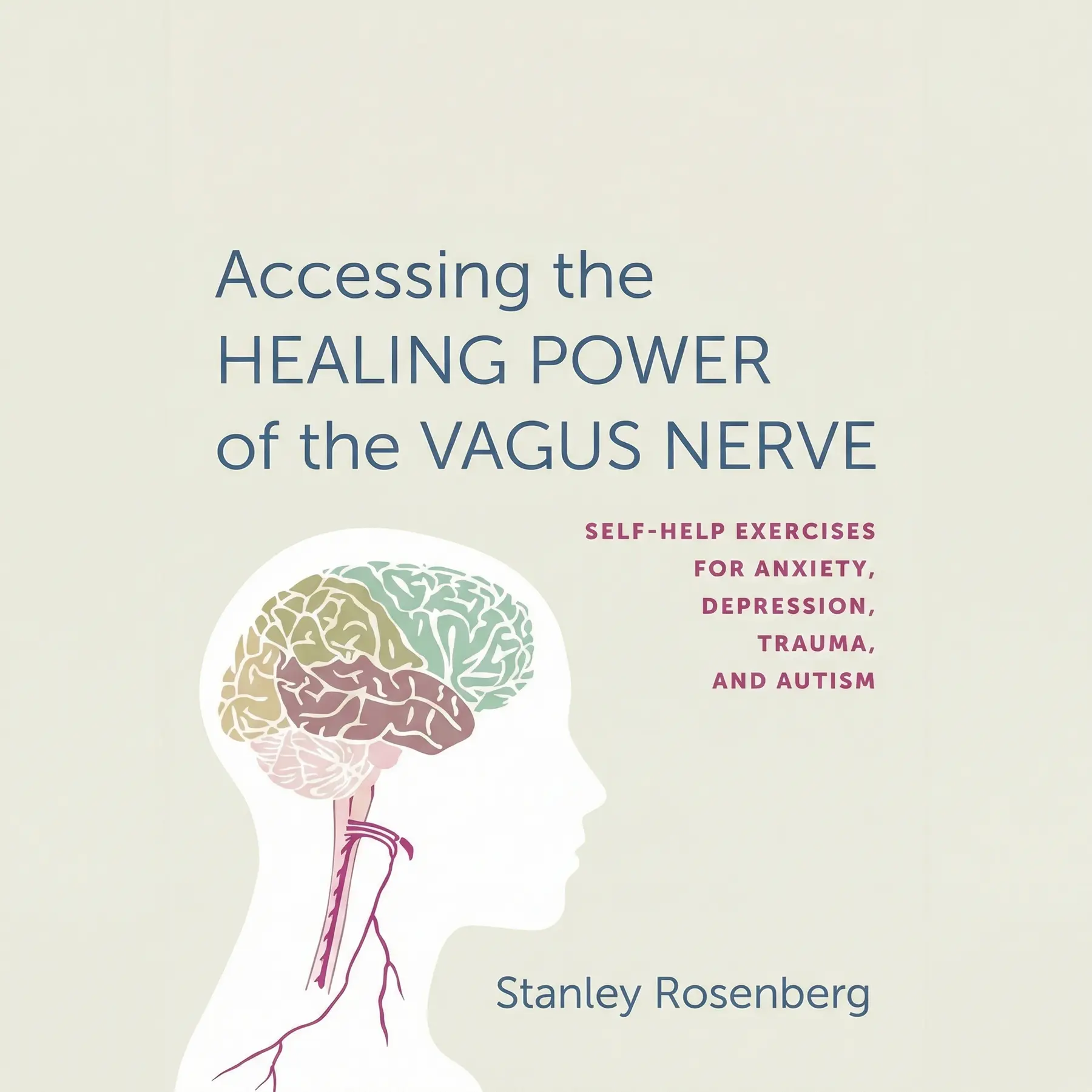
Accessing the Healing Power of the Vagus Nerve: Self-Help Exercises for Anxiety, Depression, Trauma, and Autism
Shows how a nervous system stuck in fear can drive sleeplessness, anxiety and withdrawal, and teaches a two-minute eye-and-hands exercise meant to switch on the branch of the vagus nerve linked to calm and connection.

Table of Content
1. Introduction
53 sec
If your body feels braced for trouble most days, with broken sleep, a clenched jaw and little wish to see friends, Stanley Rosenberg would start with one nerve. In Accessing the Healing Power of the Vagus Nerve, the Copenhagen body therapist traces that cluster of complaints to the vagus nerve and offers a two-minute routine to reset it at home.
His argument is that much stress is a nervous system stuck in the wrong setting. A simple physical exercise, he says, can move it back into the state where we rest, recover and enjoy other people. To make the case, he leans on Stephen Porges’s Polyvagal Theory, which swaps the old picture of two nervous states for five.
By the end, you will be able to name those states, spot one sign of a struggling nerve, and do the exercise lying on your back while your eyes do the work.
2. Spot the nerves behind feeling safe with people
1 min 54 sec
The same alarm system that saves you from a predator can ruin a family dinner after a bad day at work. Rosenberg locates the switch for feeling at ease somewhere most people never think to look.
3. Name the five settings of your nervous system
2 min 04 sec
Most of us were taught the body has two modes, stressed or relaxed. One psychiatrist’s theory says there are five, and two of them explain why some people feel wired or flat for years.
4. Stop constant stress and shutdown from wearing you out
1 min 56 sec
Some people feel heavy and exhausted, others feel permanently switched on, and both may share one cause. A test any doctor’s patient has done once reveals whether a key nerve is struggling.
5. A two-minute exercise to calm your system
2 min 02 sec
It needs no equipment, no app and no special breathing, only your hands, the back of your head and the direction of your gaze. Rosenberg explains why something this small reaches the nerves it does.
6. See how calming one nerve eased breathing
2 min 05 sec
A man in his forties could not climb a single flight of stairs without stopping to gasp. What one man went through at a Copenhagen clinic was later confirmed by his hospital’s lung tests.
7. A body route to calmer minds and connection
2 min 06 sec
A teenager who had avoided eye contact since infancy became talkative after a few minutes of treatment from his own brother. Rosenberg is careful about what he claims, and about what he does not.
8. Conclusion
1 min 14 sec
What Rosenberg offers is a different first question. When someone cannot sleep, grinds their teeth, pulls away from friends or feels drained all the time, the usual move is to reach for a pill or a label. He asks instead which setting the nervous system is stuck in, and whether the front branch of one wandering nerve has gone silent. His evidence comes from his Copenhagen clinic: hundreds of clients, a breathless man who climbed four flights, a withdrawn teenager who grew up to design sound.
The practice is small enough to start tonight. Lie on your back with your head resting in your laced fingers, look right with only your eyes until a yawn or sigh comes, then look left. Turn your head before and after to feel the difference. During the day, notice whether your energy is the playful kind or the fearful kind, because Porges’s five settings make that line visible. And keep your doctor involved before changing any treatment, as Rosenberg himself insists.
The vagus earned its name by wandering through the whole body. Rosenberg’s case is that the way back to calm can begin with where your eyes look.
About this book
What is this book about?
Poor sleep, a clenched jaw, low mood, changes in weight and no wish to see anyone. Stanley Rosenberg, a body therapist who has run a clinic in Copenhagen for decades, links this whole cluster of complaints to a single source: the vagus nerve, the longest of the twelve cranial nerves. Drawing on Stephen Porges's Polyvagal Theory, Rosenberg replaces the familiar idea of two nervous states, stressed or relaxed, with five. Two of them are fearful, one wired and one frozen, and many people get stuck in them for years. His remedy is to activate the front, or ventral, branch of the vagus, which he ties to rest, recovery and social engagement. Readers learn how to recognize those settings, how Rosenberg checks for a struggling nerve by watching the throat as someone says Ah, and step by step how to do his Basic Exercise lying down. He also describes cases from his clinic, including a breathless man with lung disease and a teenager on the autism spectrum, to show how far he believes the approach can reach, always alongside a doctor's care.
Book Information
Who it's for
On edge or drained
People who feel stuck on high alert or constantly drained and want a simple routine to try at home.
Professionals taking stress home
Professionals whose work stress spills into sleep, mood and relationships.
Curious parents and carers
Parents and carers curious about body-based approaches to anxiety and autism alongside medical care.
About the Author
Stanley Rosenberg
Stanley Rosenberg has run a craniosacral therapy clinic in Copenhagen, Denmark, for about thirty years. Over that time he has treated thousands of clients for physical and psychological conditions, among them migraines, respiratory problems, bipolar disorder and autism. That long hands-on practice is the ground his methods for calming the nervous system grow from.
Ratings & Reviews
Ratings at a glance
What people think
Listeners find the work educational and simple to navigate, offering lucid, sequential guidance to aid in nervous system regulation. Furthermore, the text is logically organized and presented in accessible terms, making for a compelling exploration. They value the thorough theoretical foundation, specifically the distillation of polyvagal theory, and believe it is vital for comprehending total health, with one listener highlighting how it revolutionized their life after struggling with anxiety for years.
Top reviews
Surasit
After years of struggling with a nervous system that felt like it was constantly on high alert, this book has been a godsend. Rosenberg takes the complex Polyvagal theory and makes it accessible for people who aren't medical professionals. The writing is simple, clear, and deeply informative. I particularly loved the focus on how our physical state dictates our social engagement. It explained so much about my own patterns of withdrawal. The exercises are the real stars, though. They are subtle but incredibly powerful; the first time I did the basic reset, I felt a physical shift in my chest. It is rare to find a book that offers both the theory and a concrete 'how' that actually works. This should be required reading for anyone dealing with trauma or chronic stress.
Show moreDimitri
I’ve tried everything for my migraines, from medication to extreme diets, but nothing provided relief until I started the exercises in this book. It sounds too simple to be true—just moving your eyes and tilting your head—but the physiological release is real. Rosenberg explains the 'Basic Exercise' with such clear, step-by-step directions that you can't really mess it up. I love that he doesn't just give you the moves; he explains the theory behind why your body reacts the way it does. The book is a bit academic in parts, but I found the theory fascinating rather than boring. It has completely changed how I look at my health. I no longer feel like a victim of my symptoms. I finally feel like I have a manual for my own nervous system.
Show moreChamnong
Ever wonder why you feel stuck in a loop of panic or total exhaustion? This book explains it all through the lens of the vagus nerve. I was worried it would be too 'woo-woo,' but the focus is very much on the physical body and the cranial nerves. The language is simple and easy to follow, making it perfect for someone who is already overwhelmed by stress. I found the summary of Porges' Polyvagal theory to be the best I've read yet. It is well-organized and the illustrations help a lot with the anatomy parts. I have been doing the exercises daily for three weeks now, and my 'brain fog' has significantly lifted. It is a comprehensive theory that actually translates into a better quality of life. Highly recommend.
Show moreTim
Rosenberg manages to take some very heavy neuroscience and turn it into something I could actually use to help my anxiety. Before reading this, I didn't realize that my 'shutting down' was a physiological response from the dorsal vagus nerve. Understanding that it wasn't a character flaw, but a survival mechanism, was a huge relief for me. The book is informative and the exercises are incredibly easy to incorporate into a busy schedule. I have noticed that I am more 'present' in social situations and less likely to feel overwhelmed by noise or crowds. While the author is a bodyworker and not a doctor, his deep insight into how the body holds tension is clear on every page. This book is an essential tool for anyone trying to heal.
Show moreRatchada
Finally, a guide that actually bridges the gap between complex neuroscience and practical, everyday application. I’ve struggled with chronic anxiety for nearly a decade, and understanding the 'rest and digest' mechanism through Rosenberg’s lens was a total lightbulb moment for me. The book is well-structured, moving from the foundational theory of the nervous system into specific, illustrated exercises that anyone can do at home. I appreciate how he explains the evolutionary side of why we freeze or flee. My only real gripe is that the text is a bit repetitive in the middle chapters; he tends to reiterate the same points about the ventral branch over and over. Still, the impact on my daily stress levels has been undeniable. If you can move past some of the more anecdotal claims, there is real gold here.
Show moreMoon
As a bodyworker myself, I found Rosenberg’s insights into the anatomical connections between the vagus nerve and our facial muscles to be incredibly useful for my practice. He provides a level of detail about the hybrid states of the nervous system that I haven't found in other popular texts. While his writing style can be a bit dry and he definitely repeats himself to drive the point home, the clinical value is there. I’ve started incorporating the eye-positioning techniques with my clients, and the feedback has been overwhelmingly positive. I do agree with other reviewers that his language regarding autism is dated and could have used a more sensitive editorial eye. If you can look past that, the core methodology for nervous system regulation is solid. It is a great resource for healers.
Show moreEleni
This book provides a solid foundation for anyone interested in the mind-body connection. Rosenberg’s passion for his work really shines through, and his generosity in sharing these techniques is a breath of fresh air in a field where everything is usually hidden. To be fair, the book is quite repetitive and could have been edited down by about fifty pages. He also makes some very grand claims about the psychological effects of these exercises that might be a bit of an oversimplification. However, the core message is vital: our physical state governs our emotional reality. It is a fascinating read that offers practical tools for grounding yourself during chaotic times. This is definitely worth the read for the exercises alone, even if the theory feels a bit long-winded.
Show moreSomboon
Picked this up because my therapist mentioned Polyvagal theory, and I wanted a layman's introduction to how it all works. The book is a bit of a mixed bag, in my experience. On one hand, the breakdown of the dorsal vs. ventral vagal states is fascinating and helped me realize why I shut down during stress. On the other hand, the author’s background as a bodyworker definitely colors his perspective. He makes some very bold claims about 'cures' that lack rigorous clinical backing. The section on autism was particularly uncomfortable to read and felt very out of touch with modern neurodiversity perspectives. However, the step-by-step directions for the exercises are clear and easy to follow. I’ve noticed a slight improvement in my sleep, so it wasn't a total waste of my time.
Show moreNikolai
The anatomy portions of this book were incredibly dense and, to be fair, quite boring to get through. I really wanted to understand the mechanics of the vagus nerve, but the writing fluctuates between technical jargon and simplistic generalizations. One minute he's talking about cranial nerves, and the next he's making wild claims about changing the shape of a child's head to treat autism. It feels like he’s trying to sell a 'one size fits all' solution to every human ailment. I did find the 'Basic Exercise' helpful for my shoulder tightness, but the 200 pages of repetitive filler leading up to it were exhausting. You are better off watching a YouTube summary of the exercises and saving your money. It is simply too much fluff for very little actionable substance.
Show moreKomsan
Frankly, I’m appalled by the way this book discusses neurodivergence. Rosenberg refers to autism as a 'defect' that needs 'curing,' which is not only outdated but deeply offensive to the community. The writing style is also excruciatingly repetitive throughout every single chapter. Often, the author rehashes the exact same sentences in consecutive chapters as if the editor fell asleep mid-task. While the physical exercises at the end have some merit for neck tension, they are presented as a miracle panacea for everything from social anxiety to chronic illness. I find the scientific claims to be shaky at best. This is especially true since the author is a bodyworker rather than a doctor or neuroscientist. If you are looking for actual Polyvagal theory, go straight to Stephen Porges and skip this mess entirely. It is a dry manual that could have been a pamphlet.
Show moreQuestions about this book
What is the main idea of Accessing the Healing Power of the Vagus Nerve?
Stanley Rosenberg argues that many symptoms of stress, from sleeplessness and anxiety to withdrawal and teeth grinding, trace back to the vagus nerve. Drawing on Stephen Porges’s Polyvagal Theory, he describes five nervous system settings and says many people get stuck in the two fearful ones. Activating the front, or ventral, branch of the vagus, he argues, returns people to social engagement, the state where body and mind rest and connect.
How do you do the Basic Exercise for the vagus nerve?
Lie flat on your back, interlace your fingers, and let your hands support the full weight of your head. Keeping your head still, move only your eyes as far right as possible and hold until you swallow, yawn or sigh, usually within thirty seconds to a minute. Bring your eyes to center, then repeat to the left. Rosenberg suggests checking how far you can turn your head before and after.
What are the five states of the nervous system in Polyvagal Theory?
As Rosenberg presents Porges’s theory, they are social engagement, the relaxed and safe state; mobilization with fear, or fight or flight; immobilization with fear, a frozen shutdown driven by the dorsal vagus; immobilization without fear, the safe stillness of intimacy such as cuddling; and mobilization without fear, the energy of friendly competition. The fearful states become a problem when they turn chronic.
How does Rosenberg test whether the vagus nerve is working?
He asks the client to open their mouth and say Ah, the way a doctor might. Next he looks at the uvula hanging at the back of the throat, along with the soft arches that sit on both sides of it. As the sound repeats, the arches should lift evenly. If one side rises more than the other, he reads that as a sign the ventral branch is not functioning well.
Can the Basic Exercise replace medication?
Rosenberg says that in his practice, getting the ventral vagus to work properly has eased many health problems and cut the need for drugs or surgery; in one case, a man with COPD who received the Basic Exercise along with a manipulation of his stomach and esophagus saw his vital capacity rise from 70 to 102 percent. He is also explicit that no one should stop prescribed medication without first consulting their doctor.
Readers also enjoyed

ADHD an A-Z: Figuring It Out Step by Step
Leanne Maskell





Alcoholics Anonymous
Alcoholics Anonymous World Services


A Liberated Mind: How to Pivot Toward What Matters
Steven C. Hayes
AUDIO SUMMARY AVAILABLE
Listen to Accessing the Healing Power of the Vagus Nerve in 15 minutes
Get the key ideas from Accessing the Healing Power of the Vagus Nerve by Stanley Rosenberg, plus 5,000+ more nonfiction titles.
- 5,000+ titles
- Listen as much as you want
- 7-day free trial
- Cancel anytime









