

14 min 17 sec
Available in: English
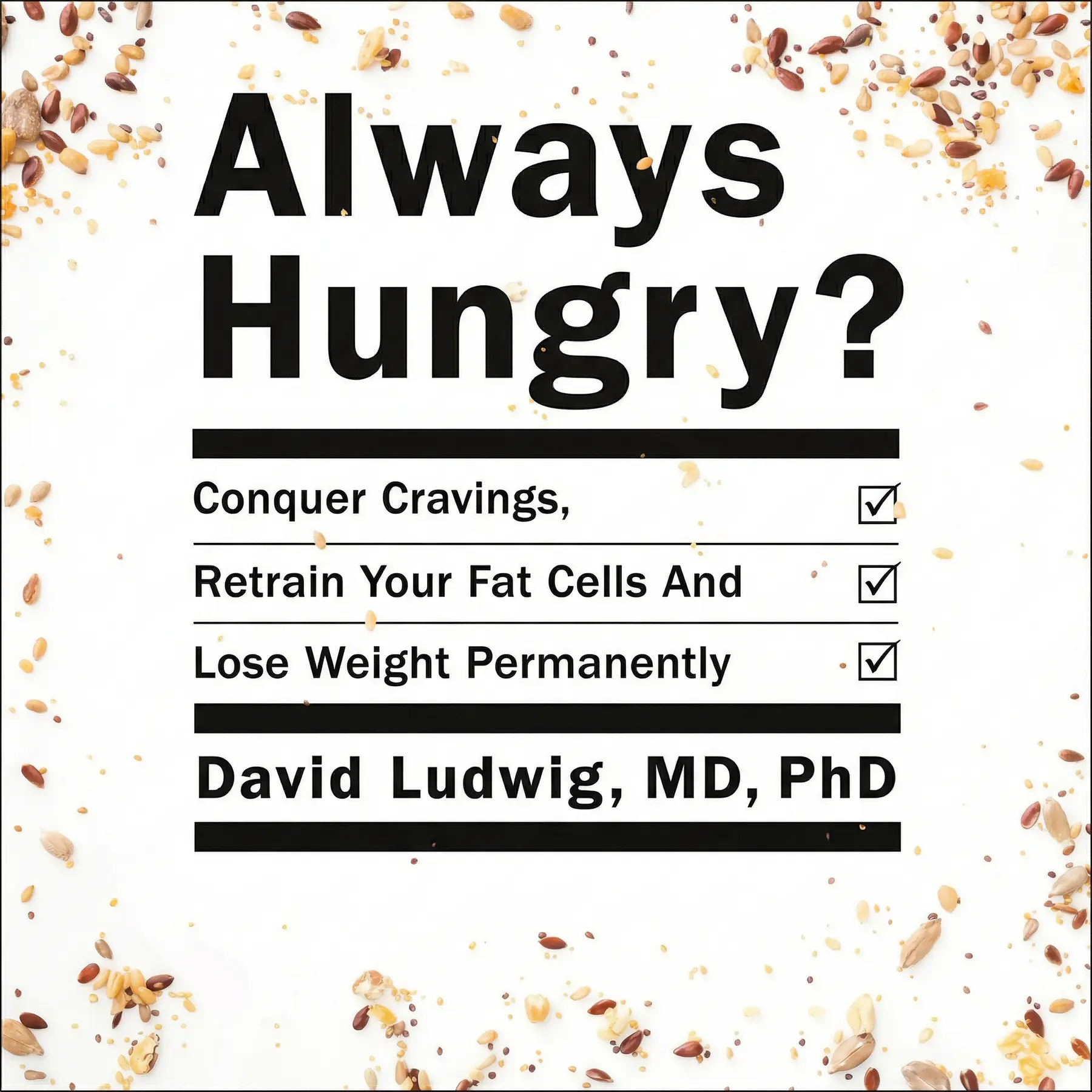
Always Hungry?: Conquer Cravings, Retrain Your Fat Cells And Lose Weight Permanently
By David Ludwig
Explains why calorie counting and low-fat diets leave you hungry and heavier. It then sets out a three-phase plan that lowers insulin with fat and protein and retrains your fat cells to handle carbohydrates.
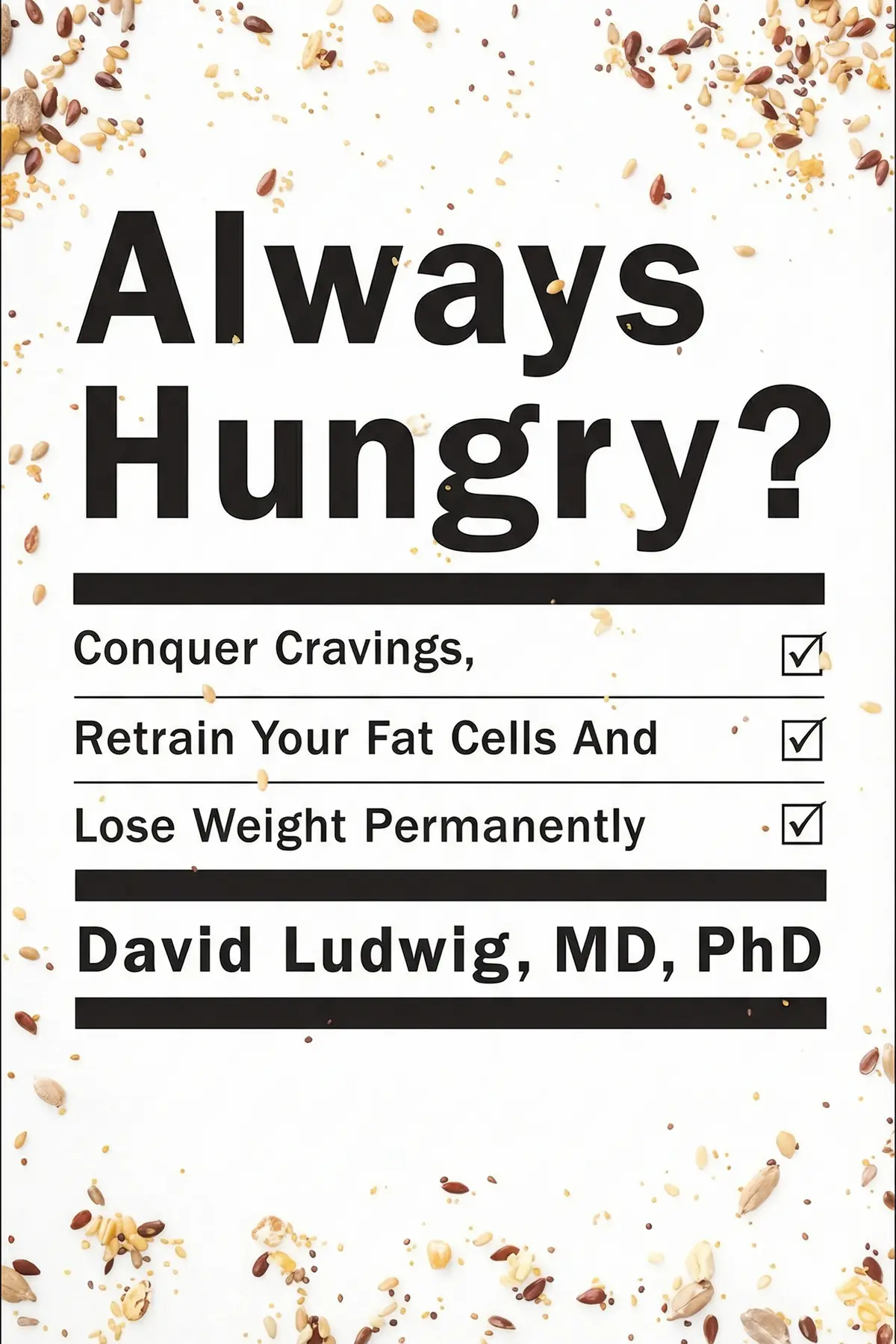
Table of Content
1. Introduction
1 min 06 sec
If you have dieted before, you probably know how it goes: a few pounds lost, hunger and chills the whole way, and then the weight creeps back. In Always Hungry?, endocrinologist and Harvard professor David Ludwig argues that the diet itself was the problem. Weight gain, he says, begins when sugary and starchy food drives insulin up. Insulin locks fuel inside fat cells and leaves the rest of the body short, so the brain demands more food.
That turns the usual advice upside down. Cutting calories makes the shortage worse, while eating more fat can help you get leaner. Ludwig’s case is that lasting weight loss comes from calming insulin and retraining your fat cells, so that hunger stops working against you. Along the way you will learn why a low-fat snack can leave you hungrier and how swollen fat cells set off inflammation. You will also get a three-phase eating plan, with real breakfasts, snacks and ratios, that lets you eat until satisfied while getting slimmer.
2. Stop blaming calories, the gym and your genes
2 min 02 sec
Decades of advice to move more, eat less and fear fat have gone along with rising waistlines. Ludwig takes apart the three usual explanations and puts something unexpected in their place: a body that is short of fuel.
3. Stop cinnamon bun cravings before they start
1 min 53 sec
A sweet pastry gives a fast burst of energy, so why are you hunting for food again an hour later, feeling cold and shaky? The answer lies in one hormone, and it changes what low-fat food really does.
4. See how excess fat turns your immune system inward
1 min 57 sec
A cut on your finger and a growing fat cell set off the same emergency response. One alarm switches off when the wound heals. The other keeps ringing, and the harm spreads through the body.
5. Calm cravings in two weeks with fat and protein
2 min 18 sec
The first phase of Ludwig’s plan drops whole food groups. It also tells you to keep eating when you are still hungry. This is what goes on the plate, and why the permission is the point.
6. Bring carbs back without restarting the cravings
2 min 09 sec
Giving up bread and rice for good is not the goal. Ludwig wants fat cells that can handle them again, and he uses one signal you already feel every day to tell you how fast to go.
7. Stay on track when a bad day hits
1 min 47 sec
The hardest moment of any eating plan is the late evening after a rough day, with candy within reach. Ludwig’s defense is less about resisting and more about what you set up beforehand.
8. Conclusion
1 min 05 sec
Ludwig’s book turns hunger from an enemy into a signal. Constant cravings, feeling cold after a sugary snack and weight that returns after every diet are, in his account, what a body does when insulin locks its fuel away and its organs go short. Feed it fat, protein and vegetables and let insulin settle, and the signal changes. You can eat until satisfied and still lose weight, because the body is no longer calling for rescue.
That gives you a different job from the usual diet. For two weeks, drop grains, potatoes and added sugar, and eat eggs, nuts, olive oil and fish without counting anything. Clear the candy and white rice out of the kitchen before you need the willpower to resist them. Then bring carbohydrates back slowly, use your cravings as the gauge, and eat at a table away from screens.
The fat cells that once soaked up every sugar rush can learn to release energy again. The task is to stop fighting your hunger and start answering it with the right food.
About this book
What is this book about?
Most diets follow the same arc. You eat less, feel hungry, cranky and cold, lose a few pounds, and then watch them come back. Endocrinologist David Ludwig argues the fault lies with the advice itself. Exercise, genes and calorie counting are the usual suspects, and in his view none of them explains the problem. His explanation centers on insulin. Insulin spikes when we eat sugar and starches that have been heavily processed. Fat cells then soak up fuel from the blood and the rest of the body runs short, so the brain calls for more food and slows the metabolism. Over time, swollen fat cells set off chronic inflammation, insulin resistance and, eventually, type 2 diabetes. Ludwig's answer is to eat differently, not less. A two-week first phase cuts grains, potatoes and added sugar and leans on eggs, nuts, olive oil, fish and vegetables. Two later phases bring carbohydrates back step by step while you watch your cravings. Readers get sample meals, nutrient ratios, kitchen and shopping advice, and habits for mindful eating that let them eat until satisfied and still lose weight.
Book Information
Who it's for
Regained weight after dieting
People who lost weight on calorie-counting or low-fat diets and watched it come back.
Professionals tired after snacks
Busy professionals who feel hungry and tired soon after a sugary or starchy snack.
Worried about blood sugar
Anyone worried about rising blood sugar who wants a food plan instead of calorie limits.
About the Author
David Ludwig
David S. Ludwig, MD, PhD, is an endocrinologist, researcher and professor of nutrition. He teaches at Harvard Medical School and the Harvard T.H. Chan School of Public Health. He also directs the New Balance Foundation Obesity Prevention Center at Boston Children's Hospital. His research looks at how diet affects hormones, metabolism, body weight and overall wellbeing, the questions at the heart of this book.
Ratings & Reviews
Ratings at a glance
What people think
Listeners find the work extensively researched and supported by credible science, offering useful tactics for bettering health and diet. The program helps listeners drop roughly five pounds of stubborn fat, and they enjoy the recipes, highlighting their ease of preparation. Listeners note a decrease in cravings for sugar and carbohydrates while finding the program's scientific basis easy to grasp. While some listeners think the plan is direct, others feel it isn't easy to execute.
Top reviews
Dao
Ever wonder why you're still hungry right after eating a big bowl of pasta? This book explains exactly why that happens. Dr. Ludwig’s research on the 'insulin-carbohydrate' model is fascinating and, frankly, it just makes sense. By focusing on high-quality fats and proteins, you're essentially turning off the hunger alarm in your brain. I’ve lost 30 pounds following this approach since the beginning of the year. The best part? I don't count a single calorie. I just eat until I'm full and focus on the food quality. The recipes for things like the shepherd’s pie and various nut-based snacks are actually delicious. This isn't a temporary diet; it’s a permanent shift in how I view food. If you are tired of the constant cycle of restriction and bingeing, you need to read this book immediately. It works.
Show moreTern
Wow, I didn't expect a book written by a Harvard MD to be this practical and accessible. The program is laid out with such detail that it’s almost impossible to fail if you just follow the steps. I loved the inclusion of downloadable grocery lists and the focus on 'mindful' eating rather than just 'less' eating. For the first time in my life, I feel at home in my body. My skin looks better, my arthritis pain has decreased, and my energy is through the roof. The science is solid, providing a real explanation for why the low-fat craze of the 90s failed so many people. It takes the shame out of weight gain by explaining the hormonal drivers behind it. It’s an empowering, well-researched guide that offers a clear path toward health. Highly recommended for anyone struggling with their weight.
Show moreCarlos
The truth is, this isn't just a diet; it's a metabolic reset that actually takes the psychological battle out of eating. I’ve spent years tracking every morsel on a Fitbit and still feeling like I was failing. Ludwig’s plan focuses on taming the insulin response, which in turn calms the whole body down. I stopped having those desperate cravings for bread and sugar within just a few days. The first three weeks are structured so perfectly that you don't even have to think—you just cook and eat. Yes, it’s a lot of work in the kitchen. Yes, you have to shop more often for fresh produce. But feeling this good is worth every second of prep. It’s a profound shift to go from 'always hungry' to feeling fueled and focused. This book is a must-read for anyone who wants to understand how their body actually works.
Show moreManika
As someone who has struggled with the 'eat less, move more' mantra for decades, this perspective on hormonal fat storage was eye-opening. Dr. Ludwig argues that we aren't overeating because we lack willpower; we are overeating because our fat cells are programmed to hoard calories. This shifts the blame from the individual to the biological signals being sent by insulin. The logic is sound and backed by his own extensive research at Boston Children’s Hospital. I followed the plan and lost about five pounds of stubborn fat that wouldn't budge before. Gotta say, the recipes are surprisingly tasty and easy to prepare once you get the hang of the shopping lists. My only gripe is the occasional dismissal of the National Weight Control Registry data. Overall, it’s a refreshing take that prioritizes satiety over deprivation. It makes weight loss feel like a biological shift rather than a daily battle of wills.
Show moreKom
After hearing so many conflicting things about carbohydrates, I appreciated how Ludwig breaks down the 'fast' vs 'slow' carb distinction. This isn't just another keto book; it’s a more nuanced approach to how our bodies process different fuels. The 'Always Hungry?' philosophy suggests that if we fix the underlying metabolic issue, the weight will take care of itself. Personally, I found the three-phase approach very logical. Phase one jump-starts the system, and then you slowly reintroduce whole grains. I felt incredibly sustained throughout the day and didn't experience the usual mid-afternoon energy crashes. The prep work is definitely significant, and you'll be doing a lot of dishes, but the results in terms of mental clarity were worth it. It’s a comprehensive plan for anyone willing to put in the kitchen time to heal their metabolism.
Show moreTang
Finally got around to reading a diet book that doesn't make me feel like I'm starving myself every single hour. The truth is, I’ve always been skeptical of high-fat diets, but the science here is hard to argue with. Ludwig explains how refined carbs spike insulin, which then locks calories away in fat cells, leaving the rest of the body hungry. Once I switched to the full-fat dairy and healthy oils he recommends, my constant hunger actually subsided. It was a strange feeling to be satisfied after a meal! I lost a few inches off my waist in the first month without ever feeling deprived. To be fair, the book can get a bit repetitive with the science, and some of the specialty ingredients are hard to find in a regular grocery store. Still, it’s a life-changing approach for those of us with metabolic issues.
Show moreScarlett
Picked this up because I was curious about the science of insulin, but it felt a bit redundant if you have already read Atkins or Paleo books. To be fair, Ludwig is a great writer and explains complex biological processes in a way that is very easy to digest. He focuses on the quality of food over the quantity, which is a message I can get behind. However, the 'revolutionary' tag feels like a bit of a stretch. The advice is essentially: eat real food and avoid sugar. We’ve heard this before. The recipes included are decent, and I did appreciate the focus on sleep and stress as factors in weight gain. It’s a solid 3-star read for a nutrition newbie, but seasoned health nuts won't find anything particularly ground-breaking here. It’s just another voice in the very crowded low-carb choir.
Show moreNoppadol
In my experience, this program is a bit of a mixed bag. The first phase is incredibly restrictive, cutting out all grains and starchy vegetables—even the poor potato is treated like the devil's intern! I did notice that my cravings for sweets vanished after the first week, which was a huge win. That said, the sheer volume of fat you’re expected to eat felt overwhelming. Drowning everything in olive oil and nuts isn't exactly my idea of a 'Mediterranean' diet, despite how the author labels it. My energy levels were stable, but the weight loss was minimal. It’s a well-researched book with some valid points about how processed carbs trigger hunger, but the actual diet feels unsustainable for the long haul. I think I'll stick to a more balanced version of CICO instead of following this rigid metabolic reset.
Show moreSuwit
How much free time does Dr. Ludwig think the average person actually has? While the science regarding insulin and 'fat fertilizers' is somewhat interesting, the implementation is a total nightmare. I spent my entire weekend prepping specialized sauces and shopping for expensive oils like avocado and flax. Not gonna lie, the meal plan is incredibly rigorous and unforgiving for anyone with a real job or a social life. It leans heavily into a 'conspiracy theory' vibe, suggesting the government and food industry have collaborated to keep us fat. That feels more like a marketing tactic than medical advice. Despite following the phases for a month, I lost zero pounds. I just ended up stressed out and missing fruit. It might work if you have a private chef and a massive budget, but for the rest of us, it’s just too much work for very little payoff.
Show moreWeera
This book is basically just another low-carb manifesto wearing a white lab coat. Frankly, it feels like Dr. Ludwig is just repackaging keto propaganda and calling it revolutionary science. He spends half the time bashing 'calories in/calories out' as if the laws of thermodynamics suddenly stopped applying to humans. Five thousand calories of broccoli is still five thousand calories! The reliance on mice studies to support such massive claims is honestly embarrassing for a Harvard researcher. It also completely ignores the reality of exercise, practically demonizing movement because it might make you crave a potato. Look, if you want to lose weight, you still need to burn more than you eat. Pushing a high-sodium, high-fat diet while telling people to avoid fruit and grains is just irresponsible. It’s a cherry-picked mess of nutritional 'dark age' theories that ignore any modern research showing balanced diets work just as well.
Show moreQuestions about this book
What is the main idea of Always Hungry? by David Ludwig?
Ludwig argues that weight gain is not mainly caused by eating more calories than you burn. Sugar and processed starch, both refined carbs, raise insulin, which drives fuel into fat cells and leaves the organs short of nutrients. The brain responds by calling for more food and slowing the metabolism. His fix is to lower insulin with fat, protein and vegetables, then retrain fat cells to handle carbohydrates.
What are the three phases of the Always Hungry plan?
Phase one lasts two weeks. It removes grains, potatoes and added sugar and aims for about half fat, a quarter protein and a quarter carbohydrate. Phase two brings back unprocessed carbohydrates such as brown rice, oats, quinoa and sweet potatoes, and it can last from a month to six months or more. Phase three reintroduces processed carbohydrates and sweets one at a time, at most two modest portions a day.
Does exercise help you lose weight according to Always Hungry?
Ludwig says exercise alone will not make you lose weight. People overestimate what they burn, and hard workouts can make you hungrier. Exercise still has a role in his plan. Phase one calls for a daily walk, and regular gym-goers cut their intensity by a third. Phase two adds half an hour of moderate activity, such as yoga or an easy jog, which improves insulin sensitivity.
Why does Ludwig say low-fat diets make you gain weight?
Many low-fat foods are high in carbohydrates. Those carbohydrates make insulin spike, and fat cells then absorb glucose and fatty acids from the blood. When the fuel runs low, the brain triggers hunger. If you don’t eat, it slows your metabolism as if you were starving. Ludwig recommends healthy fats from olive oil, nuts, avocados, fatty fish and whole milk products instead.
Who should read Always Hungry?
It suits people who have dieted, lost weight and regained it, and people who feel hungry and tired soon after sweet or starchy food. It also speaks to readers concerned about blood sugar, since Ludwig links obesity to chronic inflammation, insulin resistance and type 2 diabetes. Readers who prefer real meals and nutrient ratios to calorie limits will find the plan practical.
Readers also enjoyed




AUDIO SUMMARY AVAILABLE
Listen to Always Hungry? in 15 minutes
Get the key ideas from Always Hungry? by David Ludwig, plus 5,000+ more nonfiction titles.
- 5,000+ titles
- Listen as much as you want
- 7-day free trial
- Cancel anytime









