
15 min 20 sec
Available in: English
 ไทย
EnglishไทยStatus Anxiety
Explains why worrying about our place in the pecking order is really a hunger for love, why modern life inflames it, and how philosophy, art, history and the right company can calm it.

Table of Content
1. Introduction
1 min 00 sec
If your mood rises and falls with a promotion, an unanswered message or a neighbor’s new car, Alain de Botton has a diagnosis. In Status Anxiety, he argues that the hunger for rank is at heart a hunger for love: the feeling that our existence matters to other people. We have more comforts than any medieval peasant, yet de Botton finds us more worried about our place, because modern societies tie worth to wealth and make failure look deserved.
His argument has a hopeful turn. Status is a story a society tells about who counts, and stories can be questioned. Along the way you meet the students who gave English the word snob, a French king who jailed a cartoonist over a drawing of a pear, and the ruins that make every social ladder look short. The reward is a set of tools, from philosophy to the right friends, for deciding whose opinion of you deserves a vote.
2. Money chasing is really a hunt for love
1 min 19 sec
Some people keep piling up money long after they could spend it in five lifetimes. Greed cannot account for that, and the real motive says something uncomfortable about how fragile everyone’s sense of worth is.
3. See through the snobs who rank your worth
1 min 23 sec
A word once scribbled beside the names of certain university students now means almost the opposite. Its strange history explains why so many people judge you by badges, and who keeps teaching them to do it.
4. Pick your comparisons and shrink your humiliation
1 min 37 sec
Material life has improved beyond recognition since medieval times, yet the worry about falling behind has grown with it. A Harvard psychologist explains why some comparisons wound us and others leave us untouched.
5. See why poverty now feels like personal failure
1 min 41 sec
A medieval peasant had far less than you, yet was spared one modern burden. Two shifts in how we explain wealth and how we earn a living turned bad luck into something that feels like personal failure.
6. Use reason to judge the people judging you
1 min 38 sec
A ragged philosopher once told the most powerful man alive to get out of his light, and lived. The exchange shows how a little reasoning can strip other people’s opinions of their power over you.
7. Find dignity in ordinary lives through art and jokes
1 min 47 sec
A poor girl who speaks no French, a woman peeling an egg and a king drawn as a pear all strike at the same target. Art, de Botton argues, can do something factories and railways cannot.
8. Gain perspective from Sparta, skeletons and ruins
1 min 54 sec
A warrior who could not count and a gentleman who danced were each the height of respectability in their time. Set side by side, with a few skeletons at a feast, they make today’s ladder look far less permanent.
9. Build a circle that measures success differently
1 min 47 sec
Long before it became a fashion label, bohemia was a revolt against a whole way of keeping score. Its most useful lesson has nothing to do with clothes or cabins in the woods.
10. Conclusion
1 min 14 sec
Status Anxiety is finally a book about whose love we are trying to earn. De Botton shows the worry is neither natural nor eternal. It swelled with expectations after the American Revolution, with a meritocracy that made poverty look earned, and with jobs that leave most people exposed to a pyramid and a business cycle. The medieval peasant had less of everything, yet he was spared the fear of being a nobody by his own fault.
That history is the hopeful part, because a measure of worth that was invented can be questioned. When someone’s judgment frightens you, weigh whether you respect their mind. Let Fanny Price or Philipon’s pear remind you that the ranking has always been partly absurd. When a rival’s success looms large, stand in front of a ruin, a mountain or a high ceiling. And keep company with people whose idea of success is one you would choose.
The Egyptians carried skeletons on stretchers past their feasting guests, and whatever the intent, the sight recalled death. Every ladder ends in the same dust, and the people climbing beside you want what you want: to matter to someone.
About this book
What is this book about?
We live with more comfort than any generation before us, yet many of us feel anxious about where we stand: our title, our salary, how we compare with friends and neighbors. Alain de Botton argues that this status anxiety is not simple greed. It is a longing for love and respect, made sharper by modern life. He traces how the worry grew. Expectations rose after the American Revolution, meritocracy began to make poverty look deserved, and most people came to depend on employers and an economy they cannot control. Along the way he explains where the word snob came from, and why comparisons with our equals sting most. Then he turns to remedies. Philosophy teaches us to question the judges. Novels, paintings and jokes lift up ordinary lives and puncture the powerful. History shows that every society ranks people differently and that time levels everyone. Bohemian communities offer a different scale of success. Readers come away with a clearer sense of whose opinion deserves their attention.
Book Information
Who it's for
Professionals comparing with peers
Professionals who feel their worth rise and fall with titles, salaries and comparisons with peers.
Young climbers wanting calm
Young climbers stung by friends' success who want a calmer way to judge their own progress.
Laid off or stalled
Anyone recovering from a layoff or stalled career who suspects the shame is out of proportion.
About the Author
Alain de Botton
Alain de Botton was born in Zurich, Switzerland, in 1969. His first book, Essays in Love, appeared in 1993 and sold two million copies, and How Proust Can Change Your Life, Status Anxiety and The Architecture of Happiness are also described as bestsellers. He helped found The School of Life in 2008 and Living Architecture in 2009, and the Royal Society of Literature elected him a fellow in 2011. His other books include The Consolations of Philosophy and The Art of Travel.
How Proust Can Change Your Life
Alain de Botton
How to Think More About Sex
Alain de Botton
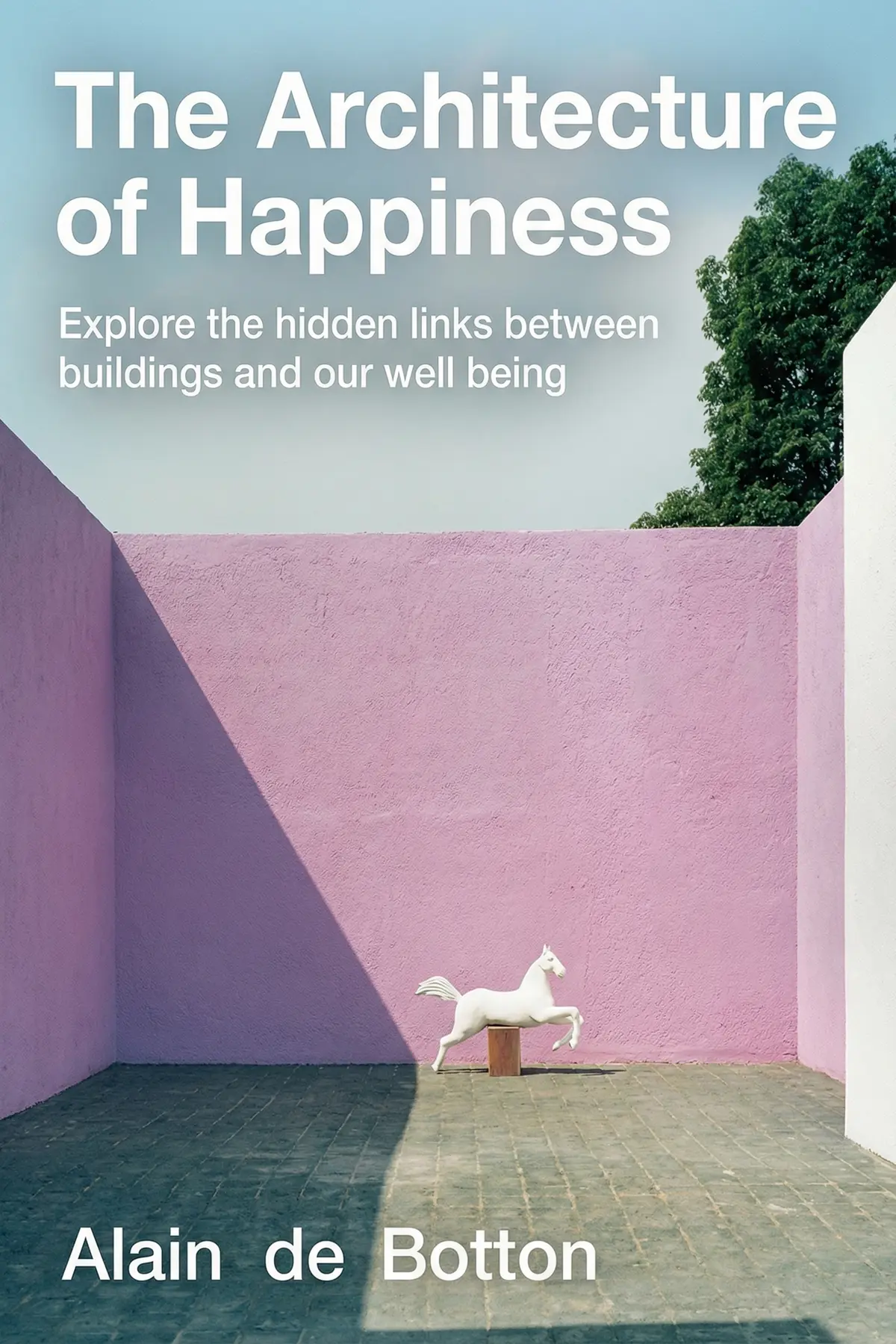
The Architecture of Happiness
Alain de Botton
The Art of Travel
Alain de Botton
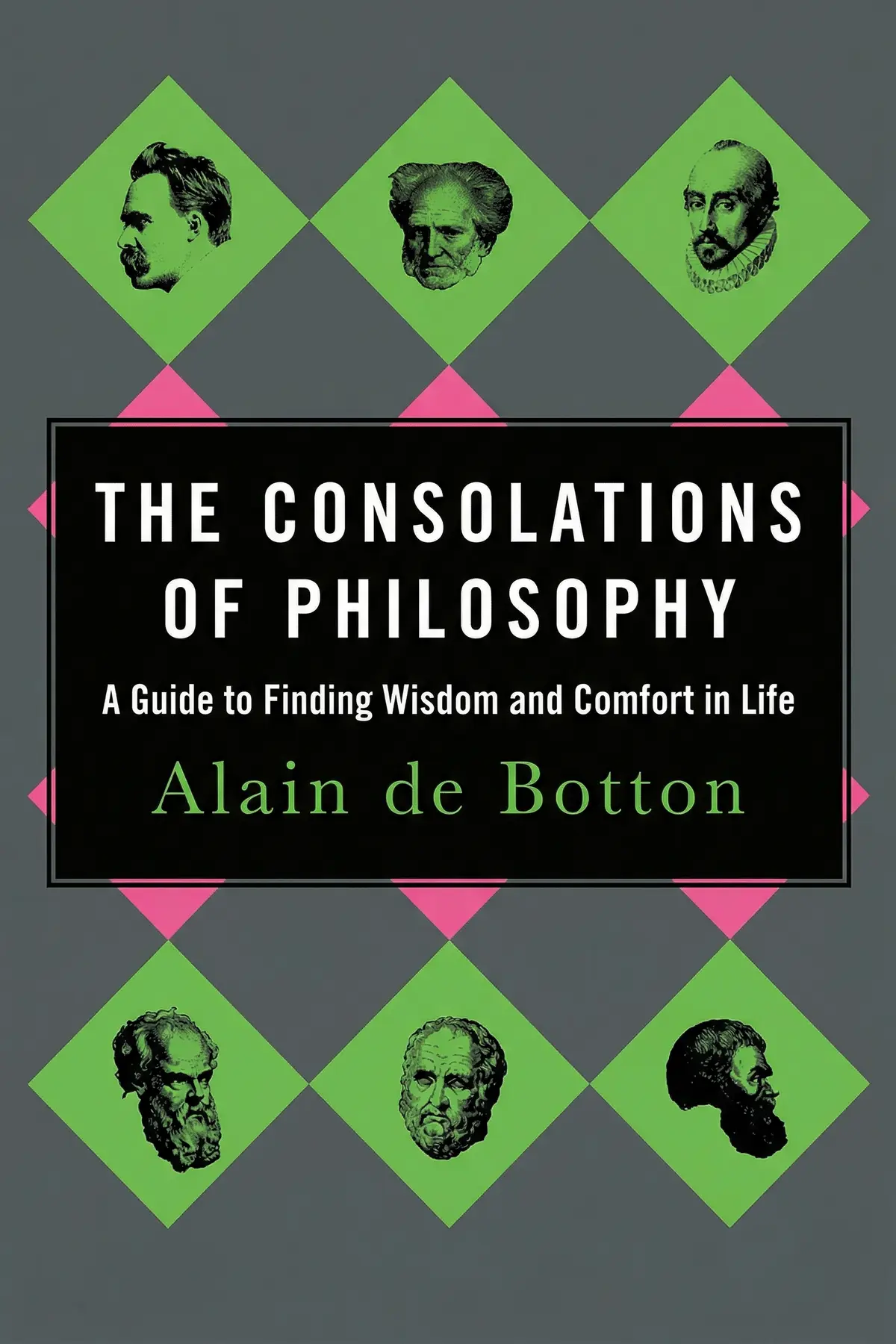
The Consolations of Philosophy
Alain de Botton
The News: A User's Manual
Alain de Botton
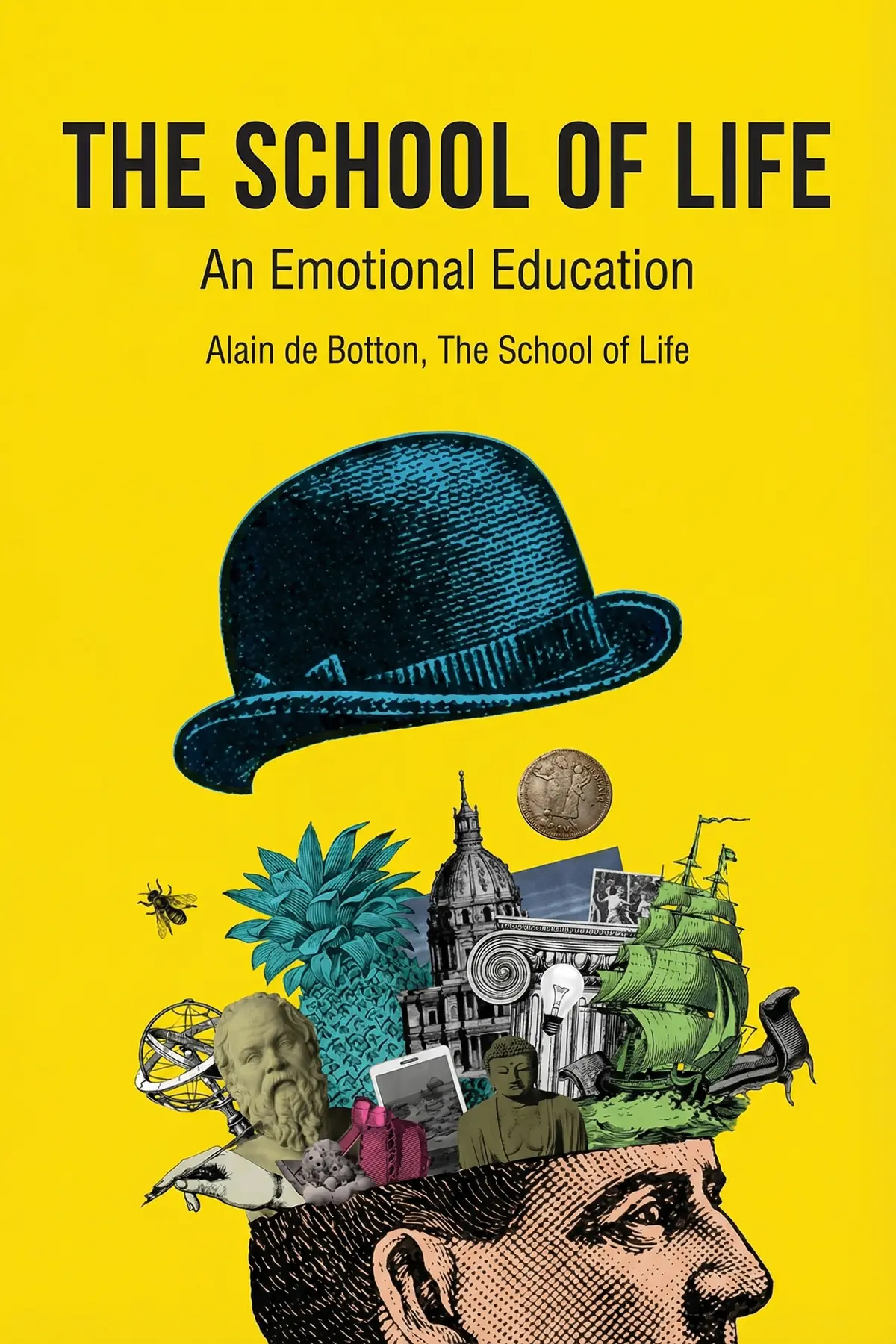
The School of Life: An Emotional Education
Alain de Botton
Ratings & Reviews
Ratings at a glance

What people think
Listeners describe the work as accessible and intellectually stimulating, with one listener calling it the best they read in 2015. Furthermore, the prose is phenomenologically rich, and listeners value the extensive research and historical context provided. They also find the content highly applicable to daily life; one listener emphasizes its practical utility, while another admires how it encourages us to laugh at ourselves with kindness.
Top reviews
Aom
This book should be mandatory reading for anyone currently stuck in the corporate rat race. De Botton’s erudition is remarkable, yet he remains remarkably accessible. He brilliantly explains how our self-esteem is essentially a balloon that requires the breath of others to stay inflated. By using historical references ranging from Social Darwinism to New Yorker cartoons, he builds a phenomenologically rich argument for why we are so miserable despite our material wealth. The truth is, our expectations have outpaced our reality, and the mass media only exacerbates this by throwing rags-to-riches stories in our faces. I particularly appreciated the chapter on how comedy can undermine the pretensions of the powerful. It is a polished, elegant work that encourages a much-needed self-examination of our own values and what we consider a 'successful' life.
Show moreChai
The way de Botton uses art to subvert modern status norms is nothing short of brilliant. This is a superb meditation on why we are all so consumed by what we 'do' for a living. He manages to balance a high-brow intellectual examination with a kind of gentle, ironic humor that makes the medicine go down easier. By looking at how the poor were once honored as productive members of society, he highlights just how much our current meritocratic values have distorted our sense of worth. I found the discussion on our individual and collective mortality to be a sobering but necessary reminder to focus on non-materialistic values. It’s one of those rare books that actually makes you want to slow down and re-evaluate your entire career path. A truly marvelous and phenomenologically rich investigation into the 21st-century psyche.
Show morePatchara
Finally, a philosopher who can talk about the crushing weight of modern expectations without sounding like a dusty textbook. This is an elegant argument for the art of self-examination. De Botton’s genius lies in his ability to make profound observations about our need for status feel familiar and personal. He explains how progress has actually increased our anxiety by making everything seem attainable, which only makes failure feel more shameful. I found the book hard to put down, especially the sections on how we can use philosophy to become our own judges. While some might find his solutions a bit impractical for the modern world, the perspective shift alone is worth the price of admission. It's a beautiful, thoughtful work that allows us to laugh at ourselves with kindness while questioning the very foundation of our social hierarchy.
Show moreRosa
Ever wonder why we're so obsessed with what our neighbors think of us? De Botton tackles this head-on by exploring 'lovelessness' and our desperate need for the world’s affection. The first half of the book is an incredibly sharp look at how meritocracy has turned success into a moral judgment. If you fail, it’s no longer just bad luck; in a meritocratic society, it’s seen as your own fault. I found his writing light-hearted yet deeply perceptive, though the second half on 'solutions' felt a bit more theoretical than practical. While I loved the section on how art can subvert status, the bohemian lifestyle solution seems a bit out of reach for most of us working 9-to-5 jobs. Still, it’s a thought-provoking read that will make you look at your LinkedIn feed with a much-needed sense of irony.
Show moreJoe
As someone who struggles with impostor syndrome, I found the chapter on meritocracy particularly gut-wrenching. De Botton explains how the shift from inherited status to earned status has made failure feel much more personal and shameful. We judge ourselves against our reference group, which makes us feel poor even if we have more than our ancestors ever dreamed of. The book is well-written and full of acute perceptions about the human condition. I did feel that some of the solutions, particularly the section on politics, were a bit too brief and lacked the depth of the earlier chapters. However, the author’s ability to use tragedy and comedy as tools for coping with our fallible shared humanity is truly moving. It’s a solid 4-star read that offers a lot of comfort through perspective.
Show moreCha
After hearing several friends rave about this, I finally sat down with it over the weekend and was pleasantly surprised. De Botton's writing style is incredibly light-hearted for such a heavy topic. He does a great job of explaining how the 'meritocracy' we all praise actually increases our anxiety by removing the excuse of 'bad luck' from our failures. The examples he uses, from old-timey salesmen to modern success stories, help ground his philosophical arguments in reality. My only real gripe is that the presentation style is a bit odd, with paragraphs that don't always flow logically into one another. It's a very good book for self-reflection, especially if you feel like you're constantly falling behind. Just don't expect a step-by-step 'how-to' guide on curing your stress, as the solutions are more about changing your mindset.
Show moreAndrew
Picking this up felt like a gentle slap in the face from a very well-educated friend. De Botton hits the nail on the head regarding our dependence on the economy and luck, factors we can't control but which dictate our social standing. The book is an uncommonly well-reasoned argument for why we should stop caring so much about the 'love of the world.' I loved the selection of illustrations and the way he weaves in poetry to make his points more vivid. To be fair, he does meander a bit in the religion and art sections, but the core message remains powerful. We are often mistaken about what will make us happy, and this book serves as a polished mirror to our own vanity. It's a fascinating conceptual investigation that will leave you feeling a little less alone in your insecurities.
Show moreLadawan
To be fair, de Botton's prose is as elegant as ever, but the structure here feels a bit disjointed compared to his other works. The book is essentially split into two halves: the causes of status anxiety and the potential remedies. I found the causes—like snobbery and the dark side of meritocracy—to be fascinating and well-researched. However, the solutions section meanders quite a bit into art history and philosophy without offering many concrete steps. The numbered paragraph style felt a bit too academic for what I expected to be a 'retail' read. It felt at times like he was more interested in describing the art itself than explaining how it helps our anxiety. If you are a fan of his TED talks, you might find this a bit repetitive, though his insights on dependence and luck remain quite salient.
Show moreArjun
Not quite the life-changing manual I was expecting, though it certainly provides plenty of food for thought. Look, the historical research is impressive, but the book feels like it's missing a certain heart that was present in 'The Art of Travel.' Some sections become very dry and academic, almost as if the author was ticking boxes on a list of causes and solutions. I appreciated the insight that we judge ourselves based on our expectations rather than absolute wealth, but the remedy of living a 'bohemian' lifestyle feels incredibly dated. It’s a decent read that articulates a subject usually ignored in mainstream society, but it lacks the punch of his earlier works. It is well-organized, yet at times it feels a bit contrived in its attempt to bridge the gap between high philosophy and everyday life.
Show moreSienna
Frankly, I found the first half of this book fascinating and the second half nearly unreadable. While the investigation into snobbery and our need for social love started strong, the 'solutions' section felt like a dry art history lecture. De Botton seems to reach for connections between 19th-century painting and modern anxiety that just aren't there. The writing is certainly accessible, but it wanders off-topic so frequently that I lost interest in his original thesis. It is also quite frustrating that he ignores secular mindfulness or modern psychology in favor of 'bohemia' as a cure. While he makes some good points about how we determine our status by comparison, the lack of practical advice makes this feel more like a coffee table book than a helpful guide. I'd stick to his YouTube videos instead.
Show moreQuestions about this book
What is the main idea of Status Anxiety by Alain de Botton?
De Botton argues that the drive for status is really a desire for love and respect, the sense that our existence matters to others. Because self-esteem depends heavily on how others see us, losing status feels threatening. He shows how modern expectations, meritocracy and insecure employment have intensified this worry, then offers remedies from philosophy, art, history, spirituality and bohemian communities.
Why does de Botton think status anxiety is worse today?
After the American Revolution, rank came to depend on economic achievement instead of birth, so people began expecting more and suffering when they fell short. Meritocracy, from the mid eighteenth century, made poverty look like a sign of laziness or stupidity. And by 2000, 90 percent of the American workforce worked for someone else, leaving most people exposed to company politics, cost cutting and recessions.
What does the book say about snobs?
De Botton traces the word to England in the 1820s, when Oxford and Cambridge colleges marked students without aristocratic backgrounds with s.nob, from sine nobilitate. Its meaning later reversed to describe people who look down on those with less rank. Snobs judge worth only by outward markers like diplomas and job titles, and magazines and family values keep the habit alive.
How can I apply the ideas in Status Anxiety?
Ask whether you actually respect the minds of the people whose judgment worries you, and question traditions nobody has examined. Turn to novels, paintings and comedy that honor ordinary lives and mock the powerful. Seek perspective in ruins, vast landscapes or high-ceilinged buildings. Most practically, spend more time with people who do not measure achievement in money, as the bohemians did.
Readers also enjoyed

A Room of One’s Own
Virginia Woolf


Abolish Rent: How Tenants Can End the Housing Crisis
Tracy Rosenthal

Abortion: Our Bodies, Their Lies, and the Truths We Use to
Jessica Valenti



Afropean: Notes From Black Europe
Johny Pitts


All About Love: New Visions
bell hooks
AUDIO SUMMARY AVAILABLE
Listen to Status Anxiety in 15 minutes
Get the key ideas from Status Anxiety by Alain de Botton, plus 5,000+ more nonfiction titles.
- 5,000+ titles
- Listen as much as you want
- 7-day free trial
- Cancel anytime









