

A River in Darkness: One Man’s Escape from North Korea
Masaji Ishikawa
 English
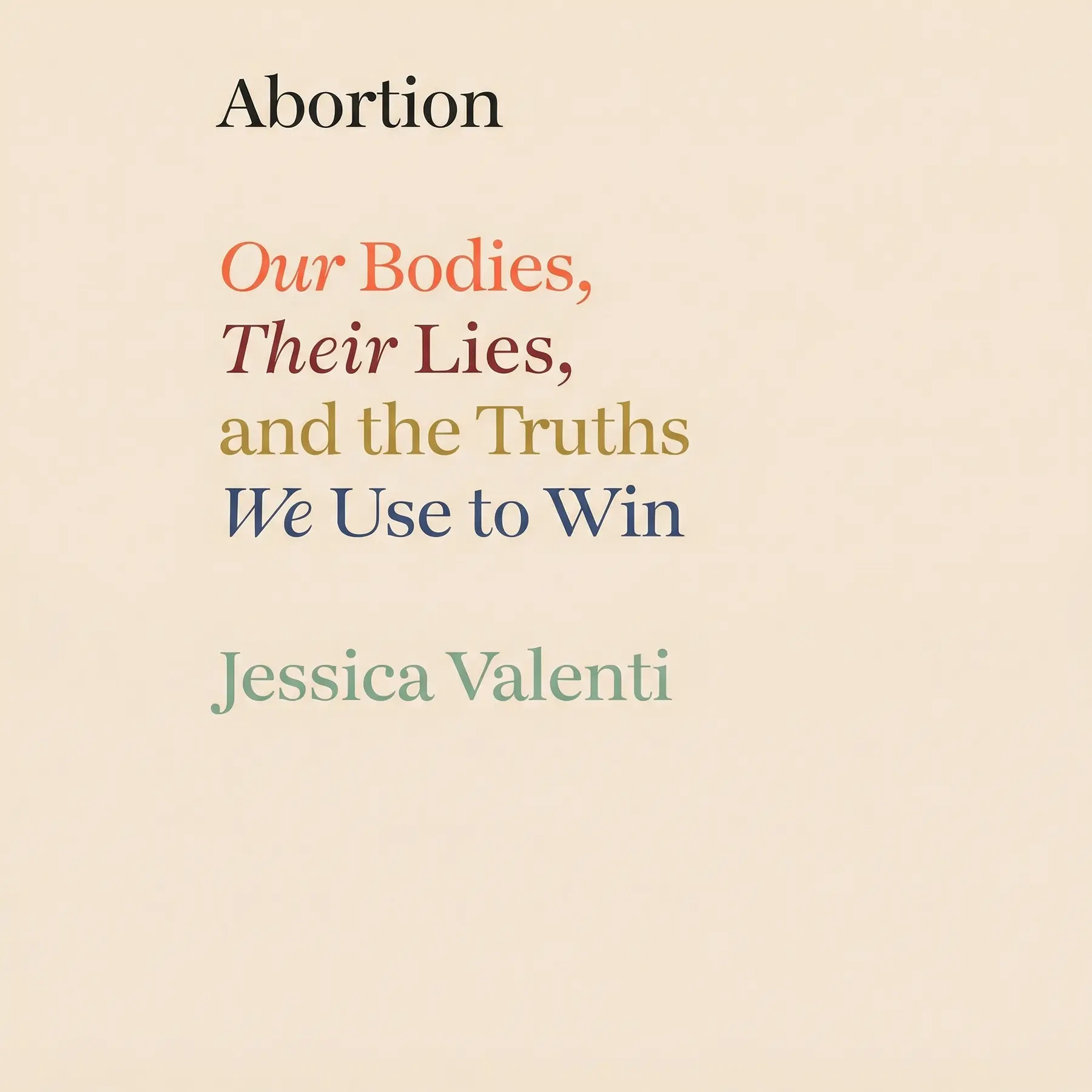
Jessica Valenti argues that abortion is safe, common and good, and that most Americans support it. She shows how bans, limits on birth control and hollow exceptions work against that majority.

1 min 07 sec
When abortion comes up at dinner or at work, many people who support the right reach for hedges: it is complicated, it is a hard personal choice. In Abortion, journalist Jessica Valenti argues that this careful tone helped lose Roe versus Wade, and that the facts allow a far stronger case.
Roe was the 1973 ruling by the United States Supreme Court that made abortion a constitutional right. In 2022, a case called Dobbs versus Jackson Women’s Health Organization ended those protections and let states ban the procedure. In Arizona, Valenti notes, a total ban pushed the law back to 1864.
Her argument is blunt. Abortion is safe, common and good for the people who have it, most Americans want it legal, and the bans survive only through misleading arguments that fall apart once you name them. What follows gives you her numbers, her cases and her language, so you can make that argument plainly and recognize the tactics used against it.
1 min 47 sec
Supporters of abortion rights often open with an apology. Valenti thinks that habit did nothing to help protect a landmark ruling, and she offers a bolder starting point drawn from what bans actually demand of patients.
2 min 01 sec
A common dental procedure and a five-year study of a thousand women supply some of the sharpest evidence in the debate, and they point somewhere many listeners will not expect.
1 min 49 sec
Headlines keep calling the country deeply divided on abortion. The polling Valenti gathers tells a different story, and it changes how you should read every ban passed since 2022.
1 min 55 sec
No state has outlawed the pill, yet in some places it is getting harder to get. Valenti traces how, and the method runs through insurance rules and the meaning of a single word.
2 min 05 sec
Bans promise care for rape victims and dying pregnancies. Three cases from Mississippi and Texas show what happens when someone actually tries to use those promises.
1 min 49 sec
The most shocking stories seem like the best weapon for abortion rights. Valenti argues they can also shrink the goal, and a murdered doctor’s two-word button points to a better one.
1 min 16 sec
Valenti’s book works like a field manual for a single argument. Her claim is that supporters of abortion rights have been fighting on their opponents’ terms. They apologize for a procedure safer than a wisdom-tooth extraction, concede a split the polls do not show, and bargain over exceptions that collapse in hospital rooms in Texas and Tennessee. Change the terms and the debate looks different: a small, well-funded minority overriding a large majority through definitions, insurance rules and exceptions designed to fail.
What she asks of readers is mostly a change of voice. Say plainly that abortion is good, and back it with the Turnaway finding that women denied care were four times as likely to fall into poverty. Ask for the numbers whenever someone calls the country divided. Keep an eye on what officials choose to call contraception, because a relabeled pill can vanish without a vote. And judge any exception by whether a real patient, someone like Amanda Zurawski, could use it in time.
Beneath all of it sits George Tiller’s button. Two words, worn by a doctor who was killed for his work, and still the shortest form of the case: trust women.
In 2022 the United States Supreme Court ended the protections of Roe versus Wade, and states began rolling back reproductive rights, in Arizona as far back as a law from 1864. Journalist Jessica Valenti argues that supporters of abortion rights helped lose that fight by speaking tentatively and apologetically, treating abortion as a fraught personal choice instead of a basic right. Her book sets out the case she thinks they should make. Abortion, she argues, is safe, common and rarely regretted, and the Turnaway Study links being denied one to poverty, poor health and abusive relationships. Polls show large and growing majorities in favor of legal abortion, which makes the bans, in her view, an attack on democracy. She then exposes two tactics: a campaign against birth control that works through insurance rules and redefinitions, and exceptions for rape, nonviable pregnancies and danger to life that fail real patients in Texas, Tennessee and Mississippi. Readers get the numbers, the court cases and the human stories to argue for abortion plainly, and a way to spot the framing and fine print used against it.
Supporters of abortion rights who want facts and language to argue without hedging.
Readers outside the US trying to understand what changed after Roe and how the bans work.
Students and journalists studying how framing, polling and legal fine print shape a public debate.
Jessica Valenti is a feminist writer who co-founded the blog Feministing and wrote for it from 2004 to 2011. She was a columnist for The Guardian from 2014 to 2018 and also wrote for The Nation, with work in The New York Times and The Atlantic. Her books include Full Frontal Feminism, The Purity Myth and the New York Times bestseller Sex Object: A Memoir. After Roe was overturned she started Abortion, Every Day, a newsletter tracking abortion rights across the US.
Listeners consider this work essential reading for people of all genders, highlighting the thoroughly researched material and vital perspectives offered. The prose is of superior quality, and one listener characterizes the title as groundbreaking.
This book is a gut punch that every single person in this country needs to experience immediately. Valenti has clearly spent the last two years obsessing over the legal fallout of the Dobbs decision, and her expertise shines through on every page. She doesn't just list facts; she connects the dots between obscure legislation and the harrowing reality of pregnant people being denied life-saving care. It’s groundbreaking work that exposes how the anti-choice movement is systematically rebranding their agenda to sound more palatable while actually restricting more than just abortion. I was particularly struck by how she dismantled the misinformation surrounding IUDs and hormonal birth control. Frankly, if you think you know the extent of what's happening, this book will prove you wrong in the most necessary way possible. It’s an invaluable tool for anyone looking to understand the current landscape of reproductive rights.
Show moreWow. Just finished this and I feel like my brain has been completely rewired regarding how I talk about bodily autonomy. Valenti is direct and refuses to use the "polite" euphemisms that have allowed the right to dominate the conversation for decades. She makes a compelling case that this isn't just about a single medical procedure, but a broader, more insidious attempt to subjugate women and anyone who can give birth. The stories she includes—of women pushed to the brink of sepsis before doctors felt legally safe enough to intervene—are absolutely devastating. I’ve always considered myself pro-choice, but I realized I didn't fully grasp the "why" behind the specific wording of these new bans. The book is short and fast-paced, making it easy to consume despite the heavy subject matter. It isn't just informative; it's a call to action that highlights how popular reproductive rights actually are when you strip away the propaganda.
Show moreThe chapter on birth control is arguably the most important section of this entire book. Valenti meticulously documents how conservative lawmakers are already laying the groundwork to reclassify contraceptives as abortifacients. It sounds like a conspiracy theory until you see the actual bills and the specific legal language being deployed in real-time. She’s lived and breathed this topic for years, and that level of immersion is evident in her sharp, searing commentary. This isn't a book that minces words; it's a direct assault on the misinformation that has clouded the public's understanding of healthcare. Personally, I found the intersectional approach refreshing, as she acknowledges how these laws disproportionately impact marginalized communities who already lack adequate access. While it's a deeply depressing read at times, it’s also empowering to have the facts laid out so clearly. We can't fight what we don't understand.
Show morePicked this up on a whim and ended up finishing it in a single sitting. The title is bold and uncompromising, much like Valenti’s writing style throughout the entire book. She doesn’t let anyone off the hook—not the lawmakers, not the media, and not even the "polite" liberals who are too afraid to say the word abortion out loud. The truth is, the current state of reproductive rights in the U.S. is horrifying, and this book captures that reality without being hyperbolic. She breaks down the "trafficking" laws that aim to trap people in their home states, which was a terrifying piece of the puzzle I wasn't fully aware of. Her research is clearly deep, and she has a knack for making complex legal strategies easy to understand for the average reader. Not gonna lie, I left this feeling a bit shaken, but also much better equipped to argue these points with my more conservative family members.
Show moreAs someone who previously felt a bit disconnected from this issue, I found this to be an invaluable and groundbreaking guide. Valenti makes it clear that this isn't just a "women's issue"—it's a fundamental human rights crisis that affects everyone. She shows how the closing of maternity wards and clinics creates "OBGYN deserts" that leave entire communities without essential care. The way she links the fall of Roe to broader attempts at controlling autonomy is brilliant and terrifyingly logical. I especially appreciated the section on "exceptions" and how they are intentionally written to be impossible to actually use. It’s a well-researched piece of commentary that avoids being overly academic, focusing instead on real-world ramifications for real people. This is a must-read for men as much as women; we need to understand the insidious nature of these laws. Valenti’s voice is sharp, clear, and absolutely necessary in this moment.
Show moreValenti has produced a searing, necessary document that captures the grim reality of a post-Roe America. She doesn't just talk about the law; she talks about the cruelty—the women forced to carry nonviable pregnancies to term and the doctors who are too afraid to help them. Her research into every bill and legal case is staggering, yet she presents it in a way that is incredibly readable and fast-paced. This book is a direct response to the gaslighting we see from lawmakers who claim their bans are "protective." Look, the evidence is all there on the page: these laws are about control, period. I loved the way she integrated personal stories with her analytical breakdown of conservative media strategies. It’s a small book with a massive impact, and it honestly feels like a historical record of our times. If you care about the future of bodily autonomy, you simply cannot skip this.
Show moreLook, if you’re looking for a comfortable read, this isn’t it, but it’s definitely the book we need right now. Valenti’s writing is sharp and clear-eyed, cutting through the noise of the current political climate with surgical precision. She explains the "why" behind the bans and the specific attitudes that made them possible in a way that feels both fresh and deeply researched. I was especially interested in the section on how these laws tie into the broader agenda of the religious right. It’s not just about abortion; it’s about a total rollback of rights we’ve taken for granted for decades. The book is meticulously backed by evidence, and while it's incredibly depressing, it also offers a sense of clarity. She dispels the myths and provides a way to talk about these issues that refuses to cede any ground. Groundbreaking, direct, and absolutely essential for anyone trying to navigate this new landscape.
Show moreEver wonder how we actually got to a place where ten-year-olds are forced to travel across state lines for medical procedures? Valenti provides a clear-eyed roadmap of the language and political maneuvers that led us here. For those of us who follow her work, some of this might feel like a refresher, but having it all compiled in one concise volume is incredibly powerful. The chapter on the "teen" angle was eye-opening, showing how parental consent laws are being weaponized in ways I hadn't fully considered. My only minor gripe is that it can feel slightly redundant when she’s driving home the point about legislative control across multiple chapters. Still, her ability to weave personal anecdotes with hard legal data makes for a compelling, fast read. It’s a solid to-the-point overview that communicates the sheer urgency of our current moment without descending into meaningless rhetoric.
Show moreFinally got around to reading this, and I’m glad I did, even if it made my blood boil. Valenti’s focus on the language used by anti-choice activists is particularly insightful, showing how they've reframed the debate to push through extreme policies. I found the chapters on teens and birth control to be the most compelling, as they highlight the "what's next" of the movement. The book is short, which makes it an easy recommendation for busy friends, though I do wish she had delved a bit deeper into the international context or offered more on the legislative history prior to 2022. Some parts felt a little repetitive, echoing points made in earlier chapters, but the overall message is so vital that I didn't mind much. It’s a nice refresher on the key arguments and a great tool for dispelling the misinformation that often dominates the news cycle.
Show moreTo be fair, this is a very well-written book, but I didn't walk away feeling like I had learned a significant amount of new information. If you've been closely following the news since Roe fell or if you already read Valenti’s regular columns, you might find the content a bit repetitive. It’s a very fast read, almost more of an extended essay or a handbook than a deep-dive investigative tome. I did appreciate the personal anecdotes she sprinkled throughout, which helped humanize the legal jargon that can sometimes feel cold. The chapters on misinformation are solid, and she does a great job of dispelling common talking points from the anti-abortion side. However, I was looking for that "wow" factor or a more unique angle that I hadn't encountered before. It’s definitely a great "Abortion 101" for someone who is just starting to pay attention, but for those already in the weeds, it might feel like a familiar summary.
Show moreValenti argues that abortion is safe, common and good, and that supporters lost ground by speaking about it apologetically. She cites polls showing most Americans want it legal, casts bans as an attack on democracy carried out by a small band of politicians and lobbyists, and exposes tactics such as limiting birth control and writing exceptions that rarely work in practice.
The Turnaway Study followed a thousand women with unwanted pregnancies for five years, comparing those who had abortions with those who were turned away. Women who were refused abortions were more often stuck with abusive partners, faced serious complications during pregnancy, struggled with anxiety and weaker physical health, and ended up living in poverty. Being forced to carry the pregnancy made falling below the poverty line four times as likely.
Valenti says they exist on paper but not in practice. Reporters found no doctor in Mississippi willing to perform an abortion for a rape or incest victim. Texas refused Kate Cox despite a fatal fetal condition, and Amanda Zurawski reached septic shock before getting care. Narrow viability rules and police-report requirements, she argues, are designed to make exceptions hard to use.
Valenti describes two tactics. Some state laws let insurers refuse to cover certain contraceptives and let pharmacists decline to stock them, while also opening the way for crisis pregnancy centers to replace clinics. And some lawmakers redefine IUDs and morning-after pills as abortion-causing, an argument upheld in the 2014 Hobby Lobby case. Birth control can stay legal yet become hard to find or afford.
Valenti’s advice is to stop apologizing and state that abortion is good. Use concrete facts: 99 percent of people do not regret their abortion, and it carries fewer complications than a wisdom-tooth removal. Challenge claims that the country is split with the polling numbers. And argue for abortion as a universal right, using hard cases as proof of harm without making them the limit of your demand.
Masaji Ishikawa

John Rawls



Miles Taylor



Fay Bound Alberti


Daniel Goleman
AUDIO SUMMARY AVAILABLE
Get the key ideas from Abortion by Jessica Valenti, plus 5,000+ more nonfiction titles.









