
15 min 40 sec
Available in: English
 ไทย
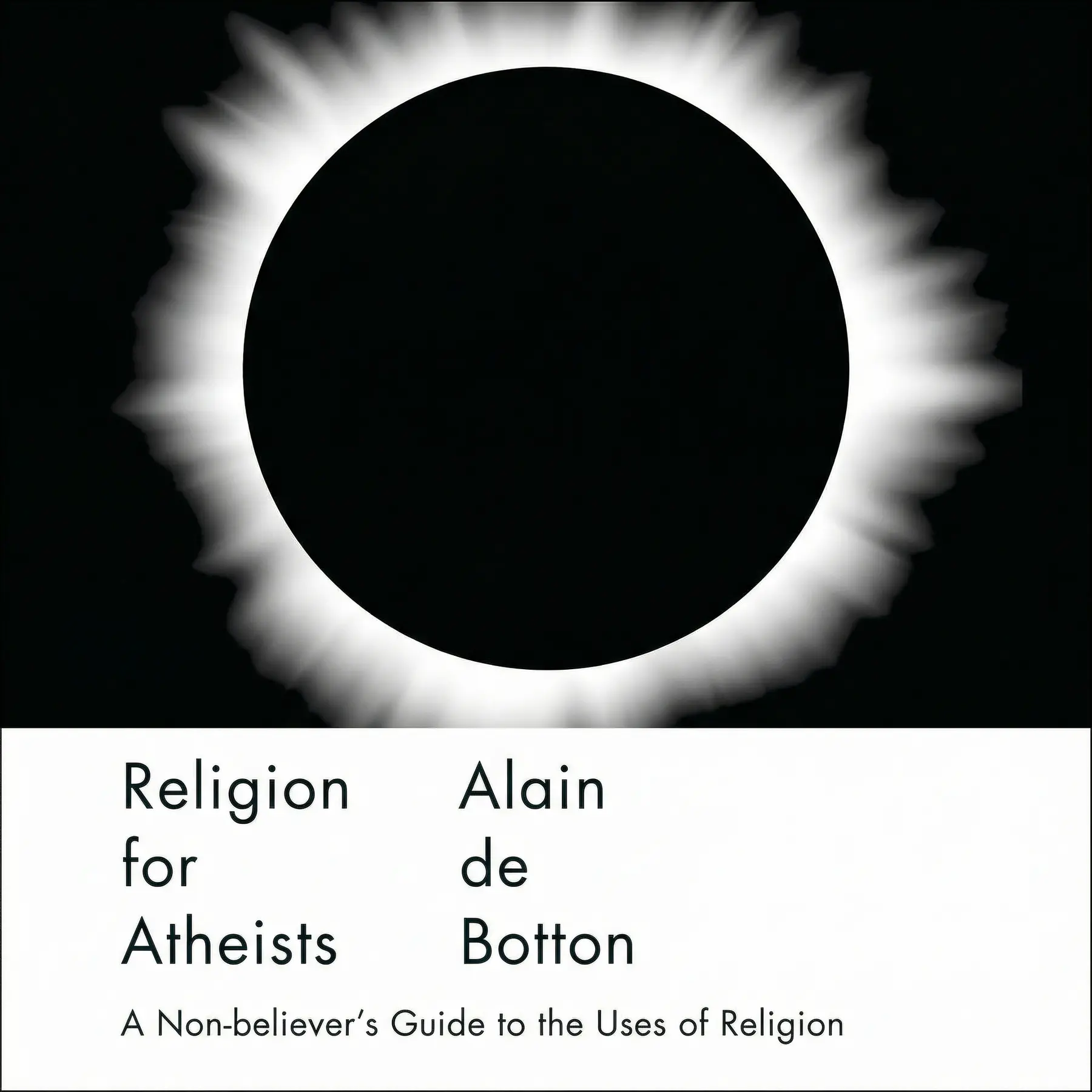
EnglishไทยReligion for Atheists: A Non-believer's Guide to the Uses of Religion
Shows how nonbelievers can borrow religion's practical tools, from shared meals and days of atonement to moral images, consoling rituals and humbling perspective, to build community and steady themselves without believing in any god.
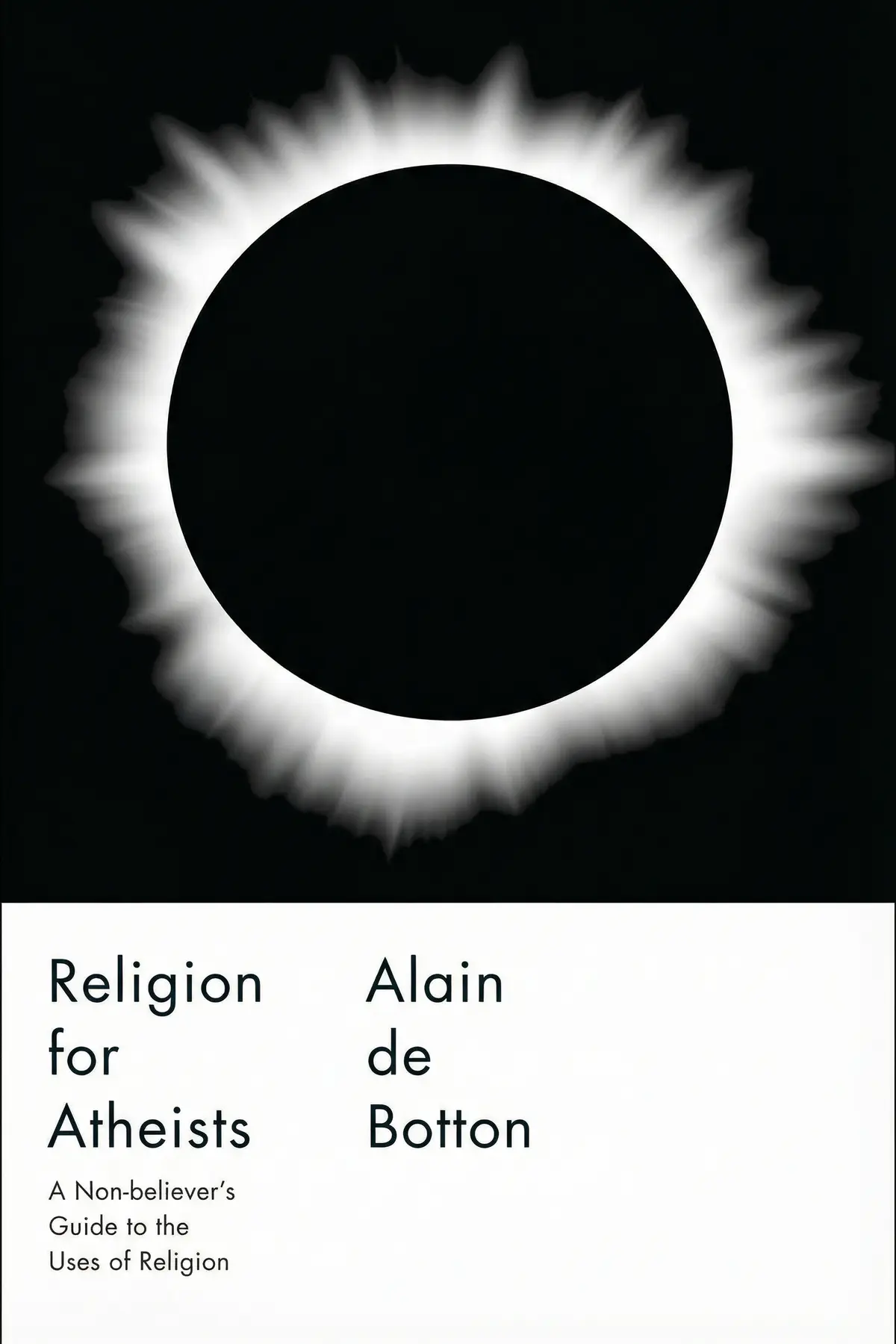
Table of Content
1. Introduction
1 min 02 sec
If you have left religion behind, or never had it, you may assume it has nothing left to teach you. In Religion for Atheists, the writer Alain de Botton argues the opposite, and he starts with a reminder that religions have always borrowed: Christmas itself joined a pagan midwinter festival to the birth of Jesus. If believers could take from outsiders, outsiders can take back.
His case is that religions solved problems secular life still struggles with, among them loneliness, moral confusion, grief and pride, and that their solutions work without the doctrine. A mass that began as a meal among strangers, a Jewish day set aside for apologies, a wall in Jerusalem stuffed with handwritten wishes: each points to something a nonbeliever could build at home, at work or in a city. What follows is a set of tested tools for living with others, facing sorrow and keeping your own troubles in proportion.
2. Borrow religion's best ideas, leave the gods
1 min 29 sec
Most nonbelievers reject religion as a single package, belief and practice together. De Botton thinks that habit has cost secular people more than they realize, and early Christianity’s own borrowing shows another way.
3. Turn a room of strangers into a community
1 min 37 sec
Secular societies keep growing, yet many people feel they share nothing with the person walking past them. An ancient meal and a day devoted to apologies suggest how that distance can shrink.
4. Find moral guidance without being bossed around
1 min 39 sec
Adults often resist being told how to behave, yet hard choices keep arriving with no one to ask. Ancient Jewish tips and a painted chapel wall show a gentler kind of guidance.
5. Teach life skills alongside school subjects
1 min 43 sec
Few adults remember their classes fondly, and many never learned what mattered most. Religious teaching organizes knowledge in a different way, and some preachers have a technique any bored classroom could use.
6. Make space for sorrow and accept care
1 min 51 sec
Online, everyone seems to be winning, and that makes ordinary disappointment feel like private failure. A wall in Jerusalem and a Buddhist figure of comfort suggest a kinder way to carry it.
7. Shrink your worries by remembering the stars
1 min 37 sec
A blemish on your face can ruin a morning until something far larger comes into view. A biblical story, a philosopher named Spinoza and an enormous star all argue for the same humbling habit.
8. Art and buildings help ideas stay with you
1 min 44 sec
Why does the same religious image appear again and again across centuries of painting? The repetition turns out to be the method, and church builders once followed rules just as deliberate.
9. Reliable rituals make institutions worth trusting
1 min 49 sec
A hospital visit rarely feels the same twice, while a confession box feels identical across continents. Religion’s habits of consistency hold a lesson for any organization, and a fast-food chain already knows it.
10. Conclusion
1 min 09 sec
What de Botton proposes is a visit to a treasury nonbelievers were told was locked. The gods can stay behind. The shared table, the day of apology, the painted virtues, the wall of written sorrows and the star brighter than four million suns are human inventions answering human needs, and secular life threw many of them out with the doctrine.
The book supports small borrowings you can start now. Set a regular time, with family or colleagues, for saying sorry and letting old grudges go. Keep an image of someone whose conduct you admire where you will see it when a decision gets hard. When your feed fills with other people’s victories, find a place to admit your own disappointments, and let someone care for you. And when a problem feels enormous, measure it against the sky.
None of this asks for faith. It asks only for the humility to notice that believers have been testing ways to live together and console each other for centuries, and that the results belong to anyone willing to learn from them.
About this book
What is this book about?
Many people who have left religion behind treat it as a closed file: science and reason explain the world, so faith has nothing left to offer. Alain de Botton disagrees, though not because he believes. His argument is that religions spent centuries solving very human problems, and secular society discarded those solutions along with the doctrine. He looks at what faiths actually do. They seat strangers together at a shared meal, set aside a day for apologies, paint virtues on chapel walls, make room for sorrow at places like the Wailing Wall in Jerusalem, and humble their followers with stories like the Book of Job. They teach life themes instead of school subjects, shape thought through art and buildings, and run institutions so consistent that a ritual feels the same in any country. Readers get a fresh way to look at churches, temples and holidays: as a library of tested ideas for community, kindness, consolation and perspective, open to anyone willing to borrow from it.
Book Information
Who it's for
Nonbelievers feeling something missing
Nonbelievers who feel something is missing from secular life but distrust anything that sounds religious.
Managers and educators
Managers, teachers and trainers looking for better ways to build community, teach and create rituals that last.
Worn down by comparison
People worn down by social media comparison who want kinder ways to handle disappointment.
About the Author
Alain de Botton
Alain de Botton was born in Zurich, Switzerland, in 1969. His first book, Essays in Love, appeared in 1993 and sold two million copies, and How Proust Can Change Your Life, Status Anxiety and The Architecture of Happiness also became bestsellers. He helped found The School of Life in 2008 and Living Architecture in 2009, and the Royal Society of Literature made him a fellow in 2011. His other books include The Consolations of Philosophy and The Art of Travel.
How Proust Can Change Your Life
Alain de Botton
How to Think More About Sex
Alain de Botton

Status Anxiety
Alain de Botton
The Architecture of Happiness
Alain de Botton
The Art of Travel
Alain de Botton
The Consolations of Philosophy
Alain de Botton
The News: A User's Manual
Alain de Botton
The School of Life: An Emotional Education
Alain de Botton
Ratings & Reviews
Ratings at a glance
What people think
Listeners find the work remarkably perceptive, featuring deep commentary on the worldly advantages of faith and smart interpretations of its appeal. The prose is beautifully composed, and listeners describe the title as a gripping, witty, and mentally stimulating experience. While some listeners feel it is an accessible read, others mention that it is not particularly simple. Listeners prize the book's real-world utility, with one highlighting its significance as a helpful reference for adolescents.
Top reviews
Chan
Finally got around to reading Alain de Botton’s latest, and it’s a revelation for those of us who feel a void in the modern secular world. To be fair, most atheists focus solely on the lack of a god, but de Botton offers profound observations on the secular merits of religious rituals. He creates a sort of secular illuminated manuscript that celebrates aesthetic beauty and architecture. I loved the way he suggests we can find inspiration in things like communal meals and art museums. Some might find the idea of 'temples for atheists' a bit much, yet the writing is so well-crafted that it remains a compelling read throughout. It is truly a thought-provoking guide for anyone searching for community without the supernatural baggage.
Show moreMind
This book serves as a surprisingly valuable resource for my teenage children who are navigating a complex world without the safety net of traditional faith. It provides an intelligent explanation of why religion has been so successful for centuries. Personally, I think his focus on 'Wisdom without Doctrine' is exactly what the modern world needs right now. We need ways to express gratitude and find perspective, even if we don't believe in a higher power. De Botton makes a compelling case for re-appropriating the best parts of religion for the secular realm. The book is beautiful, insightful, and profoundly necessary.
Show moreThanit
As someone who rejects dogma but misses the structure of faith, I found this book to be an incredibly insightful resource. De Botton’s argument for university reform—suggesting lecturers take notes from the emotional delivery of Pentecostal preachers—is both funny and weirdly practical. Education should be about more than just data; it should address the themes that torment our souls. Some parts, particularly the focus on Judeo-Christian traditions while ignoring Islam, felt a bit narrow. However, the book’s overall message about using art and ritual to foster social bonds is brilliant. It’s a valuable resource for anyone wanting a more meaningful secular life.
Show moreGioia
Is it possible to love the writing while hating most of the specific suggestions? De Botton is a master of the well-crafted sentence, and his meditations on architecture and the 'temple to atheism' are genuinely thought-provoking. However, the book is padded with so many photographs that it occasionally feels like it’s trying to hide the flimsiness of its central thesis. To be fair, his observations on how universities have failed the soul are spot on. Even if I don't want to attend a liturgical restaurant, I appreciate the intellectual effort to bridge the gap between faith and reason. It's a funny, absorbing, and ultimately very charming book, despite its quirks.
Show moreSombat
The chapter on art alone is worth the price of admission, reminding us that museums should be more than just cold repositories for historical facts. Alain de Botton writes with such clarity and compassion that it’s hard not to be swept up in his vision for a more connected society. I especially enjoyed his ideas on 'secular saints' and how we can use culture to teach us how to live. To be honest, some of the specific rules he proposes feel a bit too paternalistic for my taste. But the overall project of finding wisdom without doctrine is noble. It’s not an easy read if you’re looking for quick answers, but it’s deeply rewarding for the patient reader.
Show moreZoe
After hearing so much controversy about the 'Atheist Temple,' I expected something much more radical, but I found a gentle and intelligent explanation of religion's enduring attraction. De Botton’s perspective as a non-believer who still finds beauty in the Catholic Mass is quite refreshing. He understands that we have genuine human needs for community and ritual that aren't being met by modern, atomized society. The book is essentially a series of essays on being human in a world without God. It appeals to the emotions and the imagination in a way that most dry philosophy books never could. It’s a profound, if sometimes slightly melodramatic, look at the uses of faith.
Show moreNarongrit
The premise sounds fascinating, but the execution feels like a strange exercise in intellectual paternalism that left me quite cold. Look, I appreciate de Botton’s lucid prose, but his suggestion that we need 'Agape restaurants' with guidebooks for conversation feels incredibly forced and condescending. Frankly, the truth is that atheists already build community through things like book clubs or local activism without needing to steal the tools of religious indoctrination. He seems to think we are like children who need our knowledge fed to us in manageable, pre-chewed bites. While I found some of the photographs and meditations on human fragility to be quite moving, the overall structure relies on illogical leaps that I simply couldn't accept. It’s an interesting failure, but a failure nonetheless.
Show moreNook
Truth is, De Botton seems more interested in being a secular Pope than actually helping people find meaning in a truly rational way. His comparison of the Catholic Church to the McDonald's corporation for its efficiency is bizarre and frankly a bit cynical. He focuses almost entirely on Judeo-Christian traditions, which makes the title 'Religion for Atheists' feel a bit misleading. That said, the book is undeniably well-crafted and contains several profound observations about our need for community. I didn't find it to be an easy read, mostly because I kept stopping to argue with the text. It’s a provocative piece that succeeds as a conversation starter even if its solutions are unworkable.
Show moreStella
While the writing is unquestionably well-crafted and often quite funny, I couldn't help but feel the author over-generalizes the secular experience to an annoying degree. He assumes all atheists are lonely, disconnected individuals who have no mechanism for expressing gratitude. In my experience, skeptics are often the most connected and community-oriented people I know. His idea to set up new restaurants with liturgical scripts is a bit laughable. To be fair, he does make some excellent points about the lack of 'life skills' being taught in our current university system. It’s a mixed bag of brilliant insights and truly absurd suggestions. Worth a read, but keep your critical thinking cap on.
Show moreSkylar
What a profoundly insulting piece of work that assumes atheists are living empty, materialistic, and miserable lives just because we don't pray to a deity. De Botton’s intention appears to be a reinvigoration of Comte’s 'religion of humanity,' but it comes across as smug and upper-class. He insists that we must adopt a highly prescriptive approach to how we eat, think, and communicate. This isn't freedom; it's just another form of doctrine dressed up in secular clothing. I found his description of the 'Agape Restaurant' with forced confessionals to be parodically exaggerated. Not gonna lie, I’m surprised this got published as serious philosophy. It feels more like an exploitative self-help manual than a rigorous defense of unbelief.
Show moreQuestions about this book
What is the main idea of Religion for Atheists?
Alain de Botton argues that you can reject belief in God and still learn a great deal from religion. Faiths developed practical solutions to lasting human problems: shared meals and rituals that build community, moral guidance, teaching aimed at real life, ways to accept sorrow, stories that keep us humble, and institutions people can rely on. Secular society, he suggests, can borrow these without the doctrine.
Is Religion for Atheists for or against religion?
Neither, in a simple sense. De Botton writes as a nonbeliever and does not try to prove or disprove any god. His interest is in what religions do well. He treats churches, rituals, art and sacred stories as a store of human wisdom that nonbelievers dismissed too quickly because of what Nietzsche called the bad odor of religion.
What secular rituals does Alain de Botton suggest?
He proposes a secular day of atonement modeled on Yom Kippur, when people would reflect on the past year and apologize to those they hurt, and jokes that it could become a public holiday. He also imagines a secular Wailing Wall where people could share their grief and unfulfilled hopes, even anonymously, and restaurants that seat strangers together the way the early mass did.
How can I apply Religion for Atheists in daily life?
Start small. Set aside a regular moment with family or colleagues to apologize and drop old grudges. Keep an image of someone you admire nearby as a moral reminder, the way believers keep statues of saints. Admit disappointments instead of hiding them, and accept care from others. When problems loom large, recall the scale of the universe, such as the enormous star Eta Carinae.
What can businesses learn from Religion for Atheists?
De Botton points to the consistency of religious institutions. Catholic rituals such as confession follow the same standards worldwide, so people know what to expect anywhere. He suggests companies borrow this, noting that McDonald’s keeps a 300-page manual covering everything from smiling warmly to where name tags go and how much mayonnaise goes on a burger.
Readers also enjoyed

A Theory of Justice
John Rawls

A New Earth: Awakening to Your Life’s Purpose
Eckhart Tolle

A Return to Love: Reflections on the Principles of a Course in Miracles
Marianne Williamson


Abundance: The Inner Path to Wealth
Deepak Chopra

Aflame: Learning from Silence
Pico Iyer

Alcoholics Anonymous
Alcoholics Anonymous World Services

A Guide to the Good Life: The Ancient Art of Stoic Joy
William B. Irvine
AUDIO SUMMARY AVAILABLE
Listen to Religion for Atheists in 15 minutes
Get the key ideas from Religion for Atheists by Alain de Botton, plus 5,000+ more nonfiction titles.
- 5,000+ titles
- Listen as much as you want
- 7-day free trial
- Cancel anytime









