
14 min 52 sec
Available in: English
How to Think More About Sex
Alain de Botton explains why sex stays awkward even in an open age, what our turn-ons say about us, and how to handle rejection, honesty and fading desire in long relationships.
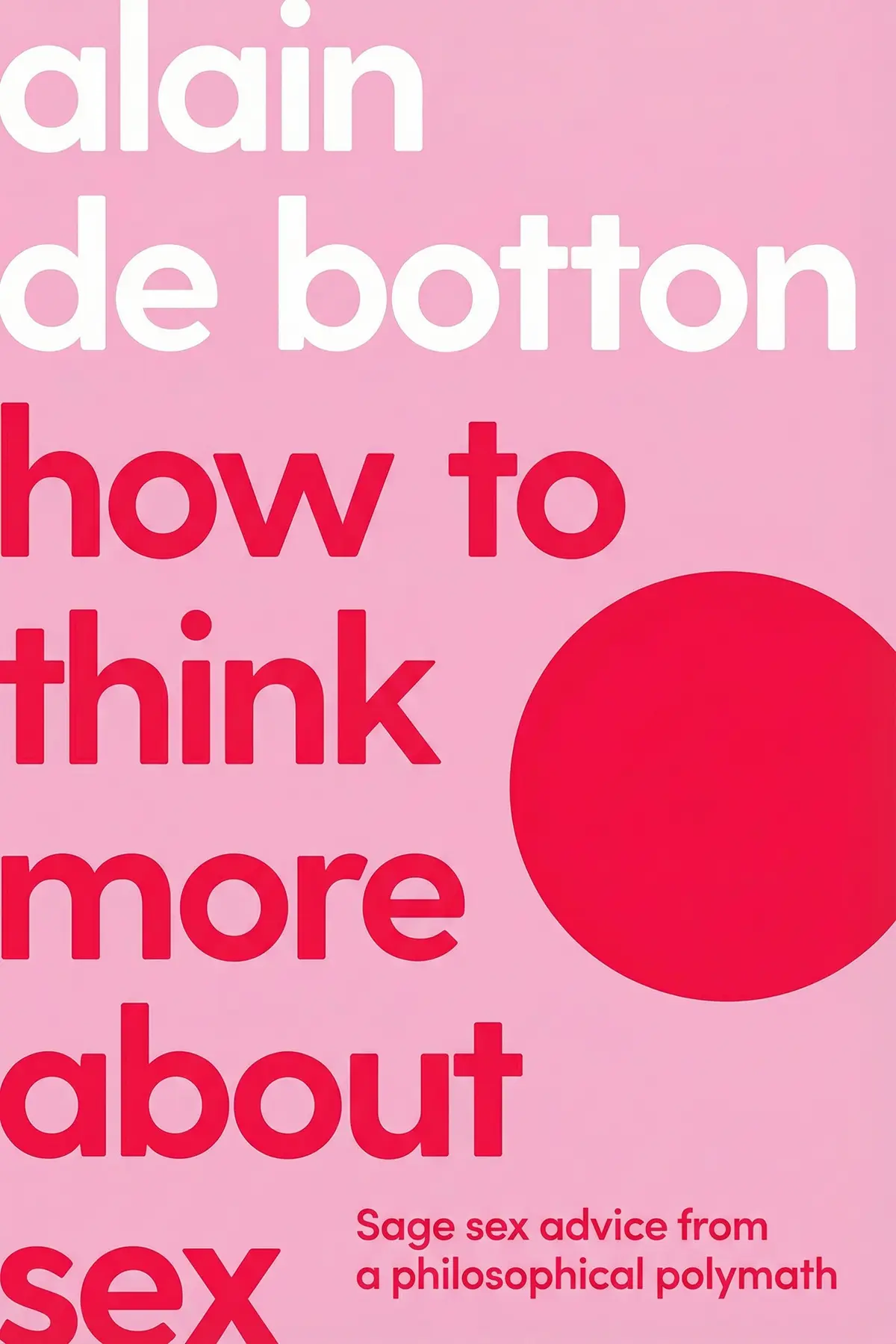
Table of Content
1. Introduction
1 min 02 sec
Most adults believe they think about sex enough, yet it stays awkward, even for people in loving relationships. In How to Think More About Sex, Alain de Botton, the writer behind Status Anxiety and The Architecture of Happiness, argues that the awkwardness has a cause. Desire clashes with the polite, controlled self we show the world, and later with the orderly home we build with a partner.
Biology explains only part of attraction, he says. The rest comes from psychology: from childhood, from what we lack and from what we fear to admit. Understand those hidden drives and sex carries less shame, rejection stings less, and a familiar partner can look desirable again. The evidence here is personal and vivid: a first kiss, a pair of plain black loafers, two strangers on a train and a painting of asparagus. Each one supports a single claim, that thinking clearly about desire is how we suffer less from it and love better.
2. Treat desire as a search for acceptance
1 min 57 sec
Evolution can explain why strength and a symmetrical face attract us. It cannot explain why a first kiss stays vivid for decades, and that gap points to what sex is really for.
3. Read your turn-ons as clues to what you lack
1 min 56 sec
An old wristwatch on a worn strap and a pair of librarian shoes can stir more desire than any perfect body. De Botton argues these small details reveal something far from shallow.
4. Say plainly whether you want love or sex
1 min 45 sec
Two strangers meet on a train, like each other and become a couple. Each hides one simple fact from the other, and that small silence sets them up for guilt and pain.
5. Take a no the way you take rain
1 min 46 sec
Being told someone would rather just be friends can feel like a judgment on your whole worth. An old misunderstanding about the weather suggests a far calmer way to hear it.
6. Spot how home life dims desire, and revive it
1 min 49 sec
Couples see each other naked every day, yet many rarely have sex. De Botton traces the problem to a clash that marriage itself creates, and it is not a lack of love.
7. Look at your partner the way a painter would
1 min 37 sec
Nobody in nineteenth-century France found asparagus exciting until one painter put it on canvas. His trick, according to de Botton, works on a partner you have stopped noticing.
8. Guard your attention and honor a faithful partner
1 min 54 sec
De Botton is harsher on pornography than many expect and gentler on cheating than most. Yet his conclusion about faithful partners may be the most generous idea in the book.
9. Conclusion
1 min 06 sec
De Botton’s case is that most people think about sex far less clearly than they believe, and pay for it in shame, guilt and loneliness. Desire was never only a matter of nerve endings and healthy genes. It is a request for acceptance, a set of symbols pointing back to childhood, and a force that sits uneasily beside the routines of a shared home. Once you see that, the awkwardness starts to make sense, and sense is easier to live with than shame.
The practice he supports is modest. Trace one turn-on to the quality it seems to promise, and stop treating it as a sign that something is wrong with you. Say early whether you are looking for love or sex, and hear other people’s answers without judging them. When a no comes, from a stranger or a spouse, file it with the weather. And once a day, set aside the chores and the calendar and look at your partner the way Manet looked at a bunch of asparagus, until the familiar becomes remarkable again.
The person in front of you may not need replacing. They may only need to be seen.
About this book
What is this book about?
Talk about sex became ordinary decades ago, yet for most people it remains a source of embarrassment, guilt and hurt. Alain de Botton argues that the reason is not prudishness. Desire pulls against the polite, self-controlled person we try to be in public, and later against the routines of a shared home. Biology, he says, explains why health and strength attract, but it cannot explain why a pair of shoes arouses one person or why impotence strikes with a kind and attractive partner. For that, de Botton turns to psychology: childhood isolation, the qualities we lack, the taboos around wanting love or wanting sex, and the way a long-term partner starts to feel like family. Readers get a calmer way to understand their own turn-ons, a reason to stop taking rejection as a verdict on their worth, and practical ways to revive desire, from a night in a hotel to looking at a partner the way Manet looked at asparagus. He also takes clear positions on pornography and on fidelity.
Book Information
Who it's for
Couples whose desire faded
Couples in long relationships whose desire has faded and who want to understand why.
Singles finding dating hard
Single people stung by rejection or unsure how to say what they want from dating.
Embarrassed by their turn-ons
Anyone embarrassed by their own turn-ons who wants a calmer, kinder way to think about them.
About the Author
Alain de Botton
Alain de Botton was born in Zurich in 1969. His first book, Essays in Love, came out in 1993 and sold two million copies, and later titles such as How Proust Can Change Your Life, Status Anxiety and The Architecture of Happiness became bestsellers. He helped found The School of Life in 2008 and Living Architecture in 2009, and was elected a fellow of the Royal Society of Literature in 2011.
How Proust Can Change Your Life
Alain de Botton

Status Anxiety
Alain de Botton

The Architecture of Happiness
Alain de Botton

The Art of Travel
Alain de Botton
The Consolations of Philosophy
Alain de Botton
The News: A User's Manual
Alain de Botton
The School of Life: An Emotional Education
Alain de Botton
Ratings & Reviews
Ratings at a glance
What people think
Listeners find this title to be a brief and amusing read that prompts them to consider various subjects from a new perspective. The prose is captivating, and listeners value the educational quality of the text, as one listener emphasizes its original viewpoint on human sexuality. Furthermore, the work is lauded for its applicable and kindhearted tone, with one listener observing how it directly challenges modern taboos.
Top reviews
Sue
This book manages to be both profoundly awkward and deeply enlightening at the same time. Ever wonder why we feel so much shame about something that is supposed to be natural? De Botton tackles this head-on, confronting contemporary taboos with a level of grace you don't often see in the 'self-help' genre. The chapter on Renaissance art and how it used sexuality to highlight lofty principles was a highlight for me. It completely reframes the way you look at attraction. Personally, I think the 'School of Life' series is hit-or-miss, but this one is a definite hit. It’s informative without being dry. It’s short. It’s punchy. Most importantly, it makes you feel significantly less 'weird' about your own internal life. It’s about time someone spoke about the existential dread of the sex drive with this much honesty. Truly a must-read for the modern adult.
Show morePraepimon
Wow. I didn't expect to feel so seen by a philosophy book. De Botton's description of sex as a communion of our 'polluted sides' is probably the most accurate thing I've ever read on the subject. We spend so much energy trying to be respectable, and sex is the one place where we are allowed to be 'dirty' and still find welcome. That thought alone is worth the price of the book. The prose is elegant and the insights into fidelity were particularly helpful for me. It’s a quick, entertaining read that manages to confront some very heavy contemporary taboos without being crass. To be honest, I think everyone should read this just to realize they aren't as 'weird' as they think they are. It’s a deeply empathetic work that stays with you. It’s definitely my favorite in the School of Life series so far.
Show moreRin
As someone who usually finds philosophy books too dense, this was a breath of fresh air. De Botton has this unique way of taking something as messy and frantic as human desire and placing it under a calm, clinical light. The truth is, we spend so much time feeling guilty about our 'polluted sides,' but this book argues that these kinks and urges are exactly what make us human. It’s a relatively quick read, but the ideas stick with you long after you close the cover. I particularly appreciated the compassionate tone he takes when discussing the difficulties of maintaining desire in a long-term marriage. Some of the suggestions regarding pornography censorship felt a bit extreme and idealistic, admittedly. However, the core message about sex being a 'promise of happiness' rather than just a physical act is genuinely illuminating. It’s an engaging, witty look at why we are the way we are.
Show moreManop
Finally got around to reading this, and I gotta say, the chapter on the 'mundane realities' of relationships hit home. De Botton is spot on about how choosing a sofa or educating children can slowly kill the sexual spark. He writes with such a sparky, engaging style that you almost don't notice how radical some of his ideas are. He views sex not as a domesticated impulse, but as a force of nature that we should approach with caution. That perspective is quite rare today. While I didn't agree with his stance on censorship, I found his suggestion for a 'new kind of pornography' with artistic merit to be a fascinating thought experiment. The book is compassionate and relevant to anyone struggling with the friction between love and lust. It’s not perfect, but it’s a very informative and unique perspective on human sexuality.
Show moreJoshua
The chapter on whether 'sexiness' can be profound really changed my perspective on physical attraction. De Botton argues that our attraction to someone’s 'cute bum' or 'nice lips' is actually a promise of a certain kind of happiness, which is a beautiful way to think about it. His writing style is incredibly engaging and he has a knack for summarizing complex feelings in a single, witty sentence. Not gonna lie, some of his cultural criticisms about the porn industry and Natalie Portman are a bit strange. He gets a little bogged down in his own theories toward the end. Still, the book is a great tool for anyone wanting to think in a different light about their desires. It’s informative, it’s quirky, and it’s surprisingly relevant to the 'social awkwardness' of modern dating. A solid four stars for the arresting thoughts alone.
Show moreOscar
Pick this up if you want a short, punchy essay that won't take more than an afternoon to finish. It’s a bit of a ditty, really. The title is slightly misleading; it’s more of a meditation on the *philosophy* of sex rather than a practical guide. I found the sections on how sex liberates the self to be quite compelling. He has a way of turning the profane into something lovely. However, the second half of the book takes a turn into some pretty grim territory. He basically argues that we are all doomed to disappointment and that our sex drives are 'cray' monsters we can barely control. Some of the diagrams in the 'School of Life' edition are also unintentionally hilarious. It’s an interesting look at our culture, but don't expect it to solve your relationship problems. It’s more about opening a dialogue with yourself.
Show moreNoi
The title is a bit of a bait-and-switch, but the content inside is still quite charming. It’s less 'how to think more' and more 'how to think differently.' De Botton is excellent at pointing out the absurdities of our sexual lives. He captures that 'existential dread' we feel after a random hookup perfectly. However, the book is very much centered on the male, heterosexual experience, which limits its reach. To be fair, he acknowledges this is his own perspective, but it still feels a bit narrow at times. I enjoyed the 'Homework' bibliography at the end—it’s a nice touch. Overall, it’s a smooth and elegant read that adds up to a little less than you want it to. It won't change your life, but it will give you some great talking points for your next dinner party. A decent, light-hearted look at a heavy topic.
Show moreOwen
After hearing so much about De Botton, I found this volume surprisingly disconnected from actual human experience. Look, the writing is undeniably smooth, but he spends far too much time in his own head. He categorizes sexual experiences into these stereotypical, Hollywood-esque boxes that don't reflect any reality I recognize. One minute he’s talking about the 'sweetness' of oral sex, and the next he’s advocating for a state-mandated ban on pornography so we’ll all go back to reading highbrow literature. It’s pretentious. The logic is often circular, relying on naturalistic fallacies to justify why relationships get boring. I felt like I was getting a 'birds and bees' talk from a very sophisticated, very depressed uncle. There are some arresting thoughts scattered throughout, but they are buried under a mountain of shaky arguments. It adds up to much less than the title promises.
Show moreNang
Not what I expected from a supposed philosopher, frankly. I found the arguments here to be a frustrating mix of reductive Freudian tropes and questionable evolutionary psychology. To be fair, the prose is elegant, but the substance is lacking. De Botton seems to think he can solve the 'problem' of sex by intellectualizing it into oblivion. He treats our deepest, most private urges like a math problem to be solved by a shy teacher who has never actually left the library. His take on adultery is particularly bizarre, suggesting we just need a 'failure of imagination' to stay faithful. It felt elitist and wildly out of touch with how real people actually experience intimacy. If you want a book that uses Boticelli paintings to explain why you feel empty after a hookup, this is for you. For everyone else, it’s a pass. A total disappointment.
Show moreFon
Truth is, this felt more like a therapy session for the author's own hang-ups than a guide for the rest of us. De Botton seems obsessed with the idea that sex is inherently shameful and repugnant. He uses these grand, sweeping absolutes to explain away complex human emotions, which felt incredibly reductive. 'X is because of Y,' he claims, with almost no evidence to back it up. He isn't a psychologist, and it shows. The book is full of these boring attempts at humor that just don't land. I found his constant references to Godard and Boticelli to be a bit of a 'look how cultured I am' flex that didn't add much to the actual discussion. It’s a pathetic attempt at explaining human behavior that fails to challenge any conventional values. If you're looking for enlightenment, you won't find it here. Just a lot of pretentious navel-gazing.
Show moreQuestions about this book
What is the main idea of How to Think More About Sex?
Alain de Botton argues that sex remains awkward because desire conflicts with the controlled, respectable self we present in public and with the practical routines of domestic life. Biology explains only part of attraction. The rest is psychological, shaped by childhood and by the qualities we lack. Understanding those drives, he says, reduces shame, softens rejection and helps couples keep desire alive.
What does Alain de Botton say about rejection?
He compares it to the weather. People once read drought as divine punishment until meteorology showed it was just atmospheric chance. Likewise, being rejected only means the other person is not aroused, an involuntary reflex like preferring one ice cream flavor. It is not a verdict on your worth, and he notes that rejection happens inside long-term relationships too, where it can sting even more.
How can couples revive desire, according to de Botton?
He offers three options. Adventurous couples without jealousy issues might involve a third person. A gentler step is a night in a hotel, away from household routine. His favorite is to look at your partner the way Manet looked at the asparagus he painted in 1880, noticing again qualities that were always there. He suggests doing this every day.
Why do turn-ons and fetishes matter in this book?
De Botton argues that everyone has fetishes and that they point to deeper qualities we seek. One man is aroused by plain black loafers because they stand for the maternal love he missed; a woman is drawn to an old wristwatch that recalls her late father. Tracing a turn-on back to its source, he says, eases the feeling of being sexually strange.
Readers also enjoyed


AUDIO SUMMARY AVAILABLE
Listen to How to Think More About Sex in 15 minutes
Get the key ideas from How to Think More About Sex by Alain de Botton, plus 5,000+ more nonfiction titles.
- 5,000+ titles
- Listen as much as you want
- 7-day free trial
- Cancel anytime









