

A Planet of Viruses
Carl Zimmer
 English
 ไทย
A doctor's guide to spotting fake science in ads, supplements, drug trials, courtrooms and newspapers, using a few plain questions about placebos, fair testing, missing data and misused numbers.
1 min 00 sec
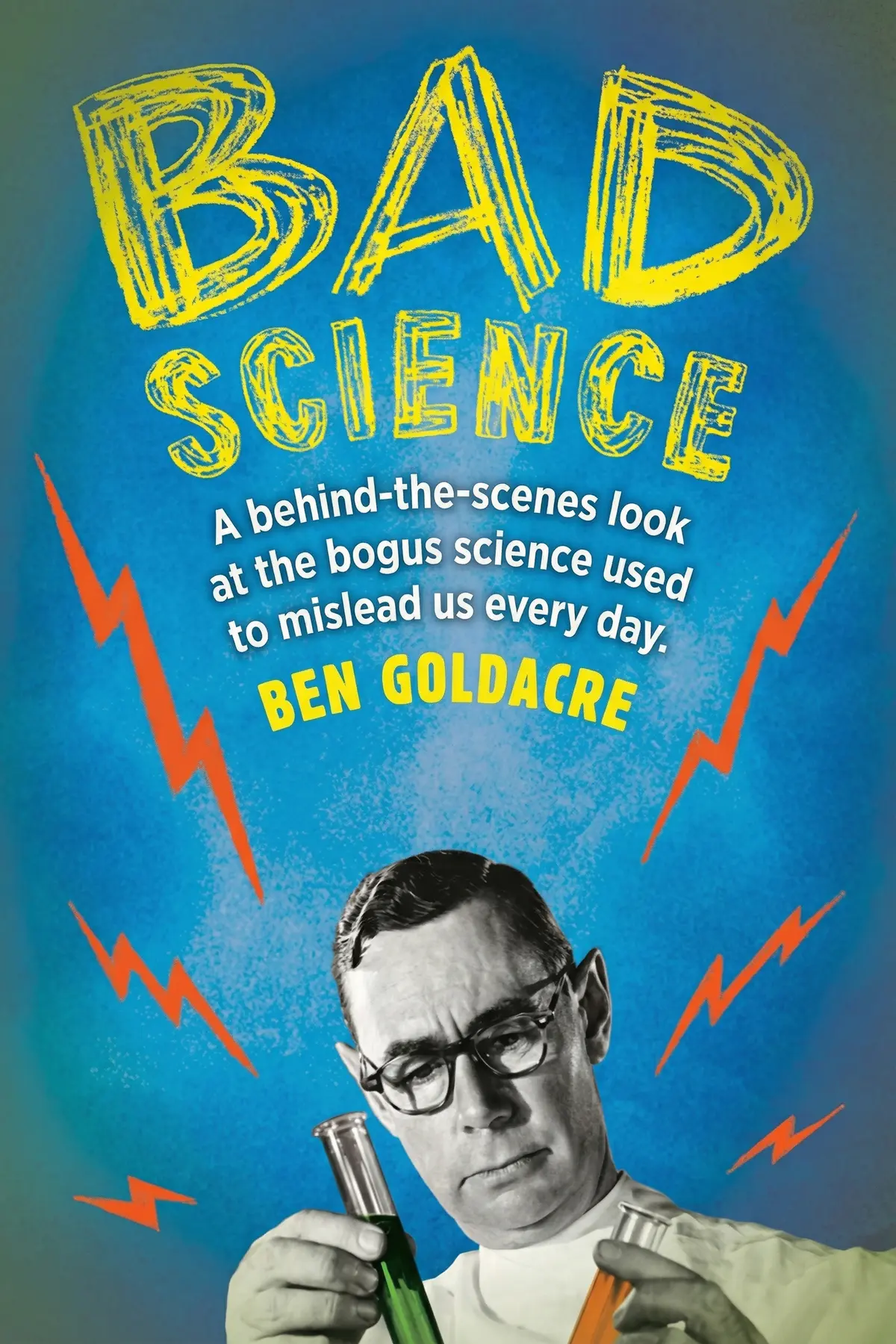
Every week you are asked to trust health claims you cannot check, and Ben Goldacre’s Bad Science shows that most of them fail a few plain questions. Take the claim that vitamin C beats a prescription HIV drug: its only support was one experiment on infected cells in a petri dish.
A doctor and longtime newspaper columnist, Goldacre finds the same move at beauty counters, drug companies, vitamin sellers, courtrooms and newsrooms. Scientific language is borrowed to sell, scare or persuade, and almost nobody asks for the evidence. The tools for asking, he argues, are simple enough for anyone: compare against a placebo, check how a trial was run, look for what was left out, and see who paid.
What follows turns those questions into habits, with the cases that show what is at stake when nobody asks them: a mother sent to prison and a policy that cost lives.
1 min 14 sec
A detox footbath turns its water brown and a face cream promises the power of salmon DNA. Both look convincing, and both rely on a habit most shoppers never notice in themselves.
1 min 24 sec
You remember your first kiss but not your first coffee. That small quirk of memory belongs to a family of mental shortcuts that can make a useless remedy feel like it cured you.
1 min 36 sec
Four sugar pills work better than two, and pink ones feel different from blue. These odd findings turn out to be the fairest way to judge any treatment, and they carry a dark history.
1 min 39 sec
A trial can compare a treatment with a placebo and still tilt the result. Two simple words in a study report reveal whether the comparison deserves your trust.
1 min 40 sec
Bringing one drug to market costs close to half a billion dollars, and someone has to pay. Who pays shapes what you get to see when you read the evidence.
1 min 43 sec
A single experiment in a petri dish became a claim that vitamins beat HIV drugs. In one country, the same kind of stretching shaped national policy, with a cost counted in lives.
1 min 32 sec
Seven small trials found nothing, yet together they proved a treatment saved babies. Another calculation, one in 73 million, helped send a grieving mother to prison. Knowing the difference starts with one question.
2 min 05 sec
A forecast about humans in the year 3000 and a superbug scare in hospitals both made headlines. Neither held up, and one vaccine story did lasting damage to public health.
1 min 07 sec
Goldacre’s book is finally an argument about confidence. The tricks he exposes, from rusty footbath water to a drug trial published twice, all work for the same reason: people assume science belongs to someone else. It does not. A placebo comparison, a question about randomization, a check on who paid for a study, a look at whether a number ignores the obvious alternative: none of these needs a laboratory.
The stakes are concrete. Bad reasoning about vitamins helped keep anti-HIV drugs from people in South Africa, and an unchallenged statistic sent Sally Clark to prison.
So the next time a product, a pill or a headline cites science, start with the simplest question in the book, which is what the claim was compared with. Then ask whether you are hearing all the results or only the flattering ones. Be just as hard on the study you like as on the one you dislike. Science, in Goldacre’s hands, is not a priesthood. It is a habit of asking, and anyone can keep it.
Health claims arrive dressed in scientific language: detox footbaths, skin creams made with fish DNA, vitamins said to fight disease, frightening headlines about superbugs and vaccines. Most people feel unqualified to question them. Ben Goldacre argues that this deference is exactly what sellers, drug companies and careless newspapers count on. A doctor by training, Goldacre walks through the ways evidence gets bent. Placebos show how much of healing is expectation, and why every treatment needs a fair comparison. Trials can be skewed by loose randomization and missing blinding. Drug companies, which pay for most clinical trials, can bury unwelcome results or publish good ones twice. Nutritionists stretch lab findings into cures, and a misused statistic helped send a mother to prison. The stakes are real. One estimate put the deaths that anti-HIV drugs could have prevented in South Africa, during a period when vitamins were promoted instead, at 343,000. Sloppy reporting on the MMR vaccine led to falling vaccination. Readers get a short set of questions that work on any claim, from a beauty counter to a front page.
Shoppers tired of detox, supplement and anti-aging claims they cannot judge.
Patients and carers who want to know what a drug trial really shows before trusting a treatment.
Students, journalists and professionals who use statistics and want to stop being fooled by them.
Ben Goldacre, born in 1974, trained as a doctor. From 2003 to 2011 he wrote the Bad Science column for The Guardian newspaper. At the University of Oxford he became the first holder of the Bennett Professorship of Evidence-Based Medicine, and he is director of the Bennett Institute for Applied Data Science. He helped found the AllTrials campaign and OpenTrials, both working for openness in how clinical trials are run and reported. Bad Science, published in 2008, was shortlisted for the BBC Samuel Johnson Prize.
Listeners consider this work highly accessible and articulate, enjoying the dry British wit and useful advice for incorporating scientific value. The book is further praised for its eye-opening material, with one listener mentioning it serves as a solid prompt to maintain a skeptical mindset. On the other hand, responses to the prose and tempo are varied; one listener felt compelled to keep reading, whereas another viewed the tone as excessively sarcastic. Views on the writer are also split, as some value their deep knowledge while others perceive them as being extremely opinionated.
Finally got around to reading Goldacre’s takedown of the wellness industry, and it’s every bit as sharp as I’d hoped. He doesn’t just debunk things like homeopathy or those ridiculous detox foot baths; he explains why our brains are so easily fooled. The section on the placebo effect was particularly eye-opening, showing that even when there is no active ingredient, the ritual of care matters. To be fair, his British wit is quite dry and might rub some the wrong way, but it kept me engaged through some of the heavier statistical sections. It’s a necessary manual for anyone living in an era of 'alternative facts' and celebrity-endorsed health scams. I found myself checking the sources of every health article I’ve seen since. Truly a must-read for developing a sharper bullshit detector.
Show moreEver wonder why people swear by those brown-sludge foot baths or magnetic bracelets? Goldacre dives headfirst into the world of 'mountebanks' and medical scams with a level of snark that I found absolutely refreshing. The way he deconstructs 'Brain Gym' is both hilarious and deeply concerning, showing how easily nonsense can infiltrate our education systems. While some might find him opinionated, his arguments are backed by a solid understanding of the scientific method that is rare in popular writing. I loved the chapters on the pharmaceutical industry; he doesn't just attack the small-time gurus, he goes after the giants too. If you enjoy a bit of dry British humor mixed with rigorous data analysis, you’ll find this hard to put down. It changed how I view every medical headline I read.
Show moreWow. This should be required reading for every high school student before they’re allowed to browse the internet. Goldacre dismantles the 'miracle cure' industry with surgical precision, showing exactly how nutritionists and 'doctors' with mail-order degrees exploit our fears. I found the chapter on the MMR vaccine particularly moving, as it shows the real-world harm that comes from sloppy journalism and bad data. He doesn't hold back on the media, calling out editors for prioritizing sensationalism over public health. The writing is snappy and the examples—like the 'magical' properties of antioxidants—are easy to grasp. It’s empowering to realize that with a little bit of knowledge, you can see through the tricks that billion-dollar industries use to deceive us. I’ve already bought copies for three of my friends.
Show moreThe chapter on the MMR hoax alone makes this book worth the price of admission. Goldacre meticulously tracks how a single flawed paper in The Lancet, fueled by a media frenzy, led to a legitimate public health crisis. It’s a sobering reminder that 'bullshit' isn't just annoying—it can be deadly. I loved how he didn't just target easy marks like psychics, but also went after the systemic issues in big pharma and academia. His passion for the scientific method is infectious, and he provides practical guidance on how to evaluate claims yourself. Some might find him a bit arrogant, but I think a certain amount of anger is justified when you're talking about lives being put at risk. This is a brilliant, funny, and deeply necessary book that everyone should read.
Show moreThis book is a fascinating, if sometimes frustrating, exploration of how the media fails us when it comes to science reporting. Goldacre illustrates that you don't need to be a professional scientist to spot flaws in a study, but you do need to be a critical thinker. I particularly appreciated the breakdown of how statistics are manipulated—moving the goalposts or choosing selective populations to make a drug look more effective than it is. It’s a bit of a hybrid between a narrative and a guide to scientific literacy. Look, it’s not always an easy read, especially when he gets into the nitty-gritty of trial design, but the payoff is worth it. My only real complaint is that it feels very UK-centric at times, but the lessons on skepticism are universal. Definitely worth your time.
Show morePicked this up on a whim after seeing it mentioned in a column, and I have to say, it was a wake-up call. Goldacre does a brilliant job explaining how journalists, who often have no background in maths, turn minor studies into global health scares. The fish oil chapter was particularly enlightening for me because I’ve been taking those supplements for years without ever questioning the evidence. The truth is, reality is complex and there are rarely 'miracle cures,' which is a hard pill for the public to swallow. He balances the serious stuff with a lot of humor, though his sarcasm can be a bit thick at times. To be fair, the pharmaceutical sections are a bit dense and felt a little like a lecture, but the overall message is vital. It’s a great tool for anyone wanting to be less gullible.
Show moreAfter hearing so much about Ben Goldacre, I finally dove into this, and his dry wit didn't disappoint. It's a bracingly honest look at why we believe things that aren't true, from homeopathy to the supposed dangers of MRSA. The book is quite readable despite the complex topics, though some sections on clinical trial manipulation are definitely a bit more demanding. Personally, I enjoyed the deep dives into the 'bad science' of the cosmetics industry—it’s amazing what companies can get away with just by using science-y sounding words. It’s not a perfect book, as the author's opinionated nature can be a bit grating after 300 pages, but the core message is too important to ignore. It makes you realize that the world is much more interesting when you actually look at the data.
Show moreAs someone who values scientific literacy, I really wanted to love this book more than I did. Goldacre raises incredibly important points about how Big Pharma manipulates data and how nutritionists often rely on shaky correlations to sell supplements. However, the tone is frequently off-putting. He has this elitist edge that makes it feel like he’s talking down to the reader, even when you’re on his side. It’s hard to stay focused on the brilliant breakdown of the MMR vaccine controversy when the author is busy being a bit of a jackass to everyone involved. Frankly, it starts to feel a bit like a textbook disguised as a polemic, which makes the pacing drag in the middle chapters. Important info, definitely, but the delivery could use a lot less arrogance.
Show moreTo be fair, the science in this book is rock solid, and I appreciate Goldacre’s dedication to debunking harmful myths. The problem is that it often feels like he’s preaching to the converted. If you already understand the scientific method, a lot of this will feel like a long-winded confirmation of things you already know. There are plenty of graphs and detailed explanations of p-values that might scare off a casual reader. At times, the book feels more like a collection of his Guardian columns rather than a cohesive narrative, leading to some repetitive sections. I think the information on how drug trials are buried is the most valuable part, even if the delivery is a bit elitist. It’s a good reference book, but I didn't find it to be the page-turner that others have described.
Show moreI struggled paragraph by paragraph to finish this, and honestly, I nearly gave up halfway through. While the content regarding the MMR hoax and the flaws in nutritional 'science' is undeniably important, the author’s personality is just too much to handle. He alternates between being incredibly rude to the public and acting like he’s the only person in the room with a functioning brain. It’s one thing to be skeptical, but it’s another to be so insulting that you alienate the very people who need to hear your message most. The book is repetitive and the pacing is all over the place, making it feel twice as long as it actually is. If you want to learn about these topics, there are better sources that don't make you feel like an idiot for being curious. Very disappointing.
Show moreGoldacre, a doctor, shows how scientific language is used to sell products, promote supplements, market drugs and fill newspapers, often with little real evidence behind it. He covers detox footbaths and salmon DNA creams, placebos and fair trials, publication bias in the drug industry, misused statistics such as those in the Sally Clark case, and media scares about MRSA and the MMR vaccine. His aim is to give ordinary readers the tools to question such claims themselves.
Goldacre explains that sugar pills can ease problems such as tooth pain and angina, and that presentation matters: four pills beat two, injections beat pills, and pill color changes how people feel. Because feeling treated helps on its own, any real treatment must outperform a placebo to prove its worth. Homeopathy fails that test in blind, randomized trials. He also notes the ethical risks, citing 399 men with syphilis left untreated by the US Public Health Service from 1932 to 1972.
Because bringing a drug to market costs close to $500 million on average, pharmaceutical companies run or commission 90 percent of clinical drug trials. Goldacre describes publication bias, where good results are published more often than bad ones, including hidden data showing SSRI antidepressants were no better than a placebo. He also describes positive results published several times in reworded form, and a known side effect, anorgasmia, left off the list.
Sally Clark, a solicitor, lost two babies who died suddenly at different times and was jailed for their murder. A central part of the case was the prosecutor’s figure putting the chance of two SIDS deaths at one in 73 million. Goldacre points out that it overlooked genetic and environmental factors that raise the odds of a second SIDS death, and that two murders in one family were really twice as improbable as two cases of SIDS.
Ask what any claim was compared with, since a treatment that has not beaten a placebo is untested. Check whether a trial report describes random assignment and blinding. Ask whether all results were published or only the good ones. When a study was done on cells in a dish, do not assume it applies to people. Test a dramatic statistic by asking what it assumes, and doubt the expert in a scary headline until you know their credentials.
Carl Zimmer

Bill Bryson

Jeff Hawkins




Lisa Kaltenegger


AUDIO SUMMARY AVAILABLE
Get the key ideas from Bad Science by Ben Goldacre, plus 5,000+ more nonfiction titles.









