

All In: How Great Leaders Build Unstoppable Teams
Mike Michalowicz
 English
Shows business owners how to grow by dropping poor-fit clients, focusing on their best few, building a distinctive offer around them, and shaping the team, costs and daily decisions to serve those clients.
1 min 03 sec
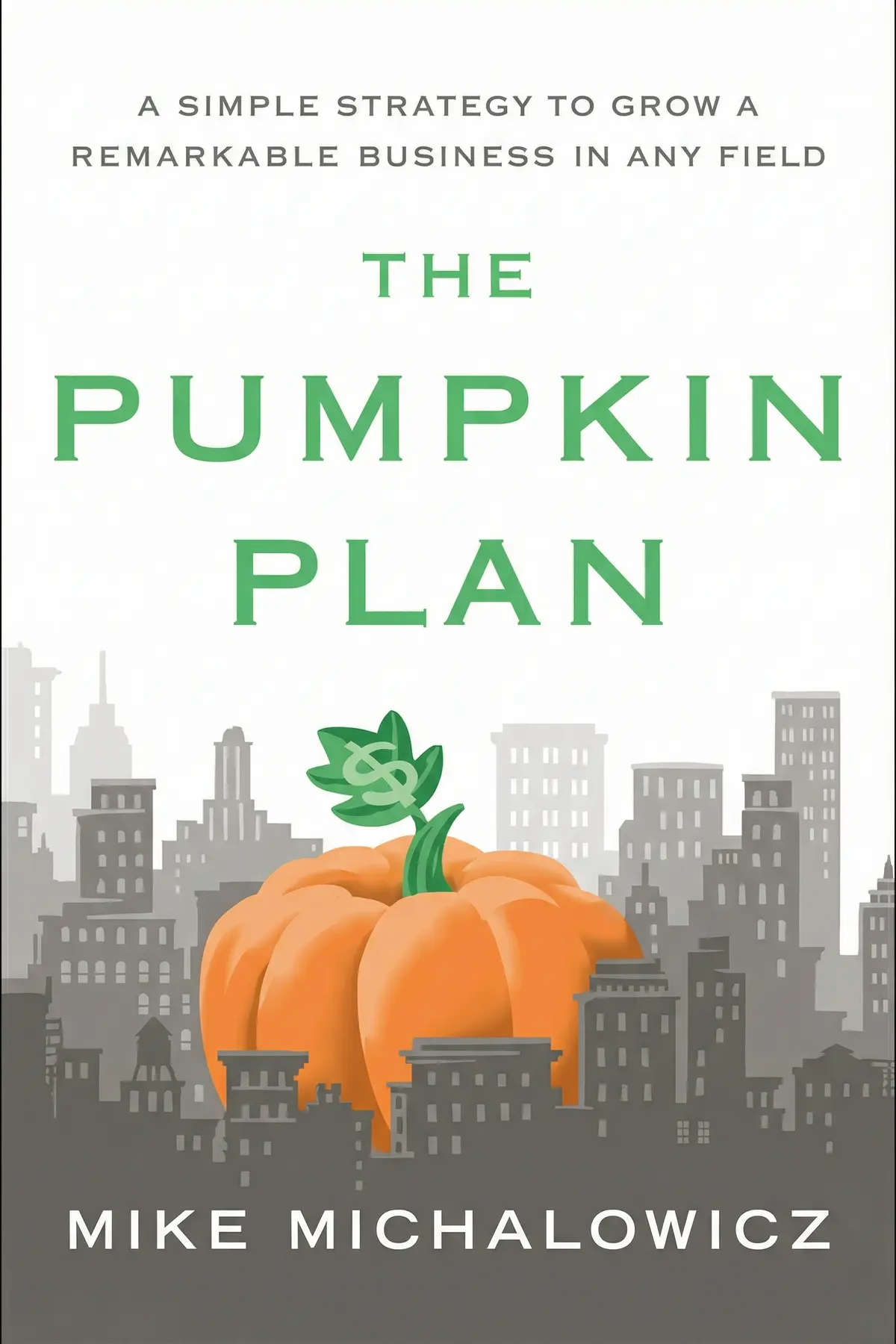
If your business takes every hour you have and still refuses to grow, Mike Michalowicz offers an uncomfortable diagnosis: you may be feeding too many customers, not too few. In The Pumpkin Plan, the entrepreneur explains how he stopped grinding and started growing after reading a newspaper story about a farmer who raised a giant pumpkin. The farmer did not care for every vine equally. He removed the damaged and weaker fruit so that all the plant’s strength went into one prize.
Michalowicz argues that a company grows the same way. It cuts weak clients, needless costs and distractions, and pours everything into a handful of top clients and the one thing that makes it different.
The steps ahead cover how to tell when you are stuck and how to rank your clients and release the worst. You’ll see how to find a selling point people repeat and how to rebuild your team around your best customers. Last come three questions that let staff make the right call without you.
1 min 55 sec
A struggling owner kept telling himself that more effort would save his company. A farmer’s account of how he grew a gigantic pumpkin suggested the opposite, and the idea eventually led to a sale worth millions.
1 min 56 sec
Most entrepreneurs pass through the same three moods when business turns bad, and the middle one can even feel like a badge of honor. Knowing which one you are in decides what happens next.
1 min 32 sec
One woman turned down a client worth more than seven times her usual accounts, and her reason was simple: she was already swamped with smaller ones. It also showed exactly what was holding her business back.
1 min 43 sec
An ordinary financial planner risks being seen as just another planner. One new label, drawn straight from what the planner’s favorite clients wished for, soon had people calling the planner by that name as the business expanded.
1 min 51 sec
An overloaded owner was struggling to keep up with the workload. Two simple drawings, one of the company he had and one of the company he wanted, pointed to a very different fix.
1 min 47 sec
In many small companies every unusual problem ends up on the owner’s desk. A short test, posted on a wall, can teach a whole team to reach the answer the owner would have given.
1 min 10 sec
The pumpkin image works because it reverses the instinct most struggling owners share. When things go badly, they add: more hours, more clients, more services, more staff. Michalowicz’s farmer subtracts. He pulls the rotten fruit, clears the weeds, keeps the strongest vine and lets it take everything. Abbie’s $2,000 accounts, Luke’s distracting manager and the restaurant’s children’s menu were all vines draining strength from the prize.
The plan asks for nerve more than talent. Spend half an hour remembering why you began, and protect a weekly half hour to check your progress. Rank your clients honestly and let the bottom of the list go, then ask your best ones what they wish you also did, since that answer may become the thing you are known for. Redraw your team and your spending around those top clients, and put three questions on the wall so your people can decide without waiting for you.
Michalowicz once believed the cure was working harder. What finally carried him to a sale worth millions was deciding what to stop growing.
Many owners work longer hours every year and still watch their businesses stall. Mike Michalowicz was one of them, until a newspaper story about a farmer who grew a giant pumpkin changed how he ran his company. The farmer did not tend every vine equally. He removed the rotten and weaker fruit so the strongest one could take everything. Michalowicz turned that method into the Pumpkin Plan. Owners rank their clients and let the worst fits go. They pour their attention into the best few and give them exactly what they want. Then they build a distinctive offer around those clients and go looking for more clients like them. He also shows how to recognize when you are stuck, how to redraw a team and a budget around top clients, and how three simple questions let employees make good decisions without the owner. The book combines cases from Michalowicz's own dealings, such as a woman named Abbie turning away a client worth $15,000 a month and a small business owner fixing his team by comparing two charts, with a number of hypothetical examples. Readers get a clear way to decide where their time and money should go.
Small business owners and freelancers who are busy every hour yet see no real growth.
Founders juggling many low-paying clients who suspect a few better ones would change everything.
Managers of small teams who want staff to make good decisions without constant sign-off.
Mike Michalowicz is an American entrepreneur who founded and sold two multi-million dollar companies before turning 35. He later lost his fortune as an angel investor and started over. He created the Profit First and Clockwork methods for small business owners, and his book Fix This Next became a Wall Street Journal bestseller. He once wrote a small business column for The Wall Street Journal and presented a Business Rescue segment on MSNBC.
Mike Michalowicz
Mike Michalowicz

Mike Michalowicz
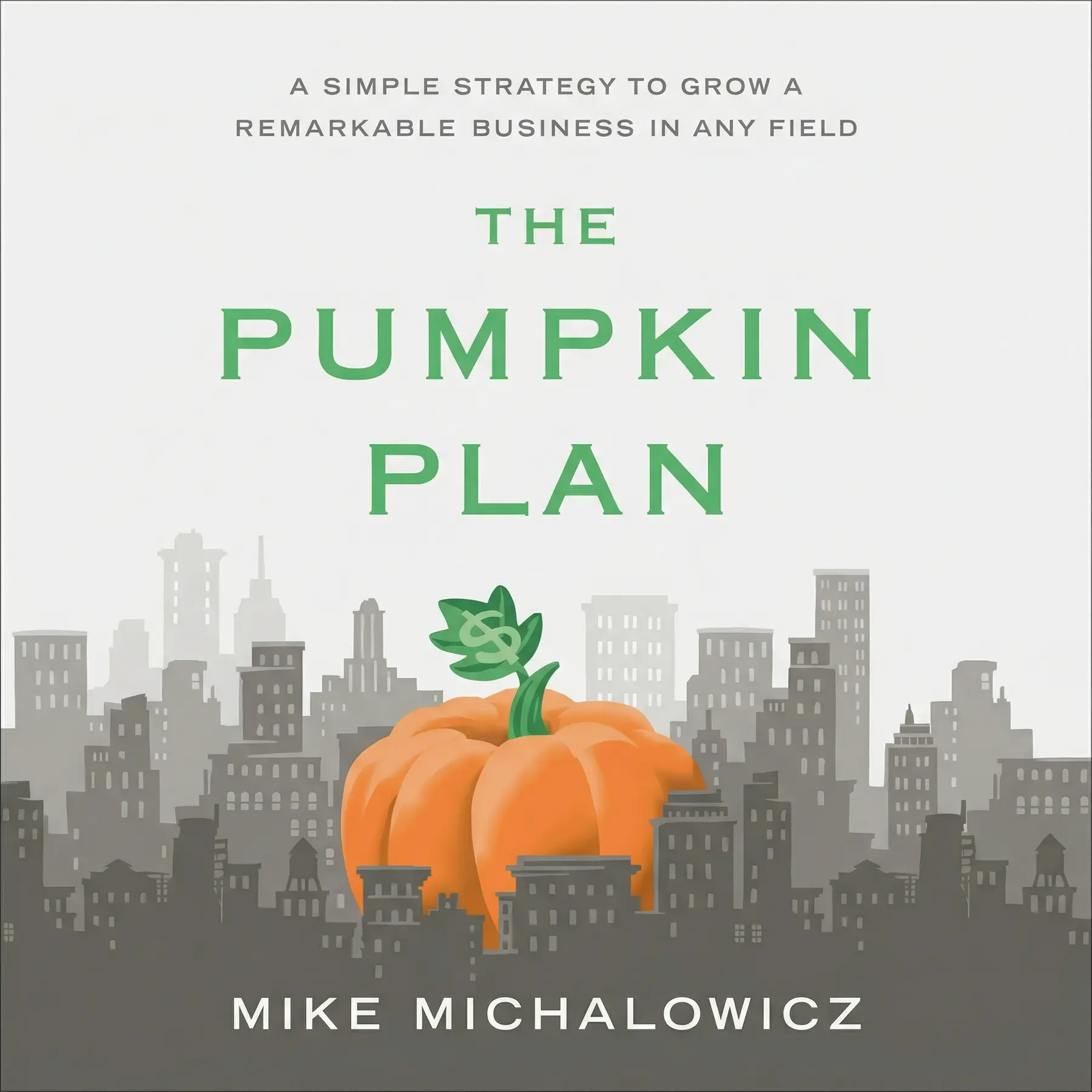
Listeners find this business guide engaging and accessible, enjoying its fantastic use of practical logic and well-defined business fundamentals. Furthermore, the title offers a direct method for developing detailed strategies, and listeners prize its high-quality ideas that apply to many different sectors. They also enjoy the comedic elements woven into the writing, with one listener highlighting that it provides practical tips through a laugh-out-loud approach.
As a long-time fan of Profit First, I went into this expecting some serious business wisdom, and Mike Michalowicz certainly didn't disappoint. The central metaphor of growing a prize-winning pumpkin is surprisingly robust and provides a clear framework for identifying which clients are actually worth your time. It is a rare treat to find a business manual that actually makes you laugh out loud while you are re-evaluating your entire revenue stream. I personally appreciated how the author emphasizes being the 'extreme' in your field rather than just another average competitor. If you are tired of working eighty hours a week just to break even, you need to read this immediately. The concepts are straightforward but the execution requires real guts, especially when it comes to firing the 'rotten pumpkins' that drain your energy. This is a must-read for anyone who feels like their business has become a cage instead of a vehicle for freedom.
Show moreThe audible version is a total blast because the author actually narrates it himself with an infectious amount of energy and genuine belief. You can really tell that Mike has lived these struggles and isn't just reciting theories he learned in a classroom. I loved the focus on being 'better, faster, or cheaper' as a way to establish a true competitive advantage in a crowded market. The concept of the 'Top Seed' really changed how I look at my service offerings and what I choose to specialize in. Not gonna lie, I was skeptical about the farming analogy at first, but it works perfectly to illustrate the dangers of over-diversification. It is an entertaining and highly practical guide that delivers actionable advice with a laugh-out-loud approach. This book convinced me that more is not better; better is better. My business is already starting to look a lot more like a prize-winner thanks to these chapters.
Show moreEver wonder why you're working eighty hours a week but still feel like you're just treading water in a sea of average? This book explains that you are likely trying to save too many 'ordinary' pumpkins instead of nurturing the one that has prize-winning potential. I loved the focus on the 'Wish List' interview process, which is a brilliant way to get inside the heads of your top-tier clients. The author’s voice is magnetic and he makes complex ideas feel like things you could explain to a child. It is a very applicable strategy for all businesses, believe it or not, from solo freelancers to larger corporations. I've already started implementing the referral strategy with my top three clients and the quality of leads coming in has shifted dramatically. This book is a loud wake-up call for anyone who is currently addicted to the 'hustle' without having a clear direction. Truly a game-changer for my professional sanity.
Show moreI've been an entrepreneur for a decade, and this is the first time someone explained niche marketing in a way that actually clicked. The pumpkin farmer analogy is more than just a gimmick; it is a perfect representation of how resources are wasted on low-potential projects. I really appreciated the 'no-bullshit' nature of the plan and the fact that the author doesn't sugarcoat how hard it is to change your habits. The humor throughout the text makes the medicine go down much easier, especially when you realize you've been the one holding your business back. It provides a clear, actionable path to move away from the 'quantity game' and start focusing on high-value, high-joy work. If you follow the steps and actually do the exercises, it is almost impossible not to see an improvement in your operations. I’m currently on my second read-through and finding even more nuggets of wisdom to apply this quarter.
Show moreFinally got around to reading this after my business partner kept nagging me about the 'rotten pumpkins' currently sitting in our client list. Frankly, the idea of getting rid of customers during a slow quarter was terrifying, but the author makes a compelling case for it. The logic is pure common sense: you cannot grow a giant, award-winning business if you are wasting all your water and nutrients on small, diseased vines. I found the section on finding your dream customer’s other favorite suppliers to be the most actionable part of the entire book. It’s a brilliant way to network without feeling like a sleazy salesperson. While some of the humor is a bit over-the-top, the actual strategy is rock solid and easy to implement. We have already started the 'pruning' process and the vibe in our office has improved almost overnight. It is a solid four-star guide for anyone struggling with growth.
Show moreAfter hearing about the 'Giant Pumpkin' strategy at a local networking event, I realized our agency was drowning in mediocre accounts that paid very little. This book provides a straightforward approach to creating specific plans for growth that actually feel achievable for a small team. I particularly liked the section about asking enabling questions to your brain, rather than focusing on why you are currently struggling. The quality of your questions really does influence the quality of your results, and that mindset shift alone was worth the price of the book. Mike's writing is clear and the presentation of business principles is remarkably entertaining compared to most dry textbooks. My only gripe is that some of the examples feel a bit dated, but the underlying logic remains relevant across various industries. It is a wonderful application of common sense that most of us ignore in the heat of daily operations. I'll be keeping this on my shelf for reference.
Show moreIt’s a rare treat to find a business manual that actually makes you laugh out loud while you’re re-evaluating your entire revenue stream. The idea of 'firing' your worst clients is a tough pill to swallow, but Michalowicz explains why it is necessary for survival. I read this as part of a business book club and it sparked some of the most intense debates we have ever had. Some members felt it was too aggressive, but those of us with 'rotten pumpkin' clients knew exactly what he was talking about. The strategy of mirroring your best customers to find more just like them is pure gold. Truth is, most of us are too scared to specialize, and this book gives you the permission to finally narrow your focus. It is simple, effective, and written with a lot of heart. Even if you don't agree with every single point, the overall framework will definitely make you a better strategist.
Show moreThe chapter on finding your 'top seed' was a total game-changer for my small consulting firm during a period of stagnation. I used to think that saying no to any business was a sin, but now I see it as an essential part of the pruning process. Michalowicz has a knack for putting things in a certain way that just makes the concepts stick in your memory. The book is incredibly easy to read and you can probably finish it in a single weekend if you are motivated enough. I did find a few parts a bit repetitive toward the end, but the core message is important enough that it bears repeating. There is something extremely magnetic about the idea of being the best at one specific thing rather than being okay at everything. This is an excellent guide for achieving success as an entrepreneur in any field without losing your mind in the process.
Show moreTo be fair, the central metaphor is stretched a bit thin over two hundred pages, even if the core message is fundamentally sound. The book is very American in its tone and delivery, which can occasionally grate on you if you prefer a more dry, analytical style of business writing. Much of the advice feels like a creative rebranding of the Pareto Principle, focusing on that vital twenty percent of your client base. I did find the specific exercises helpful, though I tend to read through the whole big picture before circling back to do the actual work. It’s a quick read and the writing is undeniably accessible for people at any stage of their career. However, I felt like the second half became quite repetitive, hammering home the same few points about niche dominance. It is a decent resource for beginners, but experienced founders might find it a bit light on deep technical data.
Show moreLook, I understand why people like this, but I found the humor a bit forced and the advice felt like recycled business tropes. It is essentially just telling you to focus on your best customers, which isn't exactly a revolutionary discovery in the year 2024. The writing style is far too chatty for my taste and it felt like the author was trying too hard to be the 'cool guy' of the business world. While the pumpkin analogy is cute for a blog post, it doesn't really sustain a full-length book without a lot of fluff and filler. I was hoping for more specific data or case studies that weren't just anecdotal success stories from the author's own circle. If you have never read a business book before, you might find this ground-breaking, but seasoned entrepreneurs will likely find it underwhelming. It's an easy read, but I didn't find the 'no-bullshit' nature that others mentioned to be particularly profound.
Show moreMike Michalowicz argues that a business grows the way a farmer raises a giant pumpkin. Instead of tending everything equally, you remove rotten clients, needless costs and distractions, then focus your energy on your best clients and the distinctive thing you do for them. Once you serve those top clients extremely well, you look for more clients like them.
Michalowicz adapts a pumpkin farmer’s method. You plant promising seeds by building on your strengths, then water the business through steady promotion and new customers. You pull out rotten clients and weed out distractions. Next you identify your strongest clients, give them what they want and find more like them. The final stage is watching the business grow large.
Michalowicz suggests writing down every client and ranking them by how well they fit your business. You can keep most of them. Focus on the ones at the very bottom and seriously consider letting them go. His example is Abbie, who refused a $15,000-a-month client because her many $2,000-a-month clients kept her too busy. Clearing that space makes room for better clients.
They are a decision filter for employees. Staff ask whether a choice serves the top clients better, whether it strengthens or protects the Area of Innovation that sets the company apart, and whether it grows or maintains profit. If the answer to all three is yes, the decision is on track. Michalowicz suggests posting the questions where staff see them every day.
It suits owners of small businesses, freelancers and consultants who work long hours but have stopped growing, especially those serving many clients who pay little. It also helps owners whose teams depend on them for every decision, through its organizational chart exercise and its Three Questions filter.




Duncan Clark



Hamilton Helmer
John Carreyrou
AUDIO SUMMARY AVAILABLE
Get the key ideas from The Pumpkin Plan by Mike Michalowicz, plus 5,000+ more nonfiction titles.









