All In: How Great Leaders Build Unstoppable Teams
Mike Michalowicz
 English
 ไทย
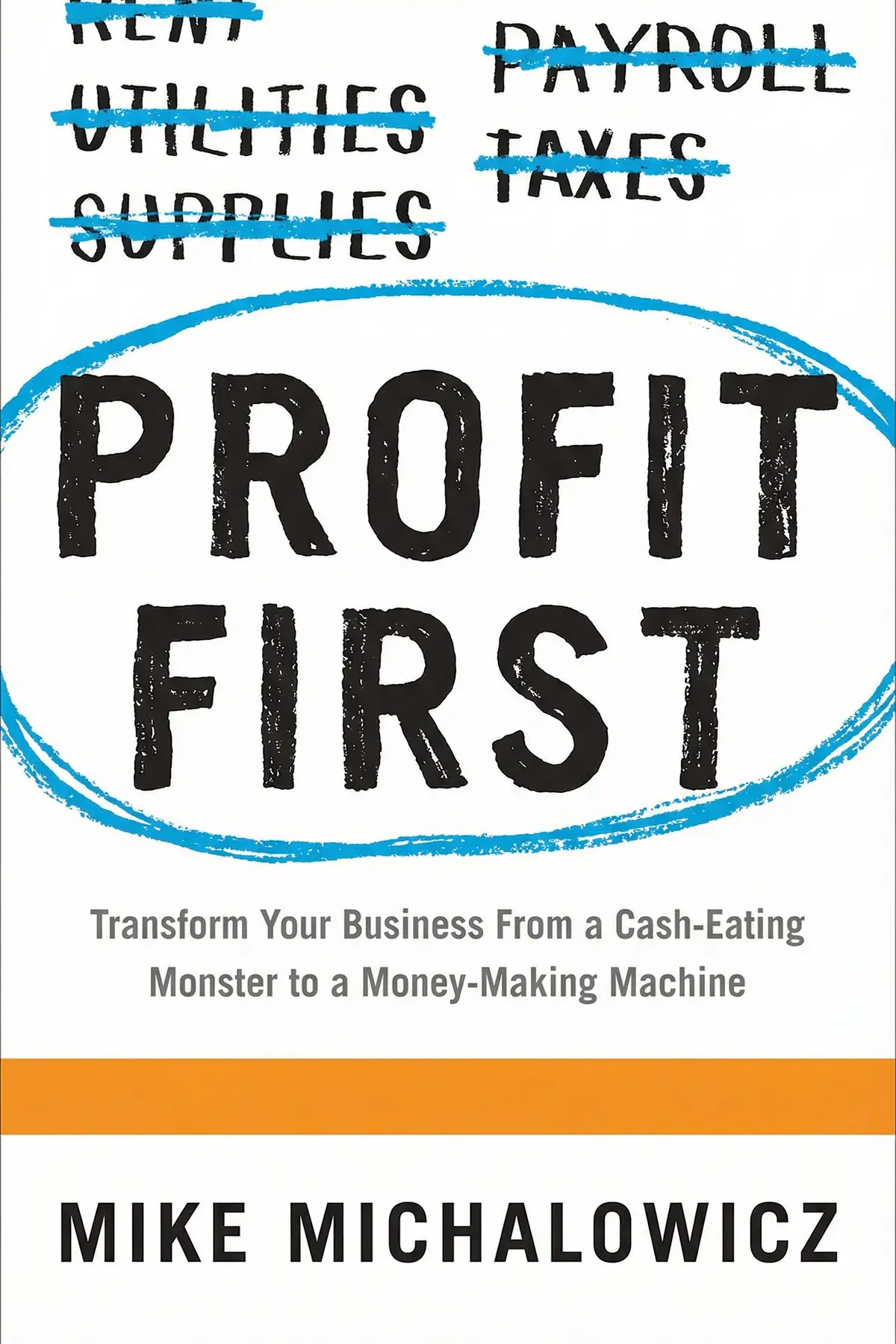
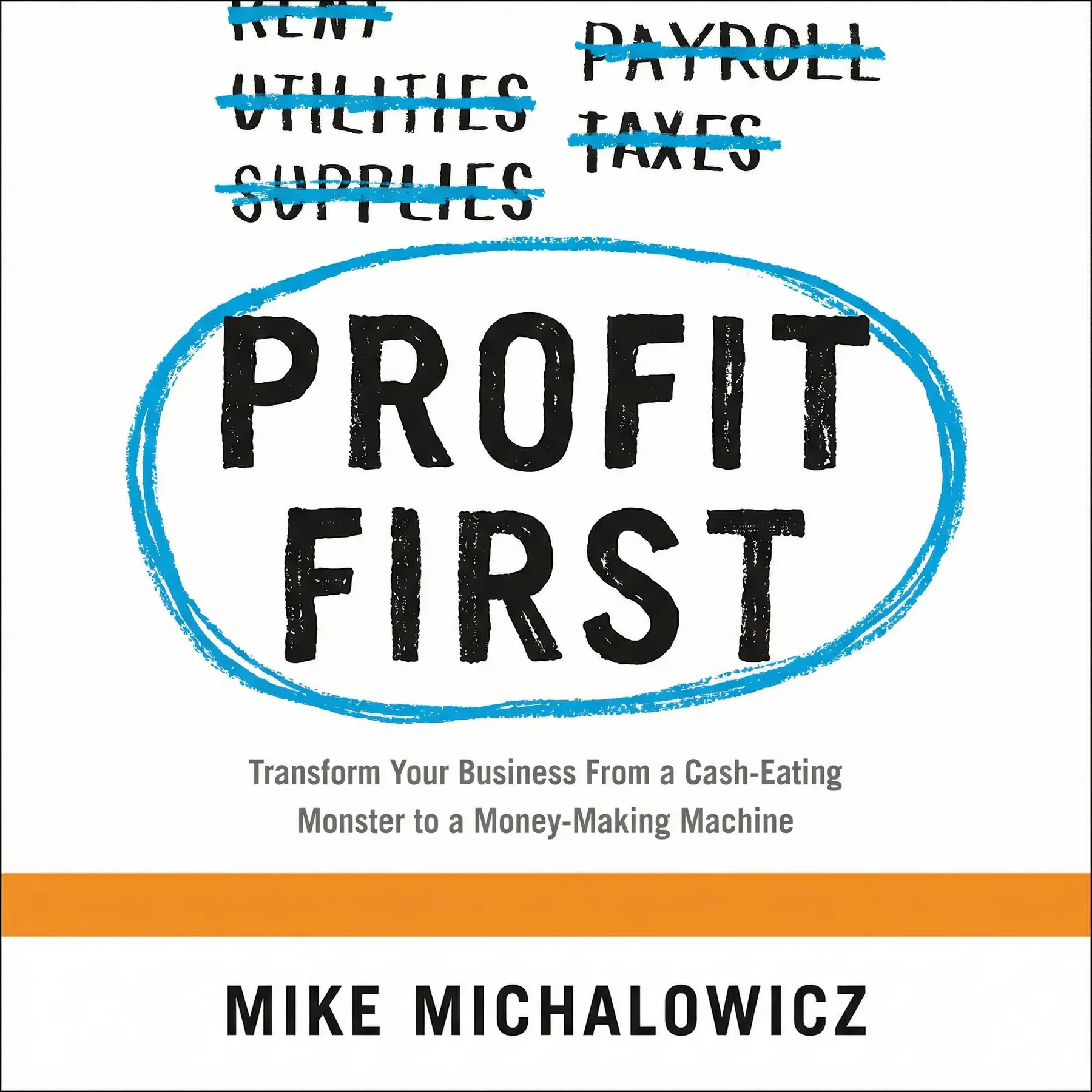
Shows business owners how to make profit certain by setting it aside the moment money arrives, then running the company on what remains through separate bank accounts, small quarterly steps and a clear plan for debt.
1 min 01 sec
Many business owners see their sales climb each year and yet find their bank account empty by the time the month closes. In Profit First, entrepreneur Mike Michalowicz argues that the fault lies in the formula they were taught. The fix is to set profit aside the moment money arrives, before a single bill is paid. Half of all businesses close within five years, he notes, and many survivors live from one payment to the next, collecting debt as they go.
His argument rests on a plain fact about people: we spend whatever we can see. So profit has to be taken first and hidden, and the business will learn to run on what remains. From that rule he builds a system of separate bank accounts, small percentage steps, quarterly payouts, a plan for debt and a version for your household. It closes with a habit of sorting your money every two weeks instead of monthly, building on the five accounts, a profit share that starts at one percent, and a rule for reserves beyond three months of costs.
1 min 54 sec
Selling more and spending less sounds like the obvious road to profit, yet most businesses that follow it never arrive. Two ordinary habits of the human mind explain why, and they point to a simple reversal.
1 min 38 sec
A dieting trick about dinner plates gave the author a sudden insight into why his money always vanished. The fix involves more bank accounts, and one of them should be kept where you rarely look.
1 min 38 sec
Eager owners often grab a big profit share on day one and end up worse off than before. There is a slower route, and its first step looks almost too small to matter.
1 min 35 sec
Plenty of owners build profit and never enjoy a cent of it. Others raid it whenever they feel like it. A rule borrowed from big public companies sits between the two, and it eventually funds growth.
1 min 35 sec
A delivery company saved millions every year by changing one small habit on the road. Most businesses have a version of that habit, and spotting it is easier once profit leaves first.
1 min 33 sec
When loans and credit cards pile up, most owners pause everything else until the debt is gone. The author refuses that trade, and his repayment order makes each payment bigger than the last.
1 min 46 sec
A good salary does not stop money worries on its own. The same accounts and ordering that rescue a business can do it at home, if you resist one tempting move once the savings start to grow.
59 sec
What Michalowicz really changes is the order of events. Most owners hope profit will be left over; he makes it the first thing that happens to every payment, then parks it at another bank where it cannot be spent by accident. The habit that once emptied the account, using whatever is in front of us, becomes the pressure that makes a business leaner and more inventive. The small plate does the work that willpower never managed.
The practice itself is modest. Open the separate accounts and move money between them on a steady rhythm; he suggests every two weeks rather than once a month, so you always know where you stand and where the money goes. Start the profit share at one percent and raise it each quarter. When the quarter ends, take your half and enjoy it, or send it to your debts until they are gone. At home, pay your future self before anyone else.
A business that pays its owner first stops eating cash. It starts paying back the person who built it.
Many small businesses grow their sales year after year and still have nothing left at the end of the month. Half close within five years, and many survivors get by from one payment to the next while their debts grow. Mike Michalowicz argues that the problem is the formula owners are taught: sales minus expenses equals profit. Because people spend whatever is available, profit rarely survives that sum. His answer is to reverse the order. A set percentage of every payment goes to profit first, into an account kept at a separate bank, and the business runs on what remains. Around that rule he builds a full system: five accounts with one job each, a profit share that starts at one percent and rises every quarter, a quarterly payout split between the owner and an emergency fund, a search for waste, and a method for clearing debt. Readers get a routine built on separate bank accounts, along with a version for personal finances that puts retirement savings first and keeps spending steady while the savings grow.
Small business owners whose sales keep growing but whose bank balance never does.
Freelancers and founders carrying business debt who want a repayment plan that still pays them.
Salaried earners who want a simple account system that puts retirement savings first.
Mike Michalowicz is an American entrepreneur and author. He built and sold two multi-million dollar companies before he turned 35. He then lost his entire fortune as an angel investor in small businesses and had to start over. He created the Profit First method for managing business profit and the Clockwork method for helping a business run without constant input from its owner. He has written a small business column for The Wall Street Journal and hosted the Business Rescue segment on MSNBC's Your Business. His books have been translated into more than 27 languages.
Mike Michalowicz
Mike Michalowicz
Mike Michalowicz
Listeners find the material deeply informative and accessible, appreciating the practical guidance and straightforward processes for handling money. Furthermore, the content allows listeners to feel in control of their company's finances and offers a structure for developing a robust, gainful enterprise. In addition, listeners view it as essential for entrepreneurs and a valuable use of time, highlighting its effectiveness in helping them retain a larger portion of their earnings.
This book completely flipped the script on how I view my business income. Instead of the standard GAAP formula that leaves profit as an afterthought, Michalowicz forces you to prioritize it from the jump. I’ll admit, setting up five different bank accounts felt tedious at first, but the psychological shift is undeniable. Suddenly, you aren’t just 'spending money to make money'—you’re actually keeping what you earn. The author’s humor is a bit hit-or-miss, and some stories are definitely repetitive, but the core framework is gold. It provides a logical, step-by-step path for anyone who feels like their business is a cash-eating monster. I finally feel like I have a handle on my taxes and my own paycheck.
Show moreFinally got around to implementing this system, and the change in my financial clarity has been night and day. Before this, I was trapped in that classic cycle of checking my bank balance to see if I could afford a new tool or hire. Now, I follow the specific percentages Michalowicz outlines, and the discipline it creates is massive. It forces you to be agile and bootstrap even when you think you need to spend big. Not gonna lie, the author’s tone is a bit abrasive at times, but he’s right about how we trick ourselves into thinking we're profitable when we aren't. This is a must-read for any entrepreneur who is tired of being the lowest-paid person in their own company.
Show moreEver wonder why you're working so hard but the bank account stays empty? This book answers that question by exposing the flaw in how we are taught to manage business finances. Michalowicz argues that profit shouldn't be what's left over; it should be what we take out first. I implemented the 'Profit First' method six months ago, and I have already paid myself more than I did in the previous two years combined. The writing is conversational and easy to digest, which is rare for a finance book. It feels less like a textbook and more like a chat with a mentor who actually wants you to succeed. Truly life-changing for small business owners.
Show moreWow, I wish I had read this five years ago when I first started my agency. The way Michalowicz breaks down the 'spend money to make money' trap is absolutely spot on. We often think we need the latest gadget or a fancy office to grow, but this book proves that scarcity is actually a better driver of innovation. By taking my profit first, I’ve been forced to become much leaner and more creative with my operating expenses. It’s a simple, logical approach that removes the emotional stress of managing cash flow. The author’s writing is engaging and funny, making a potentially dry subject very enjoyable to read. It’s an essential tool for any serious business owner.
Show moreLooking back at my first year using this method, the results speak for themselves. I used to dread tax season, but this year the money was already sitting in a separate account, waiting to be paid. That kind of financial empowerment is priceless. The book provides a clear, step-by-step framework that any entrepreneur can follow, regardless of their background. I love how it treats profit as a habit rather than an event that happens at the end of the year. The writing is fast-paced and the advice is immediately actionable. If you want to stop feeling like a slave to your business and start actually making money, buy this book today. It’s the best investment I’ve made.
Show moreAfter hearing several people rave about the 'Profit First' method, I decided to see if the hype was real. To be fair, the book is basically a highly-extended version of the old envelope budgeting system, but applied to a business context. The concept of Revenue - Profit = Expenses is simple yet transformative for those of us who tend to spend whatever is sitting in our operating account. While the writing style is a little too 'bro-business' and the jokes can be pretty cringeworthy, the actual advice is incredibly sound. It empowers you to make lean decisions and stop over-complicating your books. I’m giving it four stars because it could have been fifty pages shorter, but the impact on my bottom line is very real.
Show moreAs someone who struggled to understand traditional P&Ls and balance sheets, this book was a breath of fresh air. It bypasses the dense accounting jargon and offers a practical framework that actually makes sense for the daily grind. The idea of moving your tax and profit money to a different bank where you can't touch it is brilliant because it removes the temptation to 'reinvest' every penny back into growth. My only gripe is that the author spends a lot of time self-promoting his consulting services throughout the chapters. Regardless, the step-by-step instructions for setting up your accounts are worth the price of admission. It's a solid, logical guide for building a healthy business.
Show morePicked this up because my accountant mentioned it, though he was a bit skeptical of the methodology. After finishing it, I can see why traditional accountants might be annoyed—it definitely challenges standard practices. However, for a small business owner, the 'Revenue - Profit = Expenses' logic is a lifesaver for controlling costs. I appreciated the chapter on the 'Instant Assessment' which gave me a clear picture of where my money was actually going. Some of the anecdotes felt a bit padded, and the humor is definitely an acquired taste. Still, the peace of mind I have now regarding my tax obligations alone makes this a four-star read. It’s a very practical, empowering framework.
Show moreFrankly, the core concept of this book is brilliant, but the delivery is a bit much for me. The entire philosophy can be summarized in a single blog post: pay yourself first and limit your expenses to what remains. Michalowicz stretches this into nearly 200 pages filled with corny jokes and repetitive stories that don't always add much value. I found myself skimming through the middle sections just to get to the actual action items. It’s not a bad book, and the 'multiple bank accounts' strategy is helpful for discipline, but it’s definitely over-hyped. If you’re already fiscally disciplined, you might find this a bit elementary. It's a decent starting point for the disorganized, but not the revolution it claims to be.
Show moreThe truth is, this is just a glorified envelope system for people who can't do basic math. I was skeptical from the start, and by the end, I felt like the author was just trying to sell his own consulting brand. He basically tells you to ignore GAAP and set up a convoluted web of bank accounts that will drive any professional bookkeeper insane. It’s an irresponsible take on accounting that oversimplifies the complexities of running a real enterprise. While the 'pay yourself first' sentiment is nice, you don't need a whole book of bad jokes and repetitive anecdotes to tell you that. It felt more like a marketing gimmick than a legitimate business strategy. Not recommended if you actually understand your P&L.
Show moreMike Michalowicz argues that the usual formula, sales minus expenses equals profit, fails because people spend whatever money is available. He reverses it: take a set percentage of every payment as profit first, keep it out of sight, and run the business on what remains. Owners naturally adapt to the money in front of them, so the business becomes leaner and profit becomes reliable.
The book recommends an income account that receives all customer payments, plus four accounts for profit, the owner’s pay, taxes and operating expenses. Money moves out of income into profit first, then into the others. Each account pays only for its own purpose, and the profit and tax accounts are moved to a second bank so you are less tempted to spend them.
Start with one percent of income going to profit while cutting operating expenses by one percent. Find your long-term target by checking the profit share of public companies in your industry, and put it in your profit account’s name. At the end of each quarter, raise the profit share by at least three percentage points, trimming expenses to match, until you reach the target.
Michalowicz says to keep allocating profit even while in debt, which builds a cash reserve. During repayment, 99 percent of your quarterly profit share goes to creditors and you keep one percent. List debts from smallest to largest, pay minimums on all but the smallest, put everything else toward it, then roll that payment into the next debt once it is cleared.
Yes. The book splits a salary into accounts for income, daily spending, recurring bills, retirement and emergencies, with retirement funded first on every payday. Michalowicz suggests keeping your lifestyle unchanged for five years as savings grow, and spending only half of any raise or tax refund while the other half goes to retirement, until interest can support the life you want.



Hamilton Helmer



Duncan Clark

John Carreyrou
AUDIO SUMMARY AVAILABLE
Get the key ideas from Profit First by Mike Michalowicz, plus 5,000+ more nonfiction titles.