

14 min 14 sec
Available in: English
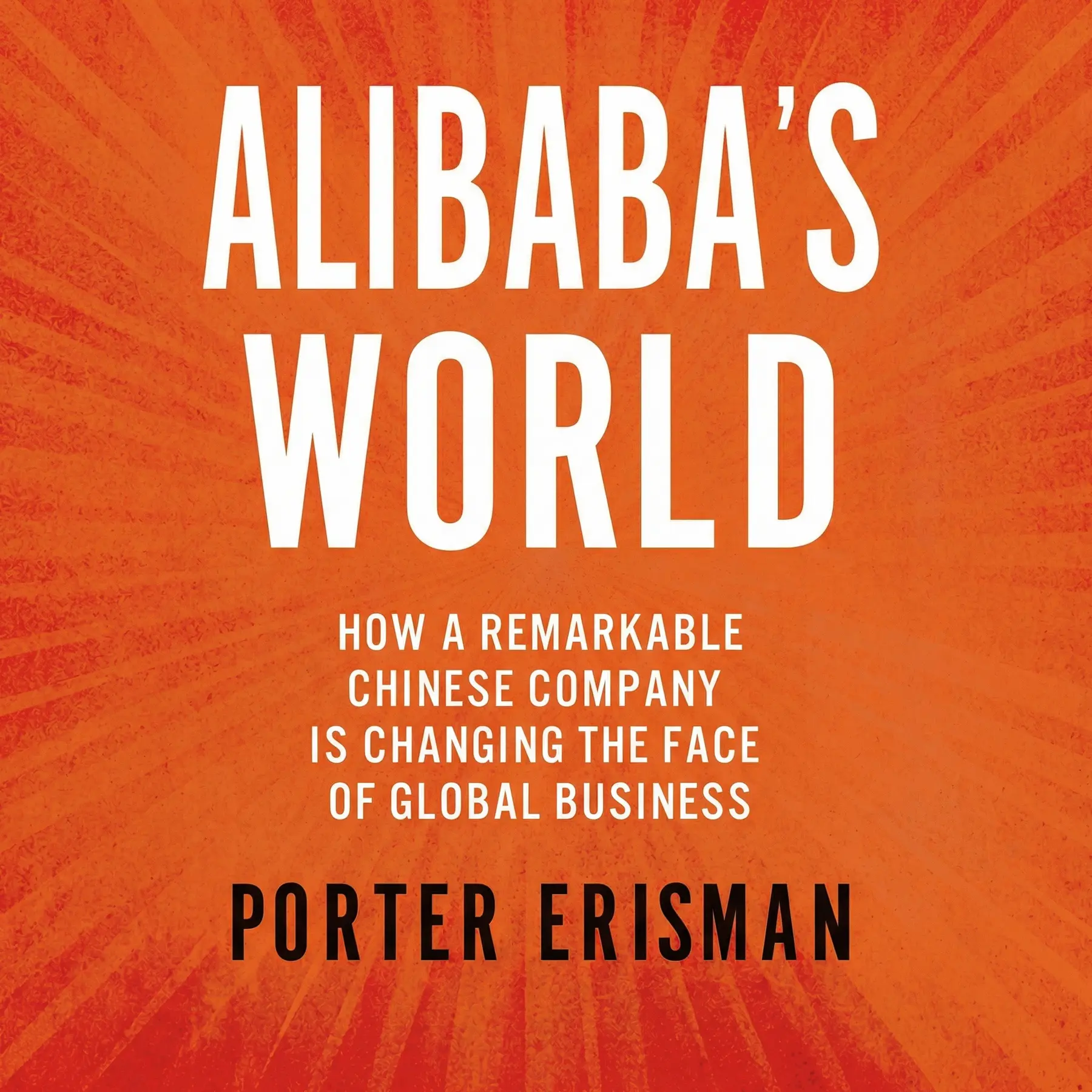
Alibaba’s World: How a Remarkable Chinese Company Is Changing the Face of Global Business
How Jack Ma turned a startup in a country with almost no internet users into China's e-commerce leader. Lessons on building to last, earning customer trust, using crises and rivals, and hiring a committed team.

Table of Content
1. Introduction
1 min 04 sec
If you have a business idea but keep waiting until you feel smart enough or the timing feels right, Jack Ma’s start takes away most of those excuses. When he founded Alibaba in 1999, he was a former English teacher who had earned 20 dollars a month, and only one percent of people in China used the internet. In Alibaba’s World, Porter Erisman, an Alibaba vice president from 2000 to 2008, tells how that apartment startup came to hold 80 percent of China’s e-commerce market.
His case is that Alibaba won in three ways. It built for decades around what its customers truly feared. It treated obstacles and rivals as openings. And it had bold leadership and a team that owned the result. Erisman saw it from inside, so each lesson comes with a date and a name: a deal nearly dropped over a name, a free service that pushed eBay out of China, an epidemic that brought in new buyers. You can use each of these moves in a much smaller business.
2. Nerve matters more than genius when starting
1 min 47 sec
A founder who earned a teacher’s salary and admits he barely understands computers built China’s largest online marketplace. His story questions the quality most would-be founders believe they lack before they dare to begin.
3. Build a company meant to outlive you
1 min 41 sec
In the middle of the deal that would make Alibaba famous, Jack Ma walked away from the table over a single word. Was that pride, or the clearest sign of how he meant to run the company?
4. Find the fear that keeps customers away
1 min 43 sec
Alibaba’s early attempts to make money, including an office in Silicon Valley, went nowhere. What finally worked had nothing to do with features or price, and everything to do with one worry its customers carried.
5. Turn your worst obstacles into openings
1 min 43 sec
A country barely online, officials suspicious of the internet, and then a deadly epidemic that sent every employee home. Each looked like a reason to give up, and each ended up helping the company grow.
6. Stop copying the market leader and grow bigger
1 min 44 sec
eBay mocked TaoBao for giving its service away for free. A local rival with a chat tool and a different picture of who its sellers were beat it anyway, helped along by eBay’s own behavior.
7. Make the bold call, and the painful one
1 min 39 sec
Giving away a product everyone else sold, and delaying a stock listing for years: Ma’s boldest moves looked reckless at the time. His hardest move was firing people he had hired only months earlier.
8. Hire for fit and give people a stake
1 min 38 sec
Erisman’s first posting at Alibaba put him among managers with flawless resumes, and it went badly. What the company did next with stock options and a values test shows what makes a team pull together.
9. Conclusion
1 min 15 sec
Alibaba’s World shows that a small startup from a developing country can beat Western giants without a technology genius in charge. Alibaba had other strengths: a long horizon, a clear view of what its customers feared, the nerve to give a service away, and a team that owned part of the result. eBay mocked the free model and later closed its China site. TaoBao had live chat, free listings and sellers who felt like shopkeepers.
You can use the same approach in a business of any size. Set a goal that feels slightly too big. Then test each major decision against the company you want to be running decades from now, the way Ma judged a single name in the Yahoo deal. Find the one worry that stops your customers from saying yes and remove it before you think about charging more. When a crisis hits, ask who suddenly needs what you offer, as Alibaba’s quarantined staff discovered during SARS. Hire people who share your values and will work together, then give them a real stake.
The former English teacher never learned much about computers. What he learned was what his customers were afraid of, and he built a company meant to outlast him.
About this book
What is this book about?
In 1999, only one percent of people in China used the internet, and those who did rarely imagined buying anything online. That was when Jack Ma, a former English teacher, started Alibaba in a small apartment in Hangzhou. Fifteen years later it held 80 percent of the country's e-commerce market and had pushed eBay out of China. Porter Erisman was an Alibaba vice president from 2000 to 2008, and he tells the story from the inside. In his telling, Alibaba won through energy and judgment more than technical brilliance. Ma set a goal for the company to last more than a century. He discovered that his customers' real barrier was trusting strangers, gave the service away while rivals charged, used the SARS epidemic and difficult local politics as openings, and refused to become a copy of eBay. Readers get a set of founder lessons tied to real episodes: a Yahoo deal nearly abandoned over a name, painful layoffs in 2000, a team of perfect resumes that failed to fit in, and stock options that made early employees act like owners.
Book Information
Who it's for
Unsure they can start
Would-be founders who doubt they are smart or well funded enough to start.
Operators competing for trust
Operators trying to win customers who do not yet trust them, or to compete with a bigger rival.
Hoping for owner-minded teams
Managers building early teams who want people to act like owners.
About the Author
Porter Erisman
Porter Erisman was a vice president at Alibaba Group from 2000 to 2008. He joined just as the company moved out of founder Jack Ma's apartment. He wrote and directed the award-winning documentary Crocodile in the Yangtze: The Alibaba Story and also wrote Six Billion Shoppers. He has advised e-commerce companies in Africa, Asia and Latin America and has spoken in more than thirty countries.
Ratings & Reviews
Ratings at a glance
What people think
Listeners find this book captivating and straightforward, with one review mentioning the complete absence of technical jargon. Furthermore, the narrative offers a genuine insider's look at Alibaba’s history, and listeners value the thought-provoking nature of the material. The prose also earns praise, particularly as one listener points out how the story is told through a single person's viewpoint.
Top reviews
Ava
Wow. This isn't your typical dry business textbook filled with charts and complex terminology. Porter Erisman delivers a gripping, front-row seat to the chaotic birth of a tech titan. The narrative moves quickly, capturing the frantic energy of the early days in Hangzhou. It’s fascinating to see how they fended off eBay and Yahoo. While some might want deeper technical analysis, the human element here is what makes it a page-turner. Erisman’s unique perspective as an American in a Chinese startup provides a bridge that makes the story accessible. It’s a must-read for any entrepreneur seeking motivation.
Show moreKomsan
Finally got around to reading this, and I'm genuinely impressed by the storytelling. It’s an incredible underdog story that highlights the sheer audacity of Ma’s vision from day one. Look, many business books are a chore to get through, but this one flows like a novel. You really feel the stakes during the dot-com bubble burst. Some might say it oversimplifies the growth, but for a general reader, the lack of technical filler is a massive plus. It’s thought-provoking and surprisingly emotional at times. I finished it in two sittings and felt incredibly inspired by the journey.
Show moreKru
Gotta say, I was hooked from the first page by the sheer scale of the ambition described here. The way Jack Ma is portrayed—as this unconventional, almost teacher-like figure—is truly inspiring to any aspiring business leader. Erisman avoids the jargon that usually bogs down business books, making it accessible to anyone. It’s a fascinating look at the grit required to build a global powerhouse from scratch. Even with its focus on one person's experience, the narrative captures the essence of entrepreneurship beautifully. It made me rethink my own approach to obstacles. Truly a phenomenal read for motivation.
Show moreDavid
This book provides a remarkably clear window into the 'Crocodile in the Yangtze' and Jack Ma’s eccentric leadership style. Erisman writes with a transparency that makes the corporate maneuvering feel personal and urgent. To be fair, it is very much one man's perspective, which colors the story, but that adds to the authenticity of the narrative. I found the sections on navigating the Chinese bureaucracy and the internal culture particularly illuminating. It’s a great introduction for anyone curious about how the internet changed China without getting bogged down in industry jargon. A solid, engaging read.
Show moreAkosua
After hearing so much about Jack Ma, I wanted to understand the actual mechanics behind Alibaba's rise to dominance. Erisman’s account of the battle against eBay is the highlight of the book, showcasing the clever tactics used to win the local market. The writing style is conversational and engaging, making the complex world of international e-commerce easy to digest for the average reader. Personally, I would have liked more direct quotes from Jack himself to balance out Erisman's observations. Still, it’s a solid insider account that avoids being a puff piece while remaining highly thought-provoking.
Show moreNiphon
The chapter on the early days in Hong Kong really set the stage for what was to come in this global expansion story. Erisman does a fantastic job of explaining the cultural nuances that allowed Alibaba to thrive where Western companies failed. The style is punchy and direct. Frankly, the book is at its best when describing the internal culture and the 'craziness' of the staff. It’s not a definitive history—it’s a memoir of a specific era. If you want a dry academic study, look elsewhere. This is for people who want to feel the heat of the entrepreneurial fire.
Show moreSureerat
As someone who works in tech, I found the rivalry with Silicon Valley giants to be the most compelling part of the book. Erisman provides a unique perspective as a Westerner inside a Chinese firm, which offers a vital bridge between two very different business cultures. The narrative moves at a brisk pace, keeping the reader engaged through the various corporate crises. My only minor gripe is that the ending felt a bit rushed compared to the detailed buildup of the early years. Nevertheless, it’s an easy-to-read, engaging account that provides a real sense of the insider experience.
Show moreVarinee
Ever wonder how a small group of people in an apartment took on global giants? Alibaba’s World tries to answer that, but it occasionally stays too much on the surface for my liking. The prose is accessible and lacks any confusing industry jargon, which I definitely appreciated. However, I felt some sections dragged, especially when the focus shifted to the author's specific PR tasks rather than the broader company strategy. The 'forty points' at the end saved it for me, providing some much-needed takeaways. It's a decent read for a flight, but left me wanting more grit and data.
Show moreTalia
Truth is, I picked this up hoping for a deep dive into the founding mechanics, but it’s more of a personal memoir. While Erisman is a great storyteller, he focuses heavily on his own journey as a PR expert. This gives a unique 'insider' feel, but it means we miss some of the broader strategic decisions happening in other departments. It’s a quick read and quite fascinating, but it lacks the 'key insights' a founder might have shared directly. It feels a bit like a high-level executive summary at times rather than a deep investigative piece. Still okay for a general overview.
Show moreRin
Not what I expected given the hype surrounding Alibaba's massive IPO. The book feels quite slow in the middle sections, often dwelling too long on the author’s day-to-day interactions and travel logistics. I was looking for a comprehensive history of the company's inception, but this focuses more on the later expansion and the PR wars. It’s a bit too 'on the surface' and lacks the technical depth I crave in a business biography. If you want a light, casual overview, it's fine, but serious students of the industry might find it lacking in real substance and data.
Show moreQuestions about this book
What is Alibaba's World by Porter Erisman about?
It tells how Jack Ma, a former English teacher, built Alibaba from a small apartment in Hangzhou into the company holding 80 percent of China’s e-commerce market. Erisman, a vice president there from 2000 to 2008, draws business lessons from the story: build for the long term, solve your customers’ real fear, use crises and competitors as openings, lead boldly and build an invested team.
How did Alibaba beat eBay in China?
Erisman credits customer insight and differentiation. TaoBao stayed free from its 2003 launch, while eBay mocked the model. It was designed for Chinese sellers who wanted something like a small back-alley shop, with the WangWang live chat and phone contact so buyers and sellers could build trust. eBay also fought with dirty tricks instead of partnering, and it later shut its China website.
Why did Alibaba offer its services for free?
The Alibaba team believed Chinese buyers wanted to try a service before paying for it, and that a free service was the only way to build a loyal customer base. They held to this despite pressure from investors. Alibaba launched premium services later, and its consumer site TaoBao has been free since it launched in 2003.
What leadership lessons does Alibaba's World teach?
Erisman says leaders must make both bold decisions and painful ones. Ma’s bold moves included giving the service away, going global when few Chinese were online and delaying the stock listing until 2014. His painful move came in late 2000, when Alibaba still had no profit and he laid off half the staff of the American office he had opened only months before.
How can I apply Alibaba's World to my own business?
Set a goal that feels too big, and judge decisions by whether they serve the company you want decades from now. Find out what makes customers nervous and remove that worry first. In a crisis, ask who suddenly needs what you offer. Hire for teamwork and shared values over impressive resumes, and give people a real stake, as Alibaba did with stock options.
Readers also enjoyed



Alibaba: The House That Jack Ma Built
Duncan Clark


7 Powers: The Foundations of Business Strategy
Hamilton Helmer


Bad Blood: Secrets and Lies in a Silicon Valley Startup
John Carreyrou

Be A Free Range Human: Escape the 9 to 5, Create a Life You Love,
Marianne Cantwell
AUDIO SUMMARY AVAILABLE
Listen to Alibaba’s World in 15 minutes
Get the key ideas from Alibaba’s World by Porter Erisman, plus 5,000+ more nonfiction titles.
- 5,000+ titles
- Listen as much as you want
- 7-day free trial
- Cancel anytime









