
13 min 03 sec
Available in: English
 ไทย
EnglishไทยEat That Frog!: 21 Great Ways to Stop Procrastinating and Get More Done in Less Time
By Brian Tracy
Brian Tracy shows how to beat procrastination by naming the one task that matters most each day, doing it first with full attention, and shaping your energy, skills and schedule so the habit lasts.
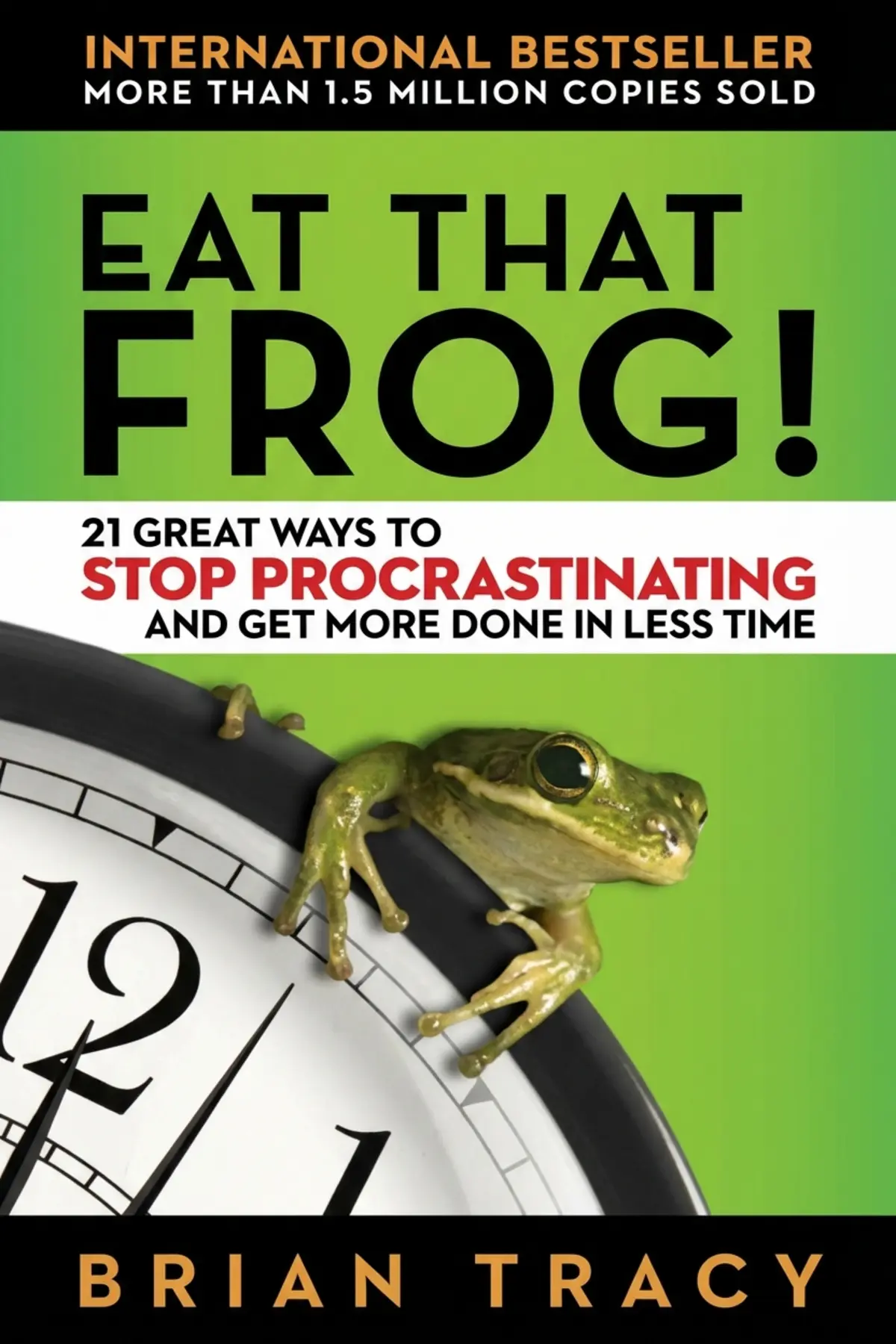
Table of Content
1. Introduction
55 sec
If your to-do list grows faster than you can clear it, the fix may be smaller than a new life plan: do the hardest, most important task first, before anything else. That task is the frog in Eat That Frog!, the productivity guide by speaker and trainer Brian Tracy. Tracy observes that most people spend their best hours on easy work while the one job that matters waits for later.
His case is that you can turn this around with a clear order of work. Name your frog, finish it with full attention, and arrange your energy, your skills and your calendar so you can do the same tomorrow. Along the way there is a simple letter system for sorting any list, a vacation trick for spotting what truly needs doing, and a reason to treat your car as a classroom. By the end, a crowded morning should have a clear sequence, with the heaviest item standing at the front.
2. Write your goals down and work from a list
1 min 28 sec
A tiny group of adults gets several times more done than everyone else, and education does not explain the gap. Their advantage costs nothing and takes a few minutes, yet most people never bother with it.
3. Find the two tasks that matter most
1 min 30 sec
On any list of ten jobs, a couple matter far more than the others. Most people still finish the other eight first, and a simple lettering habit shows why that feels productive when it is not.
4. Finish your frog before you touch anything else
1 min 30 sec
Starting the hard task is not the same as doing it. A job application and a gym full of heavy weights show where most effort leaks away, and how to stop the leak.
5. Choose on purpose what to leave undone
1 min 42 sec
Efficient people put things off just as often as everyone else. The difference lies in what they delay, and an imaginary trip tomorrow morning reveals which of your tasks truly cannot wait.
6. Keep your energy high enough to start hard work
1 min 34 sec
When you are worn out, the easy task wins every time. Tracy links your output to sleep, timing and one surprising claim about where nearly all of your emotions come from.
7. Spot what is really holding you back, then beat it
1 min 42 sec
When progress stalls, the usual suspects are the boss, the family or the budget. Tracy points somewhere less comfortable, and then to a strength you may already have and an hour you may be wasting.
8. Protect long blocks of time for big work
1 min 35 sec
The most valuable work rarely fits between meetings. A salesperson’s calendar shows how to make room for it, and why too much planning can keep you from the state where work starts to feel easy.
9. Conclusion
1 min 07 sec
What Tracy offers, in the end, is a way to stop treating procrastination as a flaw of character. In his account it is mostly a mistake of order: easy work goes first because it is easy, and important work waits until there is no energy left for it. Change the order and much else follows. A written list shows you what exists, the letters A to E show you what matters, and the frog moves to the front of the line.
The rest of the book supports that one move. Rest and a hopeful inner voice give you the strength to face the hard task. Honest attention to your own limits and talents makes you better at it. Protected blocks of time give it room, and urgency carries you into flow.
To begin, write tomorrow’s list tonight and mark the single A item you would most want finished by noon. Put it in your sharpest hour, close everything else, and stay with it until it is done. Then let something trivial wait on purpose. Once the frog is eaten early, the rest of the list stops looking frightening.
About this book
What is this book about?
Most people do not lack effort. They lack order. The day fills with errands, meetings and small requests, and the task that would make a real difference keeps sliding to tomorrow. Brian Tracy, a speaker and trainer who has advised more than 1,000 companies, argues that the cure is a single rule: find your frog, the biggest and most important task in front of you, and eat it first. Tracy builds that rule into a practical system. Goals go on paper and turn into step-by-step lists. The 80/20 rule and a simple A to E lettering method separate the few tasks that count from the many that do not. Deliberate delay of trivial activities frees time for important ones, and a surprise vacation thought experiment shows what truly needs doing. Around the core habit, he adds what keeps it going: enough sleep and a hopeful inner voice, honest attention to your own limits and talents, steady learning, and long blocks of time booked with yourself. Readers get a way to sort any to-do list in minutes and a clear reason to start each day with the hardest thing on it.
Book Information
Who it's for
Professionals buried in email
Professionals whose days vanish into email and meetings while the important project waits.
Students and new workers
Students and early-career workers who start big tasks late and finish them in a rush.
Hoping to prioritize faster
Managers and founders who want a fast, repeatable way to decide what to do first each morning.
About the Author
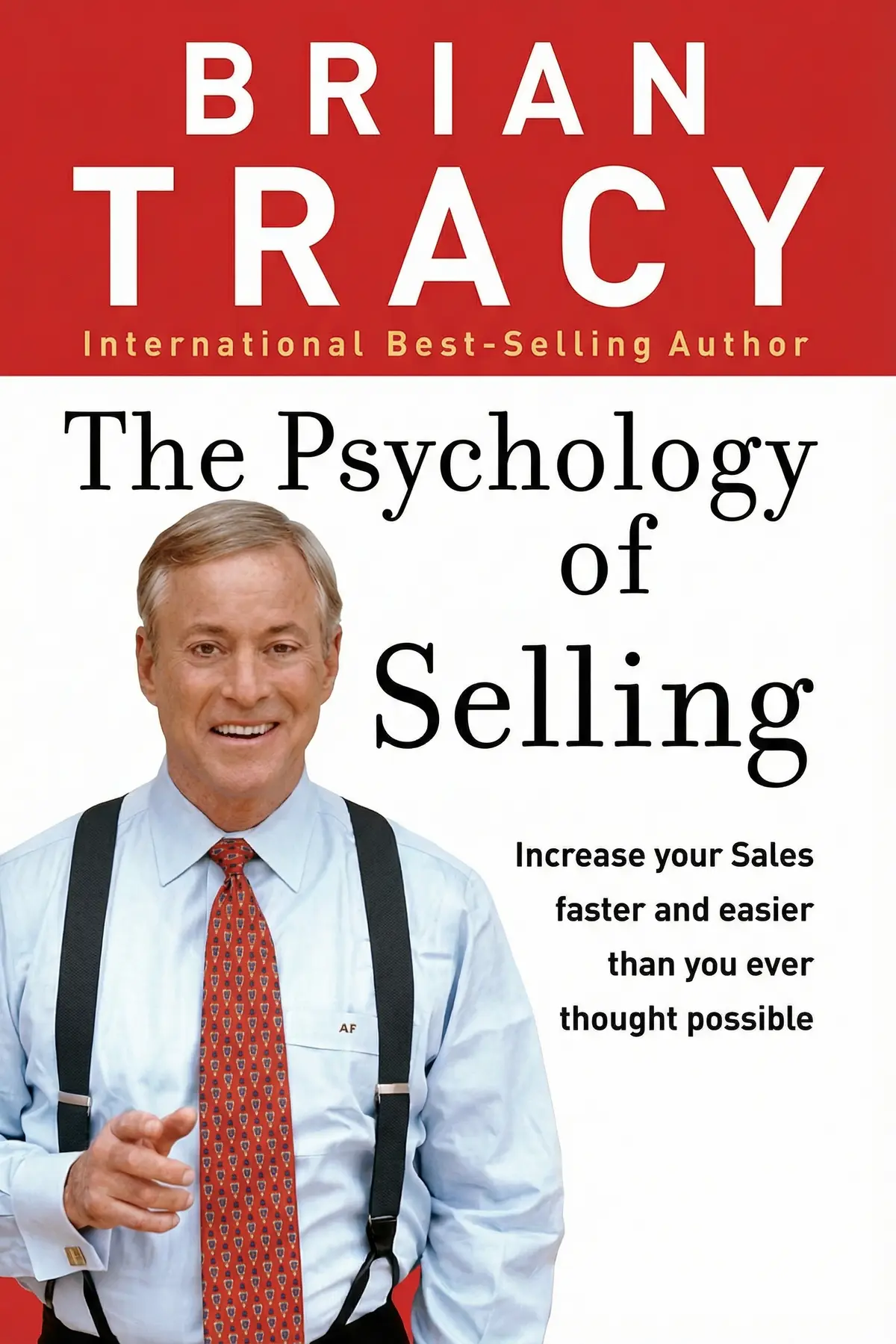
Brian Tracy
Brian Tracy is a Canadian-American motivational speaker and self-development author. He founded Brian Tracy International, a company that trains and develops individuals and organizations, and serves as its chairman and CEO. Earlier he was chief operating officer of a $265 million development company. He has advised more than 1,000 companies, worked in over 80 countries and created more than 300 audio and video learning programs, including Psychology of Achievement. He speaks on leadership, selling, self-esteem and goals.
Ratings & Reviews
Ratings at a glance

What people think
Listeners find this book to be an accessible and pleasant experience that provides enduring productivity advice and functional techniques. Furthermore, they value its inspirational quality, as one listener described it as a life-changing approach to getting things done, along with its utility in managing time, especially for ranking daily responsibilities. The material's directness is also highlighted for giving actionable instructions that listeners can apply immediately, and they appreciate the emphasis on stopping procrastination.
Top reviews
Sin
Finally got around to reading this productivity staple, and it is exactly what my chaotic schedule needed. The central metaphor—eating a live frog first thing in the morning so nothing worse happens all day—is incredibly sticky and effective. Truth is, I used to spend my mornings answering trivial emails while my biggest projects sat gathering dust on my desk. Now, I tackle that 'ugly frog' immediately, which creates a massive sense of momentum that carries me through the afternoon. While some of the corporate anecdotes feel a bit dated, the core advice regarding the 80/20 rule and setting clear priorities is timeless. It’s a very quick read that you can finish in a single afternoon, but the impact on your daily output is immediate. If you are struggling with a never-ending to-do list, stop thinking and just buy it.
Show moreAudrey
Wow, this short read completely shifted my perspective on my morning routine! I used to be a chronic snoozer who started the day in a reactive state, but the 'Eat That Frog' philosophy changed all that. The book is remarkably clear, offering 21 distinct ways to stop procrastinating, though you really only need to master three or four to see a difference. Personally, I found the suggestion to 'prepare thoroughly before you begin' to be the most helpful, as it removes the friction that usually leads me to browse social media instead of working. Not gonna lie, some of the motivational tone is a little 'rah-rah' for my taste, but the results don't lie. My productivity has spiked since I started applying the rule of three every single morning without fail.
Show moreSuwit
After hearing about 'eating the frog' for years in office meetings, I finally decided to go straight to the source and read the original text. It’s rare to find a business book that is this concise and packed with so much immediate value. Tracy understands that the biggest obstacle to success isn't a lack of ability, but a lack of focus. The 21 points are easy to digest, and the actionable tasks at the end of each chapter make it easy to implement the strategies. I especially loved the tip about 'slicing and dicing' tasks into small, manageable pieces to overcome the initial resistance to starting. This book is a life-changer if you actually do the exercises instead of just skimming the pages. Truly a must-read for anyone serious about their career.
Show moreChon
To be fair, Brian Tracy isn’t reinventing the wheel here, but sometimes you just need a swift kick in the pants to get moving. This book functions like a high-energy seminar condensed into a few dozen pages, focusing heavily on actionable steps rather than deep theory. I particularly appreciated the ABCDE method for prioritizing tasks, which helped me realize how much time I was wasting on 'D' and 'E' tasks that didn't actually matter. Gotta say, the writing style is a bit repetitive, and the formatting with all the bold text can feel like a shouting match at times. However, the 'Law of Three' section alone was worth the price of admission for me. It’s not a literary masterpiece, but as a practical guide for beating back the urge to procrastinate, it definitely delivers the results it promises.
Show morePrapaiwan
Ever wonder why you spend all day being 'busy' without actually accomplishing anything of substance? Tracy addresses this head-on by forcing the reader to identify their key result areas and stay focused on them until completion. The 'one oil barrel at a time' analogy for breaking down massive projects was a highlight for me, as it made my daunting quarterly goals feel manageable. I did find some of the tips, like the ones about technology, to be a bit basic for anyone who grew up with a smartphone. Nevertheless, the emphasis on single-handling a task until it's 100% finished has already saved me hours of 'switching cost' lost time. It’s a solid, no-nonsense manual for anyone who needs to sharpen their professional focus and stop making excuses for their lack of progress.
Show moreSangduan
The chapter on creative procrastination was a total game-changer for me because it gave me permission to stop feeling guilty about the small stuff. We are always told we have to do everything, but Tracy argues that you should intentionally put off tasks that are low-value. In my experience, this is the only way to actually make time for the big 'frogs' that move your career forward. The writing is punchy and direct, with very little fluff, which I appreciate in a productivity book. My only real gripe is that it feels a bit like a collection of blog posts rather than a deep dive. Still, if you need a clear, step-by-step framework to get your life in order, this provides a very solid foundation.
Show moreArthit
Look, if you're looking for a deep psychological dive into the 'why' of human behavior, you should definitely look elsewhere. This book is strictly about the 'how'—how to plan your day, how to prioritize, and how to execute. It’s incredibly practical and doesn't waste your time with unnecessary filler or complex jargon. I started using the ABCDE method immediately and it has cleared up so much mental space during my work hours. I did find the author's take on 'flow' a bit confusing compared to the original research, but his main point about developing a sense of urgency is well-taken. It’s a great tool to keep on your desk for those days when you feel overwhelmed by your inbox and don't know where to start.
Show moreDiego
As someone who struggles with chronic procrastination, I found some of the advice here a bit too 'bootcamp' for my taste. It’s very much a book for sales professionals and executives, which makes some of the examples hard to translate into a creative or freelance workflow. I liked the concept of the '20% tasks' that yield '80% results,' but the book tends to ignore the reality of burnout. It’s all about speed and urgency, which can be exhausting if you don't balance it with some of the more rhythmic advice found in books like 'The Accidental Creative.' To be fair, the summaries at the end of each chapter are quite helpful for a quick refresher. It’s a decent entry-level guide to time management, but it lacks the psychological depth I was hoping to find.
Show moreSaovapa
Not what I expected given the hype, but I can't deny that the 'single-handle every task' rule actually works when I remember to apply it. The book is essentially a list of 21 tips, and while some are brilliant, others feel like they were included just to hit a specific chapter count. I found the formatting to be a bit distracting; there’s so much bolding and underlining that it feels like the book is constantly shouting at you. That being said, the 80/20 rule application is explained very well here for beginners. It's a quick, easy read that serves as a good reminder of the basics, even if it doesn't offer anything revolutionary. If you've never read a time-management book before, this is a perfect place to start, but veterans might find it a bit repetitive.
Show morePranee
This felt more like a long, dated PowerPoint presentation than a cohesive book. The author relies on a lot of generic 'success' quotes from people I've never heard of, which makes the whole experience feel a bit superficial. It’s very much geared toward the 90s-era corporate ladder-climber, emphasizing a 'work-work-work' mentality that doesn't leave much room for creativity or mental health. Frankly, the advice to just 'put more pressure on yourself' felt counterproductive to someone who is already stressed out. I did take away the idea of creative procrastination—the notion that you must consciously choose what to neglect—but the rest was repetitive bunkum. If you’ve already read 'Getting Things Done,' you can safely skip this one. It's essentially 21 chapters of the same three ideas repeated until you’ve memorized them through sheer exhaustion.
Show moreQuestions about this book
What does eat that frog mean?
In Brian Tracy’s book, your frog is the biggest, hardest and most important task in front of you, the one you are most likely to put off. Eating it means doing that task first, before easier work, and staying with it until it is finished. Tracy argues that most people clear the simple jobs first and delay the few that really count, and that reversing this order is the core of beating procrastination.
What is the ABCDE method in Eat That Frog?
It is Tracy’s way of sorting a to-do list. You give every task a letter from A to E. A tasks have serious consequences if they are skipped, while E tasks can be dropped without anyone noticing. His examples set editing your résumé and applying for jobs against watching the bonus features on a Star Wars DVD. Your A tasks are your frogs, and you start with one of them.
How does the 80/20 rule apply to procrastination?
Tracy uses the 80/20 rule, or Pareto Principle, to say that in any list of ten tasks, two are worth far more than the rest. People tend to work on the easy 80 percent first because it feels productive, and they delay the 20 percent that matters. His advice is to identify those two high-value tasks and focus on them before touching the others.
What is creative procrastination according to Brian Tracy?
Creative procrastination means deliberately choosing what to postpone or skip. Tracy says efficient people still procrastinate, but on low-value activities such as watching television, never on their most important work. He calls these delayed items posteriorities, the opposite of priorities: things that can be done later or not at all. Setting them on purpose frees time for your frog.
How can I apply Eat That Frog tomorrow?
Write tomorrow’s tasks down tonight, since Tracy says working from a list saves time and raises output. Mark each item A to E and pick one A as your frog. Schedule it for the hour when you feel sharpest, often the morning, block that time as an appointment with yourself, close distractions such as social media, and do not switch tasks until it is finished.
Readers also enjoyed




AUDIO SUMMARY AVAILABLE
Listen to Eat That Frog! in 15 minutes
Get the key ideas from Eat That Frog! by Brian Tracy, plus 5,000+ more nonfiction titles.
- 5,000+ titles
- Listen as much as you want
- 7-day free trial
- Cancel anytime









