
13 min 59 sec
Available in: English
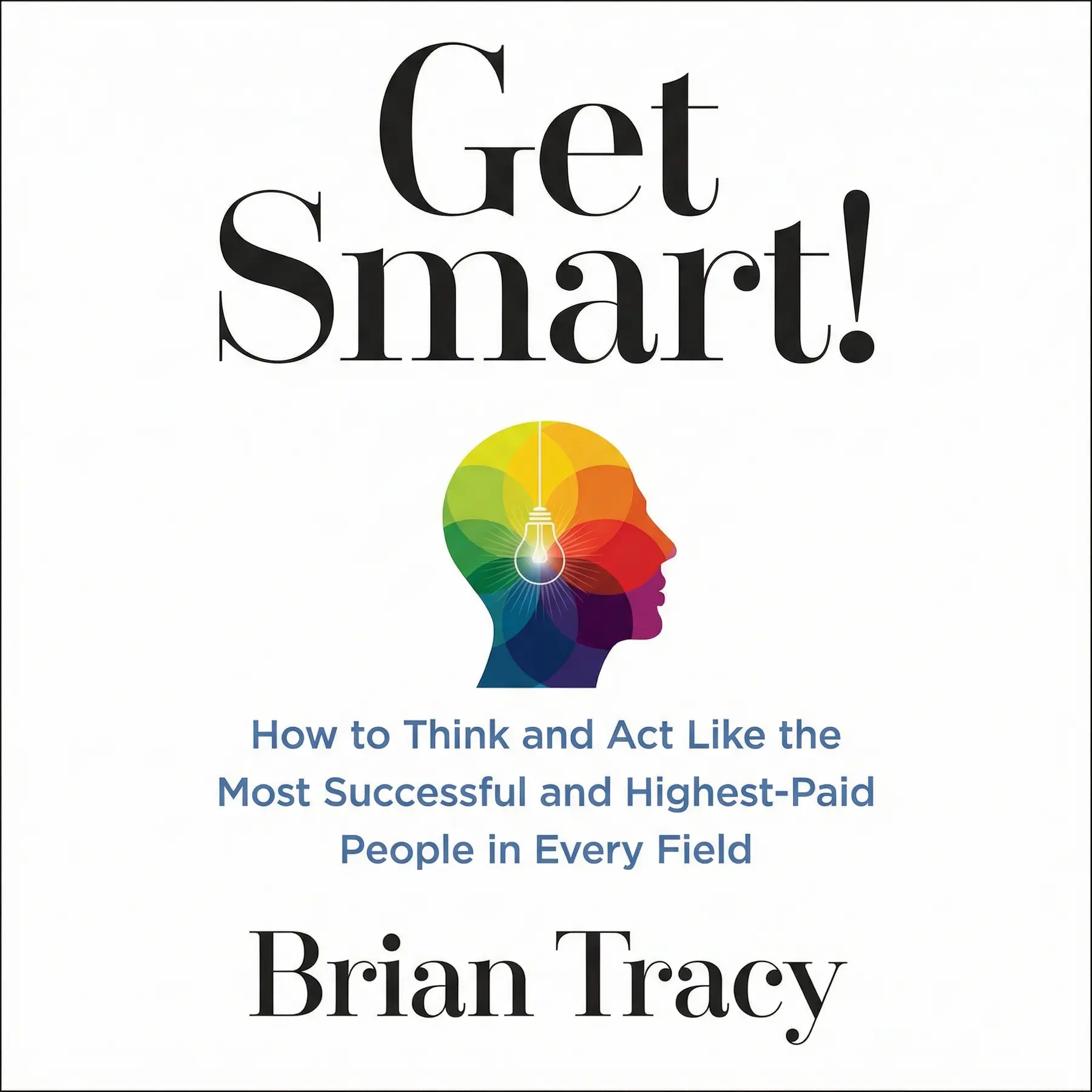
Get Smart!: How to Think and Act Like the Most Successful and Highest-Paid People in Every Field
By Brian Tracy
Brian Tracy shows how to think like the most successful people in any field: plan years ahead, slow down big decisions, write goals, focus on three key tasks and test ideas honestly.
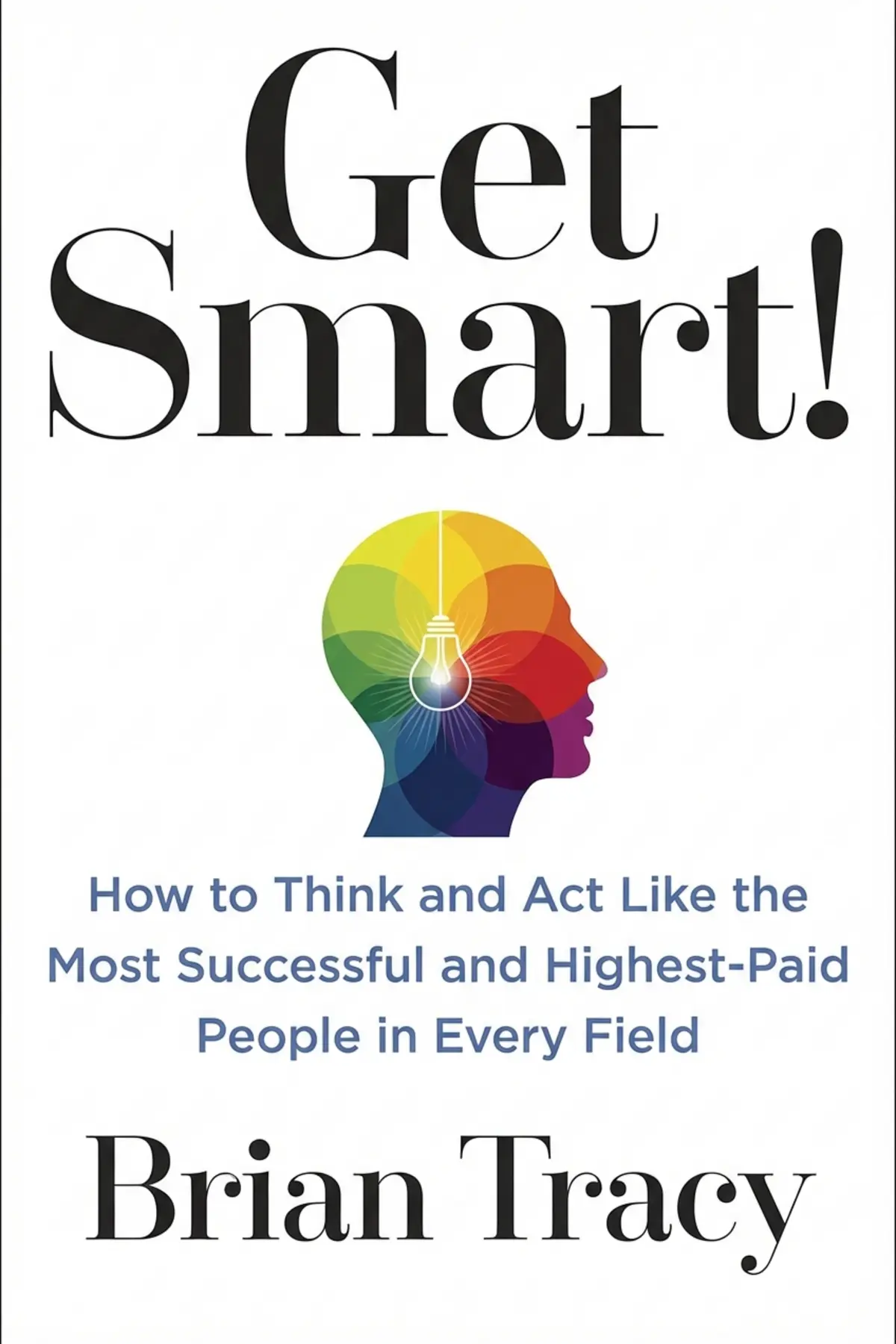
Table of Content
1. Introduction
56 sec
Most people who feel outthought by a colleague assume the difference is talent. In Get Smart!, self-development author Brian Tracy argues it is mostly a difference in use: citing studies, he puts the share of mental power the average person taps at around 2 percent. The rest sits idle, and the highest earners in any field, in his account, are simply better at putting more of it to work.
His case is that smart is a set of thinking habits anyone can learn. Look further ahead, decide more slowly, write your goals down, spend your hours on the few tasks that pay, test ideas against reality, drop what no longer serves you and copy the habits of people who already have what you want. Each habit comes with a tool to try this week, from a 72-hour pause before big decisions to one question that exposes commitments you would never make again.
2. Get more from your mind by widening your view
1 min 31 sec
Six wise men examine the same animal and reach six different conclusions, none of them false. Their mistake is one most of us make every time a setback or a piece of criticism lands.
3. Plan five years ahead and act this month
1 min 31 sec
A Harvard researcher compared rich and poor and found the gap had little to do with intelligence. What separated them was a way of seeing time, and most people’s savings show which side they are on.
4. Make better calls by slowing your mind down
1 min 38 sec
A ping from your phone or a sharp remark from a colleague can steer a whole afternoon. A Nobel Prize-winning psychologist’s distinction explains why, and a three-day rule offers a way back to control.
5. Write one goal that organizes your year
1 min 21 sec
Only a tiny share of people keep their goals on paper, and Tracy believes that small act changes what you notice and what you ignore. The wording he insists on matters as much as the list.
6. Spend your working day on three tasks
1 min 22 sec
Studies Tracy cites suggest the average employee does real work for only a few hours a day. The habit behind that starts in childhood, and three plain questions can reverse it.
7. Test your business idea by trying to break it
1 min 24 sec
Eight in ten new products flop and are withdrawn, mostly because too few customers actually want them. Tracy’s fix asks you to campaign against your own idea before customers do it for you.
8. Drop what you would not choose again
1 min 46 sec
A giant bookseller went bankrupt while new devices changed how people read. Tracy draws a personal lesson from its fall, built around one uncomfortable question about friendships, jobs and old decisions.
9. Copy the daily habits of people you admire
1 min 25 sec
A young, broke Tracy watched a fellow evening student arrive in a Mercedes, wanted one at once, and began thinking like a rich person. What he did next became his case for how a wealthy mindset is built.
10. Conclusion
1 min 05 sec
Get Smart! rests on a hopeful premise: the distance between you and the people you admire lies mostly in how you use your mind, and that can change. Tracy’s tools share one move. Each asks you to step back from the moment, whether that means looking five years ahead, waiting three days to decide, writing a goal down or asking whether you would make an old choice again. Smart, in his telling, is a habit of stepping back.
He applies the same move to trouble. His closing advice is to take your biggest current problem and treat it as a gift, a chance to learn about yourself and do better, in the spirit of Henry Ford, who saw failure as a chance to begin again and improve.
If you start anywhere, write ten goals tonight in the present tense, circle the one that matters most and list twenty steps toward it. Tomorrow, before the inbox opens, ask which three tasks would move it furthest. The blind men never saw the whole elephant because none of them stepped back far enough to look. Anyone can take that step.
About this book
What is this book about?
Many capable people assume the colleagues who outthink and outearn them simply have better brains. Brian Tracy disagrees. In his view, the gap comes from how much of the mind a person puts to work, and the habits behind smart thinking can be learned. Tracy builds his case on perspective. He draws on Edward Banfield's research on long-term planners, on Daniel Kahneman's split between fast and slow thinking, and on cautionary tales like the bankruptcy of the bookseller Borders. He then turns each lesson into a tool. The GOSPA model structures strategy. A written list of ten goals narrows to one major purpose. The Law of Three concentrates the workday, and zero-based thinking clears out old commitments. Readers get a practical set of thinking habits for work and money: when to pause before deciding, how to test a business idea by trying to disprove it, how to break a vague problem into its real cause, and how to copy the daily habits of people who already have the results they want.
Book Information
Who it's for
Feeling outpaced at work
Early-career professionals who feel outpaced by sharper colleagues and want concrete thinking habits.
Founders and small-business owners
Founders and small business owners testing a product idea or stuck on a vague problem.
Living paycheck to paycheck
Anyone living paycheck to paycheck who wants a long-term plan for goals and savings.
About the Author
Brian Tracy
Brian Tracy is a Canadian-American motivational speaker and self-development author, and chairman and CEO of Brian Tracy International, a company that trains individuals and organizations. He was previously chief operating officer of a $265 million development company. He has advised more than 1,000 companies, worked in over 80 countries and created more than 300 audio and video learning programs. His other books include Eat That Frog! and No Excuses!
Ratings & Reviews
Ratings at a glance
What people think
Listeners consider this work both useful and perceptive, offering numerous small suggestions that are simple to understand and implement. They value the way it assists in constructing mental frameworks and establishing effective routines, resulting in an encouraging and uplifting experience. The material earns high marks, with one listener highlighting its ability to assist in organizing various areas of daily living.
Top reviews
Pear
Finally got around to reading this Brian Tracy classic, and I must say it lives up to its reputation for being concise. There is absolutely no fluff here, which is a breath of fresh air compared to most 300-page business books that should have been blog posts. I found the 'Seven Rs of Superior Thinking' to be particularly impactful, especially the sections on reengineering and reinventing your current workflows. It’s not just about working harder; it’s about the mental framework you apply to every challenge. While some might find the tone a bit repetitive if they’ve read Tracy before, the systematic problem-solving methods provided are worth the price of admission alone. It helps you compartmentalize different aspects of your life so you aren't overwhelmed by the big picture. Highly recommended for those needing a mental reset and some actionable structure.
Show moreWittaya
Wow, what a punchy read! Tracy doesn't waste your time with long-winded stories; he gets straight to the actionable advice. Personally, I loved the distinction he makes between the habits of high-performers and everyone else. It’s not about being 'born smart,' it’s about adopting a sharp, creative mind that sees opportunities where others see obstacles. I’ve started using the systematic problem-solving method he outlines, and it’s already helped me clear a major hurdle at work. The book is a great reminder that our external world is a reflection of our internal thought patterns. If you change your thinking, you really can change your life. It’s an inspiring read that I’ll likely revisit whenever I feel my discipline starting to slip. Definitely worth a spot on your shelf if you value efficiency.
Show moreTum
Ever wonder why some people just seem to 'get' it while others struggle? This book attempts to answer that by looking at the mental frameworks of the highest-paid people in every field. In my experience, the 'Seven Rs' Tracy outlines—rethinking, reorganizing, etc.—are the most valuable parts of the text. They provide a checklist for your brain to ensure you aren't just stuck in a rut. I also found the section on avoiding distractions and focusing on 'long-time perspective' to be very relevant in today’s smartphone-addicted world. It’s a relatively small book, but it’s packed with information that is easy to comprehend and apply immediately. It's not a literary masterpiece, but as a manual for better thinking, it's top-notch. I’ve already recommended it to several colleagues who are looking to level up their strategy.
Show moreMarco
The chapter on negative emotions alone changed my entire week. Brian Tracy argues that it is impossible to feel things like envy or resentment without first blaming someone else for your situation. That hit home for me. Once you accept 100% responsibility for your life—even the parts that weren't your fault—you gain a sense of control that is incredibly liberating. The book is short, but it's packed with these little nuggets of wisdom that force you to reevaluate your internal dialogue. I did find the focus on money a bit heavy at times, and I don't necessarily agree that financial success is the only indicator of 'smart' thinking. However, the practical tips on avoiding 'learned helplessness' and staying out of the comfort zone are universal. It’s a solid 4-star guide for anyone feeling stuck.
Show morePracha
As someone who struggles with focus, I really appreciated the 'Law of Three' discussed in this book. It’s a simple way to prioritize, but Tracy explains it in a way that actually makes it stick. Most of the advice here isn't 'new' in the sense that you’ve never heard it before—we all know we should exercise, eat well, and set goals—but the way it’s structured as a total thought process is very effective. The writing is straightforward and easy to comprehend, making it a great afternoon read for busy professionals. I took several pages of notes on the 'Seven Rs' because I want to apply them to my current business project immediately. My only gripe is that it can feel a bit like a collection of motivational quotes strung together, but the overall impact is still very positive.
Show moreSun
Picked this up on a whim during a layover and ended up finishing it before I landed. It’s an incredibly motivating read that helps you develop the right habits for success. I particularly liked the step-by-step instructions on goal setting. We’ve all heard it before, but Tracy breaks it down into such a simple process that it feels impossible not to follow through. The tone is very direct and encouraging, which I appreciated during a period of professional transition. It helped me compartmentalize my career goals versus my personal life, making everything feel much more manageable. While some of the 'rich vs poor' comparisons are a little over-the-top, the core message about taking personal responsibility is something everyone needs to hear. It’s a practical, insightful little book that I’d recommend to any young professional.
Show moreHom
Truth is, I wasn't expecting much from another Brian Tracy book, but 'Get Smart!' surprised me with its practicality. It really focuses on the 'how' of thinking better, rather than just telling you to 'be positive.' The actionable advice, like looking for the gift in every problem, has already helped me shift my mindset during a particularly stressful week at the office. I appreciated the emphasis on continuous learning and the reminder to limit television and social media. The book is short and to the point, which makes it perfect for busy people who want the 'meat' without the fluff. It’s an inspiring guide that helps you build the thought processes necessary for long-term success. A few parts felt repetitive, but the overall message is very strong and provides a great framework for growth.
Show moreTuck
Frankly, it’s a bit of a mixed bag for me. On one hand, the book is incredibly easy to read and serves as a fantastic summary of personal development principles. On the other hand, there isn't a single original idea in the entire 150 pages. It’s basically 'Think and Grow Rich' summarized for a modern audience with a bit of a corporate lean. I did appreciate the section on rethinking your future and the importance of daily exercise, but I was hoping for something a bit more profound. It’s helpful as a quick refresher, sure, but it’s more of a highlight reel than a masterclass. The content receives positive marks for being practical, but the lack of depth makes it hard to give it a higher rating. Three stars for being useful but unoriginal.
Show moreAndrew
Look, if you’ve read any self-help book written in the last fifty years, you have already read this book. It feels like a total rehash of Napoleon Hill’s old concepts from the 1930s without adding much modern context. The author spends way too much time pointing out how rich he is and how 'poor people' think incorrectly, which feels elitist and frankly, a bit dated. He draws from psychology frequently, but as someone with a background in the field, it's clear he’s just skimming the surface to support his personal anecdotes. There are some okay reminders about goal setting, but nothing groundbreaking. If you want original insights, keep your hard-earned money and look elsewhere. It’s just regurgitated pearls of wisdom from better thinkers with very little original substance to offer.
Show moreHazel
After hearing so much about Tracy, I was disappointed by the 'Get Smart!' approach. Instead of teaching you how to actually increase your cognitive abilities, it’s mostly about how to think only about money and material gain. The author treats other people like tools to be used on your way to the top, which left a bad taste in my mouth. To be fair, he does understand the business side of things, but his grasp on human development and psychology is superficial at best. He throws around terms that he clearly doesn't fully understand to sound more authoritative to a lay audience. It’s a very 'grow rich' type of book that prioritizes wealth over actual intelligence or character. If you're looking for deep insights into the human mind, this isn't it. It's just a collection of standard business clichés.
Show moreQuestions about this book
What is the main idea of Get Smart! by Brian Tracy?
Tracy argues that the most successful and highest-paid people are not born with better brains. They use more of their mental capacity by thinking long-term, slowing down important decisions, writing clear goals, focusing on a few high-value tasks, testing ideas honestly and staying flexible. He presents each of these as a learnable habit with a specific tool attached, such as the GOSPA model, the Law of Three and zero-based thinking.
What is the GOSPA model in Get Smart!?
GOSPA is Tracy’s five-stage framework for long-term strategy. Goals are the results you want over a long period, such as five years. Objectives are smaller targets along the way, like this year’s growth. Strategies are the methods for reaching them. Priorities are the few actions that make the strategy succeed. Actions are the everyday tasks. Working through each stage in order gives your slower, rational thinking room to reach better decisions.
What is the Law of Three according to Brian Tracy?
The Law of Three says that three of your tasks produce about 90 percent of your results. To find them, list all your responsibilities and ask which one task would bring the biggest result if it were the only thing you did today, then the second and third. Tracy suggests checking your answers with your boss or closest colleagues, then focusing your working day on those three.
What is zero-based thinking?
Zero-based thinking means asking of any commitment: if I could start again, would I choose this? Tracy applies it to friendships, career moves and business decisions. When the answer is no, he says to undo the choice, accept that the time, money or emotion already invested is lost, and move on. The payoff, in his view, is more time, more energy, relief and greater flexibility to take new opportunities.
How can I apply Get Smart! to my goals?
Write ten goals for the coming year in the present tense, personal and positive, such as I am a healthy eater. Choose the one that matters most, which Tracy calls your major definite purpose, and list at least 20 actions toward it. Turn that list into a checklist, start the first task immediately and complete at least one item every day.
Readers also enjoyed


A High-Performing Mind: Strengthen Your Mind and Live Your Best Life
Andrew D. Thompson


Abundance: The Inner Path to Wealth
Deepak Chopra


60 Seconds & You’re Hired!
Robin Ryan



59 Seconds: Change Your Life in Under a Minute
Richard Wiseman

AUDIO SUMMARY AVAILABLE
Listen to Get Smart! in 15 minutes
Get the key ideas from Get Smart! by Brian Tracy, plus 5,000+ more nonfiction titles.
- 5,000+ titles
- Listen as much as you want
- 7-day free trial
- Cancel anytime









