

A Liberated Mind: How to Pivot Toward What Matters
Steven C. Hayes
 English
Explains why attention at a screen now shifts every 47 seconds, what that switching costs your energy and mood, and how to plan breaks, peaks and questions that give you back control.
57 sec
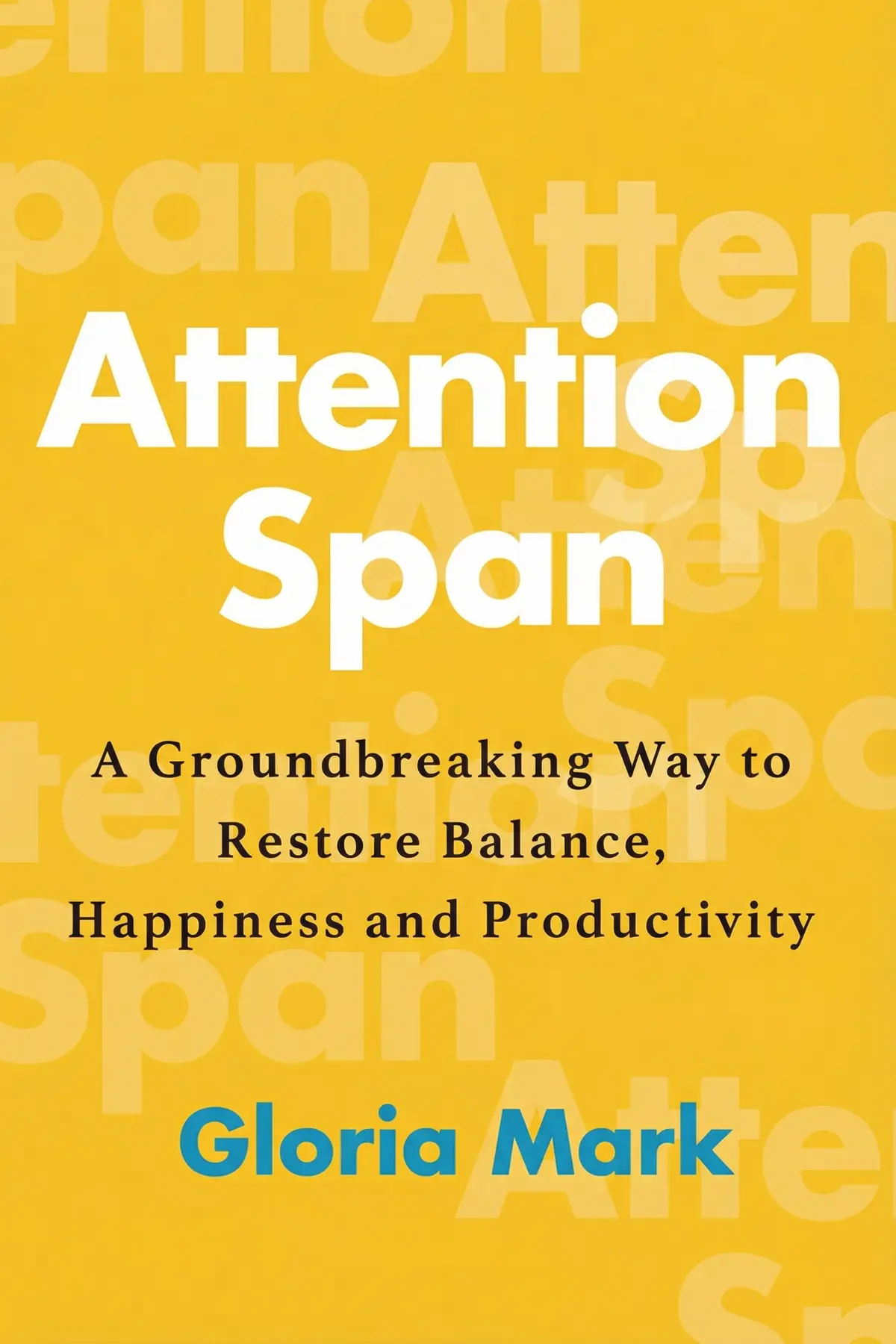
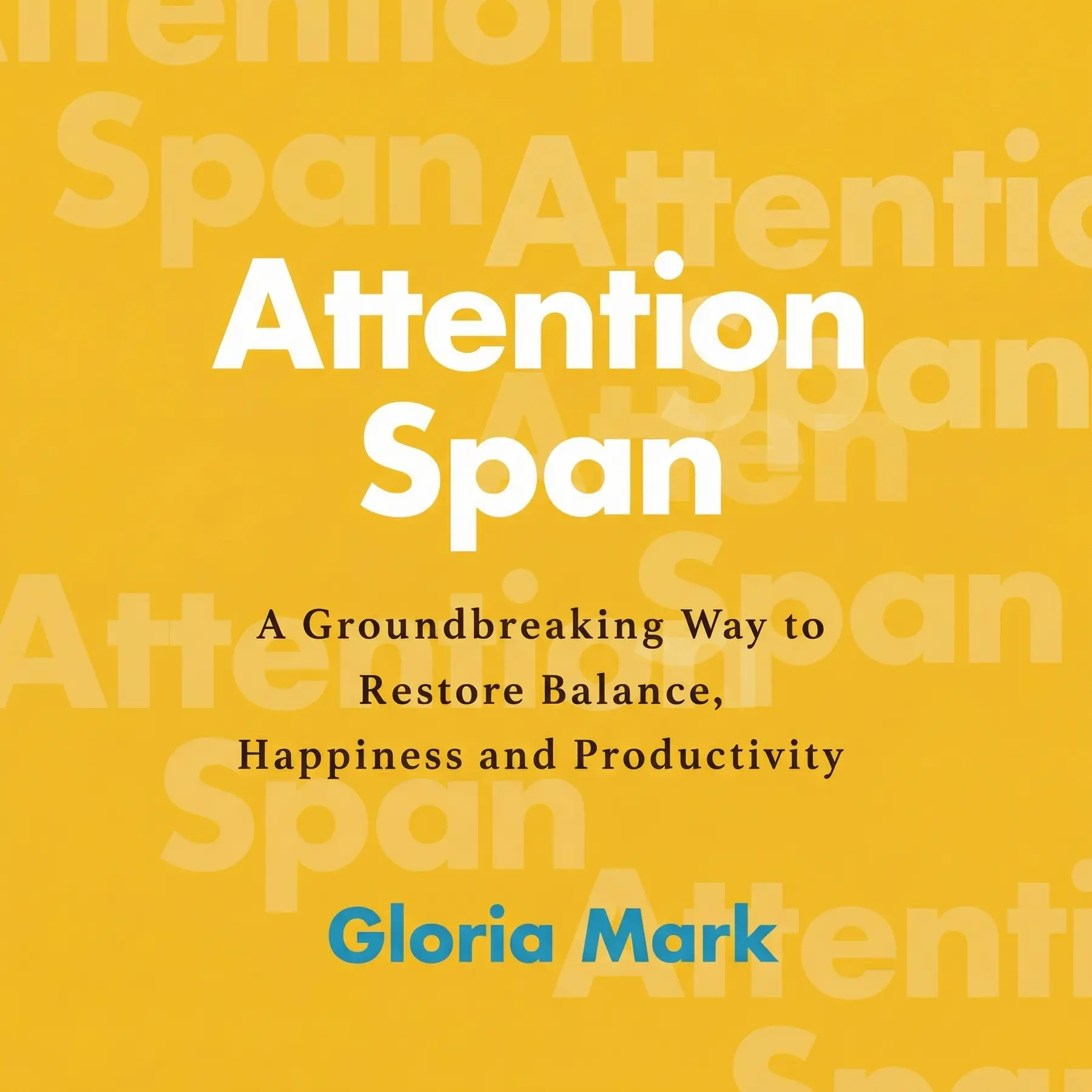
If your workday feels like a string of half-finished tasks, the problem may be speed. In Attention Span, informatics professor Gloria Mark reports that people at a computer now switch their attention every 47 seconds on average, down from about two and a half minutes in 2004. Mark has studied how people live with digital technology for nearly as long as it has existed, often by watching them at work with stopwatches in hand.
Her argument is that shrinking attention comes from the way our devices, our minds and the companies behind our apps fit together, so the remedy is to understand attention’s limits and natural rhythms and to work with them. The aim she sets is well-being. Ahead are four attention states, the real cost of an interruption, the design choices that keep you scrolling, and a handful of habits for taking back a day that screens keep cutting into pieces.
1 min 49 sec
Researchers sat in real offices with stopwatches and counters, logging every shift of attention. What they recorded over seventeen years suggests the scattered feeling at the end of a workday has a measurable cause.
1 min 58 sec
Many ambitious people measure a good day by how long they stayed focused. Mark’s research suggests that test is flawed, and that a round of a phone game can earn its place in a working day.
1 min 49 sec
It is easy to blame the boss, the chat window or the ping for a broken morning. Mark’s figures point to a less comfortable source, and to a moment you can learn to notice.
1 min 49 sec
Answering email during a video call feels efficient. Mark explains what the brain is really doing in that moment, and why a group of very disciplined people spend more time on entertainment sites than anyone else.
1 min 55 sec
A search about Leonardo da Vinci ends in French history, and you cannot quite say how. Mark shows why that drift feels natural, who profits from it, and why blaming yourself misses the point.
1 min 44 sec
If algorithms can steer clicks we barely notice making, control can seem out of reach. Mark answers with a modest habit of mind that moves the choice back into view, one question at a time.
1 min 32 sec
Most people’s focus rises and falls at roughly the same hours. Mark explains how to place hard work and easy breaks on that curve, and how a scheduled call can rescue you from a game that runs long.
1 min 07 sec
Mark’s research turns a private guilt into something easier to work with. The 47-second switching, the 25-minute recovery, the urge to check a feed when nothing has pinged: these are what happens when a mind that wanders by association meets a network built the same way, run by companies that profit from every extra click. Blaming your character misses the design.
What she offers instead is a kinder and more exact picture of attention. Focus is valuable and limited. Rote activity is a fair way to refill it, and often a happier one. Self-control tires over the day, and constant switching spends what is left.
The habits that follow are modest. Ask what you will gain before opening an app, and ask again once you are inside. Place demanding work near your late-morning and mid-afternoon peaks, and plan easy breaks for the after-lunch slump, with a hook such as an upcoming call to bring you back. Mark’s view is that nobody has to go offline or even delete Candy Crush. The task is to become a little smarter than the smart devices we carry.
Most people who work at a screen end the day tired and unsure where the hours went. Gloria Mark has measured why. Her teams watched people in real workplaces and found that attention on a computer now jumps every 47 seconds on average, and that getting back to an interrupted task can take around 25 minutes. Mark's angle is that this is not simply a lack of willpower. The internet's web of links mirrors the way the mind wanders, companies use algorithms to predict what will make us click, and content keeps getting shorter. At the same time, attention is a limited resource. Focus cannot last all day, nearly half of our switches are interruptions we start ourselves, and juggling two demanding tasks means paying for constant switching. Readers get a clear map of four attention states, an explanation of why light, mindless breaks are useful, and practical habits: questions to ask before opening an app, a schedule built around natural focus peaks, and hooks that bring you back from a break. The goal throughout is better well-being, not squeezing out more work.
Knowledge workers who end each day drained by email, chat and constant tab switching.
Team leads looking for evidence-based ways to cut interruptions, such as email-free hours.
Anyone stressed by their phone habits who wants control without going offline.
Gloria Mark holds the title of Chancellor's Professor in her university's informatics department. She trained first as an artist, then earned a PhD in psychology at Columbia University and worked as a visiting researcher at Microsoft Research. An expert in human-computer interaction, she has studied multitasking, interruptions, productivity and mood as digital technology spread, publishing more than 200 articles. In 2017 she was inducted into the CHI Academy, which honors leaders in the field.
Listeners find the work extensively researched and value its thorough explanation of the variables that influence our concentration. They describe it as an excellent title for alleviating mental tension and preventing exhaustion, with one listener remarking that it is essential reading for navigating the digital world. While the book is praised for its tactics regarding digital life management, listeners mention that it misses concrete strategies for restoring focus.
Finally got around to reading this, and frankly, I feel so much less guilty about my digital habits now. Most productivity gurus act like focus is a moral failing, but this book uses hard data to show how the internet was literally designed to mimic our brain’s associative networks. It’s not just a lack of discipline; it’s an uphill battle against algorithms that know us better than we know ourselves. I particularly loved the section on 'rote attention.' Learning that mindlessly playing a simple game can actually help replenish our cognitive resources was a huge relief for my burnout-prone brain. Rather than pushing for an impossible 24/7 'flow state,' Mark suggests we work with our natural rhythms, peaking at 11:00 a.m. and taking intentional breaks when we dip. This is a must-read for anyone navigating the digital world who wants to understand the 'why' behind their stress.
Show morePicked this up to help with my chronic burnout and found the section on natural attention rhythms to be a total game-changer for my mental health. For years, I thought I was a failure because I couldn't maintain 'flow' for eight hours a day. Mark uses her extensive research to show that nobody can. Understanding that our cognitive resources are limited—and that we need to protect them like valuable real estate—has changed how I structure my entire day. I stopped checking emails first thing in the morning and started guarding my peak focus hours. The book is dense, and yes, it’s academic, but the validation I felt was worth every page. It’s a comprehensive guide to surviving the attention economy without losing your mind. If you feel overwhelmed by your devices, this is the scientific permission slip you need to slow down.
Show moreAs someone who spends ten hours a day staring at a screen, Gloria Mark’s research felt like a personal attack in the best way possible. She perfectly captures that feeling of 'unresolved cognitive tension' we all get when we bounce between twenty different tabs. I hadn't realized that it takes an average of 25 minutes to fully return to a task after an interruption! That one stat alone changed how I view my morning workflow. Look, the book isn't a quick fix, and some might find the academic tone a bit heavy, but the comprehensive understanding of how we got here is invaluable. It’s less about 'hacks' and more about developing a meta-awareness of your own behavior. If you want to understand the architecture of the digital world and how it preys on your curiosity, pick this up. It’s a great read that provides much-needed context for our current mental health crisis.
Show moreGotta say, I appreciated the deep dive into the 47-second attention switch data, even if the author got a bit too personal with the memoir elements at times. Most books in this genre just tell you to put your phone in a drawer, which isn't realistic for most professionals. Mark is much more nuanced, suggesting we lean into our natural 'kinetic' attention. The idea that we should use mindless activities as 'daily mini-breaks' to replenish our limited cognitive resources was eye-opening. I’ve started timing my hardest work for that 11:00 a.m. peak she mentions, and it’s actually making a difference in my daily fatigue. It’s a bit wordy, and I could have done without the sections on her pregnancy in Germany, but the core science is solid. It’s a refreshing take that prioritizes well-being over raw productivity.
Show moreAfter hearing so much about the 'death of focus,' it was refreshing to read a scientist who doesn't just tell you to delete your apps and move to a cabin. Mark’s approach to 'digital agency' is much more realistic. She explains how 'chaos editing' in movies and fast-paced social media has conditioned our brains to expect a change every few seconds. It’s a bit terrifying to realize how much we interrupt ourselves—44 percent of the time without any external trigger! The book is a bit dry in the middle, and she uses the word 'we' far too much for my liking, but the insights into the 'work spheres' and the 25-minute recovery time are essential. It’s a great read for anyone who wants to understand the mechanics of their own mind. Just don't expect a quick fix; it's a slow burn.
Show moreEver wonder why you feel absolutely drained after a day of 'easy' office work? Dr. Mark explains the science behind that exhaustion with incredible precision, detailing how every interruption creates a 'switching cost' that eats our mental energy. Personally, I found the concept of 'kinetic attention' fascinating—the idea that our focus naturally ebbs and flows. But the book suffers from a bit of an identity crisis. It fluctuates between being a scientific text and a personal memoir, with the author frequently inserting anecdotes about her time in Germany or NYC that didn't seem to add much to the core argument. The truth is, it’s a bit of a slog. I appreciated the validation that multitasking is a myth, but by the end, I still didn't feel like I had the tools to reclaim my 'agency.' It’s a solid 3-star read for the research alone, but don't expect it to change your life overnight.
Show moreThe chapter on how the internet’s architecture mirrors our cognitive networks was absolutely brilliant, though the rest of the book was a bit of a slog. Mark makes a compelling case for why we get sucked into 'rabbit holes,' explaining that our brains crave the reward of new information hidden behind every link. However, the middle section of the book felt very repetitive. I lost count of how many times the word 'agency' was used without much practical application. To be fair, she does provide some strategies for managing our digital lives, like scheduling rote tasks for our afternoon slumps, but these felt like an afterthought compared to the mountains of research data. It’s a well-researched volume that definitely helps relieve some of the stress of feeling 'distracted,' but it lacks the punchy, actionable methods I was looking for. Good, but definitely not a page-turner.
Show moreLook, if you want a step-by-step manual like Atomic Habits, you are going to be disappointed by this one. This is a science book through and through. Dr. Mark spends a lot of time on the history of human-computer interaction and the 'Zeigarnik effect'—that nagging feeling of unfinished business that keeps us stressed. It’s fascinating stuff if you’re a nerd for psychology, but it doesn't leave you with a clear 'to-do' list. My biggest gripe is the lack of advice for people with low impulse control, like teenagers or those of us with ADHD. The author seems to think we can all just 'develop agency' through meta-awareness, which feels a bit optimistic given how addictive these apps are. It’s a well-researched piece of work, but it feels like it’s missing a final chapter on implementation.
Show moreThis book is essentially a dense literature review masquerading as a self-help guide. While Gloria Mark is clearly a brilliant researcher, the transition from lab data to the printed page feels clunky and overly academic. I was hoping for a tactical manual to help me stay focused at work, but instead, I got page after page of citations about task-switching and cognitive loads. To be fair, the statistic that our attention on screens has dropped to a mere 47 seconds is terrifyingly well-documented here. However, knowing the problem isn't the same as solving it. I found myself skimming the middle chapters just to find a single piece of actionable advice, but there was very little to be found. If you are writing a thesis on human-computer interaction, this is your gold mine. For the average person just trying to spend less time on TikTok, you might find more value in a twenty-minute TED talk.
Show moreNot what I expected from a book titled Attention Span, as I struggled to pay attention to the book itself. The writing style is quite dry and repetitive, often circling back to the same points about 'agency' without ever defining a clear path toward achieving it. I was particularly annoyed by the frequent 'author-insertions' throughout the narrative. Do I really need to know about her sabbatical in Austria to understand how hyperlinks affect my concentration? It felt like the book was trying to reach a certain word count rather than delivering concise value. While the research on how task duration has plummeted since 2004 is undeniably important, the presentation is just too academic for a lay reader. It would have functioned much better as a long-form magazine article than a 300-page book. I’ll stick to James Clear for actual habit-building advice.
Show moreMark argues that our attention has shortened sharply in the digital age, with screen attention now shifting every 47 seconds on average, and that this harms well-being more than character flaws explain. Devices, the associative design of the internet and companies’ algorithms all pull at us. The way back is to understand attention’s limits and natural rhythms and to work with them.
Only in a narrow sense. Mark says real supertaskers, who juggle tasks without losing mood or performance, are very rare. Most people can do two things at once only if one is automatic, like walking while on the phone. With two demanding tasks, such as a Zoom call and an email, the mind switches rapidly between them, and each switch uses up mental resources.
Her research finds that for most people focus peaks around 11 in the morning and again around 3 in the afternoon, while boredom is highest shortly after lunch and the biggest dip comes after 1. She suggests putting your hardest tasks in the peak windows and planning light, rote breaks, such as a walk or brief scrolling, for the dips.
Mark recommends building meta-awareness through questions. Before opening an app such as Instagram, ask what you will gain there. Once inside, ask how long you have spent and what you are getting. Picture how you will feel tonight after two hours of YouTube. For planned breaks, set a hook, like starting a game ten minutes before a call.
It suits office and knowledge workers who feel scattered and tired by constant switching, managers who want to reduce interruptions for their teams, and anyone uneasy about how much time screens take. It is especially useful for readers who want practical habits grounded in workplace observation, without being told to quit technology altogether.
Steven C. Hayes


Deborah Gruenfeld


Anthony Pratkanis



Laura Vanderkam
AUDIO SUMMARY AVAILABLE
Get the key ideas from Attention Span by Gloria Mark, plus 5,000+ more nonfiction titles.









