
14 min 28 sec
Available in: English
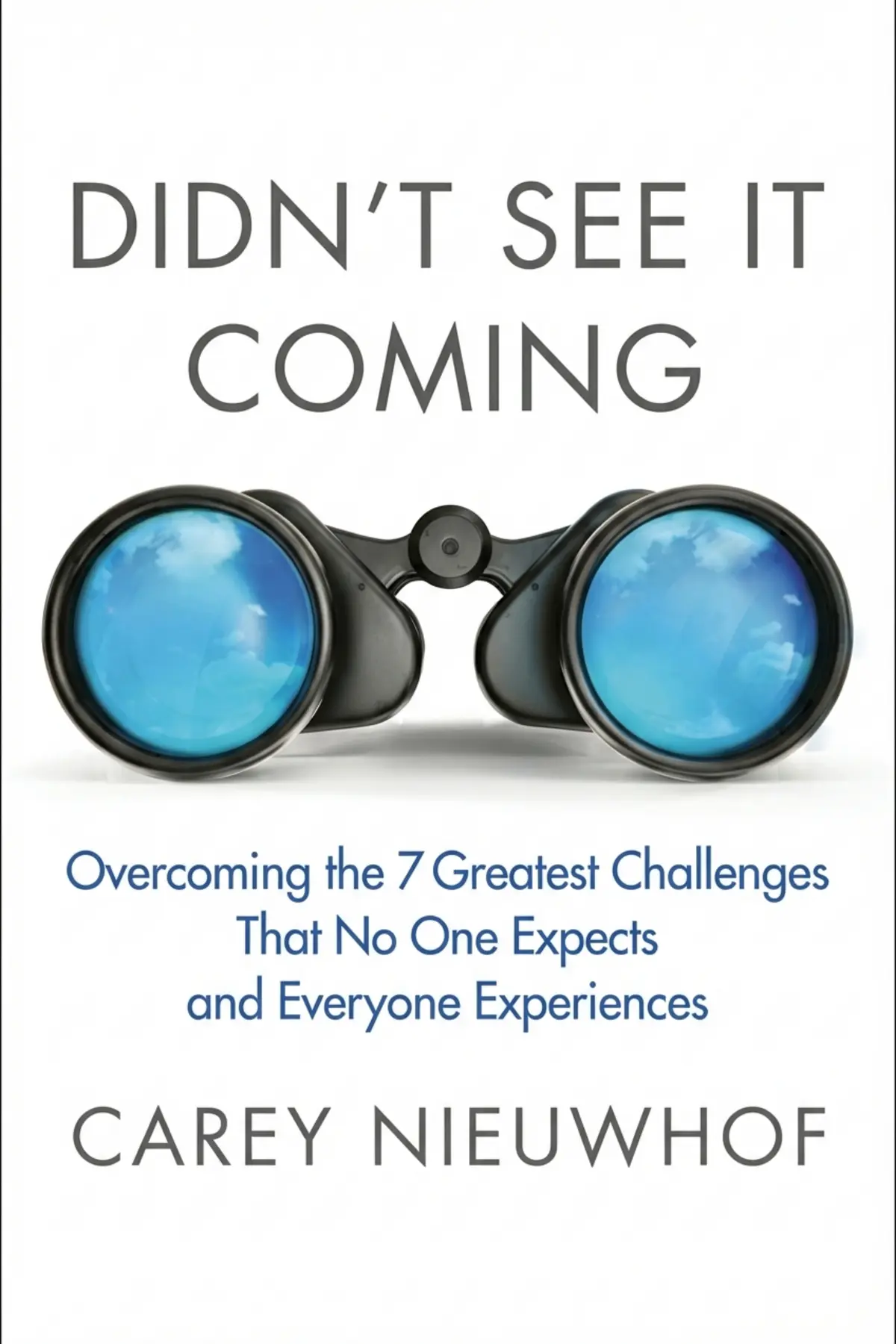
At Your Best: How to Get Time, Energy, and Priorities Working in Your Favor
Shows how to get out of the stress spiral. Map the hours when your energy peaks, fill them with your most important work, and protect your priorities from distractions and draining demands on your time.
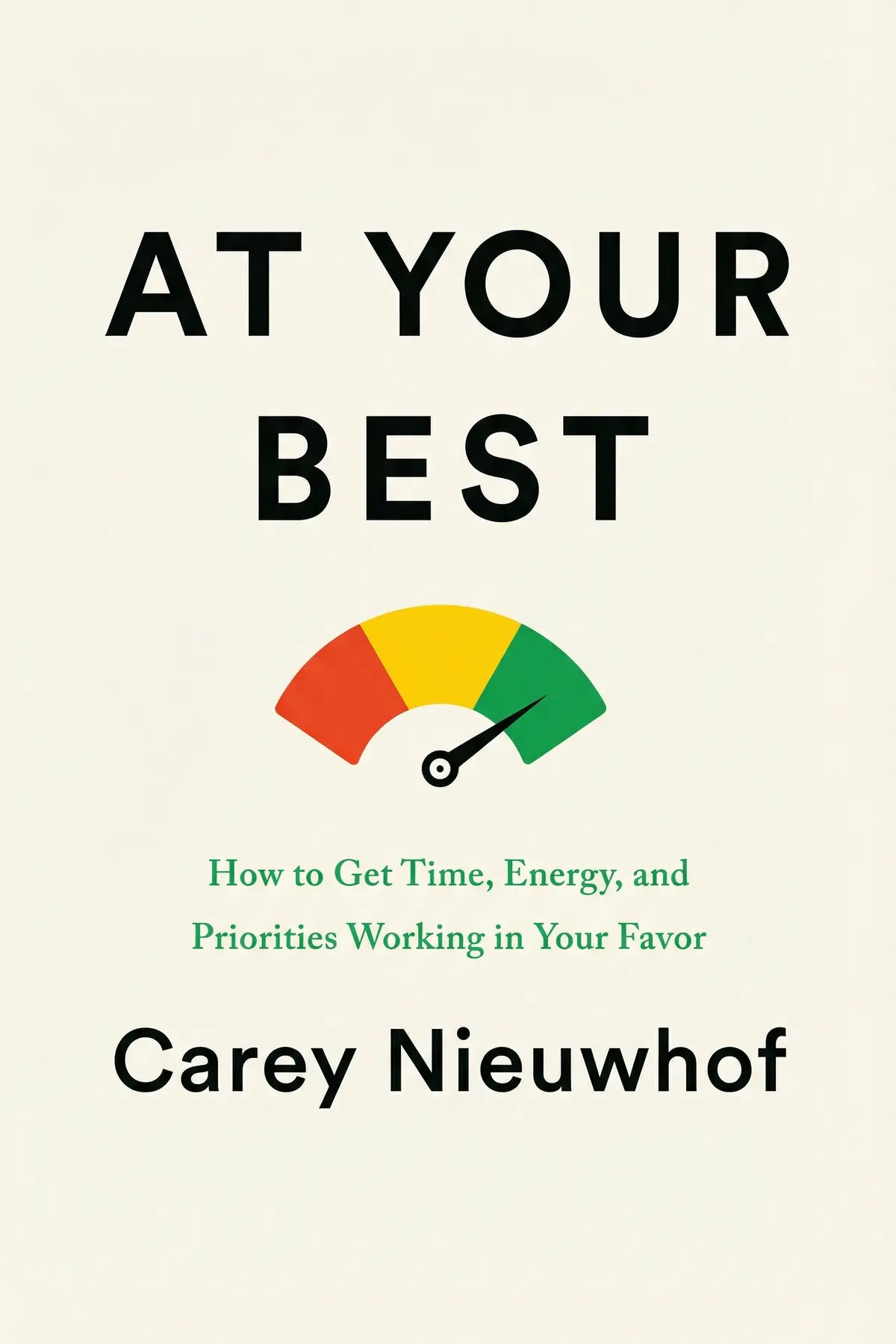
Table of Content
1. Introduction
1 min 05 sec
If your days are full but your real goals keep slipping, you may not be short of hours at all. In At Your Best, author and pastor Carey Nieuwhof argues that you have exactly as much time as the most productive people alive, and that what differs is how you spend it. His fix grew out of his own burnout. It rests on three assets most people manage separately: time, energy and priorities. When those three work together, he says, you stop just surviving your schedule and start thriving inside it.
The clock was never the whole story, because an hour at your sharpest and an hour at your dullest are worth very different amounts. From that simple observation comes a working system. You find the few hours each day when you are at your peak and give them to the work only you can do. Then you guard them against distractions and other people’s agendas, and you adjust the plan as life changes. By the end, you will be able to draw your own energy map and know which tasks belong where.
2. Sync three assets instead of chasing more time
1 min 53 sec
His career looked like a triumph, yet he was dreaming of dropping everything for a hammock in Fiji. What he learned about why successful people keep going without breaking began with a question bigger than time management.
3. Map the three to five hours you peak
1 min 54 sec
Even highly trained specialists make more mistakes at certain times of day. Once you see your own pattern clearly, the way you fill your calendar starts to look like a costly accident.
4. Spend your best hours on your best work
2 min 05 sec
Knowing when you are sharpest changes nothing if the wrong tasks keep landing there. Nieuwhof sorts work into three kinds that deserve your peak, and he names one thing your weakest hours should never touch.
5. Protect the few tasks that drive most results
2 min 16 sec
A completely empty calendar sounds like the perfect day for deep work. Somehow it vanishes anyway. The reason has less to do with discipline than with how urgency, almost unnoticed, wins every contest for your attention.
6. Say no kindly and keep the relationship
2 min 09 sec
A grandmother dreaded the same phone call every morning and never found a way out of it. Her struggle is just as common in the workplace, where those who tug hardest at your hours are seldom the people who deserve them.
7. Keep the system running when life changes
1 min 56 sec
An SUV that passed 300,000 miles holds a lesson about staying out of burnout. Regular care beats repair, but what happens when your job, your family or your health refuses to follow the plan?
8. Conclusion
1 min 10 sec
Nieuwhof recasts busyness as a mismatch. The hours were always there. They were being spent at the wrong energy level, on someone else’s priorities, by a person too tired to notice. Line the three assets up again and the same day holds far more of what matters. That is how a leader who dreamed of a hammock in Fiji ended up thriving at work and at home.
One more tool from the book makes the whole system lighter to carry: categorical decisions. A single choice can settle dozens of future ones. A team might agree to meet only at set stages of a project, or a business might work only with clients from one sector. At home, you could pick three charities to support each year, so a new request for money needs no agonizing. Set the category, hold to it, and make exceptions only when you truly must.
The first move is small. Spend a week coloring your own energy clock, then put one important task into a green hour and silence your phone while you do it. Your best hours, given to your best work, are the ones that add up to a life you no longer want to escape.
About this book
What is this book about?
Many capable people work hard all day and still watch their real goals slip further away. Carey Nieuwhof knows that feeling from the inside. In 2006 his career looked like a success, but he was burned out and dreaming of escape. As he recovered, he noticed that top performers managed more than their time. They also managed their energy and their priorities, and kept all three working together. At Your Best turns that discovery into a practical system. You chart your daily energy into green, yellow and red zones and give your scarce peak hours to your gifts, your passion and your highest-impact work. Then you defend those hours from notifications, interruptions and the people who ask for the most time while deserving the least of it. Along the way Nieuwhof draws on Pareto's 80 to 20 observation and Robin Dunbar's circles of relationships, and he offers a gentle script for saying no. Readers get a clear picture of where their days actually go. They also get the tools to change it: an energy map, a way to sort tasks, a firmer calendar, and categorical decisions that settle dozens of small choices at once.
Book Information
Who it's for
Professionals with slipping goals
Professionals who work hard all day yet see their important goals keep slipping.
Interrupted managers and leaders
Managers and leaders whose calendars are run by interruptions, meetings and other people's requests.
Close to burnout
Anyone feeling close to burnout who wants a sustainable pace without giving up their ambitions.
About the Author
Carey Nieuwhof
Carey Nieuwhof is a best-selling author and a former attorney. He is the founding pastor of Connexus Church and founded The Art of Leadership Academy, which helps leaders work through the barriers that hold back growth. He hosts The Carey Nieuwhof Leadership Podcast, which has featured guests such as Craig Groeschel, Jim Collins and N.T. Wright. His background spans law, theology and history, and his books include At Your Best and Didn't See It Coming.
Ratings & Reviews
Ratings at a glance
What people think
Listeners find this book very accessible, with one calling it an incredible handbook for thriving in life. Furthermore, it delivers actionable guidance that results in significant personal and career transformations while assisting listeners in managing stress and avoiding burnout. Listeners value the material, with one pointing out the downloadable resources, and consider it effective for improving time management and overall productivity.
Top reviews
Suthinee
Finally got around to reading this after hearing Carey on several podcasts, and it’s a game-changer for my workflow. The concept of the "Green Zone" helped me realize I was wasting my best mental energy on low-value emails. By shifting my deep work to my peak hours, I've managed to claw back significant time for actual projects. It’s not just about productivity; it’s about not feeling like a shell of a human by the time I get home to my family. Some might find it a bit repetitive if they’ve read Cal Newport, but Carey’s tone is much more accessible and pastoral. It’s a very practical manual for anyone feeling the stress spiral of modern work life. It provides a way to thrive today that helps you thrive tomorrow.
Show moreSuthee
As a leader who was teetering on the edge of total exhaustion, this book felt like a lifeline thrown into a very dark sea. Carey doesn't just give you a to-do list strategy; he helps you dismantle the mindset that says you have to be on twenty-four-seven. The distinction between being at your best versus just being busy is a paradigm shift I desperately needed. I especially appreciated the sections on setting boundaries with people who try to hijack your priorities. It’s emotional to realize how much of my life I was giving away to things that didn't matter. Not everything in here is groundbreaking—you'll recognize some Stephen Covey influence—but the synthesis is incredibly effective. This is an essential read for anyone who feels like their candle is burnt out.
Show moreZanya
Stop trying to do it all and just start doing what matters most when you actually have the brainpower to do it. That’s the core takeaway here, and it’s delivered with a mix of personal anecdotes and practical steps. I’ve been implementing the Green Zone strategy for a month now and the difference in my output is staggering. I'm getting more done in three hours than I used to get done in six. The book addresses the stress spiral of being overworked and overcommitted in a way that feels very personal. Carey’s transition from a high-stress lawyer to a thriving leader provides a great backdrop for these lessons. It’s a fantastic guide for reclaiming your priorities and actually enjoying your life again. Highly recommended.
Show moreYuwadee
After years of struggling with a hijacked schedule, I finally feel like I’m back in the driver’s seat of my own life. This isn't just about getting more stuff done; it's about doing the right stuff. The chapter on Priorities was particularly convicting for me. I realized I was letting other people's emergencies dictate my entire day. Carey offers a clear path out of that reactive mode and into a proactive rhythm. The Thrive Cycle he describes is actually achievable if you're willing to make some hard choices about your boundaries. It’s an incredible handbook for anyone who wants to excel at work without sacrificing their health or relationships. It's easily one of the most impactful books I’ve picked up this year.
Show moreAhmed
While some of these concepts feel like a repackaged version of time-blocking, the way Carey frames it around energy rather than just time is what finally made it click for me. I’ve always tried to force productivity in the afternoon, only to realize that’s my "Red Zone" where I’m basically useless for creative tasks. Moving my administrative chores to that sluggish period changed everything. The book is highly readable and moves quickly, though I do think it skews heavily toward people in high-level leadership positions. If you’re an employee with zero control over your meeting schedule, you might find some of the advice frustratingly out of reach. Still, the core message about prioritizing your Energy Clock is solid gold for anyone wanting to avoid burnout.
Show morePongpan
The downloadable resources mentioned throughout the chapters are worth the price of the book alone. Most productivity books leave you wondering how to actually implement the theory, but the worksheets provided here help you map out your specific energy zones. I spent a week tracking my focus and realized I was trying to do my hardest work during my Yellow Zone when I’m only moderately effective. Truth is, I was self-sabotaging without even knowing it. The writing style is punchy and direct, which I appreciate. My only minor gripe is that it can feel a little cheesy with the naming conventions at times. However, the results speak for themselves. I feel more in control of my calendar than I have in years, and my stress levels have plummeted.
Show moreWit
Ever wonder why you feel like a zombie at 3 PM but can crush a complex project at 8 AM? Carey Nieuwhof digs into the Energy Clock to explain why time management alone is a failing strategy. You can manage your minutes all you want, but if you don't have the fuel to power those minutes, you're just staring at a screen. This book helped me identify my peak 3-5 hours of deep productivity. Frankly, it was a relief to learn that nobody is truly at their best for eight straight hours. The advice is actionable and the structure is logical, making it a great handbook for anyone in a creative or professional role. It’s a solid read that I’ll likely revisit whenever I feel the overwhelm creeping back in.
Show moreNoo
This is a solid handbook for anyone who feels like they’re constantly drowning in meetings and emails. Carey Nieuwhof provides a straightforward framework to help you stop the stress spiral and move toward a more sustainable pace. I liked the focus on Unlevered Energy and how we often waste our best selves on things that don't move the needle. While it borrows heavily from other productivity gurus, it puts everything into a cohesive, easy-to-follow plan. It’s especially helpful for people in ministry or non-profit leadership, but the principles are universal. It’s a quick read, very practical, and definitely leads to massive personal changes if you actually do the work. A very helpful resource for reclaiming your sanity.
Show moreChamp
To be fair, I initially thought the traffic light system was a bit cheesy, but applying it to my mid-afternoon slump has been eye-opening. Instead of fighting my biology, I now save my mindless data entry for my Red Zone when I’m naturally listless. It’s such a simple shift, yet it removes so much of the guilt associated with not being on all the time. The book is very readable and moves at a brisk pace, which is great for someone who is already time-crunched. I do wish there was a bit more scientific data to back up some of the claims, as it relies heavily on personal experience and anecdotal evidence. But if you’re looking for a functional system to manage your day, this is a very strong contender.
Show moreThitiwan
Not what I expected, especially as someone who doesn't have 100% control over my own calendar or a fleet of assistants to delegate to. The author writes from a place of significant privilege, often assuming the reader can just opt-out of meetings or put on headphones to signal they’re busy. In my world, that’s a quick way to get fired. The Traffic Light system is a cute analogy, but it feels like a simplistic solution for systemic culture problems that create burnout in the first place. I found myself rolling my eyes at the suggestion that we all have the same time as the President. Technically true, but we don't have the same resources. It felt a bit like a pull-yourself-up-by-your-bootstraps guide for the corporate elite. Not very relatable for the average worker.
Show moreQuestions about this book
What is the main idea of At Your Best by Carey Nieuwhof?
Nieuwhof argues that thriving comes from bringing three assets into line: time, energy and priorities. Most people have about three to five peak-energy hours a day, which he calls the green zone. Those hours should go to your most important work, while distractions and draining demands are kept out. He developed the approach while recovering from his own burnout.
What are the green, yellow and red zones in At Your Best?
They describe how your energy changes through the day. In the green zone, usually three to five hours, you are focused, productive and in good spirits. In the yellow zone you are neither at your best nor your worst. In the red zone you feel sluggish and struggle to concentrate. Nieuwhof suggests tracking yourself for a few days or weeks and drawing your own energy clock.
Which tasks belong in each energy zone?
Green hours are for your gifts, your passion and the work with the biggest impact, such as core responsibilities or a major life goal. Yellow hours suit medium-energy work like meetings or company-wide emails. Red hours take routine admin, email and even exercise. Nieuwhof warns against making critical decisions or handling delicate conflicts in the red zone.
How does Carey Nieuwhof suggest saying no without hurting people?
He offers a gentle approach in four parts. Tell the person you would love to meet with them. Show understanding while staying firm that you can’t. Point them to another person or resource who can help. Then thank them for thinking of you. Without a clear strategy for refusing, he warns, most people default to saying yes.
Who should read At Your Best?
It suits busy professionals and leaders who feel overworked, overcommitted or near burnout, and who see their real goals slipping despite long days. It also helps people with limited control over their schedules. Nieuwhof points out that even with a fixed 40-hour work week, 128 hours remain yours to plan, and that a talk with a manager might shift your start time toward your peak hours.
Readers also enjoyed



AUDIO SUMMARY AVAILABLE
Listen to At Your Best in 15 minutes
Get the key ideas from At Your Best by Carey Nieuwhof, plus 5,000+ more nonfiction titles.
- 5,000+ titles
- Listen as much as you want
- 7-day free trial
- Cancel anytime









