
14 min 34 sec
Available in: English
 ไทย
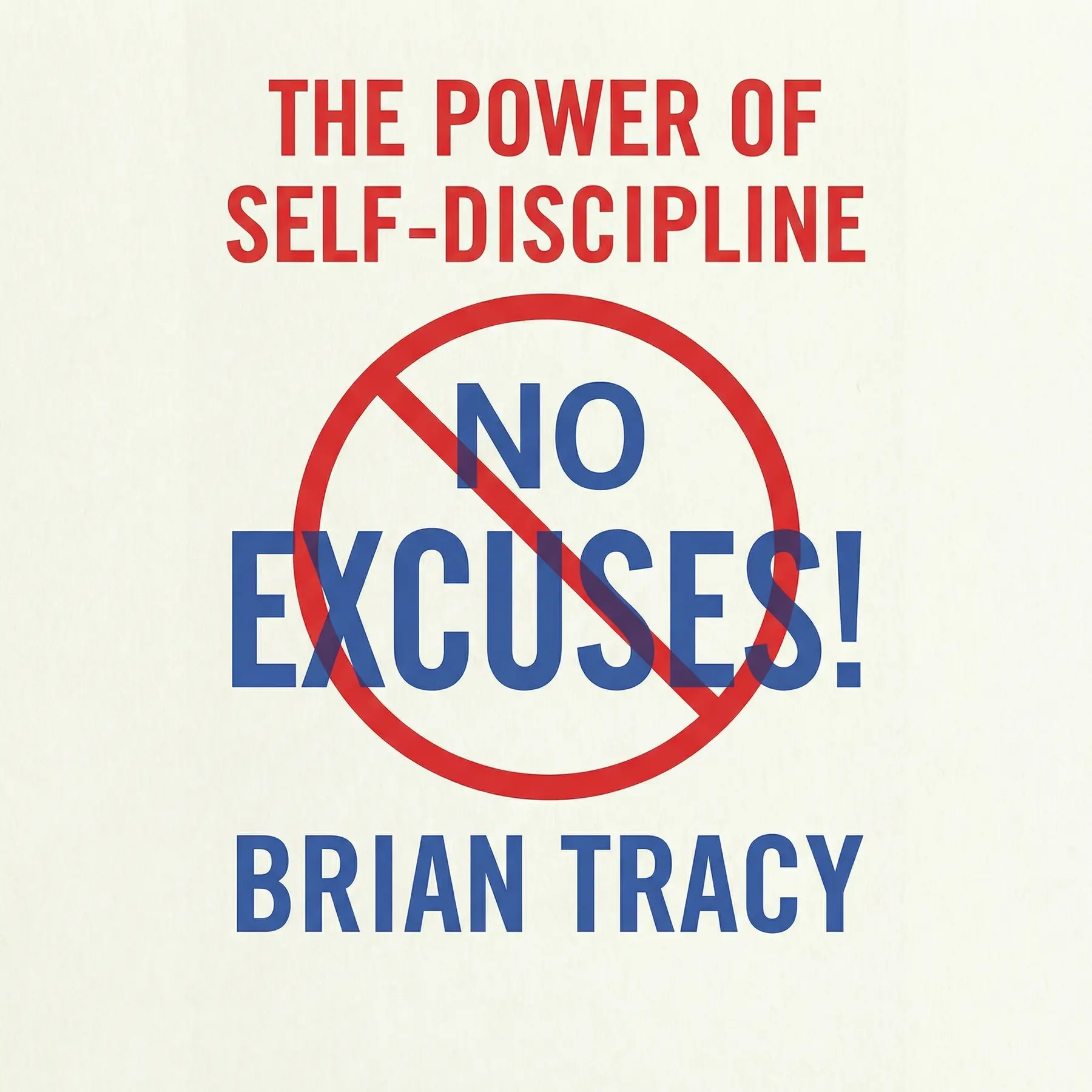
EnglishไทยNo Excuses!: The Power of Self-Discipline
By Brian Tracy
Shows how self-discipline turns good intentions into results at work, with money, in health and at home. The tools are simple: written goals, a four-step Disaster Report for fear and a savings rule that starts at 1 percent.
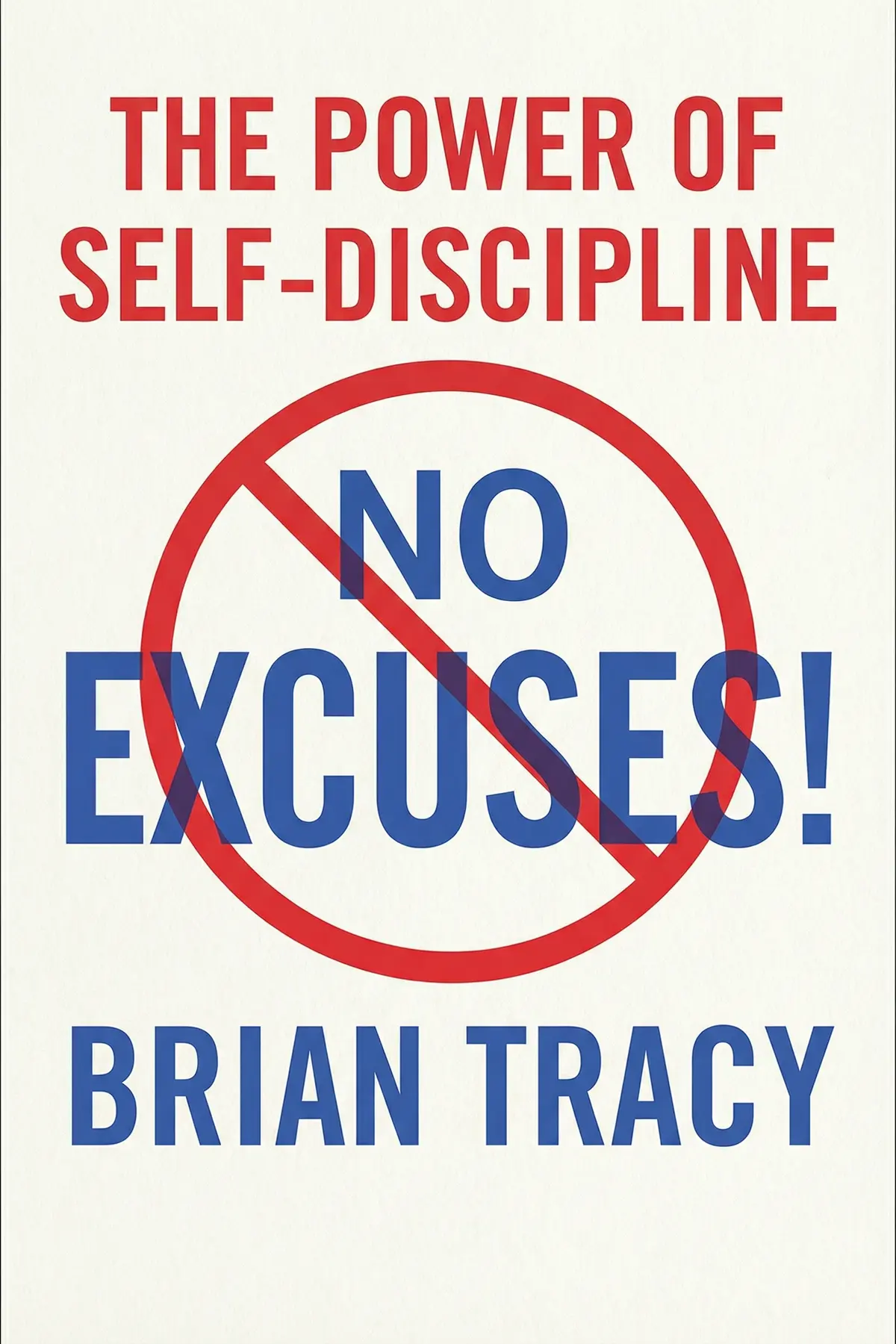
Table of Content
1. Introduction
57 sec
Most people already know what would improve their money, health and careers. What holds them back is a stack of excuses and too little discipline. In No Excuses!, speaker and trainer Brian Tracy argues that people who get ahead are given no more hours than anyone else. What sets them apart is self-discipline, applied steadily to work, money, health and family. His own turning point came at 21, when he was broke, working construction and finally done blaming his childhood and his missing education.
Tracy’s case is that discipline is a set of simple routines anyone can run. Write the goal down, face the fear and rank the day. Save a little, eat and move better, and put family ahead of lesser pleasures. Each routine arrives with a tool you can try this week, from a four-step Disaster Report for fear to a savings rule that starts at one percent of your pay.
2. Own your results and learn from the best
1 min 38 sec
A broke construction worker in a tiny apartment and a dentist at a conference in Hong Kong made the same move. One decision and one habit changed both of their lives, and neither required talent.
3. Turn a vague wish into a written plan
1 min 46 sec
Almost every New Year’s resolution is abandoned within weeks. Among the few people who keep theirs, one small physical habit shows up again and again, and Tracy builds a whole method around it.
4. Shrink any fear by facing its worst case
1 min 36 sec
Fear of losing money or of a harsh boss can freeze even a top performer. Tracy offers a four-step exercise and a single prepared sentence, and one seminar participant found her working life changed overnight.
5. Become the person your boss trusts first
1 min 41 sec
Tracy was told to visit a new property within a couple of weeks. He went the next morning, and what he found there saved his company millions and changed his career within a year.
6. Build savings that start at one percent
1 min 14 sec
Most savings plans fail because they ask too much too soon. Tracy’s starting figure is so small that even people deep in debt can meet it, and he treats it as the first step toward financial freedom.
7. Rank your day so important work wins
1 min 24 sec
A full day of small jobs can feel productive while the task that matters sits untouched. Tracy’s five-letter system comes with one strict rule, and he claims that following it can double what you earn.
8. Cut three white foods and start moving
1 min 44 sec
A man in Florida lost 22 pounds by giving up three ordinary foods. A woman who first laced up running shoes at 68 later finished races most young athletes would never attempt.
9. Make time for family and let old grudges go
1 min 28 sec
Parents name one regret more than almost any other, and it is usually avoidable. Tracy pairs a story about a golf-loving father with a harder discipline that frees adults from wounds decades old.
10. Conclusion
1 min 06 sec
No Excuses! makes an old-fashioned promise: the life you want is built mostly from things you already know you should do. Tracy’s contribution is to give that knowledge handles. A goal becomes seven written steps and a fear becomes a four-part report. A day becomes a ranked list, and savings start at a single percent. Beneath every tool sits the choice he made at 21, broke in a tiny apartment, to stop blaming his past.
The tools are modest on purpose. Nobody needs a new personality to keep $30 from a $3,000 month, to write one goal with a date beside it, or to walk around the block, as a 68-year-old woman did on her way to 50-mile races.
So begin by listening for your own excuses. The next time you explain a setback with your childhood, your boss or your schooling, treat that sentence as a signal to act. Write one goal tonight, and put a small share of your income toward learning. The excuse will still be there. You simply stop taking orders from it.
About this book
What is this book about?
Most people know what would improve their lives. They should save more, eat better, finish the important task first and spend more time with family. What gets in the way is rarely a lack of knowledge. It is a long list of excuses and too little discipline to act on what they already know. Brian Tracy argues that self-discipline explains why some people, with the same hours as everyone else, build wealth and success while others stall. He traces his own change to the day he stopped blaming his childhood and his missing education, and he applies the same refusal to every area of life: career, business, money, health and relationships. The book turns that principle into named, practical tools. The Seven-Step Method turns a goal into a written plan. The Disaster Report shrinks a fear by looking straight at the worst case. The One Percent Formula starts savings at a level anyone can manage, and the A B C D E Method ranks the day so procrastination loses. Stories from Tracy's seminars, his own career and other people's lives show the tools at work, from a promotion that followed flying to Reno the next day instead of weeks later to a 68-year-old who went on to finish two 50-mile marathons.
Book Information
Who it's for
Young professionals who procrastinate
Young professionals who know what they should be doing but keep putting it off.
Workers and business owners
Employees and business owners who want a reputation for getting things done and a plan that improves every year.
Hoping to change habits
People who want to save, lose weight or spend more time with family, and want simple rules for doing it.
About the Author
Brian Tracy
Brian Tracy is a Canadian-American motivational speaker and self-development author. He founded Brian Tracy International, a company that trains and develops individuals and organizations, and serves as its chairman and CEO. Earlier he was chief operating officer of a $265 million development company. He has advised more than 1,000 companies, worked in over 80 countries and created more than 300 audio and video learning programs, including Psychology of Achievement. His books include Eat That Frog! and No Excuses!
Ratings & Reviews
Ratings at a glance
What people think
Listeners find this book highly inspiring, offering functional tips and profound insights on every page. The text is direct and addresses every facet of life, featuring quality writing and action exercises throughout. They value its clarity and how easy it is to use, with one listener highlighting the author's natural, conversational style.
Top reviews
Amelia
Wow. This isn't just another self-help book that sits on your shelf collecting dust while you wait for inspiration to strike. Brian Tracy delivers a blunt, no-nonsense guide to taking control of your life through the power of self-discipline. I especially appreciated the action exercises at the end of each chapter because they force you to stop reading and start implementing. Truthfully, some of the financial advice felt a bit dated and focused too much on accumulation, but the core message remains powerful. If you need a cheerleader who is also willing to give you a kick in the pants, this is the one. It covers everything from health to marriage to time management. Stop overthinking it and just buy the book already.
Show moreMo
Picked this up during a major slump and it was exactly the reality check I needed to get moving again. Brian Tracy is one of those old-school gurus who doesn't care about your feelings; he cares about your results and your output. The 21 chapters cover every imaginable area of life, from personal excellence to sales and money management. I spent hours journaling through the questions at the end of each section, which provided deep insights into my own excuses. This book is basically the bible of motivation if you are ready to stop whining. It’s a life-changing manual for anyone willing to pay the price of success.
Show moreKet
Finally got around to reading this classic and it lives up to the hype if you're willing to do the work. The book is packed with wisdom on how to get your self-discipline on and start showing up for your own life. I highlighted nearly the whole thing on my Kindle because the advice is so punchy and direct. 'If it’s to be, it’s up to me' has become my new morning mantra. It’s conversational, easy to read, and doesn't waste time on flowery language or complex theories. If you follow the instructions, this book is guaranteed to change your trajectory. It really makes you take a hard, honest look at your own rationalizations.
Show moreSuphan
No more excuses—that’s the mantra I’ve been repeating since finishing the final chapter last night. This is an incredible resource for anyone who feels like they are standing in their own way. Brian Tracy covers everything from character building to financial independence with a sense of urgency that is contagious. I loved the emphasis on taking 100% responsibility for your life and refusing to blame external circumstances for your current situation. The exercises required some serious soul-searching, but the clarity I gained was worth the effort. This isn't just a book you read; it's a book you do. Get the hard copy so you can mark it up and refer back to it monthly.
Show moreJoshua
Ever wonder why some people just seem to get everything done while you're stuck on 'Someday Isle' making plans that never happen? Tracy’s approach is straightforward and almost aggressive in its simplicity, which I found surprisingly refreshing compared to the fluffier modern titles. He argues that discipline is the bridge between your goals and your actual accomplishments. Personally, I think the section on time management was the strongest, offering practical strategies that I could use the next morning. It is a bit repetitive, and the 'Law of Reversibility' sounds more like a marketing gimmick than a scientific fact. However, the wisdom on every page makes it worth the read for anyone lacking focus.
Show moreAubrey
As a freelancer, self-discipline isn't just a buzzword; it's the difference between paying rent and going broke. This book breaks down the 'how' of staying productive without a boss looking over your shoulder. The Law of Sowing and Reaping was a highlight for me, as it reminds us that we can't expect a harvest without the work. Not gonna lie, the writing style is a bit dry and feels like a transcript from a seminar, but the content is pure gold. My only complaint is the excessive alliteration in his lists, which can feel forced at times. Still, the action-oriented nature of the text makes it a permanent fixture on my desk.
Show moreAmara
This book reads like a transcript from a high-energy seminar, which makes it incredibly easy to digest in short bursts. I loved the way Tracy breaks down complex life goals into simple, repeatable habits that anyone can master. To be fair, some of the advice on working an hour earlier and later than everyone else feels like a recipe for burnout. But for someone struggling with procrastination, the 'No Excuses' mindset is a vital tool to have in the kit. The readability is excellent, and the conversational tone kept me engaged even during the more repetitive middle chapters. It’s a solid 4-star guide that stays focused on implementation over theory.
Show moreConnor
Truth is, Brian Tracy has a very specific, old-school perspective that might rub modern readers the wrong way. The information is definitely useful and worth learning, but it often feels like a collection of study notes from other, better books. He leans heavily on Dale Carnegie for the relationship advice and doesn't always cite his sources when making broad psychological claims. I liked the focus on long-term thinking, yet I struggled with the idea that we should all act like robots to be successful. It’s a decent primer on discipline, but it lacks the nuance required for a balanced 21st-century life. Read it for the motivation, but take the 'superior people' talk with a grain of salt.
Show moreVilaiporn
Look, the advice here is solid, but the constant alliteration and repetitive lists started to grate on my nerves after the tenth chapter. I understand that Tracy wants to make his points memorable, but forcing every list into a '4 P' format feels unnecessary and gimmicky. In my experience, the section on 'Someday Isle' was a brilliant wake-up call that helped me identify my own procrastination patterns. The book is written in a very straightforward style that makes it perfect for a quick morning read. However, you really have to filter out the survivor-bias and the overly simplistic view of human psychology. It’s a great message wrapped in somewhat annoying delivery.
Show moreFatou
The author's obsession with equating human value to net worth is frankly exhausting. He uses terms like 'superior people' to describe the wealthy, which implies that everyone else is somehow failing at being human. While the chapters on self-discipline are theoretically useful, the constant emphasis on money as the only metric of success felt shallow and outdated. It’s a very 'workaholic' mindset that ignores the importance of family time or mental health in favor of staying an extra hour at the office. I found some of the analogies—like the one about kids and candy—to be incredibly patronizing. There are better books on habit-building that don’t make you feel like a 'loser' for not being a millionaire.
Show moreQuestions about this book
What is the main idea of No Excuses! by Brian Tracy?
Tracy argues that successful people get no more time than anyone else. What sets them apart is self-discipline, applied to personal success, career and happiness. He traces his own change to the day he stopped blaming his childhood and lack of education. The book turns that refusal to make excuses into practical tools for goals, fear, work, money, health and family.
What is the Seven-Step Method in No Excuses!?
It is Tracy’s process for reaching a goal. Decide exactly what you want, write it down and set a realistic deadline. Then list everything you could do to get there, including obstacles and skills you need. Rank those tasks and schedule the most valuable ones, start immediately and do something toward the goal every day. He links it to a study in which writing resolutions down helped people keep them.
What is the One Percent Formula?
It is Tracy’s way to begin saving through delayed gratification. You save 1 percent of your income and live on the other 99 percent, so $30 on a $3,000 monthly income. Once that feels normal, you raise it to 2 percent and keep going. He says it stays realistic even for people living paycheck to paycheck or carrying debt.
How does the A B C D E Method beat procrastination?
Each morning you list the day’s tasks and give each one a letter. A tasks have serious consequences if missed, B tasks mild ones and C tasks none. D tasks are delegated and E tasks are eliminated. The one rule is never to do a lower-value task while a higher-value one remains. Tracy claims this can double your productivity and earnings.
How does Brian Tracy suggest dealing with fear?
He says fears are learned, so they can be unlearned. His Disaster Report has four steps: describe the fear, name the worst case, plan what you would do if it happened and work to prevent it. He also advises facing fear right away. One seminar participant calmly asked her belittling boss to speak to her differently, and he apologized.
Readers also enjoyed

59 Seconds: Change Your Life in Under a Minute
Richard Wiseman





A Guide to the Good Life: The Ancient Art of Stoic Joy
William B. Irvine


A High-Performing Mind: Strengthen Your Mind and Live Your Best Life
Andrew D. Thompson


Abundance: The Inner Path to Wealth
Deepak Chopra
AUDIO SUMMARY AVAILABLE
Listen to No Excuses! in 15 minutes
Get the key ideas from No Excuses! by Brian Tracy, plus 5,000+ more nonfiction titles.
- 5,000+ titles
- Listen as much as you want
- 7-day free trial
- Cancel anytime









