
14 min 28 sec
Available in: English
 ไทย
EnglishไทยThe 7 Habits of Highly Effective Families
Shows how a family can stop drifting and start steering: by choosing responses, writing a shared mission, scheduling time together first, building trust and listening deeply enough to find better solutions together.
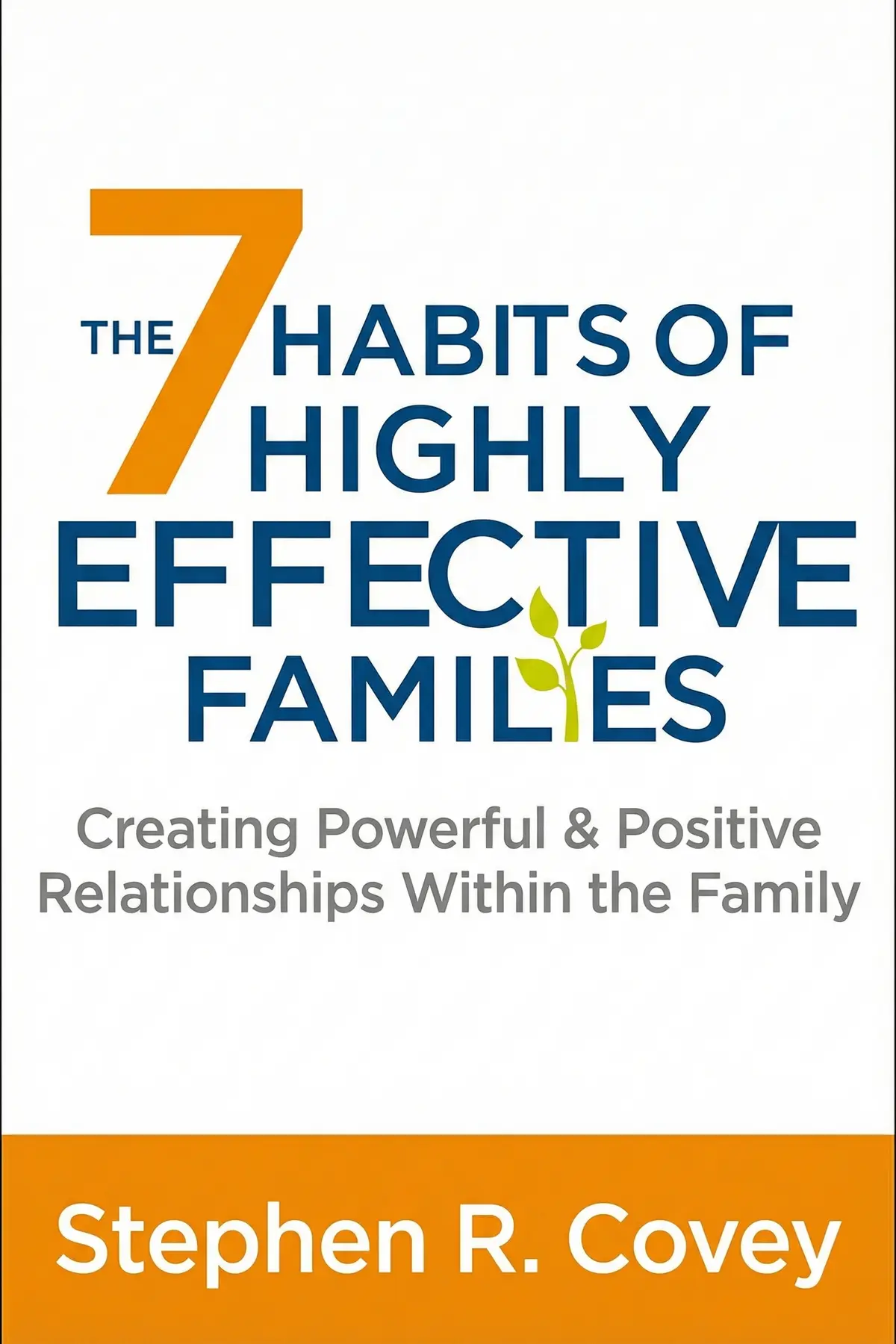
Table of Content
1. Introduction
57 sec
Many families run on autopilot: crowded weeks, the same arguments on repeat and a feeling that home should be calmer than it is. In The 7 Habits of Highly Effective Families, Stephen R. Covey argues that a family needs what every flight needs, a destination and a plan, because then it can drift off course and still find its way back. Best known for The 7 Habits of Highly Effective People, Covey brings seven habits to the kitchen table.
His case is that a family becomes effective when its members choose their responses, agree on where they are heading, protect time together, build trust, listen deeply, combine their strengths and keep renewing themselves, beginning with one person who changes first. Along the way come a three-step method for writing a family mission statement, four “Big Rock” family systems for a crowded calendar, and a practical reason why one plus one can equal three.
2. Use the pause between what happens and your reply
1 min 57 sec
A prisoner in a Nazi camp found one freedom his guards could never take. Covey turns that discovery into a daily tool for the moments when family tempers flare.
3. Give your family a destination everyone helped write
1 min 45 sec
Nobody would build a house without knowing what it is for, yet many families live exactly that way. A short exercise around the dinner table changes where everyone is pointing.
4. Put family on the calendar before anything else
1 min 51 sec
Ask people what matters most and they name family. Look at where their hours go and the picture is uncomfortable. Covey’s own household solved the mismatch with four large stones.
5. Build trust that survives family arguments
1 min 42 sec
One broken promise can undo months of good behavior. Covey’s picture of an invisible account explains why small gestures outweigh grand ones, and why gossip costs you twice.
6. Listen until the other person feels understood
1 min 52 sec
Family counselors hear one complaint far more than any other. The remedy sounds simple, but it asks you to hold back the very thing you most want to offer.
7. Turn two opinions into a better third answer
1 min 31 sec
Fighting gets a pair half a result, and compromise does a little better. Covey describes a way for two family members to produce more than both could manage alone.
8. Keep the family strong by renewing it often
1 min 53 sec
Two neighbors with identical saws finish at very different times. The difference explains why tired families decline, and where the whole climb toward a better home actually begins.
9. Conclusion
1 min 00 sec
What Covey hands a family is a way of steering. No family stays on course all the time, and he never asks it to; he asks it to have somewhere to come back to. The early habits give it a mindset, a destination and an order of priorities, the middle ones a way of working together, and the last a way of not wearing out. Because the habits form a spiral, each pass begins from higher ground.
The place to start is smaller than the title suggests. Pick the one change in your own behavior that would matter most at home, perhaps keeping a promise you usually let slide, and hold it for a month with a friend cheering you on. Book one family meal and one weekly hour before the calendar fills. And the next time someone you love is upset, ask a clarifying question before offering any advice.
A plane with a flight plan can be pushed off course by the wind and still land where it meant to. So can a family that knows its destination.
About this book
What is this book about?
Most families have good intentions and very little plan. Days fill with work, screens and errands, arguments repeat, and the people who matter most get whatever time is left over. Stephen R. Covey argues that a family, like a flight, needs a destination and a route, so it can return to course whenever it drifts. He applies seven habits to home life. Family members learn to pause and choose their responses, as the psychiatrist Viktor Frankl did in a Nazi camp. They write a shared mission statement, schedule four Big Rocks such as family meals and a weekly hour together, and build trust through an Emotional Bank Account of kept promises, apologies and small kindnesses. They practice empathic listening, look for solutions better than compromise, and renew themselves physically, emotionally, mentally and spiritually. Readers get concrete methods they can try this week and a starting point that depends on nobody else: changing one thing in their own behavior first, then letting the effect spread outward through the family.
Book Information
Who it's for
Parents wanting shared direction
Parents who feel their household runs on autopilot and want a shared sense of direction.
Couples who keep arguing
Couples who argue about the same things and want practical tools for trust and listening.
Professionals missing family meals
Busy professionals whose calendars keep squeezing out family meals and time together.
About the Author
Stephen R. Covey
Stephen R. Covey (1932 to 2012) was an educator, businessman and speaker born in Salt Lake City, Utah, and a co-founder of FranklinCovey. He wrote The 7 Habits of Highly Effective People, his best-known book, along with First Things First and The 8th Habit. When he died he was a professor at the Jon M. Huntsman School of Business at Utah State University, and in 1996 Time magazine named him one of its 25 most influential people.
Primary Greatness: The 12 Levers of Success
Stephen R. Covey
The 8th Habit: From Effectiveness to Greatness
Stephen R. Covey
The Speed of Trust: The One Thing That Changes Everything
Stephen R. Covey
Ratings & Reviews
Ratings at a glance
What people think
Listeners find the work insightful and helpful, with one individual noting that it provides doable examples. Furthermore, they value its accessibility, with one person highlighting its suitability for families with children of any age. The title also receives praise for its capacity to foster strong family relationships.
Top reviews
Pornthip
Ever wonder why family life feels like a constant scramble to catch up? Covey nails the feeling of being "off course" 90% of the time, which was a huge relief for me to hear. This isn't about being a perfect parent; it's about having a flight plan to get back on track when things inevitably get messy. I loved the emphasis on building an emotional bank account with your kids and the practical, doable examples provided for families with children of any age. Truth is, I actually highlighted sections on "choosing your own weather" because my personal mood often dictates the entire household vibe. It's a long read and some stories feel a bit dated, but the core principles for building stronger bonds are truly timeless. It really shifts the focus from discipline to genuine connection.
Show moreNim
Picked this up because I wanted more than just a surface-level parenting guide, and Covey delivered something much deeper. He focuses on the "end in mind," asking us to think about what kind of adults we want our children to become. I especially appreciated the 2022 update which addresses modern struggles like screen time and toxic relatives. The writing style is very readable, though you have to ignore the occasional outdated assumption about traditional gender roles. Look, the specific story about the miscarriage was jarring and felt poorly handled by the mother in the anecdote, but the overarching message about empathy and love is vital. It’s a great reference book for those who want to cultivate a proactive rather than reactive family life.
Show morePrim
The section on the "Emotional Bank Account" changed how I look at my relationship with my spouse and my kids. It’s such a simple metaphor, but it makes so much sense when you’re dealing with daily friction. Gotta say, I enjoyed the 2022 version because it feels more relevant to our current world of constant digital distraction. The book is easy to read, and while it's long, you can easily dip in and out of chapters as needed. I’ve started implementing the "family meeting" and even though it was awkward at first, it's helping us stay on track. It’s a must-read if you want to move beyond just "getting through the day" and actually build a legacy of love.
Show moreSienna
If you are tired of parenting books that only offer "band-aid" solutions, this is the deep dive you need. It focuses on the roots of behavior rather than just the symptoms. I love how it treats the family as a team with a shared vision. The examples are doable and didn't make me feel like a failure, even when the authors shared their own "grumpy" moments. It’s remarkably readable for such a thick book. I’ve already noticed a shift in how we handle conflict; we’re actually looking for "Third Alternatives" instead of just compromising. It’s an essential read for anyone who wants a more harmonious and effective home life.
Show moreManee
This book takes the classic corporate habits and translates them into the messy world of chores, tantrums, and teenagers. I found the chapter on family mission statements particularly useful, even if the process felt a bit formal for our casual household. To be fair, Covey’s tone can lean toward the "kumbaya" side, and the religious undertones are definitely there if you’re looking for them. However, the advice on listening first and talking second is something every parent needs to hear on repeat. Not gonna lie, I skipped some of the longer anecdotes that felt repetitive and bloated. Despite the length, it’s a solid resource for anyone wanting to be more deliberate about their home culture and build a sense of unity.
Show moreWittaya
As a parent of three, I’m always looking for ways to reduce the chaos and this provided a great framework. The idea that "home and work have switched places" as venues for adult relaxation really hit home for me. I’ve been using the "win-win" approach for chores, and it’s actually working without the usual yelling matches. In my experience, the book is a bit too long and could have been condensed by at least half. Covey repeats himself to ensure the message sticks, but it can feel like he's trying to take credit for basic common sense at times. Still, the results speak for themselves. Our family culture feels more intentional and less like we're just surviving the day.
Show moreAhmed
After hearing about the 7 Habits for years, I finally dove into the family version and found it surprisingly insightful. It’s not just for church-goers, despite what some critics say; the principles of being proactive and seeking first to understand are universal. I liked how it addresses families at every stage, from toddlers to grown children. One minor gripe is that the anecdotes sometimes feel too perfect, like no one in the Covey family ever truly loses their cool. But then he'll mention a personal failure, and the book feels human again. This is a high-quality guide for building a "positive note" in your home. I’ll definitely be keeping this on the shelf for future reference and re-reading.
Show moreGiulia
While I appreciate the depth of research, this book could have been a 50-page pamphlet and been just as effective. Covey is clearly a brilliant thinker, but the sheer volume of stories can be overwhelming and sometimes distracting from the actual habits. That said, the "Begin with the End in Mind" principle is a total game-changer for discipline. It stops me from overreacting to small messes and helps me focus on the long-term character of my children. Personally, I found the "Choose Your Weather" concept to be the most helpful tool for my own mental health as a busy mom. It’s a high-quality guide, even if it feels a bit dated and traditional in its worldview.
Show moreLucia
Frankly, the concept of applying business habits to a family unit felt a bit cold at first, and the execution didn't entirely change my mind. I struggled with the faith-based, almost smarmy tone that permeates many of the personal stories. Some of the data feels like it belongs in the 1990s, especially regarding the traditional model where mothers are expected to be the primary emotional anchors. I did find the bit about yard maintenance and teaching kids responsibility through a "contract" to be a practical win, though. It’s a bit of a hand-holding fest that might irritate the cynics among us. If you can get past the fluff, there are some nuggets of wisdom buried in there for strengthening relationships.
Show moreChanon
I was skeptical going in, and unfortunately, this just wasn't for me. The advice felt banal and primitive, disguised as some revolutionary discovery by a corporate guru. "Listen more than you talk" isn't a breakthrough; it's basic human decency. The book is incredibly repetitive, saying the same thing three different ways in every single chapter to the point of frustration. I was also deeply disturbed by the anecdote regarding the mother who subverted her feelings during a miscarriage for the sake of her daughter's "positive experience." That felt incredibly unhealthy and out of touch with modern psychological understanding. If you want a book that prioritizes empathy without the smarmy corporate-speak, I’d look elsewhere. This felt more like a lecture than a guide.
Show moreQuestions about this book
What is the main idea of The 7 Habits of Highly Effective Families?
Covey argues that a family, like an airplane, needs a destination and a plan, so it can drift off course and still return. He sets out seven habits for getting there: being proactive, beginning with the end in mind, putting first things first, thinking win-win, seeking to understand before being understood, synergizing and sharpening the saw. Their strength comes from practicing them together, again and again.
How do you write a family mission statement according to Covey?
Covey describes three steps. First, the whole family brainstorms its purpose, values and dreams, accepting every idea without judgment. Second, the ideas are combined into a few written sentences, such as a pledge to love and help each other. Third, the statement is displayed where everyone sees it, used to correct course when the family drifts, and revised as needs change.
What are Covey's Big Rocks for families?
They are the four family systems Covey’s own household scheduled before anything else: regular family meals, a weekly family hour on a fixed day, family traditions, and one-on-one time with each person. Once these are on the calendar, along with essential work commitments, it becomes easier to see where smaller activities fit. Covey links family meals to better grades and less risky teenage behavior.
What is the Emotional Bank Account?
It is Covey’s picture of trust in a relationship. Acts that build trust are deposits and acts that damage it are withdrawals. Deposits include small kindnesses, sincere apologies, keeping promises, forgiving and refusing to gossip. Excuses, blame and broken promises are withdrawals, and a broken promise can take months to repair. A high balance means high trust and better communication.
Where should I start applying the seven habits at home?
Covey says to start with yourself. Choose one thing you could start or stop doing that would make a big difference at home, make a simple plan to keep it up for about 30 days, and share it with someone who will encourage you. Then apply the habits to one relationship, then the whole family, and eventually your community.
Readers also enjoyed



AUDIO SUMMARY AVAILABLE
Listen to The 7 Habits of Highly Effective Families in 15 minutes
Get the key ideas from The 7 Habits of Highly Effective Families by Stephen R. Covey, plus 5,000+ more nonfiction titles.
- 5,000+ titles
- Listen as much as you want
- 7-day free trial
- Cancel anytime









