

15 min 13 sec
Available in: English
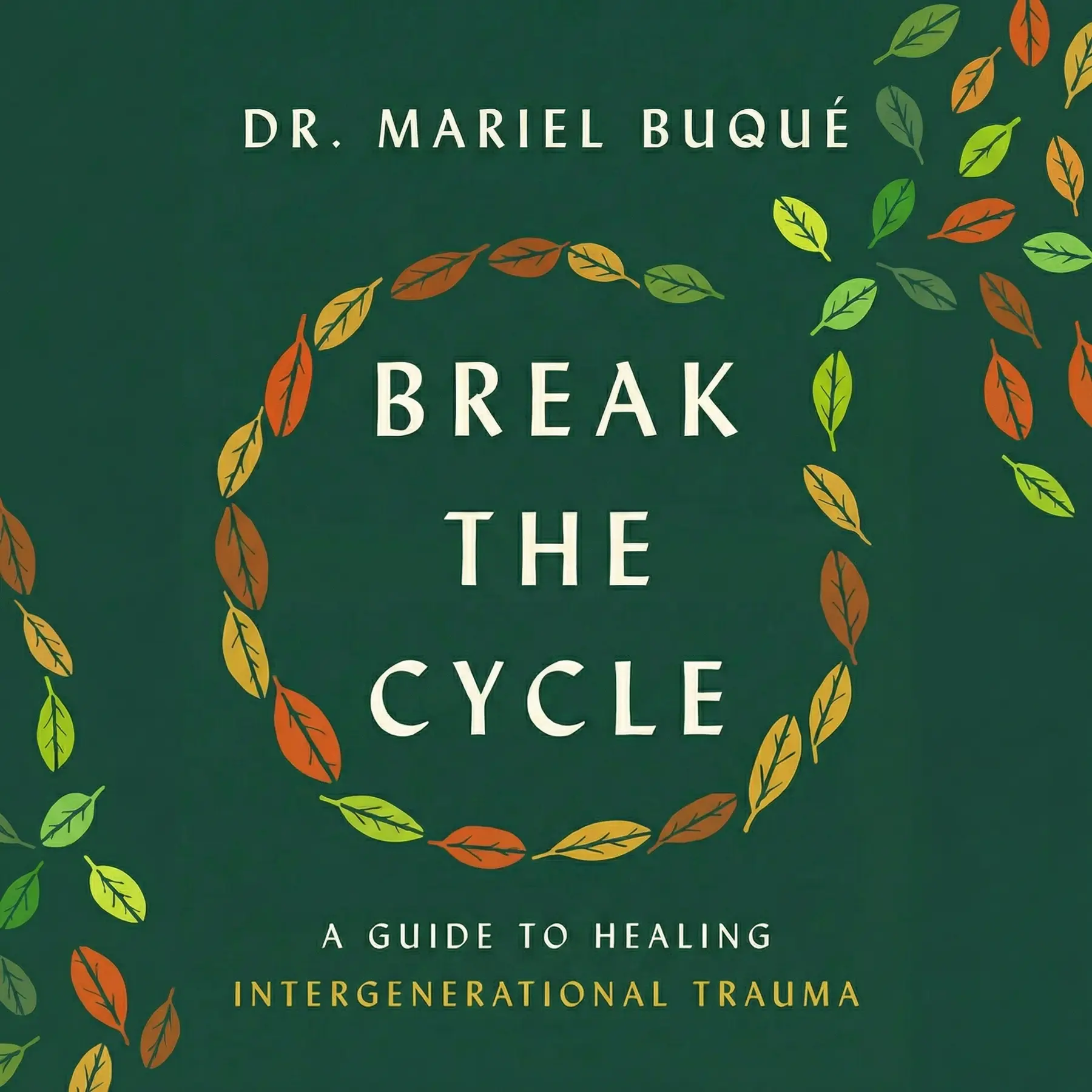
Break the Cycle: A Guide to Healing Intergenerational Trauma
By Mariel Buqué
Buqué shows how fear, people-pleasing and other family habits can be inherited trauma. She offers mapping, journaling and body-based practices to stop passing pain down while keeping the strength your lineage gave you.
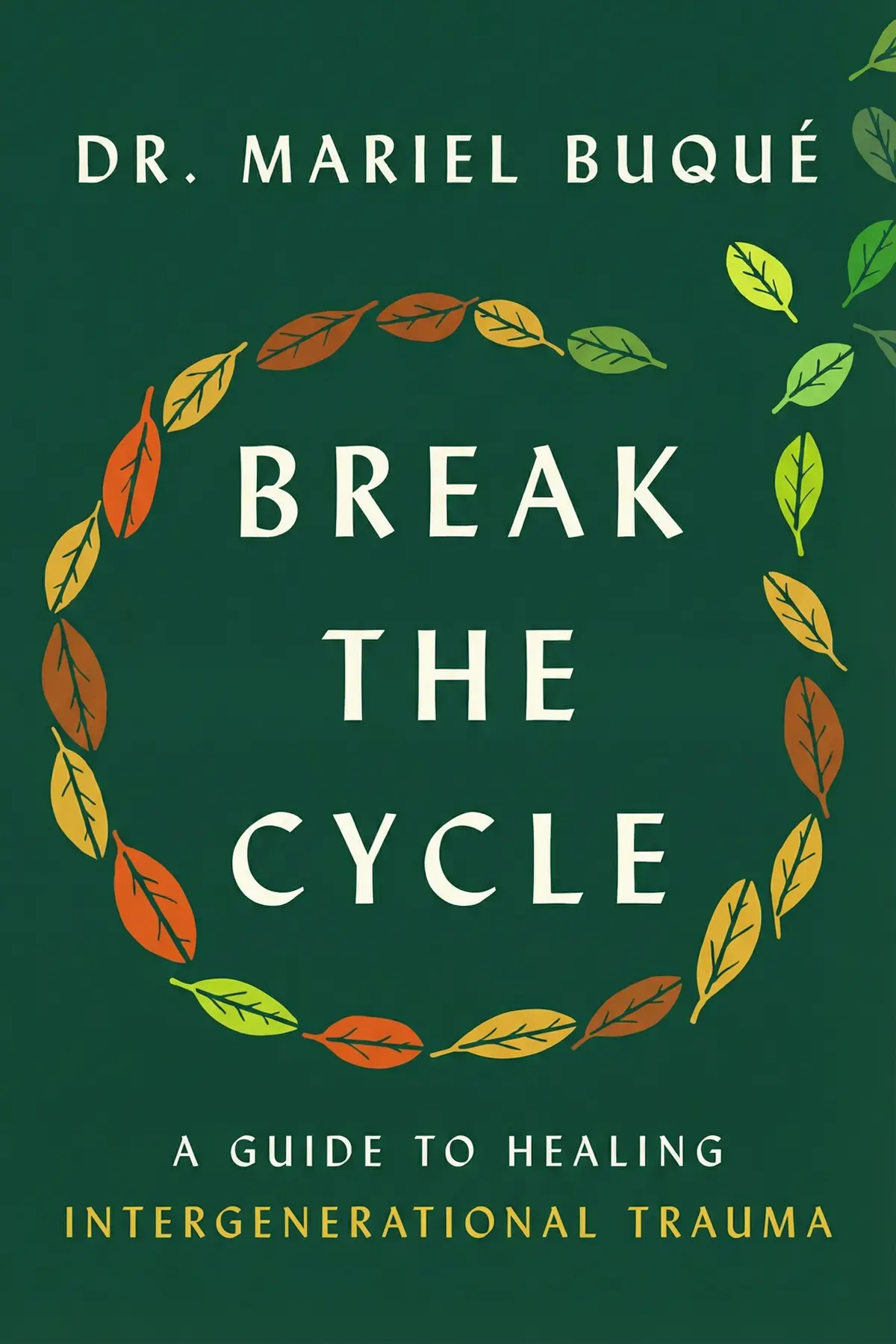
Table of Content
1. Introduction
58 sec
Many people carry a fear, a reflex or a family rule they never chose, and assume it is simply who they are. In Break the Cycle, psychologist Mariel Buqué argues that much of it was handed down, and that what was handed down can be set down. Her own example is a ten-year-old girl walking more than a mile beside her grandmother to fetch water from a spring, a childhood that explains why, decades later and living in comfort, she still struggles to throw things away.
Buqué’s case is that pain a family has learned to call normal travels through bodies, parenting and whole cultures, yet anyone willing to name both the wound and the strength that came with it can pass on the strength instead. Ahead lie a test for spotting an inherited pattern, a map of where it came from, practices that calm it in the body, and a fresh way to stay loyal when relatives resist.
2. Spot the old wound inside a normal habit
1 min 47 sec
A ten-year-old’s long walk to fetch water explains why a comfortable adult still cannot throw things away. Her story shows how a survival habit turns invisible, and why the things a family calls normal deserve a second look.
3. Read people-pleasing as a signal from the past
2 min 05 sec
Saying yes when you mean no can feel like a personality trait. Buqué traces it somewhere older, using an idea borrowed from Indigenous cultures and the picture of a wound that never closes.
4. Trace the roads your family's pain traveled
1 min 48 sec
Some inherited pain arrives through genes, some through a parent’s hand, some through a whole society. A mother who hit her child becomes the clearest case for asking what happened to someone before judging them.
5. Honor the strength inherited alongside the hurt
1 min 58 sec
Looking only at a family’s damage leads to despair or rejection. Buqué asks for a harder double view, and it changes what you keep from your culture and what you choose to reshape.
6. Map family patterns so they stop hiding
1 min 57 sec
Cycle breakers have mostly worked on instinct. A rebuilt family tree, a stretched childhood checklist and a nightly notebook aim to drag hidden patterns into the light, where they finally lose their grip.
7. A body that no longer carries the old fear
1 min 44 sec
Insight alone rarely stops a racing heart. If old pain is stored in the nervous system, the repair has to reach it there, and the speed you go at matters as much as the method.
8. Healing is the deepest kind of family loyalty
1 min 42 sec
Breaking a cycle can bring crisis, grief and pushback from the people you love most. Buqué’s answer recasts what loyalty means, and it holds even when nobody else in the family changes.
9. Conclusion
1 min 14 sec
Break the Cycle asks you to look at the most ordinary corners of family life the way a detective looks at a scene. A grandmother who grew up poor teaches a girl to waste nothing. The girl’s mother cannot bear to see anything thrown out. The girl herself, now a Columbia-trained psychologist living in comfort, still feels the same fear and guilt. Nobody chose the pattern, and everyone paid for it. Yet Buqué holds that a family line passes down resilience and inherited wisdom as well as pain.
The work Buqué describes starts small. Choose one habit your family treats as normal and write down both what it has cost and what it once protected. Trace where it came from, through bodies, parenting and the society around you, until it stops hiding behind the word culture. When a memory tightens your chest, slow your breath and go gently. And find one person who will stay beside you when relatives push back.
None of this waits on anyone else changing first. A family’s thrift can be kept as a gift while its fear is set down, and a cycle breaker is simply the first person in the line to tell the two apart.
About this book
What is this book about?
Some family habits feel like personality: the parent who cannot throw anything away, the child who cannot say no, the silence nobody questions. Psychologist Mariel Buqué argues that many of them are intergenerational trauma, pain that moves through a lineage until it passes for normal culture. Drawing on her therapy work, her own Dominican family and studies on how trauma can change gene expression, Buqué describes trauma as a wound to mind, body and spirit. She traces how it travels: through biology and an overactive nervous system, through parenting and family secrets, and through collective harms such as systemic oppression. She pairs that with dual recognition, the practice of honoring a family's resilience as clearly as its wounds. The book then offers what she presents as the first organized protocol for cycle breakers: a trauma tree, a broadened childhood-adversity inventory, journaling and reflection questions, and body-based practices like breathwork and sound baths, taken at a gentle pace. Readers learn how to handle grief and family pushback, and why Buqué sees healing as the deepest form of loyalty to the people they come from.
Book Information
Who it's for
Grown children noticing patterns
Adults who notice their parents' fears, rules or silences showing up in their own lives.
Second-generation immigrants
Children of immigrants who sense that some of their culture's habits carry old pain.
Cycle-breaking parents
Parents determined to raise their children without repeating what was done to them.
About the Author
Mariel Buqué
Dr. Mariel Buqué is a psychologist, originally from the Dominican Republic, whose work centers on healing wounds passed from one generation to the next. She helps people recognize past trauma and turn it into healing for those who come after them. She has lectured in the psychology department at Columbia University, led healing workshops for companies including Google and Capital One, and appeared on Good Morning America, The Today Show and CNN.
Ratings & Reviews
Ratings at a glance
What people think
Listeners find this title to be a significant work that provides transformative perspectives while remaining highly accessible. They value the ideal blend of educational material, with one listener pointing out the inclusion of scientific research. The text assists listeners through their recovery process and addresses trauma from several angles, as one review emphasizes the inclusion of carefully designed exercises. Listeners appreciate the exploration of family history, with one listener describing how it links various generational experiences.
Top reviews
Air
As someone who grew up in an immigrant household where mental health was a taboo subject, this book felt like a warm, validating embrace. Dr. Buqué’s Afro-Dominican perspective is so refreshing and necessary because it addresses the cultural nuances that Western psychology often overlooks. She doesn't just explain the science of intergenerational trauma; she illustrates it through moving stories, like her own childhood memory of fetching water. I particularly loved the integration of holistic practices like sound baths and breathwork into the healing process. It’s rare to find a book that marries clinical research with indigenous wisdom so seamlessly. The writing is accessible but never feels like it's talking down to you. Truly, this is a must-read for anyone looking to understand the echoes of their ancestors’ pain and finally create their own music from it.
Show moreWei
Wow, this was a heavy but absolutely necessary read that I think everyone should pick up at least once. There is a specific quote in here—'is this pain yours?'—that stopped me dead in my tracks and forced me to reevaluate my entire relationship with my parents. Dr. Buqué does an incredible job of showing how we carry the weight of decades of unresolved grief without even realizing it. The stories from her therapy room were so relatable that it was almost embarrassing to see my own irrational responses mirrored on the page. I opted for the audiobook, which I highly recommend if you’re prone to spiraling, as her voice is incredibly soothing and grounding. This book isn't just about awareness; it's about active movement toward a different kind of future. It has genuinely helped me understand my brain better than any other self-help book this year.
Show moreRatchada
Dr. Buqué offers a refreshing perspective that moves away from the sterile, Western-only approach to psychology that dominated the field for too long. By incorporating sound baths and mindfulness into her practice, she acknowledges that healing must be holistic to be effective. I felt a deep connection to the stories about reclaiming ancestral practices as a form of resistance against trauma. The writing is incredibly clear, which makes the complex science of how trauma traverses generations easy to digest. I’ve already started using some of the breathwork techniques she suggests, and they’ve been surprisingly effective during high-stress family events. This book is a paradigm-shifter. It challenges the status quo and reminds us that we have the power to sow seeds of healing for those who come after us. A truly compelling resource.
Show moreHenry
Ever wonder why certain family reunions feel like walking through a minefield of emotional triggers? This book provides the 'aha' moments you didn't know you needed. It helped me realize that my shut-off response isn't a personality flaw, but a learned behavior from a long line of people who had to be guarded to survive. Dr. Buqué writes with so much compassion and expertise that you feel safe exploring even the darkest parts of your family history. I particularly appreciated the mix of clinical stories and biological explanations. It’s like a workbook for the soul. I’ve highlighted so many passages and shared them with my siblings already. This is more than just a book; it’s an invitation to stop carrying pain that was never yours to begin with. Life-changing stuff for anyone ready to do the work.
Show moreTaweesak
Picked this up during a particularly rough patch, and it provided a much-needed framework for my healing journey. Dr. Mariel Buqué has a way of making you feel seen without ever making you feel judged. The blend of research and storytelling is perfect—I never felt bored or overwhelmed by the scientific jargon. I found the sections on holistic tools especially helpful because they give you something to do with your body when your mind is racing. It’s a well-researched, important book that addresses trauma on multiple levels: individual, familial, and communal. While I can see why some might want more 'instructions' for the exercises, I found them to be great writing prompts for my own journaling. This lands high on my list of books that helped me understand my brain better. Truly grateful for this resource.
Show moreChanikarn
Finally got around to finishing this, and I’ve got to say, it’s a solid resource for those starting their healing journey. The way Dr. Buqué breaks down how trauma lives in the body—not just the mind—is eye-opening and deeply researched. I found the sections on epigenetics fascinating because they provide a scientific backbone to things I’ve felt intuitively for years. However, to be fair, the 'practical resources' section at the end was a bit of a letdown for me. I was expecting more guided, in-depth exercises, but many were just numbered lists that lacked the description needed to really dive deep without a therapist. Despite that, the insights on setting boundaries within family dynamics were invaluable. It’s a 4-star read that offers a great foundation, even if the workbook elements felt a little thin.
Show moreWatchara
The chapter on breaking old parenting patterns alone is worth the price of the book. As a mother, I’m constantly terrified of passing down my own anxieties to my kids, and this gave me a concrete framework to stop those cycles in their tracks. Dr. Buqué explains complex psychological mechanisms in a way that feels like a conversation with a wise friend. I loved the emphasis on 'intergenerational abundance' rather than just focusing on the trauma itself. Frankly, some of the lists in the back could have used more detail, as they felt a little rushed compared to the rest of the beautifully written chapters. Still, the message is empowering. It’s informative, scientifically backed, and provides a much-needed bridge between clinical therapy and holistic self-care. It’s not a magic cure, but it’s a very helpful map.
Show moreAnthony
After hearing a lot about 'cycle breaking' on social media, I was skeptical that a single book could actually help with such a massive topic. I was pleasantly surprised. This isn't just trendy buzzwords; it’s a thoughtful exploration of how our ancestors' survival mechanisms become our own modern-day triggers. The author’s personal stories about her Dominican heritage added a layer of authenticity that many clinical books lack. My only real gripe is that while she addresses the problem of family silence, she doesn't give many solutions for when your family refuses to engage with you. It’s a bit frustrating if you're trying to do the work solo. Regardless, it’s a very informative read that has motivated me to keep digging. I’ll be keeping my physical copy nearby just to revisit the reflection questions every few months.
Show moreDing
To be fair, if you’re brand new to the world of therapy and the concept of 'inherited trauma,' this will be a groundbreaking read. For those of us who have been in the trenches of shadow work for a while, it might feel a bit like a review of the basics. The author is clearly talented and compassionate, and I appreciated the focus on collective healing. But I found myself wanting more from the techniques. Some of the reflection tasks felt a bit surface-level, like things you’d find on a therapist’s Instagram infographic rather than a comprehensive guide. It’s a good book with a noble heart, but it lacks the 'handfesten Werkzeuge' or practical depth I was hoping for to tackle really deep-seated family silences. It's a decent starting point, but perhaps not the deep-dive manual it claims to be.
Show moreTong
Not gonna lie, I was expecting a lot more depth based on the glowing marketing and the author's credentials. While the concept of breaking the cycle is vital, the execution here felt very repetitive and surprisingly shallow in terms of actual 'how-to.' The biggest disappointment was the back of the book. She builds up these 'plenty of exercises and techniques,' but they turned out to be just a few lists with almost no instruction on how to actually implement them into a daily routine. If you’ve read 'The Body Keeps the Score' or anything by Gabor Maté, you won’t find much new information here. It felt more like a very long introductory essay than a transformative guide. It’s a great idea with a weak implementation, and I honestly felt like my time could have been better spent elsewhere.
Show moreQuestions about this book
What is Break the Cycle by Mariel Buqué about?
Psychologist Mariel Buqué explains how trauma passes from one generation to the next and how to stop it. She describes trauma as a wound to mind, body and spirit that can travel through biology, parenting and collective harms such as systemic oppression. The book combines research, stories from her therapy room and practical exercises, with the aim of turning inherited pain into what she calls intergenerational abundance.
What is a cycle breaker according to Mariel Buqué?
Buqué defines cycle breakers as people who find the courage to interrupt family and community behaviors that are treated as normal but actually cause harm. She says they have mostly relied on intuition, and she presents her book as the first organized protocol for the work. A central practice is dual recognition: naming the trauma in a family’s history while also honoring the resilience it passed down.
How is intergenerational trauma passed down?
Buqué describes several routes. Parents under chronic stress may pass on genetic information that leaves children prone to an overactive nervous system. Parents with untended emotional wounds carry them into how they raise children, and families keep secrets out of shame. Trauma can also be collective, coming from systemic oppression, norms like physically disciplining children, or disasters such as a pandemic.
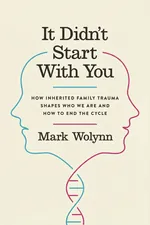
How does Break the Cycle compare to It Didn't Start with You?
Trauma therapist Sage Roberts preferred Buqué’s book to Mark Wolynn’s It Didn’t Start with You. She pointed to its empathy, its well-paced practical strategies and its more inclusive understanding of generational trauma. Buqué’s book also places weight on body-based practices such as breathwork and sound bath meditation, and on collective trauma affecting marginalized families.
How can I start healing generational trauma using this book?
Begin by naming one family habit that feels normal and writing down both its cost and the strength behind it. Map patterns with tools like Buqué’s trauma tree and her broadened childhood-adversity inventory, and journal regularly to track change. Add body-based practices such as breathwork at a gentle pace, and find a committed friend or cousin to support you through family pushback.
Readers also enjoyed



Alcoholics Anonymous
Alcoholics Anonymous World Services

A Liberated Mind: How to Pivot Toward What Matters
Steven C. Hayes




AUDIO SUMMARY AVAILABLE
Listen to Break the Cycle in 15 minutes
Get the key ideas from Break the Cycle by Mariel Buqué, plus 5,000+ more nonfiction titles.
- 5,000+ titles
- Listen as much as you want
- 7-day free trial
- Cancel anytime









