

Alcoholics Anonymous
Alcoholics Anonymous World Services
 English
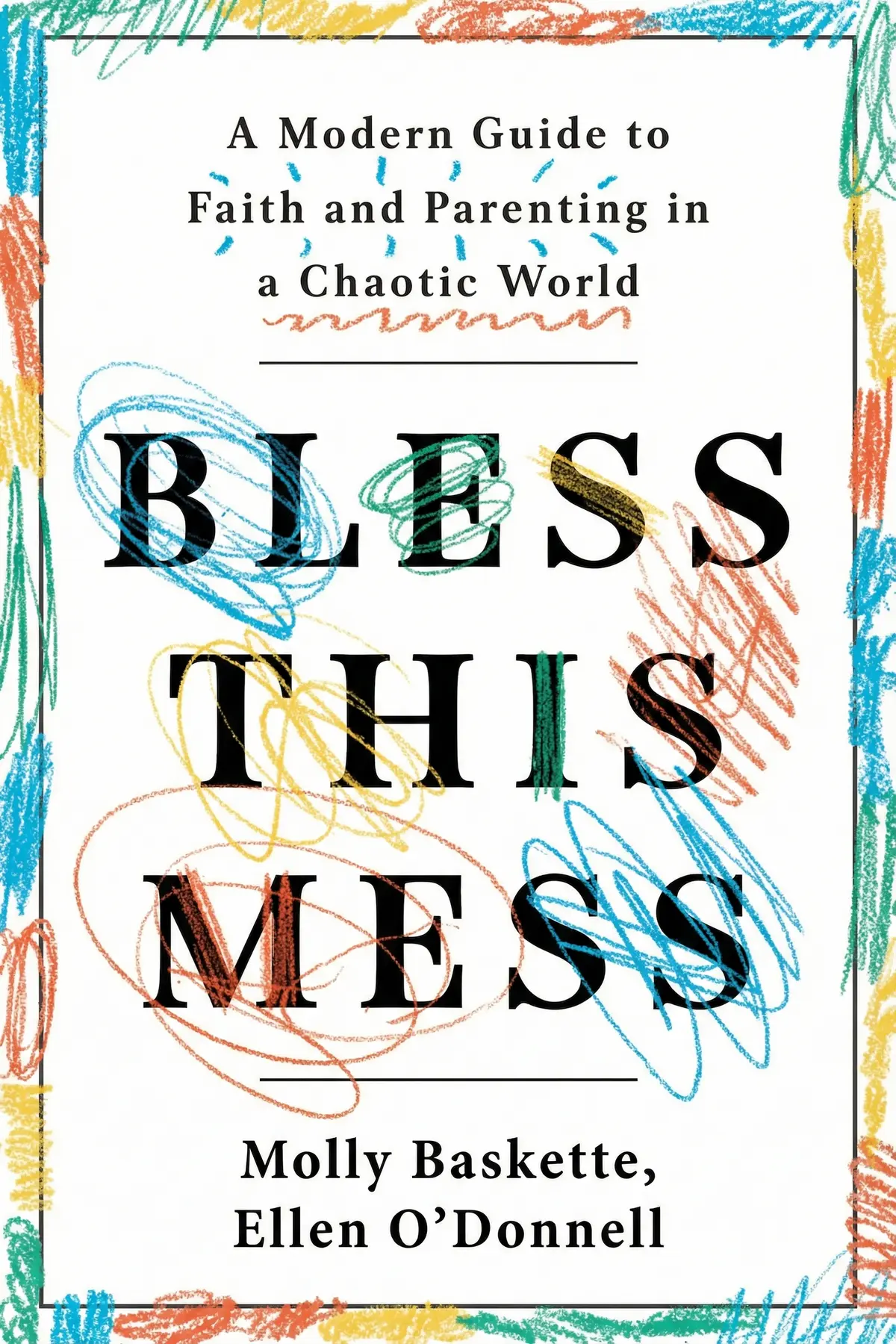
Shows parents of faith with progressive values how to raise kind, generous and independent children by working with each child's nature, explaining instead of commanding, and talking honestly about money, sex, drugs, God and fear.
1 min 06 sec
Many parents who hold both a Christian faith and progressive values find that parenting books leave them stranded: silent on sex, drugs and alcohol, or loud with rules that drive children away. In Bless This Mess, minister Molly Baskette and child psychologist Ellen O’Donnell offer a different starting point. An old proverb about training children, they point out, seems in the original Hebrew to advise raising each child according to their own character.
That reading shapes the whole book. Good parenting, in their view, goes with the grain of a child’s nature. It offers choices inside clear limits, stays warm and involved, and trades black-and-white rules for honest talk about gray areas. Out of that come children whose kindness, generosity and courage belong to them.
The authors turn faith and research into tools a family can use at home: a mission statement on the wall, an allowance split three ways, one new question after school, and a far better way to talk about sex than a single awkward conversation.
1 min 42 sec
Every parent carries a picture of who their child will become. The authors find a hint in an ancient Hebrew proverb that this picture may be the biggest obstacle to raising the child actually standing in front of you.
1 min 47 sec
A boy insists on wearing shorts on a freezing winter morning. Most parents either give in or give orders. The authors describe a third path that turns the standoff into practice for a lifetime of good decisions.
1 min 41 sec
Taking away dessert gets a bedroom cleaned this week. Paying for books gets pages read. The authors explain why both tactics can backfire, and what to put in their place when you want values that last.
1 min 44 sec
Cartoons, fairy tales and films all teach children to sort people into heroes and villains. The authors see that habit as a problem, and a question about a TV character as a chance to begin undoing it.
2 min 01 sec
Jesus told his disciples to give everything away, which few families with rent to pay can manage. The authors offer a middle path, and a simple allowance rule that turns children into savers and givers at once.
1 min 54 sec
Most parents dread the single sit-down conversation about sex. The authors argue that this conversation is the wrong tool entirely, and that telling teenagers there is only one acceptable choice can produce the very outcome parents fear.
1 min 56 sec
Parents worry about almost everything, and anxious children often seem to need protection from what scares them. The authors draw on prayer and psychological research to suggest that the kindest response may feel, at first, like the opposite.
1 min 20 sec
Bless This Mess makes the case that faith and progressive values can share the same family table. What links its advice is respect. The authors treat children as people with their own character, able to reason about choices, gray areas and consequences, and they ask parents to explain, listen and stay close. Read this way, the Bible becomes a guide to giving generously, standing against injustice and raising children who are safe, independent and spiritually grounded.
Trying it starts small. When a standoff begins, offer a choice with reasons before you set the limit, and ask what is really behind the refusal. Replace one bribe with a family value said out loud. After school, ask your child how they made someone else feel today.
And when your child does something kind, name it and tie it to who they are. The authors picture a girl who shares her chocolate with her younger brother. Praise her, point out that she made him happy, and tell her she is a considerate person. Children who hear that a trait belongs to them are more likely to act on it again.
A child told she is kind starts to believe it, and then to live it.
Many parenting books skip the hardest subjects, such as sex, drugs and alcohol, or handle them with stern rules that push children away. Few are written for parents who want to raise children in the Christian faith and also hold progressive values. Molly Baskette and Ellen O'Donnell, two mothers who found little that fit their own situation, decided to write that book themselves. Baskette brings years as a minister in progressive American churches, and O'Donnell brings her clinical work as a child psychologist. Together they argue that good parenting works with a child's own character. They draw on self-determination theory to show how autonomy, structure and involvement build inner motivation, and they read the Bible as a call to empathy, generosity and social justice. Readers get concrete practices: a family mission statement, an allowance split into saving, spending and giving, a better question to ask after school, a series of small conversations in place of one awkward Talk about sex, and a kind but firm way to help an anxious child face her fears.
Christian parents with progressive values who find most parenting books too strict or too silent.
Mothers and fathers dreading conversations about sex, drugs, alcohol and money with growing children.
Parents of anxious, stubborn or very different children who want to stop fighting their child's nature.
Molly Phinney Baskette has served as senior minister of First Church Berkeley in California and earlier helped First Church Somerville recover from falling attendance and money troubles. Her books cover church renewal, confession and research-minded parenting. Ellen O'Donnell is a child psychologist at Massachusetts General Hospital for Children and Shriners Hospitals for Children-Boston and an instructor at Harvard Medical School. She works with families facing chronic illness, runs a private practice in Concord, Massachusetts, and has written widely on parenting approaches that help prevent anxiety and depression in children.
Listeners find this parenting book to be an excellent tool, valuing its authentic models for raising children and spiritual components from a progressive viewpoint. They appreciate the lighthearted joy of the writing, with one listener highlighting the humor Molly and Ellen bring to the material.
Finally, a parenting book that doesn't make me feel like I’m failing at being a 'perfect' Christian mom. The mix of grounded progressive theology and developmental psychology is exactly what my household needed. To be fair, I was initially skeptical about how they’d blend clinical data with scripture, but Molly and Ellen pull it off with such grace. I loved the balm-like reassurance that 'good enough' parenting is actually okay for our souls. The writing is hilarious and vulnerable, making the reading experience feel more like a coffee date than a lecture. My only minor gripe is that some of the older-kid advice felt a bit less detailed than the toddler sections. Still, the tools provided here are invaluable for anyone trying to raise kids with a social conscience and a heart for God.
Show moreAs a recovering evangelical who grew up with fear-based parenting, this book felt like a massive breath of fresh air. It’s challenging to find guidance that honors progressive values without tossing the faith component out entirely. Frankly, the authors hit the nail on the head regarding the tension between our children's happiness and their kindness. We often default to wanting them to be 'happy' when we should be focusing on their character and service to others. The evidence-based theory helps ground the spiritual advice so it doesn't feel like mere wishful thinking or empty platitudes. I especially appreciated the sections on service and how to integrate community-led values into a busy family schedule. It’s a resource I’ll keep on my nightstand for years to come.
Show moreThe chapter on service and community completely stopped me in my tracks. As someone who has worked in non-profits, I often worry about the 'happiness trap' we set for our children. The authors argue that Jesus calls us to service, which is a fundamentally different goal than just seeking personal fulfillment or success. It is rare to find a book that treats children like spiritual beings capable of real empathy and sacrifice. The tone is lighthearted and joyful, even when tackling heavy topics like poverty or social inequality. I’m not gonna lie, I teared up a few times reading the personal anecdotes from Molly’s own ministry. It’s a wonderful resource for parents who want their kids to be kind and justice-oriented first.
Show moreEver wonder how to talk about body image and sex without the baggage of traditional religious shame? Chapter 8 is worth the price of the book alone for how it handles Christian sexuality with such grace and clinical precision. The authors provide a path that is both safe and spiritually rewarding for kids of all ages. I love that they don’t shy away from 'difficult' topics like inequality, money, or gender identity. In my experience, most Christian parenting books are either too rigid or too vague, but this one finds the sweet spot. The clinical research supports the theology in a way that feels intellectually honest. My teenagers even engaged with some of the discussion points I brought to the dinner table.
Show moreMolly and Ellen have created a masterpiece that brings humor to the chaotic reality of raising kids today. The book is a beautiful combination of a pastor’s heart and a psychologist’s mind. They provide genuine parenting models that acknowledge we are all going to mess up—hence the title 'Bless This Mess.' I found myself laughing out loud at their vulnerable stories about their own children’s antics and failures. It’s a relief to read something that doesn't demand perfection but instead encourages growth and alignment with our faith. The focus on making our children feel 'seen' and 'loved' is a recurring theme that I found very moving. This will definitely be a go-to gift for all the new parents in my congregation.
Show moreSocial justice shouldn't be a separate category from our faith, and this book proves it can be a core parenting value. After hearing so many conservative takes on 'family values,' it was refreshing to see the Bible used to tackle injustice. The authors provide a roadmap for raising children who are independent thinkers and compassionate neighbors. I loved the specific examples of how to help children give generously without making it a performance for others. It’s a faith-based guide that actually takes the teachings of Jesus seriously in a modern, progressive context. Some of the advice on screen time felt a bit dated, but the core message is timeless. This is the kind of spiritual guidance parents actually need right now.
Show moreIf you’re looking for a faith-based guide that actually offers actionable steps, this is it. One specific nugget that stayed with me was the advice to tie a child’s kind actions to their personality. Instead of just saying 'good job,' you label them as a 'considerate person,' which helps them internalize that identity. This kind of evidence-based psychological insight is woven throughout the entire text seamlessly. Personally, I found the chapter on bodies and sexuality to be the most profound and necessary for today’s world. It moves away from shame and toward a healthy, spiritually rewarding understanding of ourselves and our neighbors. The humor from the authors keeps the heavy clinical stuff from feeling too dry or academic.
Show moreReading this as part of a church group was a transformative experience for my parenting journey. Ever since my son was born, I’ve been craving a sense of community with other parents who share my progressive values. This book became the perfect vehicle for those conversations because it is so well-organized by topic and age group. Truth is, I don't know if the advice would have landed as well if I were reading it in total isolation. The authors emphasize that we aren't meant to parent alone, and the book's structure reflects that communal spirit beautifully. While some sections felt a little non-specific, the overarching vision for a justice-seeking family is incredibly motivating. I’m definitely passing this one along to my sisters.
Show moreI struggle with how different this perspective is from the conservative Catholic upbringing I had and the traditions I still value. Look, the authors are clearly knowledgeable, but the theology presented here is much looser than what I’m typically comfortable with. While the Protestant principles are evident, some of the advice regarding social justice and gender felt a bit too progressive for my specific family. To be fair, the clinical research on child development is solid and very helpful for managing daily tantrums. I did find the 'chocolate sharing' example quite practical for reinforcing positive traits in my daughter. However, I’m still sitting with some of the more liberal interpretations of scripture throughout the chapters. It’s a well-written book, just maybe not the perfect fit for more traditional homes.
Show moreWhile I appreciated the clinical angle and the pastoral expertise, I had some major reservations about the target audience. It felt as though the book assumed a white, middle-class perspective that didn't always translate to my urban, multi-ethnic community. Not gonna lie, the chapter on raising anti-racist kids felt a bit like it was written for people who are just now discovering these issues exist. I also found some of the advice a bit too loose for my taste, lacking the specific 'how-to' steps I need on a Tuesday morning. To be fair, the humor is great and the authors are clearly very compassionate people. It’s a decent resource for some, but it didn't quite bridge the gap for my specific context or parenting style.
Show moreMolly Baskette and Ellen O’Donnell argue that Christian and progressive parenting fit together. Drawing on a proverb that, in Hebrew, seems to advise raising children according to their own character, they urge parents to work with each child’s temperament. They combine self-determination theory, with its focus on autonomy, structure and involvement, with a reading of the Bible that values empathy, generosity, social justice and honest conversation about difficult topics.
They say studies show rewards and punishments rarely work over the long term. Threatening to take away dessert may get a room cleaned this week, but the child never learns to tidy up for its own sake, so the behavior fades when the threat does. Paying a child to read can make books feel like a chore. Instead, the authors suggest linking choices to written family values and explaining their benefits.
They see the single conversation about sex, drugs and alcohol as stiff, ineffective and full of unhelpful absolutes. In its place they recommend many casual but serious discussions, starting early with correct names for body parts and continuing through children’s own questions. They report that teenagers told abstinence is their only option are more likely, not less, to face pregnancy or sexually transmitted diseases.
The authors suggest tithing, giving 10 percent of income, and cite research on the paradox of generosity, which links giving to happiness, health and gratitude. Children can help sort family spending into wants and needs. The authors also recommend an allowance divisible by three, so a child saves one third, spends one third and gives one third away, plus part-time jobs for teenagers.
The authors note that psychological research warns against helping children avoid what frightens them, because avoidance feeds anxiety. A shy girl allowed to stay in her room when guests arrive learns that hiding kept her safe. Their advice is to be warm yet firm: recognize the worry, point out that the dreaded result is unlikely, and urge her to take part briefly, then judge how the experience actually feels.
Alcoholics Anonymous World Services


Daniel Goleman


Eckhart Tolle
Marianne Williamson


Deepak Chopra

Pico Iyer
Amy Chua
AUDIO SUMMARY AVAILABLE
Get the key ideas from Bless This Mess by Molly Baskette, plus 5,000+ more nonfiction titles.









