



13 min 53 sec
Available in: English
Becoming Attached: First Relationships and How They Shape Our Capacity to Love
By Robert Karen
Explains how a baby's first bond with a caregiver shapes the way that child later explores, copes and loves. It also shows how consistency, good care and an honest look at your own childhood help build a secure bond.
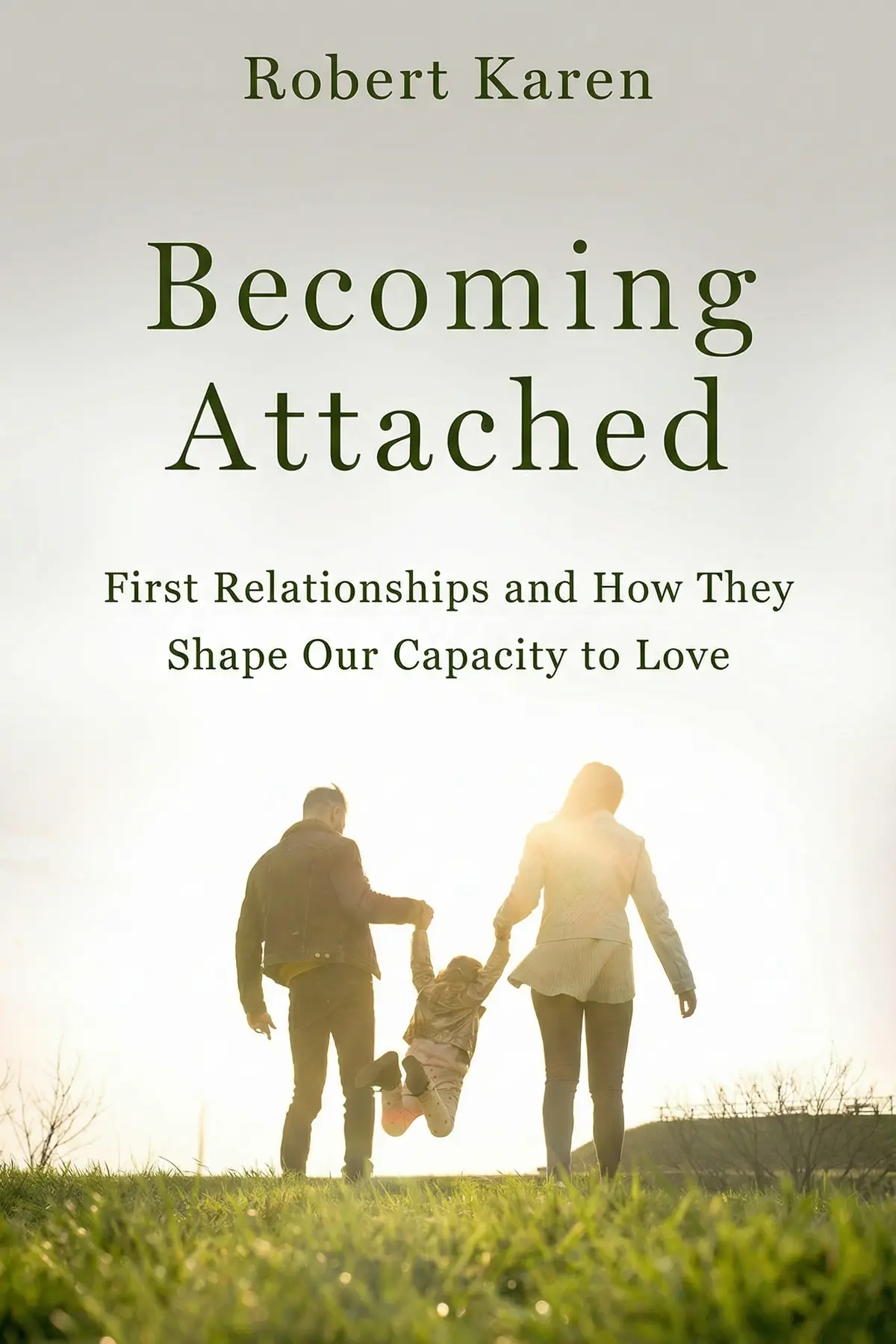
Table of Content
1. Introduction
1 min 03 sec
If you are raising a child, or still puzzling over your own childhood, the flood of parenting advice can leave you unsure what really matters. In Becoming Attached, clinical psychologist Robert Karen answers that one thing matters early and for a long time: the bond a baby forms with the person who cares for it most. The research he gathers shows how deep that need runs. In one experiment, young monkeys chose to cling to a soft cloth rather than stay near a source of milk.
Karen’s case is that this first relationship is a biological need, that it settles into a pattern which often lasts into adult life, and that the pattern depends mostly on how consistent and self-aware the caregiver is. That last part is good news, because consistency and self-awareness can be learned. Along the way you get a way to read a child’s behavior at a reunion, a fairer view of day care and a reason to look honestly at your own parents.
2. Comfort comes before food in a baby's needs
1 min 33 sec
Baby monkeys were offered two artificial mothers, one that fed them and one that did not. Their choice says something surprising about what infants need most, and it changes what counts as real care.
3. A safe base gives children courage to explore
1 min 39 sec
A crawling baby seems to be heading out into the world alone. Watch more closely and a hidden rule appears, one that also explains why a toddler suddenly bolts away in a crowded place.
4. Protect young children from the harm of short separations
1 min 36 sec
Not long ago, hospitals kept parents away from their sick toddlers for sound medical reasons. One researcher’s films showed what eight days of that rule did to a cheerful two-year-old.
5. Name the three patterns that shape a child's bond
1 min 49 sec
Some children settle in seconds, some cling and wail, and some barely seem to care whether a parent is present. Each pattern has a name, and each traces back to the same source.
6. Watch the reunion to see the real bond
1 min 46 sec
A toddler cannot tell you how attached they feel, so one researcher built a playroom and watched a single moment. A related interview later predicted a baby’s bond before the baby was even born.
7. Support and good care can shift a child's bond
1 min 49 sec
If attachment passes down the generations, a struggling parent might seem stuck. One counseling study more than doubled the share of secure children, and the long fight over day care looks different in its light.
8. Know your own childhood before raising a child
1 min 30 sec
Nearly every expectant parent vows never to repeat their own parents’ mistakes. Many repeat them anyway, and one mother-to-be’s interview reveals the blind spot that makes the vow so hard to keep.
9. Conclusion
1 min 08 sec
What Karen’s material adds up to is a hopeful kind of inheritance. The first relationship a child forms is not a soft extra. It is a need as basic as food, and it sets a pattern that can follow a person into adulthood and into the way they raise their own children. Yet the strongest evidence in the book points at things adults control: how reliably they respond, how short they keep early separations, how good the care is when they are away and how honestly they understand their own past.
His core advice is consistency. Be there in a way your child can count on, so they learn right from wrong and feel safe enough to explore. When a small child wanders and looks back, make sure you can be seen. When a separation cannot be avoided, keep it brief and keep in touch. And before using a rule your parents used on you, ask how it felt to be on the receiving end.
The monkey in the strange cage never had a real mother, only a wire figure that was moved there with it. That was enough to make it brave.
About this book
What is this book about?
Parenting advice comes from every direction, and much of it contradicts itself. Clinical psychologist Robert Karen cuts through it by going back to the studies that founded attachment research. These are the experiments and observations showing what babies need from the people who raise them, and what happens when they don't get it. Karen follows the evidence from young monkeys who chose a soft cloth over milk, to James Robertson's films of toddlers alone in hospital, to Mary Ainsworth's three attachment styles and the playroom test that tells them apart. He explains why a child's early pattern of attachment tends to last into adulthood, and why the best predictor of that pattern is the bond the parent had with their own parents. The book is also hopeful. In one study, children of counseled mothers were far more often securely attached, good day care turns out to be no inherent danger, and parents who don't understand their own upbringing may end up repeating its mistakes. Readers come away with a clear picture of what a secure bond requires and how to provide it.
Book Information
Who it's for
New and expecting parents
Expectant and new parents who want to know what a secure bond really requires.
Families facing childcare decisions
Parents weighing day care or facing time apart from a young child.
Grownups examining their upbringing
Adults trying to understand how their own childhood shapes the way they love and parent.
About the Author
Robert Karen
Robert Karen is a clinical psychologist with a private practice in New York City. His other books include The Forgiving Self. Psychology programs across the US teach Becoming Attached widely, it has been translated for readers abroad, and Oxford University Press published a revised 30th anniversary edition with twelve new chapters in 2024. Karen has written for The Atlantic, New York Magazine and Vogue, and his Atlantic cover story on shame won the National Psychology Award for Excellence in the Media.
Ratings & Reviews
Ratings at a glance

What people think
Listeners find that opinions are split on the book's intense focus on academic history, with some feeling the thorough detail on theoretical disagreements makes the text read more like a textbook than a practical guide. However, many appreciate the clear and accessible manner in which Robert Karen tracks the growth of attachment theory through the foundational studies of John Bowlby and Mary Ainsworth. Furthermore, they emphasize the engaging and emotionally stirring accounts of child development, with one listener noting that the stories of children in mid-century hospitals and orphanages are especially powerful. Additionally, listeners value the work as a broad resource for understanding how early bonds form lifelong attachment styles.
Top reviews
Levi
Wow, the gut-wrenching accounts of toddlers in 1950s hospital wards actually brought me to tears. Robert Karen masterfully illustrates the horrific consequences of old-school parenting advice that discouraged parents from consoling their own crying children. By tracing the foundational work of Bowlby and Ainsworth, the book reveals why consistent, loving care is a biological necessity rather than a luxury. Even though it is quite long, the emotional resonance of these historical case studies kept me turning the pages. It is a powerful reminder of how much we have learned about the fragility of the infant psyche. This is a must-read for anyone who cares about child welfare.
Show moreJan
Finally got around to finishing this massive volume, and I feel like I've just completed a masterclass in developmental psychology. Karen’s ability to weave together biography, history, and complex theory is truly impressive. He makes the evolution of attachment theory feel like a high-stakes drama where the lives of children were at the center of the debate. I was especially gripped by the sections on Mary Ainsworth’s 'Strange Situation' and how it revolutionized our view of infant behavior. Despite its age, the book’s core insights regarding the stability of attachment styles through life remain incredibly relevant. It is a dense, brilliant, and ultimately hopeful look at the power of human connection.
Show moreSupranee
Personally, I found the narrative flow of this book to be far more engaging than your typical dry social science text. The author manages to explain why the bond between a caregiver and a child is the cornerstone of a healthy adult life. I loved learning about the professional rivalries and the struggle to get these ideas accepted by the mainstream medical community. It is a thick book, but the jargon-free writing makes the complex topics of secure, anxious, and avoidant attachment very easy to grasp. For a layperson, this is probably the best comprehensive history of the subject available. I will be recommending this to every parent-to-be in my social circle.
Show moreChloe
Look, the reality is that this book functions much more like a comprehensive history of an idea than a modern self-help manual. If you want a quick guide to your own attachment style, you should probably look elsewhere for a summary. However, for those willing to trudge through the academic weeds, Karen provides an unparalleled look at the growth of these psychological concepts. He details the 'daycare wars' and theoretical battles with impressive nuance, even if some Freudian elements feel a bit dated. It is a slow burn. The intellectual payoff, however, is massive. It changes how you see every relationship in your life.
Show moreSuwit
This book is absolutely essential for anyone looking to understand the core of human connection and early emotional development. It explains how our earliest bonds create an internal working model that dictates our behavior in adult relationships. While Karen is clearly a fan of classical psychoanalysis, his writing remains accessible and jargon-free for the most part. I was particularly struck by the discussion of secure versus avoidant styles and how they manifest in adulthood. It is a thick read. However, the depth of research is staggering. This should be required reading for policy makers and educators everywhere.
Show moreDaranee
After hearing my therapist mention Bowlby, I decided to dive into the history of attachment styles. Robert Karen does a fantastic job of tracing how we moved away from the sterile, behaviorist views of the 1940s. It is fascinating to see how Mary Ainsworth’s observations in Uganda and Baltimore eventually led to our understanding of secure and avoidant patterns. To be fair, there are moments where the author gets a bit lost in 'Freudian fugues' that don't seem to fit with modern data. However, the overarching story of how we learned that babies actually have feelings is quite powerful. This is a dense but rewarding read for any serious student of human nature.
Show moreSirichai
As a working mother, the sections regarding the 'daycare wars' and early childhood independence were incredibly grounding. This volume provides much-needed context for the guilt many parents feel, showing how these theories evolved through intense professional conflict. Karen writes with a clear, accessible style, though he definitely doesn't shy away from the technical details of developmental psychology. My only gripe is that the book is quite long and could have been edited down by at least a hundred pages. Some of the historical detours regarding British psychoanalysis felt like filler. Still, it is a comprehensive resource for anyone wanting to understand the foundations of how we bond with our children.
Show morePaiboon
Picked this up on a recommendation and was surprised by how much the historical narrative pulled me in. The book acts as a bridge between the clinical world and the general public, explaining the 'internal working model' in a way that makes sense. I found the discussion of how early trauma can impact adult romantic relationships to be particularly enlightening and thought-provoking. Some might find it too academic, but I enjoyed the deep dive into the lives of the researchers themselves. It makes the science feel more human. While it doesn't offer a '10-step plan' for better parenting, it provides the deep understanding necessary to make your own informed choices.
Show moreFinn
Ever wonder why certain parenting trends shift so dramatically over the decades? The truth is that the academic squabbles between giants like Melanie Klein and John Bowlby take up far too much space for a casual reader. While the information is organized clearly, the narrative often gets bogged down in the 'history of ideas' rather than getting to the point. I appreciated the sections on the 'Strange Situation' test, but the book feels overall like a dry academic text. It is informative, certainly. Yet, it lacks the 'page-turner' quality I was hoping for based on the glowing recommendations. It is a solid three-star reference for the history-inclined student.
Show moreEnd
Not what I expected from the teaser questions on the back of the cover, which promised actionable insights for parents. This felt like an antiquated textbook that prioritized the biography of dead scientists over actual, usable advice for a modern parent like myself. Frankly, the heavy reliance on Freudian analysis made several chapters feel like they belonged in a museum rather than a modern clinical setting. It is far too dense for the average layperson and spends an eternity discussing obscure academic rivalries from sixty years ago. Unless you are a professional psychologist interested in the history of the field, this is probably a skip. The information is simply too dated to be relevant today.
Show moreQuestions about this book
What is the main idea of Becoming Attached by Robert Karen?
Karen argues that a child’s first bond with the main caregiver, usually the mother, is a basic biological need, since babies cannot survive alone. That bond gives the child a secure base for exploring the world, and the pattern it forms tends to last into adulthood. The pattern depends mostly on how consistently and warmly the caregiver responds, and that parents can learn.
What are the three attachment styles in Becoming Attached?
Drawing on Mary Ainsworth, Karen describes secure attachment, where an available, responsive mother has a child who cries least and settles easily. With ambivalent attachment, an unpredictable mother has a needy, anxious child who struggles with separation. With avoidant attachment, there is little interaction, the mother pushes too much independence, and the child may ignore her or turn angry for no clear reason.
What is the Strange Situation test?
It is Ainsworth’s laboratory test of attachment. A child plays in an unfamiliar room with the mother, a stranger enters, the mother leaves, and then she returns. The reunion reveals the style. Secure children are glad and calm down quickly, ambivalent children become more upset and seem angry, and avoidant children ignore the returning mother.
Is day care bad for babies according to Becoming Attached?
Not necessarily. Karen explains that day care was long considered harmful in the first year, and that opposition to it was partly a way to attack the women’s movement. Early studies linked low-quality centers to anxiety and aggression. Advocates showed that quality matters most and that stress at home explains some problems. Where caregivers build healthy, reliable relationships with children, day care is not an inherent danger.
How can parents apply the ideas in Becoming Attached?
Be consistent, so a child can rely on you and feel safe enough to explore. Keep early separations short and contact steady, since very young children experience even a few days apart as a lasting loss. Seek counseling if a baby is hard to handle: in one study, 68 percent of the counseled mothers’ children were securely attached, against 28 percent in the control group. And reflect honestly on your own childhood so you do not repeat its mistakes.
Readers also enjoyed

Age of Propaganda: The Everyday Use and Abuse of Persuasion
Anthony Pratkanis




59 Seconds: Change Your Life in Under a Minute
Richard Wiseman




AUDIO SUMMARY AVAILABLE
Listen to Becoming Attached in 15 minutes
Get the key ideas from Becoming Attached by Robert Karen, plus 5,000+ more nonfiction titles.
- 5,000+ titles
- Listen as much as you want
- 7-day free trial
- Cancel anytime









