

15 min 16 sec
Available in: English
The 15 Invaluable Laws of Growth: Live Them and Reach Your Potential
Shows how to stop waiting for the right moment and grow on purpose: test your dream, start before you feel motivated, find mentors, quiet your inner critic and turn setbacks into progress.
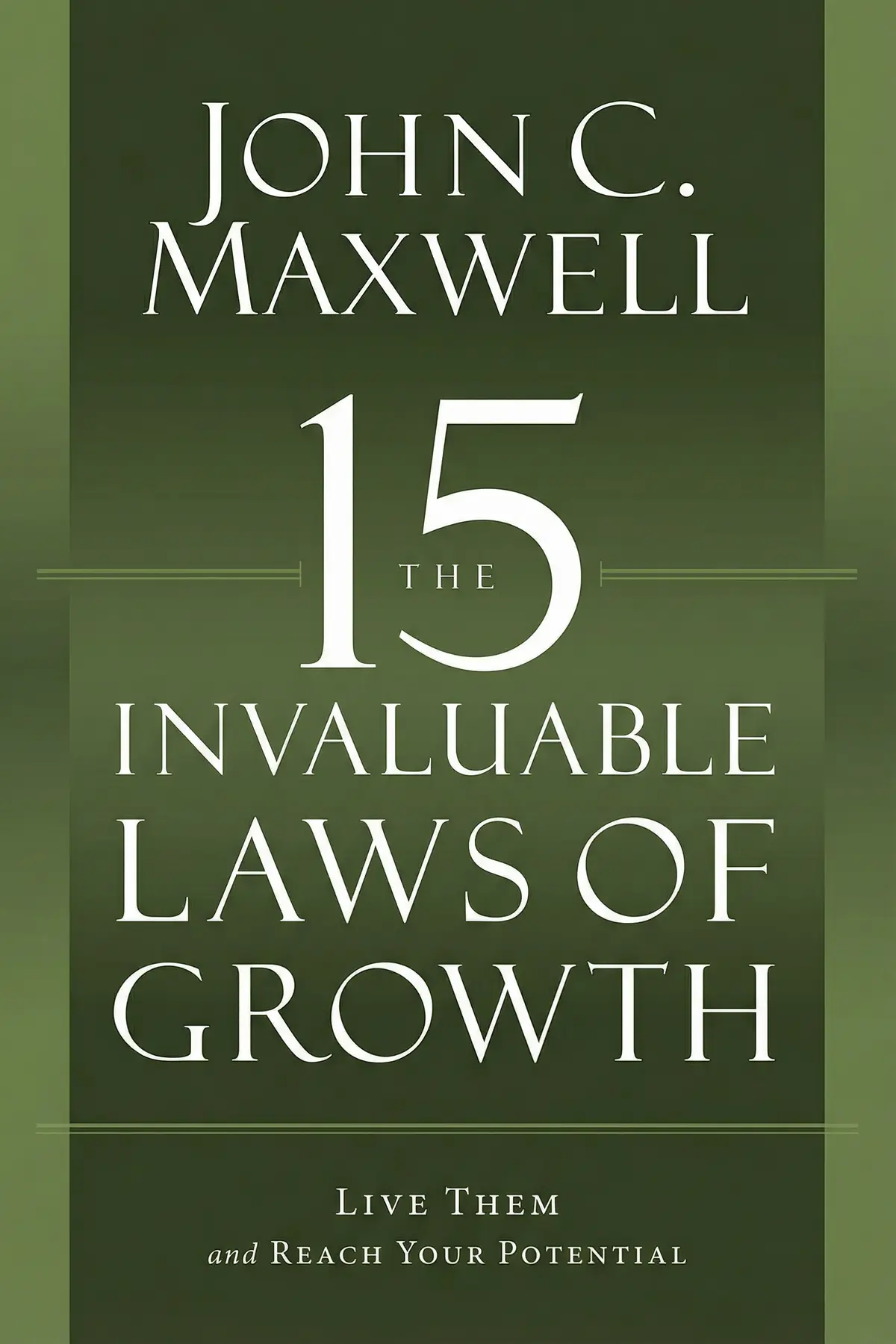
Table of Content
1. Introduction
1 min 02 sec
Most people want to grow, yet years pass and they stand in roughly the same place, waiting for a better moment that never comes. In The 15 Invaluable Laws of Growth, leadership author John C. Maxwell argues that this waiting is the real obstacle. Personal growth, unlike hair or houseplants, never happens by itself.
His case is that growth comes from deliberate choices. You have to know what you want and why, start before motivation shows up, pick the people and the inner voice that will carry you, and treat slow progress, pain and loss as material to work with. Maxwell backs this with his own life, from a yearly audit of his calendar to a heart attack at 51 and seven career changes.
The ideas that follow turn a vague wish to improve into a handful of habits you can begin tonight, plus a way to read your next setback as a lesson instead of a verdict.
2. Tell a real dream from a fantasy
1 min 48 sec
Some goals collapse not from lack of effort but because they were never really yours. A would-be basketball player and a reluctant PhD student show the two hidden flaws that sink ambitions before they start.
3. Act first and let motivation follow
1 min 53 sec
The perfect moment to start working on yourself has a strange habit of never arriving. Maxwell explains why that delay is built into human nature, and what a grumpy trip to the gym reveals about breaking it.
4. Choose people who pull you upward
1 min 45 sec
Saying your goal out loud can feel foolish, and telling the wrong people can quietly sink it. Maxwell describes whom to tell, whom to study from a distance, and how to treat the rare person willing to teach you.
5. Turn your harshest critic into an ally
1 min 52 sec
The loudest voice doubting your plans is often your own, and for some people it has been shouting since childhood. Maxwell offers four steps to change what it says, and the last one comes from an unexpected direction.
6. Grow like an apple tree, with a plan
1 min 55 sec
Movies show breakthroughs in a single dramatic scene, and real life rarely cooperates. Two garden plants and one man’s yearly audit of his calendar explain how to keep going, and how to stop working hard in circles.
7. Make setbacks and trade-offs pay you back
1 min 56 sec
A heart attack and five pay cuts sound like a list of misfortunes. In Maxwell’s telling they became turning points, and the difference came down to a choice anyone facing a loss can make.
8. Share your growth with others and it multiplies
1 min 53 sec
Busy people treat character and generosity as luxuries for later. Maxwell argues both are the foundation, and his own career shows what happened once he stopped keeping his lessons to himself.
9. Conclusion
1 min 12 sec
Maxwell’s laws move growth from the category of luck to the category of choice. Much of life stays outside your control: a failing heart, a stalled career, a harsh voice in your head. Growth remains within reach because it lives in small decisions, like what you do tonight, whom you tell and how you read a bad week. Discomfort, mistakes and uncertainty are simply the fee for finding out how far you can go.
He also warns against complacency, which he treats as an enemy of growth, especially once you have some success to protect. His antidote is to become a beginner again on purpose. Sign up for something new that intimidates you, a tango class, a short calligraphy course or an improvised story at an open mic, and remember how it feels to be curious and open. Then take one plan you keep postponing, shrink it to something you can do before bed, and tell a friend who is growing too when you will report back.
A tomato plant gives a fast harvest and dies with the frost. Maxwell is asking you to plant the apple tree.
About this book
What is this book about?
Most people want to grow, but years slip by while they wait for more time, more money or a burst of inspiration. John C. Maxwell argues that this waiting is the trap. Unlike hair or houseplants, personal growth does not happen on its own. It has to be chosen and practiced in small steps, every day. Maxwell's laws cover the whole cycle. First, you work out what you truly want and why. Then you begin before you feel ready, gather people who will hold you accountable, and learn to speak to yourself as an ally. He draws on his own life: a yearly review of how he spent his time, a heart attack at 51 that changed his habits, and seven career moves, five of them with a pay cut. Readers get a practical way to move from a vague wish to improve toward steady, lasting growth, with tests for their goals, ways to handle failure and a reason to share what they learn with others.
Book Information
Who it's for
Professionals feeling stuck
Professionals who feel stuck and keep waiting for the right moment to work on themselves.
Testing a big ambition
Young people and career changers testing whether a big ambition is a real dream or a fantasy.
Managers wanting steadier growth
Managers who want a steadier way to grow while helping their teams grow too.
About the Author
John C. Maxwell
John C. Maxwell, born in 1947 in Garden City, Michigan, is an American author, speaker and pastor whose books focus mostly on leadership, several of them New York Times best sellers. He founded EQUIP, a nonprofit devoted to leadership development, and his organizations include Maxwell Leadership and the Maxwell Leadership Foundation. He has sold more than 40 million books and received the Horatio Alger Award.

Developing the Leader Within You
John C. Maxwell
Leadership 101: What Every Leader Needs to Know
John C. Maxwell

No Limits: Blow the CAP Off Your Capacity
John C. Maxwell
Ratings & Reviews
Ratings at a glance

What people think
Listeners consider this volume to be among John Maxwell’s top contributions, highlighting its profound insights and hands-on strategies for self-improvement. Listeners characterize the experience as life-changing, assisting them in building a trajectory for advancement, while valuing the transparent writing and simple-to-implement recommendations.
Top reviews
Pannipa
Picked this up during a major career transition and found it to be a masterclass in establishing a sustainable growth track. Maxwell has a way of making complex self-development concepts feel accessible through his clear writing style and actionable advice. The Law of Intentionality really hit home for me because it forces you to realize that improvement doesn't just happen by accident while you are busy with other things. Frankly, the book works best if you treat it as a workbook rather than a quick read, taking time to digest each law. I especially appreciated the Law of the Mirror, which focuses on building self-worth to fuel personal expansion. While he does lean on a lot of anecdotes from his own life and other leaders, those stories provide the necessary context to see the laws in action. This is easily one of his best works and a must-read for anyone feeling stagnant.
Show moreWipada
Ever wonder why some people just seem to keep leveling up while you feel stuck in the same cycles year after year? This book provides the blueprint to break that plateau by focusing on character and consistency rather than just quick fixes. The Law of the Rubber Band was a standout for me, reminding us that growth only occurs when we are willing to stretch beyond our current comfort zones. Truth is, most of us avoid that tension, but Maxwell argues it is the only way to increase our capacity. I loved the emphasis on mentorship and finding the right environment, as those external factors often dictate our internal progress. His writing is incredibly encouraging and filled with profound wisdom that feels like a conversation with a trusted mentor. This isn't just a book you read once; it is a resource you return to whenever you need a refocus on your purpose.
Show morePridi
Wow, I can finally see why Maxwell is considered a titan in the personal development space after finishing this incredible guide. The Law of the Ladder alone is worth the price of the book because it emphasizes that your character determines the height of your potential. In a world obsessed with shortcuts and financial success, his focus on integrity and internal value is incredibly refreshing and much needed. Not gonna lie, I was skeptical about whether a book from 2013 would still be relevant, but these principles are truly timeless. Each chapter ends with specific steps to apply the law, which helped me establish a concrete growth plan for my leadership role. I found the Law of Contribution to be a beautiful way to end the book, shifting the focus from self-improvement to serving others. It is life-changing if you actually do the work he suggests instead of just skimming the pages.
Show moreChanpen
The chapter on the Law of Environment was exactly the wake-up call I needed to change my social circle and professional surroundings. Maxwell correctly points out that if you are always at the head of the class, you are probably in the wrong class for your own growth. This book is peppered with that kind of blunt but necessary wisdom that forces you to take a hard look at your life choices. I followed his suggestion to work through only one chapter per week, and that pace allowed the concepts to really sink in. By the time I reached the Law of Expansion, I felt like I had a totally different mindset regarding my own capabilities. This is one of the most insightful books on personal development I’ve encountered because it focuses on the ‘how’ and ‘why’ of growth equally. His passion for helping people reach their potential is evident on every single page.
Show morePla
Gotta say, I didn't expect to be as moved by this book as I was, given how many leadership books are out there. Maxwell manages to distill a lifetime of experience into fifteen core principles that feel both grounded and aspirational at the same time. The Law of Awareness helped me realize I didn't know myself as well as I thought, which was a necessary first step for real change. I love how he uses the Law of the Ladder to connect personal character directly to professional success, showing they aren't separate entities. The writing is warm and encouraging, almost like a grandparent handing down life lessons over a long afternoon. It has helped me establish a clear growth track that I am excited to follow for the next few years. This is easily my favorite Maxwell book and one I will be recommending to my entire team at work.
Show moreSook
Finally got around to reading this classic and it absolutely lived up to the reputation of being a life-changing resource. The Law of Design taught me to stop being a victim of my circumstances and start planning my life with much more intentionality. Frankly, I think every college student should be required to read the Law of Consistency before they enter the workforce. Maxwell’s ability to weave together stories from history, business, and his own life makes the 'laws' feel proven and reliable. While some people might find the quote-heavy style annoying, I actually found that it provided a diverse range of perspectives that reinforced his main points. This book is a profound tool for anyone who wants to stop wishing for a better life and start building one through disciplined action. It’s an easy read that provides a lifetime of wisdom if you are willing to listen.
Show moreChanikarn
After hearing so much hype from my work book club, I finally dove into the 15 Laws and found the experience quite rewarding. The structure is very logical, and I appreciated the Law of Reflection for reminding me to pause so my learning can actually catch up with my experiences. My only real gripe is that it can feel a bit quote-heavy at times, which disrupts the flow of Maxwell’s own unique insights. However, the practical application of the Law of Consistency has already helped me fix my morning routine and stick to my goals better than before. He writes with a very clear style that makes it easy to follow, even when he gets into the deeper philosophical aspects of growth. I would recommend this to anyone looking for a structured way to improve their professional and personal life. It’s a solid, insightful read that offers a lot of value for the time invested.
Show moreIsaiah
As someone who appreciates a highly structured approach to learning, I found the layout of this book to be incredibly helpful for my daily routine. Maxwell breaks down growth into manageable laws that don't feel overwhelming, even if some of the stories he tells are a bit dated. The Law of the Rubber Band was particularly impactful for me, as it changed how I view the stress of learning new skills. My only hesitation in giving it a full five stars is that some of the advice feels a little 'post-modern self-help,' occasionally veering away from the depth I expected. To be fair, though, the practical exercises at the end of each chapter are gold for anyone who actually wants to change. It’s a very easy-to-follow guide that helps you identify exactly where you are stalling in your journey. Overall, it’s a very strong addition to any leader's library.
Show moreJirapat
Look, this is definitely a solid entry point for anyone brand new to the self-help genre, but seasoned readers might find it a bit basic. The 15 laws are all common-sense principles, like the Law of Curiosity or the Law of Environment, repackaged with Maxwell’s signature anecdotal style. While the advice is practical, the book lacks the compactness I prefer in my non-fiction reads, often wandering off into long-winded stories. I also found the religious slant a bit distracting at times, especially since he seems to separate his 'secular' success from his pastoral background in odd ways. Personally, I think the Law of Trade-Offs was the most useful section because it highlights what you have to give up to move forward. It’s a decent book, but it didn't feel revolutionary or particularly fresh compared to other leadership titles on the market today. It's a three-star read that could have been a five-star essay.
Show moreNora
To be fair, I expected more original content from such a famous author, but this felt like a never-ending compilation of other people's quotes. It was hard to connect with the author's tone, especially when he makes cringe-worthy comments about refusing to be alone with any woman who isn't family. That kind of outdated perspective made it difficult to take his professional advice seriously as a modern woman in business. Some of the laws, like the Law of Pain, offer decent insights on managing bad experiences, but they are buried under a lot of fluff and religious undertones. He even goes as far as suggesting that watching Dancing with the Stars is a complete waste of time, which just feels judgmental and unnecessary. If you have read any other personal development books from the last decade, you will likely find this material redundant and repetitive. It lacks the compactness needed to keep a busy reader engaged.
Show moreQuestions about this book
What is the main idea of The 15 Invaluable Laws of Growth?
John C. Maxwell argues that personal growth never happens on its own. It takes intention and daily action: knowing what you want and why, starting before you feel motivated, surrounding yourself with people who hold you accountable, speaking kindly to yourself, reviewing how you spend your time, and treating pain and loss as chances to learn. Growth is slow, he says, but it lasts.
How do I know if my dream is realistic, according to Maxwell?
Maxwell suggests three checks. Notice what genuinely excites you and when others value your contribution. Then test whether the dream fits your talents, since someone who hates exercise and lacks coordination dreaming of professional basketball holds a fantasy. Finally, examine your motive: wanting a PhD mainly to impress people is unlikely to carry you through years of hard study.
Does motivation come before action?
Not in Maxwell’s view. He argues that motivation arrives after you act, much like dragging yourself to the gym in a bad mood and leaving energized and eager to return. Waiting until you feel inspired, or until money and time line up, means the moment never comes, so he advises starting now and accepting the discomfort and mistakes.
How can I apply The 15 Invaluable Laws of Growth at work?
Set aside time to review which meetings and activities actually moved you forward, as Maxwell does every year, and protect your most productive hours. Set a measurable goal, such as a number of new clients this quarter. Share your goal with a growth-minded colleague who will hold you accountable, and if you lead people, build the workplace you always wished you had.
Who should read The 15 Invaluable Laws of Growth?
It suits people who feel stalled and want a practical way to grow: professionals waiting for the right moment, career changers weighing a pay cut against new opportunities, and leaders who want to develop themselves and their teams. Maxwell’s own examples, from a heart attack at 51 to seven career changes, make the advice concrete.
Readers also enjoyed

59 Seconds: Change Your Life in Under a Minute
Richard Wiseman





A Guide to the Good Life: The Ancient Art of Stoic Joy
William B. Irvine


A High-Performing Mind: Strengthen Your Mind and Live Your Best Life
Andrew D. Thompson


Abundance: The Inner Path to Wealth
Deepak Chopra
AUDIO SUMMARY AVAILABLE
Listen to The 15 Invaluable Laws of Growth in 15 minutes
Get the key ideas from The 15 Invaluable Laws of Growth by John C. Maxwell, plus 5,000+ more nonfiction titles.
- 5,000+ titles
- Listen as much as you want
- 7-day free trial
- Cancel anytime









