

15 min 07 sec
Available in: English
High Road Leadership: Bringing People Together in a World That Divides
Shows why leaders need strong values as well as skill to unite divided people, and how generosity, self-awareness, steadiness under pressure, accountability and refusing to keep score build trust that lasts.
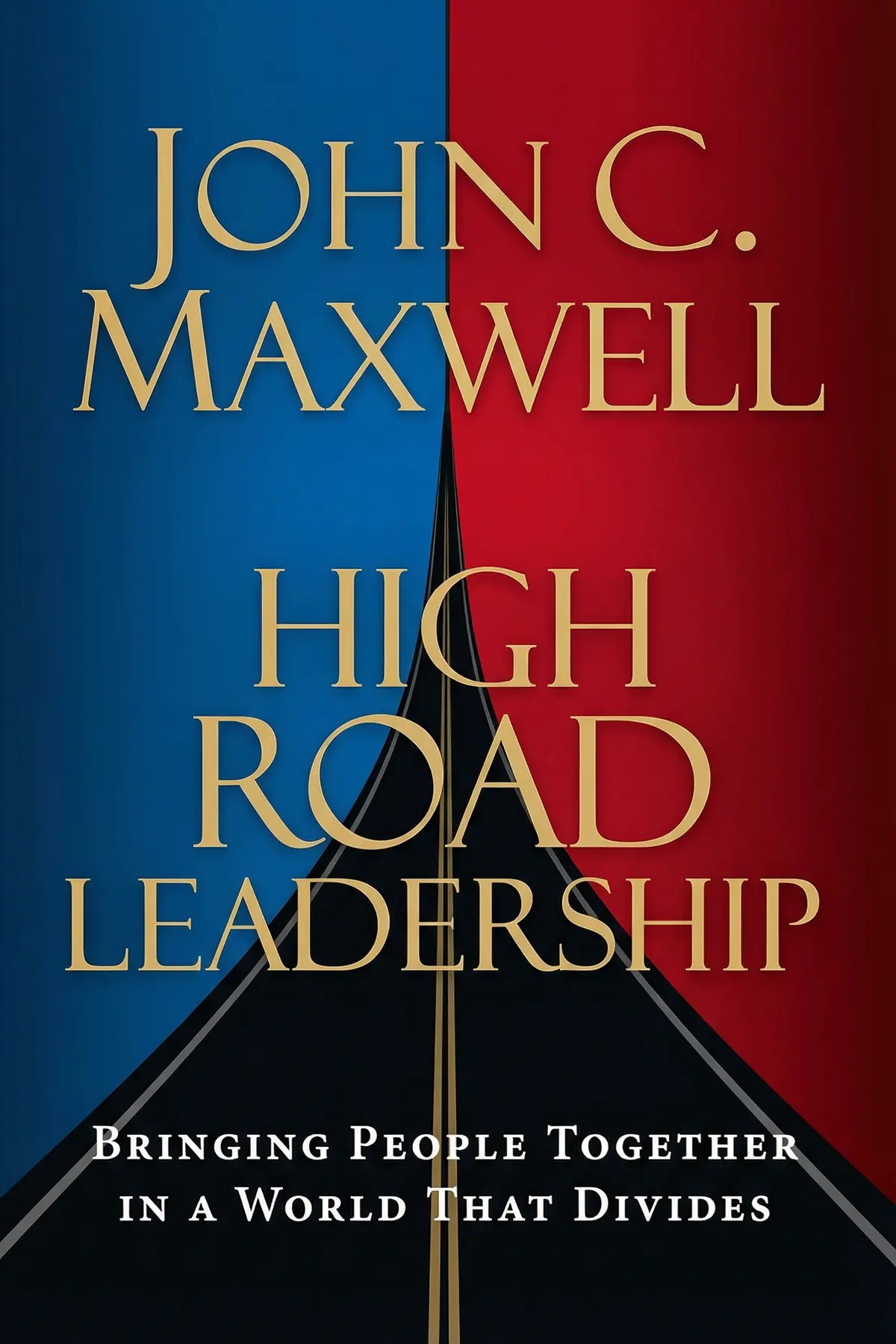
Table of Content
1. Introduction
1 min 00 sec
If you lead people who keep sorting each other into allies and opponents, charm and authority will not hold them together. In High Road Leadership, John C. Maxwell argues that what unites people is a leader with both real skill and strong values, someone who puts others first even when they get nothing back. His organization has certified 50,000 coaches across 72 countries, and from that view he sees two kinds of failure: decent people without skill, who get little done, and skilled people without values, who manipulate.
The argument that runs through every idea here is that leadership which brings people together rests on one habit practiced in many forms: giving more than you take. What follows is a set of practices you can try this week, from working with people who disagree with you and checking your own motives to staying steady under criticism and dropping the mental tally of who owes you what.
2. Pass the two-part test of skills and values
1 min 48 sec
Some leaders mean well and achieve little. Others achieve a lot and leave damage behind. Maxwell sorts leaders on two scales and finds that only one combination works for the leader, the team and the organization at once.
3. Work with the people who disagree with you
1 min 45 sec
When we decide that people who disagree with us are simply difficult, something breaks before any argument starts. Maxwell explains what that costs a leader, and why blaming the other camp keeps the leader stuck.
4. Know your own flaws and motives first
1 min 55 sec
A leader can say all the right things and still be leading for the wrong reasons. Maxwell names the habits that give selfish motives away, and the uncomfortable admission every leader has to make before leading anyone.
5. Give in three ways that help people grow
1 min 51 sec
The boss who rules by fear is still a familiar figure, and Maxwell thinks it fails. His alternative is generosity, but he means something wider than time and money, and some of its best forms cost almost nothing.
6. Stay steady when criticism and setbacks hit
1 min 54 sec
One sharp email or failed launch can undo months of trust if a leader reacts badly. Maxwell describes the capacity that keeps leaders steady, and four practices for building it when there is no switch to flip.
7. Earn trust by owning your choices openly
1 min 56 sec
Charisma looks like the thing that draws people to a leader. Maxwell suspects something plainer is at work, and he warns that calling yourself a success can be as risky as calling yourself a failure.
8. Stop keeping score and see the bigger picture
1 min 47 sec
Many leaders carry a mental ledger of favors owed and wrongs suffered. Maxwell argues that this private tally slowly poisons a team, and he offers a rule that asks more of a leader than the golden one.
9. Conclusion
1 min 11 sec
High Road Leadership makes one demanding request: lead as though the balance should always tip toward the other person. Every value Maxwell describes serves it. Self-awareness keeps your motives honest, generosity turns your position into something others gain from, and emotional capacity lets you keep giving when you are criticized. Authenticity and accountability make people believe you, and refusing to keep score stops leadership from shrinking into a trade.
The book’s sharpest point may be the one about division. Maxwell does not let leaders blame the other side. He asks them to examine their own part in the split and to treat opponents with the same dignity as allies, because a leader who can only work with friends will stop growing.
The practice starts small. Give one person an opportunity or an introduction this week. Close an open conflict before it hardens into a grudge. When a decision goes wrong, own it out loud. And when someone treats you poorly, answer a little better than they deserve. That last habit, the platinum rule, is the whole high road in a single sentence.
About this book
What is this book about?
Teams, communities and whole societies increasingly split into camps, and many leaders respond by rallying their allies and blaming the other side. John C. Maxwell argues that this kind of leadership keeps the leader small. In his view, the leaders who unite people combine real skill with strong values, and the most important value is a genuine willingness to put others first. Maxwell calls this the high road, and he sets it against two alternatives: the low road of pure self-interest and the middle road of fair trades and returned favors. He then breaks the high road into practices: valuing people who disagree with you, checking your own motives, giving in open-hearted, open-minded and open-handed ways, building emotional capacity, living with authenticity and accountability, and refusing to keep score. Readers get a clear test for their own leadership and a set of habits they can try at once, from closing conflicts quickly to treating others better than they are treated.
Book Information
Who it's for
Leading a divided team
Team leads and managers whose teams split into camps and stop trusting each other.
Founders and new managers
Founders and new managers who want people to follow them for more than their title.
Tired of office politics
Professionals tired of office politics who want a way to lead without keeping score.
About the Author
John C. Maxwell
John C. Maxwell is an American author, speaker and pastor, born in 1947 in Garden City, Michigan, whose books focus mostly on leadership, and some have been New York Times best sellers. He founded EQUIP, a non-profit devoted to leadership development, and his organizations include Maxwell Leadership and the Maxwell Leadership Foundation. His Amazon author bio says he has sold more than 40 million books and received the Horatio Alger Award.
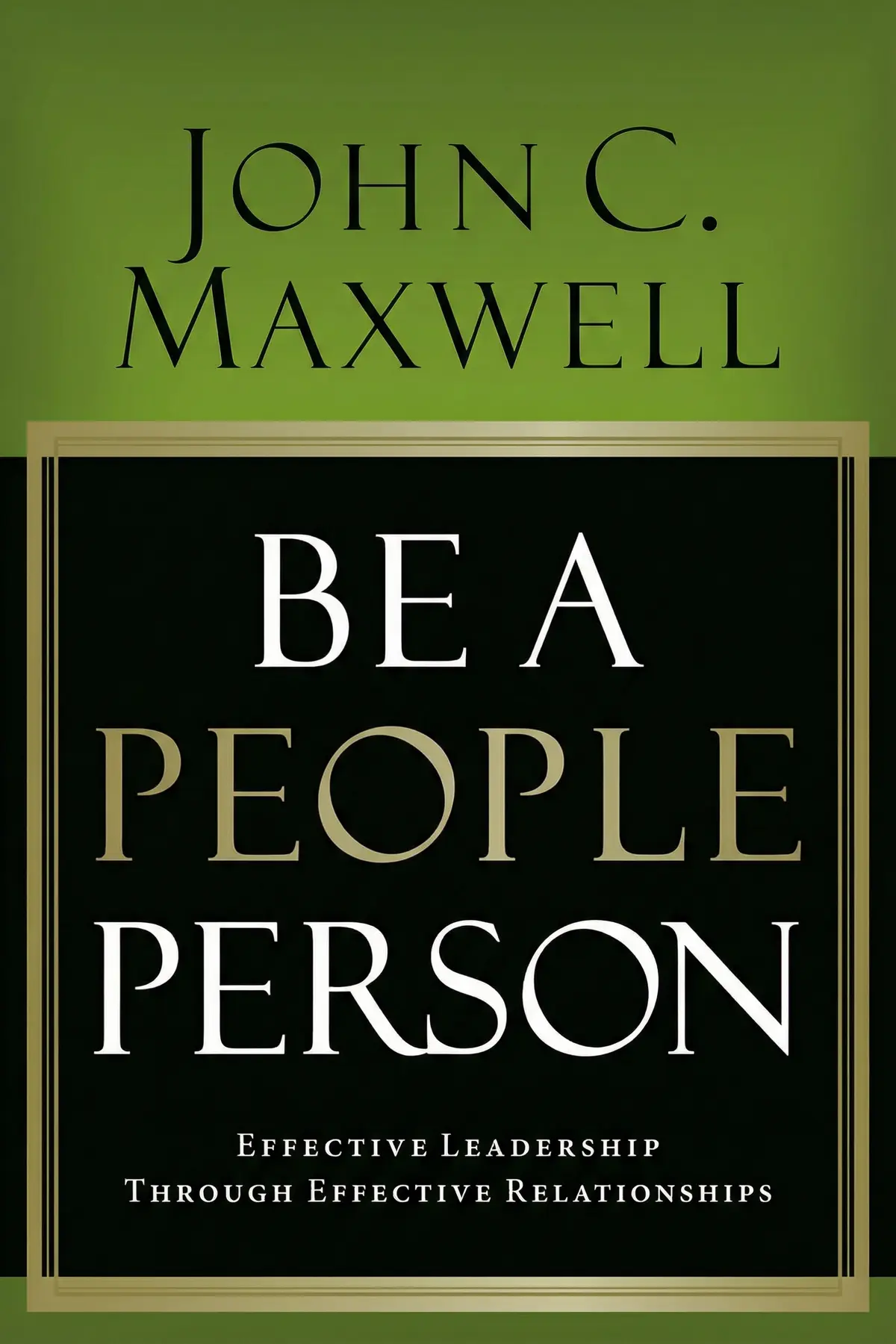
Developing the Leader Within You
John C. Maxwell
Leadership 101: What Every Leader Needs to Know
John C. Maxwell

No Limits: Blow the CAP Off Your Capacity
John C. Maxwell
Ratings & Reviews
Ratings at a glance

What people think
Listeners find this guide to leadership highly accessible and especially beneficial for those starting their leadership journey. They value the perceptive guidance and actionable suggestions provided, with one listener pointing out that the author masterfully combines wisdom with practical advice. The book is praised for its authentic voice and quality writing, leading listeners to agree it is well worth the investment.
Top reviews
Tum
Picked this up during a particularly rough week at the office where internal politics were draining everyone’s energy. Maxwell’s core message about the 'High Road' is exactly the tonic needed for our modern, fractured work cultures. He argues that integrity isn't just a nice-to-have, but the actual foundation of effective leadership. It feels less like a corporate manual and more like a heart-to-heart talk about being a decent human being in a position of power. I especially appreciated the section on building bridges instead of walls between disagreeing parties. Sometimes the advice feels a bit optimistic, but frankly, we need that kind of hope right now. It is a transformative read for anyone tired of the usual 'shitty manager' tropes.
Show moreJib
Does the world really need another leadership book? After finishing this, my answer is a resounding yes if it is this specific one. Maxwell hits the nail on the head regarding our modern struggle with confirmation bias and the toxic 'us vs. them' mentality. He challenges leaders to shift toward a collaboration bias, which is revolutionary in today's polarized climate. The practical tips on building resilience were exactly what I needed to hear this month. It’s an easy read but definitely not a shallow one, offering deep insights into how our values impact our success. If you want to uplift your team, start by fixing your own perspective first.
Show moreNing
Wow, the chapter on 'Confident Humility' completely shifted my perspective on how to handle team disagreements. I’ve always struggled with the balance between being a strong leader and being vulnerable, but this book lays out a clear path toward authenticity. Maxwell argues that trust is the foundation of any organization, and that trust only comes through genuine, honest connection. The way he breaks down the difference between character and reputation really stuck with me. It’s a masterclass in how to uplift others while staying grounded in your own values. Highly recommend for anyone feeling burnt out by traditional, cut-throat management styles that value results over people. This is leadership with a soul.
Show moreSupachai
Ever wonder why some highly skilled managers still fail to inspire their teams? John C. Maxwell explains that high skills without strong values leads to manipulation rather than leadership. This book defines the 'High Road' as a place of extreme generosity—not just with money, but with time, credit, and opportunities. It’s refreshing to read a business book that prioritizes being a 'good person' as a competitive advantage. The prose is clean and the anecdotes are relatable to anyone who has ever sat in a boardroom. This is going on my permanent shelf for annual re-reading. It is an insightful guide that proves kindness and results aren't mutually exclusive.
Show moreNongnuch
Not what I expected from a standard business book, but in the best way possible. Instead of focusing on 'crushing the competition,' Maxwell focuses on building bridges and finding common ground. He argues that kindness and empathy are the minimum standards we should hold ourselves to as professionals. The focus on accountability was a standout for me because it's so rare to see leaders take real responsibility these days. It’s a convicting read that makes you look in the mirror before you look at your team's quarterly performance figures. Truly a transformative piece of work for those willing to do the internal work required to lead others effectively.
Show moreCarter
To be fair, I was skeptical about whether John could bring anything new to the table after so many books, but he proved me wrong. This book feels more personal and urgent than his others, likely because of how divided the world feels right now. He emphasizes that being a high-road leader means serving people and giving your best, even when it isn't reciprocated. The focus on 'stewardship' rather than 'ownership' of a position is a powerful mindset shift for any executive. It’s a practical investment in your own character that pays dividends in how your team respects and follows you. If you want to move beyond being a manager, this is your roadmap.
Show moreSomboon
As someone who has followed Maxwell for years, this feels like the definitive collection of his life's work on people management. The audiobook version is a real treat because John’s voice carries such warmth and credibility, making the lessons feel more like mentorship. He doesn't just list theories; he shares his own failures, which makes the 'high road' feel attainable rather than an impossible ideal. My only gripe is that it’s a lot to take in at once—almost like a buffet where you want to try everything but get full too quickly. It is better to read one chapter, implement it, and then come back later for the rest. Definitely worth the investment for the practical tips on emotional capacity alone.
Show moreAim
Finally got around to finishing this, and I’m struck by how relevant the 'Big Picture' thinking section is for our current economic state. We are constantly bombarded by distractions, making it easy to lose sight of why we lead in the first place. This book serves as a grounding force, reminding us that a leader's success is tied directly to the growth of their team. I liked the 'pathway' sections at the end of each chapter because they provide immediate action items for busy professionals. Truth is, I probably won't do all fifty things suggested, but even picking three or four will make me a better boss. It is a great summation of what it takes to stay grounded.
Show moreIsabella
The most insightful part of this entire guide has to be the distinction between 'open-hearted' and 'open-minded' generosity. Most of us think we're generous, but Maxwell pushes us to think the best of people even when they disagree with our core methods. That’s a tough pill to swallow in today's world, but he makes a compelling case for it. I found the sections on emotional capacity and handling criticism particularly useful for my own professional development. While it's a very easy read, some parts felt a bit like a 'greatest hits' compilation of his previous lessons. Still, it’s a very valuable resource for any aspiring leader who wants to lead with integrity.
Show moreSomchai
Look, I appreciate the sentiment behind this book, but it occasionally leans too heavily into idealistic territory for my fast-paced tech environment. Don't get me wrong, the core message about valuing people is vital and John’s writing is incredibly accessible. However, some of the 'high road' qualities feel like they should just be standard human decency rather than groundbreaking leadership strategies. If you’ve read his previous work, you might find some of the material repetitive or even a bit generic at times. It is a solid guide for a first-time manager looking for a moral compass. Seasoned executives might find themselves skimming the more 'common sense' chapters in search of more technical, high-level strategy.
Show moreQuestions about this book
What is the main idea of High Road Leadership?
John C. Maxwell argues that effective leaders need both good skills and strong values. Leaders with values but no skill get little done, and leaders with skill but no values tend to manipulate. The high road means putting others first: giving without expecting a return, respecting people however they treat you, and keeping the balance in their favor, which he sees as the way to bring divided people together.
What are the three roads of leadership in Maxwell's book?
Maxwell describes a low road, a middle road and a high road. Low-road leaders are in it only for themselves. Middle-road leaders run a transactional style, helping people who help them in return. High-road leaders give without expecting anything back, accept that life is not always fair and treat everyone with respect, including people who do not return it.
What is the platinum rule in High Road Leadership?
The platinum rule asks you to treat others better than they treat you. Maxwell calls it the essence of high-road leadership. It goes with his advice to stop keeping score of favors and wrongs, since he argues that score-keeping creates guilt, unfairness, control and entitlement, and slowly turns a team into a place of trades and damaged trust.
How can I apply High Road Leadership at work?
Start with Maxwell’s practical habits. Give one person an opportunity or a useful connection, not just your time. Settle conflicts quickly instead of letting grudges build. Focus on what you can control, especially your own reactions. Own your decisions openly, including the unflattering ones. And before blaming people who disagree with you, look at how you may have added to the division yourself.
Who should read High Road Leadership?
It suits managers, team leads and founders who lead people with differing views and want to build trust instead of rallying one camp against another. It also helps anyone who notices they lead for recognition or keep a mental tally of who owes them, since Maxwell offers a clear test of motives and concrete habits to replace those patterns.
Readers also enjoyed

A Bigger Prize: How We Can Do Better Than the Competition
Margaret Heffernan





A Year with Peter Drucker: 52 Weeks of Coaching for Leadership Effectiveness
Joseph A. Maciariello



Acting with Power: Why We Are More Powerful Than We Believe
Deborah Gruenfeld
AUDIO SUMMARY AVAILABLE
Listen to High Road Leadership in 15 minutes
Get the key ideas from High Road Leadership by John C. Maxwell, plus 5,000+ more nonfiction titles.
- 5,000+ titles
- Listen as much as you want
- 7-day free trial
- Cancel anytime









