

13 min 03 sec
Available in: English
Developing the Leader Within You
Shows how to turn a job title into influence people choose to follow by growing yourself first: living your values, building self-discipline, setting sharp priorities, finding a vision and leading change well.
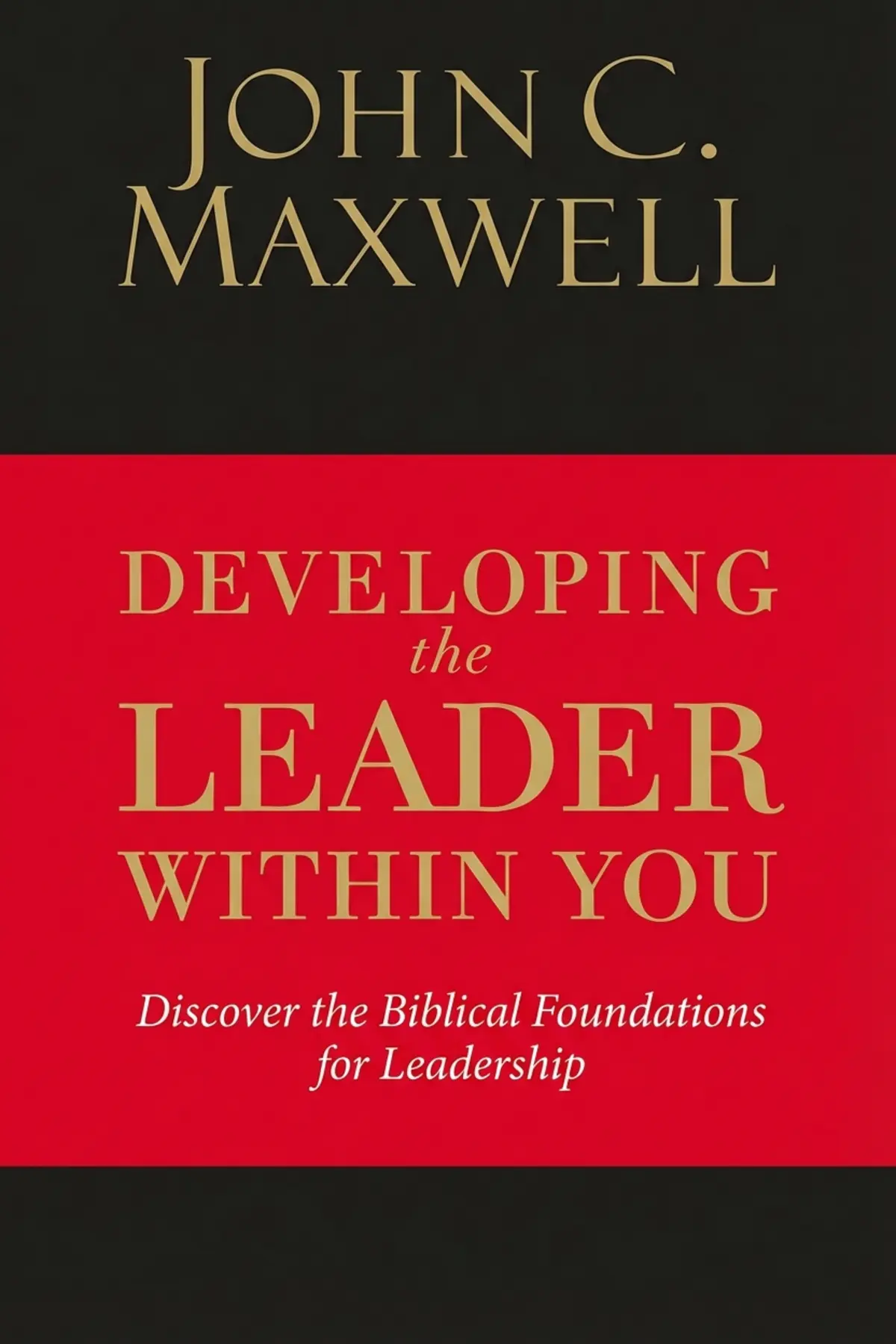
Table of Content
1. Introduction
1 min 05 sec
Many people with a manager’s title find that nobody really follows them, and that the title alone cannot fix it. In Developing the Leader Within You, author and speaker John C. Maxwell gives a blunt definition that explains why: leadership is simply influence, the ability to make others want to follow you. A title puts you on the bottom rung of that influence, and every rung above it has to be earned.
Maxwell’s case is that an organization grows only as far as its leader grows, so the work begins with you. Leaders climb by becoming people worth following: consistent in their values, disciplined in their habits, clear about what matters most, guided by a vision and willing to change. Along the way come a car that Henry Ford refused to improve, a championship basketball team and a sixty-day routine for building discipline one area at a time. What you gain is a way to turn authority someone handed you into influence people choose to give.
2. Climb from job title to real influence
1 min 47 sec
Some leaders are followed only as far as their contract requires, while others inspire lasting loyalty. The difference has little to do with rank, and Maxwell maps exactly where the gap between them lies.
3. Earn trust by letting people watch you
1 min 41 sec
Speeches about values tend to be forgotten by Friday. Maxwell points to something your team absorbs far more readily, and explains why meeting a hero in person so often ends in disappointment.
4. Build self-discipline in sixty-day blocks
1 min 51 sec
Most people know exactly where they should improve and still never do the work. Maxwell offers a slow, almost modest routine, and a championship team suggests why slow is the point.
5. Spend most of your effort on the top fifth
1 min 45 sec
Busy leaders often give their best hours to whatever shouts loudest. Maxwell’s sorting rules for tasks, money and people suggest that a small slice of your work and team deserves almost all of your attention.
6. Find a vision that people will follow
1 min 46 sec
A deaf composer, a blind man and a beginner earning six dollars a week all shared one thing. Maxwell explains where it comes from, and why having it is still not enough to make people follow.
7. Lead change and keep your team with you
1 min 56 sec
Henry Ford built a car he believed was perfect and then fired the man who suggested a new design for it. His stubbornness shows how a leader can stall a whole company, and what people need when change arrives.
8. Conclusion
1 min 12 sec
Maxwell’s case comes down to a simple reversal. Leadership is not about giving orders. It is what happens when people decide, for their own reasons, that you are worth following, and those reasons sit almost entirely inside you: values you keep when it costs something, discipline you practice when no one is watching, priorities you hold to, a vision you found in yourself and the openness to change your mind. A title can start the climb, but only your own growth carries you from position toward personhood.
The starting points are small. Choose the one area where you most need discipline, find someone already good at it, and give it 15 minutes every morning for 60 days. Look at where last week’s hours went and see whether most of them reached your best people and your most important work. Before the next change you bring to your team, explain why it is happening and what it is for. And the next time someone on that team speaks, listen to their tone as closely as their words.
The Model T was a masterpiece, and it still had to change. So does any leader who wants to keep being followed.
About this book
What is this book about?
Plenty of people are handed a title and discover that it does not make anyone follow them. John C. Maxwell starts from a plain definition that explains why. Leadership is influence, the ability to get others to want to follow you, and a title is only the lowest of five levels of it. Every level above position has to be earned. Maxwell's angle is that an organization grows only as far as its leader grows, so the work starts with the leader. He sets out the principles that move someone up the ladder. Integrity builds trust because people copy what they see. Self-discipline lets you follow your own lead. Priorities send money, time and energy to the work and people that matter most. A vision found inside yourself gives the team direction, and a readiness to change, shown by how Henry Ford nearly lost ground by clinging to the Model T, keeps the organization moving. Readers get a ladder for judging where their influence stands today, a sixty-day routine for building discipline one area at a time, a way to sort tasks and resources, and practical advice on bringing a team through change and listening to it well.
Book Information
Who it's for
New managers
New managers who have the title but feel the team is not really following them.
Hoping to build influence
Ambitious professionals who want to build influence before they are promoted.
Team leads facing change
Team leads facing a reorganization or a big change and wondering how to bring people along.
About the Author
John C. Maxwell
John C. Maxwell is an American author, speaker and pastor, born in 1947 in Garden City, Michigan, whose books focus mainly on leadership. Several have appeared on the New York Times Best Seller list, and his Amazon author bio says he has sold more than 40 million books and received the Horatio Alger Award. He founded EQUIP, a non-profit devoted to leadership development, and his organizations include Maxwell Leadership and the Maxwell Leadership Foundation.

Leadership 101: What Every Leader Needs to Know
John C. Maxwell

No Limits: Blow the CAP Off Your Capacity
John C. Maxwell
Ratings & Reviews
Ratings at a glance

What people think
Listeners find this book to be an essential resource for those in leadership roles, highlighting its actionable guidance and profound insights. The material is also praised for being high quality and offering great value for the price. Furthermore, listeners value this updated version of a classic title, with one reviewer pointing out the extensive revisions made to the first edition.
Top reviews
Nikolai
This book should be mandatory reading for anyone stepping into a management role for the first time. Maxwell delivers an absolute masterclass in practical wisdom, stripping away the complex jargon usually found in business manuals. To be fair, I was worried it might be outdated, but this 2.0 version is remarkably relevant for the modern workplace. The focus on character and the 'servant’s heart' really resonated with me because it shifts the focus from power to people. Truth is, most leadership books are fluff, but this one provides a clear roadmap. Every chapter feels like a deep dive into personal growth. It is well-written and offers incredible value for the money. You won't just learn how to lead others; you'll learn how to lead yourself first.
Show moreChatchai
Maxwell has managed to breathe new life into a classic with this 2.0 update. I was impressed by how many revisions were actually made to the original text to reflect today's digital and diverse landscape. It isn't just a re-hash; it’s a total upgrade that feels fresh and vital. The insights on vision and problem-solving are pearls of wisdom that I’ve already started implementing with my department. Frankly, the depth of knowledge here is staggering. It’s rare to find a book that is both inspirational and highly functional at the same time. If you want to excel as a leader, this is an absolute must-read. I keep it on my desk for quick reference whenever I hit a roadblock.
Show moreSkylar
The chapter on self-discipline alone is worth the price of admission. I’ve read a lot of self-help, but Maxwell has a way of making high-level concepts feel attainable for the average person. He focuses heavily on the idea that leadership is influence, nothing more and nothing less. This perspective changed how I interact with my colleagues daily. Not gonna lie, I expected it to be a bit dry, but the pithy stories and real-world examples kept me engaged throughout. The book emphasizes that a leader's attitude is the primary factor in team success. It’s a well-written guide that provides a lot of bang for your buck. I’m already planning to buy copies for my entire executive team.
Show morePrim
After hearing Maxwell speak at a conference, I finally dove into this revised edition to see if the written word carried the same weight. It does. The book is filled with pearls of wisdom that apply to both personal life and professional management. He covers priorities, character, and vision with a friendly, casual style that makes you feel like you're getting advice from a mentor. Some of the 'Dad jokes' are a bit cheesy, but they add to the book’s charm. I especially liked the section on fostering a servant’s heart. In my experience, this is the missing link in most modern leadership. This update is a classic for a reason. It is practical, insightful, and deeply encouraging.
Show moreEarn
Gotta say, the insights on problem-solving and maintaining a positive attitude are timeless. Maxwell drops gems on how to lead and build teams that are actually functional rather than just groups of people working in the same room. I appreciated the emphasis on the 'inner' work of leadership—the stuff nobody sees, like integrity and discipline. The book is well-written and flows much better than other management texts I’ve tried to tackle. It really drives home the point that if you aren't leading yourself well, you have no business trying to lead others. This is an absolute must-read for anyone who wants to make a real impact. It’s rare to find such depth of wisdom in such an accessible format.
Show moreNaomi
Ever wonder why some people command a room while others just fade into the background? Maxwell breaks it down into actionable steps that anyone can follow if they are willing to do the work. The chapter on self-discipline was a major wake-up call for me personally. Look, the author is a former pastor, and that perspective definitely colors the advice, even when he tries to keep it strictly professional. Some might find the religious undertones a bit much, but the core principles of integrity and attitude are universal. The writing style is very conversational and accessible, which makes it easy to digest during a busy week. It’s a solid resource for building a strong team foundation.
Show moreSudarat
Picking this up after years of hearing the hype, I can say it mostly lives up to its massive reputation. The author provides practical steps and principles based on years of experience, which gives the advice a lot of weight. My only gripe is that if you’ve read his other work, a lot of this feels like a retelling of familiar material. It’s a bit of the 'same old, same old' for dedicated Maxwell fans, though still valuable. For a newcomer, however, this is the perfect place to begin. The focus on character-building over simple 'success tactics' is a breath of fresh air. It’s a practical book that avoids the cynical mindset of newer 'gangster' success guides. Definitely worth a look.
Show moreClaire
Maxwell narrates the audiobook himself, and his characteristic friendly style makes the material feel like a conversation over coffee. I listened to it twice just to make sure I caught all the nuances in the chapters on vision and personal growth. There’s a lot of practical information packed into these pages. To be fair, it does rely heavily on lists and bullet points, which can feel a little tedious if you're looking for a narrative. However, those lists make it very easy to go back and find specific advice later on. It keeps the buzzwords to a minimum, which I really appreciated. It’s a solid, practical guide that offers great value for the money, despite the occasionally formulaic structure.
Show moreBae
While the core message is undeniably strong, the delivery felt a bit like reading a very long PowerPoint presentation. The content is fine—good even—but the structure is so formulaic that it becomes tedious after a while. Each chapter follows the exact same pattern: a main idea, several points, and then subpoints, all punctuated by an endless stream of quotes. It’s a checklist rather than a narrative journey. I think it could have been a very effective long-form essay or a series of blog posts. To be fair, there are great lessons to learn here about priorities and ethics. However, the choppy writing style and lack of real storytelling made it a chore to finish. It's a useful reference, but not a page-turner.
Show moreRungrat
Not gonna lie, I struggled to get through the choppy segments and the heavy-handed religious undertones. The author denies it, but the minister background creeps into almost every chapter, which felt a bit stale for a 21st-century business book. It feels very formulaic—almost like the author’s team just plugged quotes into a pre-set template. I didn't find much here that felt 'new' or 'mind-blowing.' Most of the advice consists of clichés we've heard for decades. While there are some decent points about conflict management, they are buried under layers of anecdotes that didn't really land for me. It’s not a bad book per se, but it certainly isn't the 'leader's bible' I was led to expect. I'd recommend '7 Habits' instead.
Show moreQuestions about this book
What is the main idea of Developing the Leader Within You?
John C. Maxwell defines leadership as influence, the ability to make others want to follow you. A job title gives only the lowest level of that influence. To rise further, he argues, leaders must grow personally, because an organization grows only as far as its leader does. That growth rests on integrity, self-discipline, clear priorities, a personal vision and a willingness to lead change.
What are the five levels of leadership in Maxwell's book?
Maxwell describes position, where people follow because of your title; permission, where they follow because you value their needs and opinions; production, where they follow because of the results you achieve together; people development, where they follow out of gratitude for how you helped them grow; and personhood, a rare level reached after a lifetime of influence, where respect for who you are inspires people to follow.
How does Maxwell suggest building self-discipline?
Write down five areas where you want more discipline and rank them. Ask someone already disciplined in your top area to check your progress. Spend 15 minutes each morning on that area and take five minutes at midday and in the evening to review how it went. After 60 days, move to the next area on your list, and celebrate each one you master with the person who helped you.
What is the 20/80 principle in Developing the Leader Within You?
Maxwell uses it to decide where resources go. Leaders should put about 80 percent of their money and energy into their top 20 percent of priorities, and give 80 percent of their time to the most productive fifth of their staff, whom he sees as producing most of the organization’s success. Everything else should be delegated or outsourced, and top performers should train new people.
Who should read Developing the Leader Within You?
It suits new managers who hold a title but lack real influence, ambitious professionals preparing for leadership, and team leads guiding people through change. Its advice is practical: check whether your actions match your words, run a 60-day discipline routine, sort tasks by importance and urgency, explain changes before they happen and listen closely to tone and body language.
Readers also enjoyed



A Year with Peter Drucker: 52 Weeks of Coaching for Leadership Effectiveness
Joseph A. Maciariello



Acting with Power: Why We Are More Powerful Than We Believe
Deborah Gruenfeld

All In: How Great Leaders Build Unstoppable Teams
Mike Michalowicz


7 Powers: The Foundations of Business Strategy
Hamilton Helmer
AUDIO SUMMARY AVAILABLE
Listen to Developing the Leader Within You in 15 minutes
Get the key ideas from Developing the Leader Within You by John C. Maxwell, plus 5,000+ more nonfiction titles.
- 5,000+ titles
- Listen as much as you want
- 7-day free trial
- Cancel anytime









