

11 min 36 sec
Available in: English
How Successful People Lead: Taking Your Influence to the Next Level
Maxwell maps leadership as five levels, from the authority a new title gives you to a legacy of leaders you have developed. He shows what keeps people stuck at each level and how to earn the next.
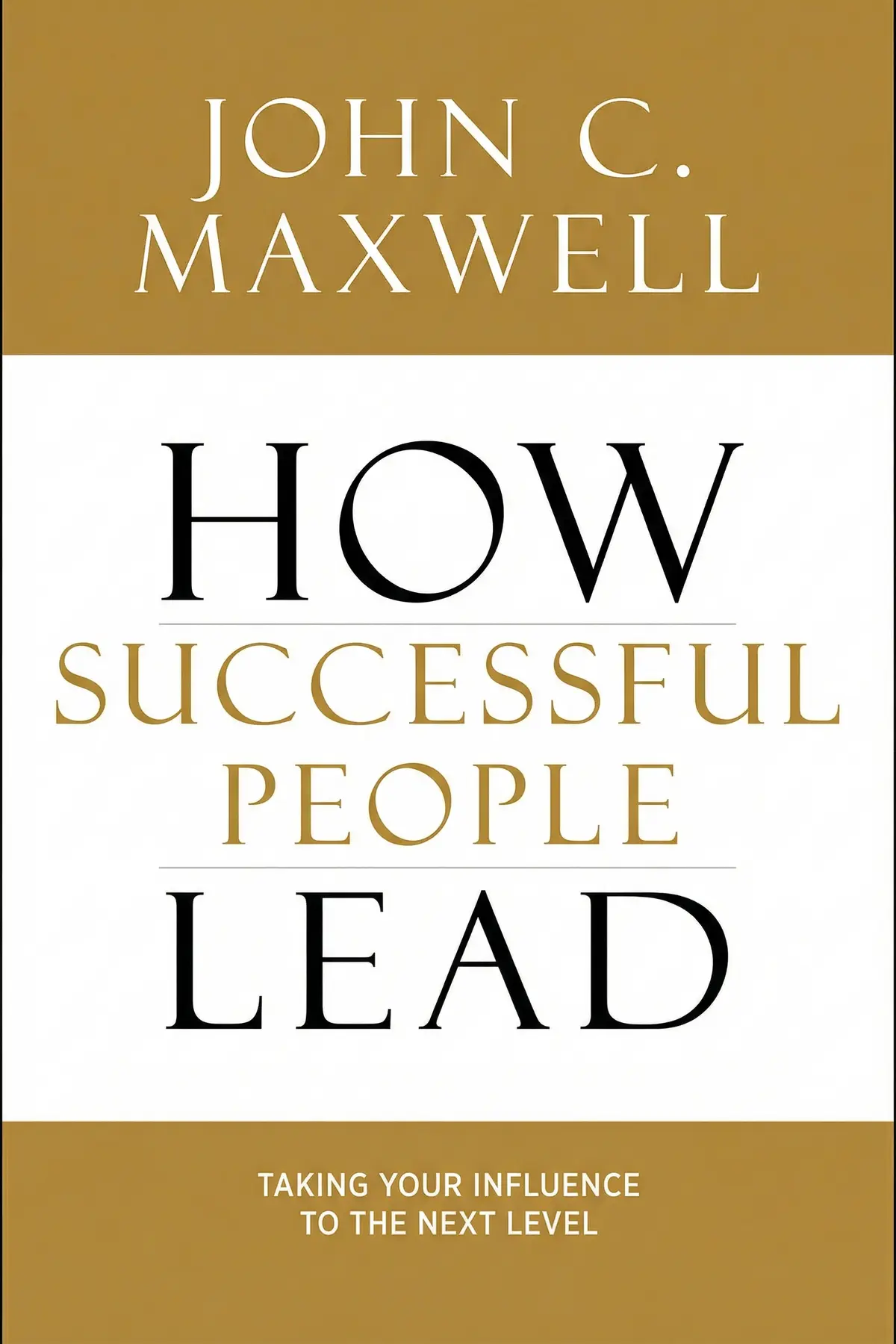
Table of Content
1. Introduction
56 sec
A new title gives you authority on day one, yet nobody is obliged to give you their best effort. In How Successful People Lead, John C. Maxwell, an author and pastor who has written many books on leadership, treats the title as the ground floor of a five-level climb. Above it come permission, production, developing other leaders and, at the top, a legacy. Each floor is earned through how you treat and grow people, and none of them is ever left behind.
That is the claim the whole book builds: influence grows as a leader’s attention moves from their own authority to other people’s growth. If you have just become a manager, a founder or a team lead, Maxwell’s levels work like a map. They show where you stand today and which habits keep leaders stuck on a floor. They also show what to do this month to earn the next one.
2. Turn a new title into a solid foundation
1 min 35 sec
Authority arrives the day the promotion is announced, and so does a temptation that has damaged many teams. Maxwell explains what to examine in yourself first, and which inherited picture of the boss to throw away.
3. Win people who choose to follow you
1 min 52 sec
Some leaders hold meetings, make decisions and still end up working alone. The gap between obedience and real support comes down to a handful of habits, plus the nerve to deal honestly with people who exploit goodwill.
4. Turn team goodwill into finished work
2 min 11 sec
A friendly team that delivers little will slowly drain its leader’s credibility. Maxwell offers a simple way to sort people by how they react to momentum, and it changes where a leader’s hours should go.
5. Grow leaders who multiply your reach
1 min 59 sec
Output that keeps rising can still trap a leader under a ceiling. Maxwell describes four tests for choosing whom to develop, and the hard inner work required once those people begin to shine.
6. Build a legacy that outlives your role
1 min 49 sec
The higher a leader climbs, the fewer people tell them the truth. Maxwell names the traps that come with success, and the conversation most leaders avoid until it is too late to have it well.
7. Conclusion
1 min 14 sec
Maxwell’s five floors describe one steady change in where a leader looks. At the bottom, attention sits on the title and its authority. Each step up points it further outward: to the relationships that win permission, to the team that produces, to the new leaders who multiply the work, and finally to the people who will carry it on. In his telling, influence grows as you hand more of it to others. Nothing is left behind on the way up, because a top-floor leader still owes the team the same example and accountability as a manager in their first week.
Use the map honestly. Find the floor where you really stand, which may be lower than your title suggests. If your team rarely speaks up, work on permission before chasing results. If results are strong but everything still runs through you, start choosing people to develop, testing them for chemistry, character, capacity and contribution. And whatever your level, begin thinking now about who could take your place, and keep close the few people who will tell you the truth.
A title makes you the person in charge. The floors above it decide whether anyone still follows once the title is gone.
About this book
What is this book about?
Being named a manager, founder or team lead gives you authority. It does not give you willing followers, results or lasting influence. John C. Maxwell argues that leadership is a process that unfolds across five levels: position, permission, production, developing people and legacy. For each level, Maxwell describes what the leaders who stall there get wrong and what the leaders who rise do differently. Leaders stuck at the bottom lead alone and fall back on intimidation. Those who rise do several things. They listen and include their teams. They spend their energy on the people who create momentum. They choose future leaders for chemistry, character, capacity and contribution, and they plan their own succession early. He also insists that no level is ever left behind, so a leader at the top still owes the team discipline and accountability. Readers get a map for finding where their influence really stands. It shows the traps waiting at each level and gives concrete moves for climbing from the authority a title hands them to a legacy carried on by the leaders they have grown.
Book Information
Who it's for
New managers and leads
New managers and team leads who have the title but not yet the team's trust.
Founders still deciding everything
Founders whose growing companies still depend on them for every decision.
Leaders thinking about succession
Experienced leaders starting to think about successors and the legacy they will leave.
About the Author
John C. Maxwell
John C. Maxwell is an American author, speaker and pastor, born in 1947 in Garden City, Michigan. Most of his books focus on leadership, and several have appeared on the New York Times Best Seller list. He founded EQUIP, a non-profit dedicated to leadership development, and his organizations include Maxwell Leadership and the Maxwell Leadership Foundation. His Amazon author bio says he has sold more than 40 million books and has received the Horatio Alger Award.

Developing the Leader Within You
John C. Maxwell
Leadership 101: What Every Leader Needs to Know
John C. Maxwell

No Limits: Blow the CAP Off Your Capacity
John C. Maxwell
Ratings & Reviews
Ratings at a glance
What people think
Listeners find this book to be a reliable, fast-paced read featuring excellent tips in every chapter, making it an effective resource for mentoring new management. The text offers an archetype for every level of leadership through an accessible writing style, with one listener mentioning that it teaches in concise plain English. Listeners characterize the work as inspiring and a solid investment, noting it serves as a wonderful gift.
Top reviews
Hazel
Finally got around to finishing this, and I can say it really shifted my perspective on what authority actually means. Maxwell breaks down leadership into these five distinct stages, from just having a title to actually building a lasting legacy. I used to think my promotion meant I had arrived, but this book taught me that a position is just the starting line for true influence. The transition from "Production" to "People Development" hit me the hardest because it's so easy to focus on results while ignoring the growth of your team. Truth is, the writing is extremely straightforward, which makes it a quick read for busy managers who don't have time for fluff. While some might find the concepts a bit high-level, I found the clarity refreshing. It’s an uplifting guide that I’ll definitely be passing along to my junior leads because it sets a high bar for excellence.
Show moreJonathan
Wow. This was exactly what I needed to jumpstart my motivation this quarter. I’ve read plenty of leadership books that ramble on for 400 pages, so finding something this concise and punchy was a relief. The "Pinnacle" level of leadership sounds like a distant dream, but the way Maxwell outlines the steps makes it feel attainable if you put in the work. He doesn't just talk about being a boss; he talks about the responsibility of cultivating an environment where everyone can thrive. Frankly, it’s the kind of book you want to buy in bulk for your entire department to get everyone on the same page. It’s written in such a clear, accessible way that anyone from a college student to a CEO can get value from it. Definitely worth the money for the shift in mindset alone.
Show moreSumalee
John C. Maxwell has a gift for taking the abstract concept of "influence" and turning it into something measurable and attainable. This book completely changed how I view my role as a director in my organization. It’s not about dictating tasks; it’s about the impact you have on the people around you and the legacy you leave behind. The focus on Level 4, "People Development," was a huge wake-up call for me to stop doing everything myself and start empowering others to lead. It’s a short read, but the emotional weight of his message about mentorship really stuck with me. If you’re looking for an uplifting book that will challenge your ego while providing a structured approach to growth, this is it. It’s easily one of the most practical guides on the market today.
Show moreEleni
Look, leadership is a journey, and this book is basically the GPS for that trip. I loved how Maxwell emphasizes that true authority is earned through respect and value rather than just a name on a business card or a fancy office. The "Pinnacle" level might seem out of reach for most, but the chapters on "Permission" and "Production" offer immediate value for anyone in a supervisor role. It’s written in a way that feels like a conversation with a trusted mentor rather than a dry lecture from a professor. I’ve started using the five levels to assess my own performance every week, and the results have been eye-opening. While it’s a compact book, the advice is high-impact and easy to implement. I’d recommend it to anyone who wants to be more than just a manager.
Show moreEthan
As someone who works in a high-pressure corporate environment, I found this small book surprisingly dense with actionable frameworks. It’s not a thick tome full of academic theories, which I appreciate, but rather a concise guide on how to move from being a boss to a mentor. The breakdown of "Permission" leadership—where people follow you because they actually want to—felt especially relevant to my current team dynamics. In my experience, most managers get stuck at Level 1 because they rely too much on their title and fail to build genuine relationships. I do wish there were more "boots on the ground" examples from non-corporate life to round it out. Still, for a quick flight or a long commute, it’s a solid investment of your time. It teaches essential skills in plain English without making things overly complicated or burdensome.
Show moreYothaka
Picked this up during a recent road trip, and I ended up finishing it before we even reached our destination. It’s a very fast read, which is perfect for someone like me who tends to lose interest if a book gets too bogged down in data or jargon. The five levels provide a great roadmap for anyone looking to evaluate where they currently stand with their subordinates. I particularly liked the section on "Production" and how building momentum can solve a lot of internal problems. However, it does feel a bit "preppy" and polished, almost like a transcript of a very good seminar rather than a deep dive. It’s a great training tool for new supervisors, though I think it could use a bit more grit. Overall, it’s a helpful guide for stepping up your game in the office.
Show moreManee
Ever wonder why some people have a title but no one actually listens to them? This book explains that phenomenon perfectly through the lens of the five levels of leadership. I appreciated how it differentiates between "Permission" and "Production," showing that being liked isn't the same as being effective. The framework is logical, easy to follow, and provides a clear path for professional growth. My only gripe is that it leans heavily on corporate applications and ignores some of the messier aspects of leading volunteers or small community groups. Despite that, the plain English style makes it very digestible for anyone. It’s a great gift for a recent grad or someone moving into their first management role. Not perfect, but definitely a very rewarding read that highlights the stuff they don't teach you in college.
Show moreWeera
After hearing a lot of hype about the "Five Levels," I finally decided to give this a go. It provides a really practical model for evaluating where you are in your leadership journey and what specific steps you need to take to level up. The book is organized beautifully, making it a great resource for training new leaders within an organization. I found the distinction between Level 2 (relationships) and Level 3 (results) to be the most insightful part of the text. Truthfully, it’s a bit repetitive in spots, but that probably helps the lessons stick in your brain better. It’s an easy, low-stress read that delivers exactly what it promises on the cover without any unnecessary fluff. A solid addition to any professional’s bookshelf that focuses on long-term impact.
Show moreWanphen
The chapter on "Position" started strong, but I’ll be blunt: the book felt increasingly redundant as it progressed. Maxwell has a great way of summarizing complex social dynamics, but after a while, the five levels started to bleed into each other without much new substance. I grabbed this at an airport hoping for some deep tactical advice, but it felt more like a strategic overview than a manual for daily use. It’s a decent enough primer if you are completely new to management, yet seasoned leaders might find it a bit too basic. To be fair, the bullet points are excellent for a quick skim if you’re short on time. I didn’t hate it, but I didn’t love it either—it’s very much a middle-of-the-road read. It’s good for a one-time browse, but I probably won't be revisiting it for deeper insights.
Show moreJom
To be fair, I have a lot of respect for Maxwell’s reputation, but this book just didn’t do it for me. It felt like he took a 20-page whitepaper and stretched it out to fill a book-length format through repetition. The concepts are fine, but they are incredibly basic—things like "build relationships" and "get results" aren't exactly ground-breaking revelations. If you’ve ever worked in a professional environment for more than a year, you likely already know 90% of what’s in here. It’s very mid and lacks the applicable tactics I was looking for to handle difficult team members. I honestly found myself skimming the last few chapters because the narrative thins out significantly as it reaches the higher levels. It’s okay for a total beginner, but for everyone else, it’s probably a skip.
Show moreQuestions about this book
What are the five levels of leadership in How Successful People Lead?
John C. Maxwell describes five levels. Position is the authority a title gives you. Permission comes when people choose to follow you. Production is delivering results through the team. The fourth level is developing other people into leaders, and the fifth is a legacy, where the leaders you mentored carry your vision forward. Maxwell stresses that leaders never leave a level behind, so the top still demands the basics.
Why do leaders get stuck at the first level of leadership?
Maxwell says leaders stuck at the position level lead alone. They decide without involving the team, rarely start conversations, never ask for feedback and stop listening because they think they have the answers. Some also keep an intimidation mindset, with absolute authority and staff pushed to compete, which he links to toxic workplaces, low morale, little innovation and high turnover.
How does John C. Maxwell suggest choosing future leaders?
He offers four tests. Chemistry asks whether you enjoy spending time with the person, since mentoring takes many hours. Character matters because mentoring depends on trust. Capacity covers skills, attitude, effectiveness and problem solving, including how someone handles stress and failure. Contribution looks at whether someone has a history of helping others, keeping their focus and producing results.
How can I apply How Successful People Lead at work?
First, find your real level instead of the one your title implies. Ask for the team’s input before decisions to build permission. Sort people by how they react to momentum and give most of your time to those who create it. Focus on high-impact projects and delegate the rest. Start succession planning early, and keep a small circle of peers who will be honest with you.
Who should read How Successful People Lead?
It suits people who have recently been given a leadership title and want to earn real influence, such as new managers, team leads and founders. It also helps experienced leaders whose teams deliver but who have not yet developed successors. Its levels give each reader a way to locate where they stand and what to work on next.
Featured in

Readers also enjoyed





A Year with Peter Drucker: 52 Weeks of Coaching for Leadership Effectiveness
Joseph A. Maciariello



Acting with Power: Why We Are More Powerful Than We Believe
Deborah Gruenfeld

All In: How Great Leaders Build Unstoppable Teams
Mike Michalowicz
AUDIO SUMMARY AVAILABLE
Listen to How Successful People Lead in 15 minutes
Get the key ideas from How Successful People Lead by John C. Maxwell, plus 5,000+ more nonfiction titles.
- 5,000+ titles
- Listen as much as you want
- 7-day free trial
- Cancel anytime









