

14 min 51 sec
Available in: English
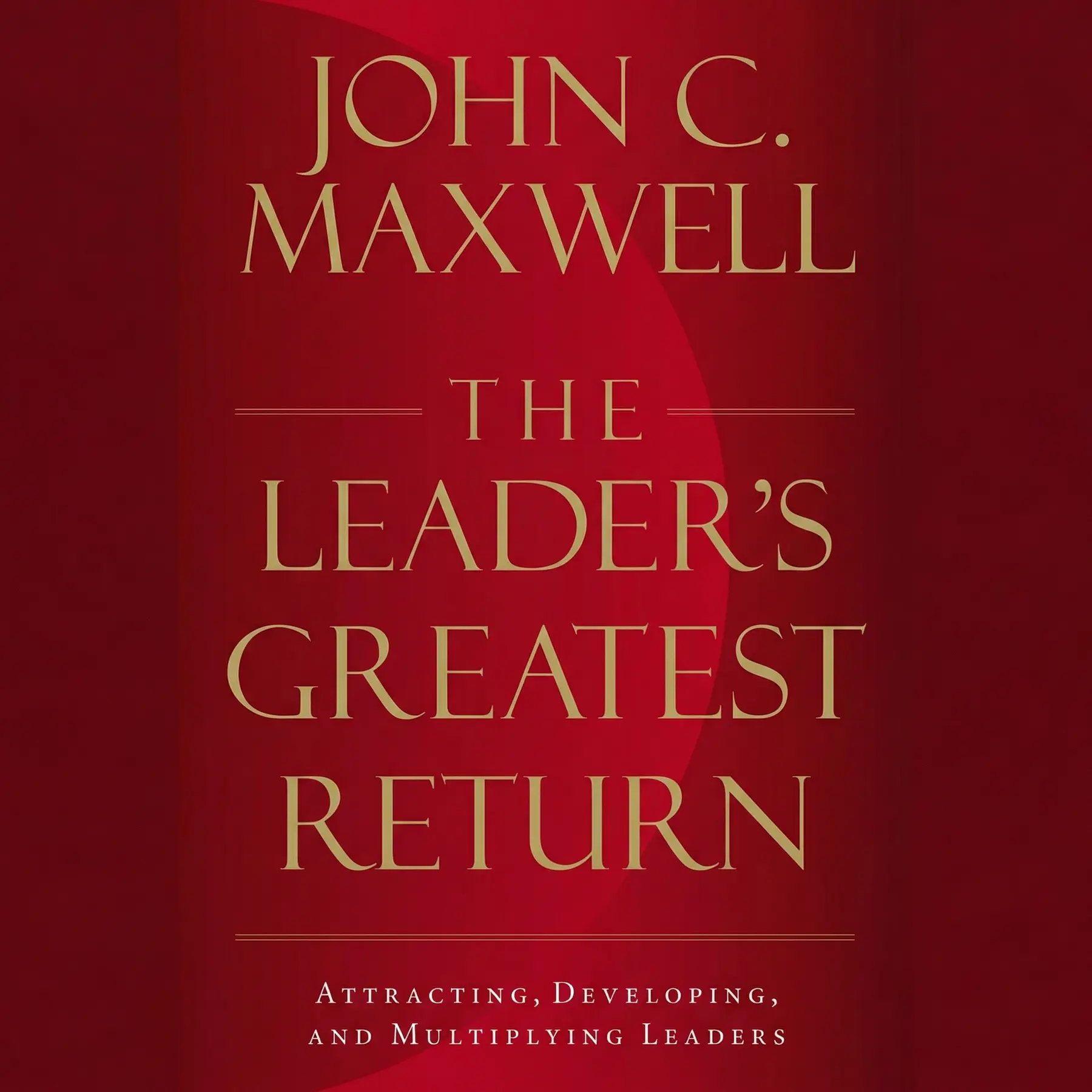
The Leader’s Greatest Return: Attracting, Developing, and Multiplying Leaders
Shows managers how to stop being the only leader on their team by spotting people with potential, motivating and training them through real work, giving them authority and teaching them to mentor others in turn.
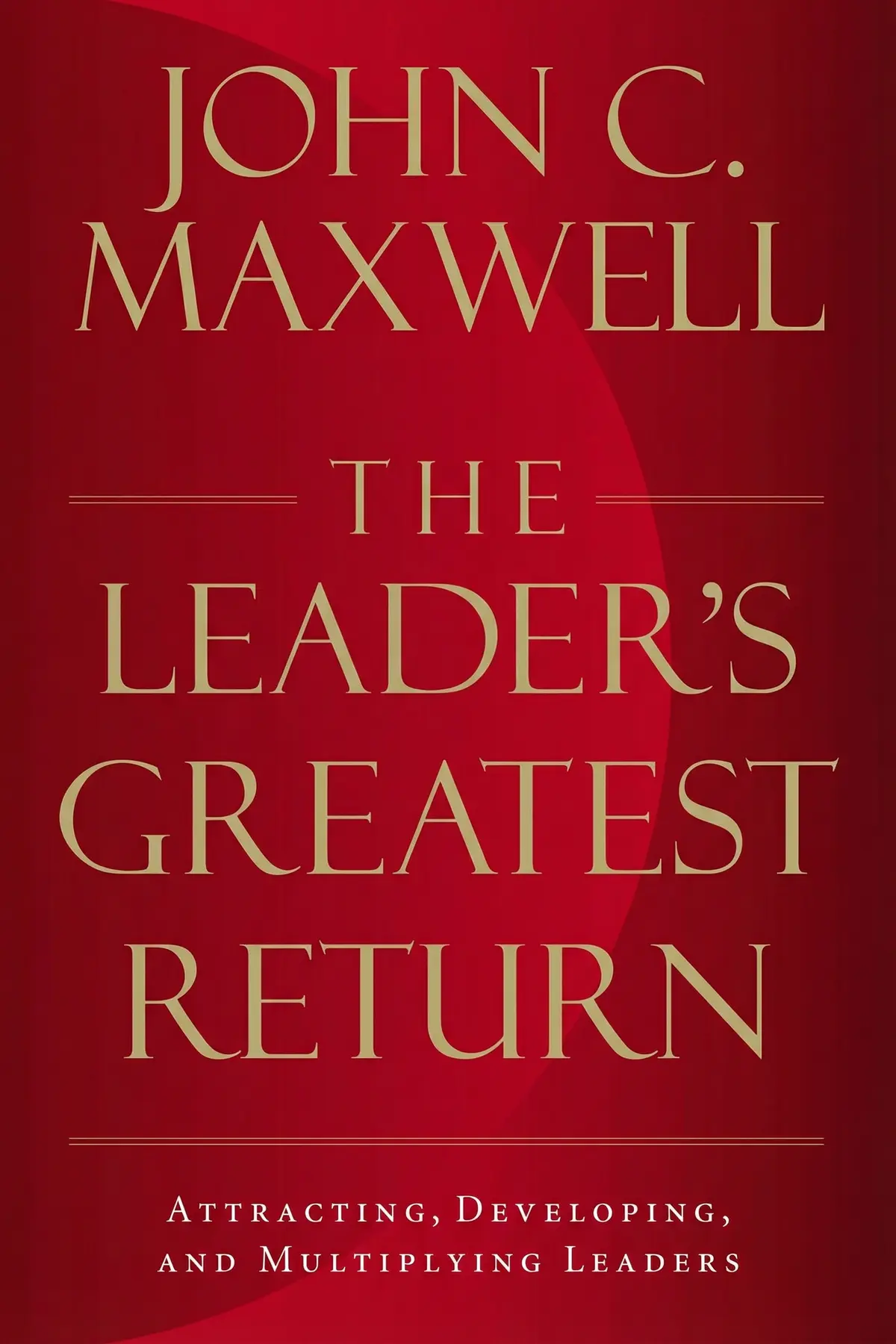
Table of Content
1. Introduction
56 sec
If you manage people, you may feel like the bottleneck, with every decision and every problem waiting for you. In The Leader’s Greatest Return, John C. Maxwell’s answer is to stop being the only leader in the room. He points to a global study from 2011 which found that companies led well were 13 times more likely to beat rivals on profit, product quality and customer satisfaction. Good leaders are the edge, and they are scarce.
Maxwell argues that you can grow them yourself. Choose people with the right skills and the instinct to lead, give them real work and real authority, and teach them to develop others in turn. Each leader you build then multiplies, which is the return the title promises. Step by step, from spotting potential to stepping aside, this is a plan for turning a team that leans on one person into one that can lead itself.
2. Win more by growing leaders at every level
1 min 32 sec
A stalled school project and a car stuck on a hill reveal the same weakness in most organizations. The fix sounds obvious, yet no single leader can watch everything or solve every problem alone.
3. Spot future leaders by first mapping your gaps
1 min 37 sec
The tallest kid on the playground can be the worst pick for the team. Choosing future leaders fails the same way, and one question about your own organization comes before any question about the candidate.
4. Match each person's drive, then turn it into habit
1 min 43 sec
Talented people stall all the time, often long after their first burst of drive. Maxwell names seven things that move people and explains what has to replace them once the excitement wears off.
5. Seat rising leaders beside experienced ones
1 min 35 sec
Writers improve faster in groups, and leaders can too. The catch lies in who you invite and what happens when a junior colleague sits in the room where senior decisions get made.
6. Teach leadership through real work and clear goals
1 min 47 sec
A 1990s study of how people learn suggests most leadership training happens in the wrong place. Pairing the right kind of work with the right kind of goal changes what a rising leader takes away.
7. Hand over the spotlight so new leaders perform
1 min 28 sec
Training a racehorse and never letting it race sounds absurd, yet organizations do something similar with their leaders. The obstacle is often the boss, and a few checks reveal whether your workplace is one of them.
8. Build a leadership team that pulls one way
1 min 34 sec
Putting your best people in one room does not make them a team. Three conditions decide whether a group of strong leaders pulls together or apart, and one of them is about values.
9. The best leaders grow others and step aside
1 min 34 sec
No manager can personally mentor everyone, which seems to cap how many leaders an organization can have. A simple cultural habit removes the cap, and its surest sign looks at first like people leaving their jobs.
10. Conclusion
1 min 05 sec
Maxwell’s case in The Leader’s Greatest Return comes down to a shift in where a manager looks for results. The usual measure is how much passes through your own hands. His measure is how many people could carry the work if you stepped away, and how many of them are already teaching someone else. That is why the sequence ends with mentors handing over their jobs: the return arrives when your effort keeps working without you.
The starting point he recommends is personal. Get to know the people you hope to develop, because we trust and follow those we feel connected to, much as most of us take advice more readily from a friend than from an acquaintance. Be curious about them, ask questions and try to see their work from where they stand. Then give one of them a real problem, a written goal that stretches without crushing, and the authority to solve it, and stay out of the way while they do.
The car on the hill never needed one stronger person pushing. It needed more people who knew how to push, and a few of them teaching the next.
About this book
What is this book about?
Organizations with strong leaders tend to outperform their competitors, yet good leaders are in high demand and short supply. John C. Maxwell's response is to build them from within. He argues that the greatest return a leader can earn comes from developing other leaders, who then develop more, until leadership runs through every level of the organization. The book lays out the sequence. Start by mapping the skills your organization needs, then look for people with the right track record and a real appetite to lead. Learn which of seven common drivers motivates each of them, and help that motivation become a habit of improving. Gather rising leaders at a leadership table where they learn beside experienced colleagues. Train them mostly through hands-on work with stretching, written goals, then hand over real authority in a setting that rewards initiative. The final steps are about scale: forming aligned leadership teams around clear strengths and making mentoring part of the culture, so that trained leaders eventually step aside for the people they trained. Managers and founders get a practical way to stop being the bottleneck.
Book Information
Who it's for
Managers feeling like bottlenecks
Managers who feel every decision still has to pass through them.
Founders outgrowing hands-on leadership
Founders growing past the point where they can personally lead every team.
HR and learning leaders
HR and learning leaders designing programs that turn internal talent into future leaders.
About the Author
John C. Maxwell
John C. Maxwell is an American author, speaker and pastor, born in 1947 in Garden City, Michigan, whose books concentrate mostly on leadership, several of them New York Times best sellers. He founded EQUIP, a non-profit devoted to leadership development, and his organizations include Maxwell Leadership and the Maxwell Leadership Foundation. According to his Amazon author biography, his books have sold more than 40 million copies, and he has received the Horatio Alger Award.
Developing the Leader Within You
John C. Maxwell
Leadership 101: What Every Leader Needs to Know
John C. Maxwell

No Limits: Blow the CAP Off Your Capacity
John C. Maxwell
Ratings & Reviews
Ratings at a glance
What people think
Listeners find the work an exceptional manual for honing leadership talents, with one noting its emphasis on instructing others to lead. They value the high-caliber content, which one listener describes as a detailed step-by-step growth guide, and find the text very straightforward to follow.
Top reviews
Rose
Few books manage to capture the essence of legacy like this one. Maxwell argues that the true measure of a leader isn’t how many followers they have, but how many leaders they successfully develop. I found the section on the "leadership table" to be particularly transformative, as it provides a concrete framework for creating space where others can fail and learn safely. The ROI of multiplying leadership influence is a recurring theme that resonates throughout the chapters. While his tone is undeniably personal—almost as if he's speaking directly to you over coffee—the advice remains grounded in practical organizational growth. To be fair, some might find the heavy reliance on anecdotes from his past books a bit repetitive, but for me, they served as necessary anchors for his points. If you are serious about building an institution that outlasts your own tenure, this is an essential manual for your library.
Show moreYok
Finally got around to finishing Maxwell’s latest, and it’s a masterclass in human capital. The step-by-step growth guide included here isn't just theory; it’s a detailed roadmap for identifying potential in others before they even see it themselves. I was especially struck by the "I do, you watch" equipping plan which simplifies the mentoring process into manageable phases. Truth is, many managers are afraid to work themselves out of a job, but this book flips that fear on its head. It pushes you to realize that your greatest return comes from empowering the next generation of giants. The writing style is classic Maxwell—easy to read, filled with punchy quotes, and deeply rooted in a service-oriented mindset. It’s the kind of book you keep on your desk to reference during team reviews. It actually changed how I approach my one-on-ones this week.
Show moreSomchai
As someone who has navigated corporate ladders for two decades, the focus here on "passing the baton" hit home in a way most management books don't. Maxwell hits the nail on the head: a company cannot grow on the outside until it grows its leaders on the inside. I appreciated the emphasis on character and the "6 C’s" of reproducing a healthy culture. The distinction between coaching and mentoring was also a lightbulb moment for me. In my experience, most people confuse the two, but Maxwell clarifies that mentoring is about life-centered transformation rather than just skill-based transactions. The book is an excellent guide for anyone feeling stuck in the day-to-day grind of
Show moreGioia
What a powerful reminder that our influence shouldn't stop at our own personal achievements! I’ve been struggling with how to scale my department, and this book provided the exact step-by-step growth guide I needed. The concept of the "leadership table" alone is worth the price of the book. It’s about more than just delegating tasks; it’s about sharing the "why" behind every decision and inviting others to weigh in. Maxwell’s storytelling is as engaging as ever, drawing on his decades of experience to show how mentoring is the greatest legacy anyone can leave. I particularly enjoyed the section on John Wooden’s advice. This isn't just a book you read; it’s a philosophy you adopt. It challenges you to stop being a shepherd and start being a rancher. Five stars for the clarity and the heart behind the message.
Show moreViroj
Wow, Maxwell really doubles down on the idea that success is the maximum utilization of the abilities of those around you. This book pushes readers to stop hoarding authority and start teaching others to lead. I loved the section on the "Vision Gap" and how builders are always impatient to close that space between what we are and what we could be. It’s a very detailed guide that feels like a personal mentorship session. Frankly, it’s refreshing to see a leader of his stature admit that his greatest joy isn't his own success, but the success of those he’s mentored. The stories about Mark Cole and Kevin Myers provide real-world proof that his methods work. If you want to multiply your impact, you need to read this and then pass it on to your team.
Show morePracha
This book provides the definitive roadmap for anyone tired of being the only decision-maker in the room. It’s an excellent guide to building a culture where everyone is empowered to take ownership. I was particularly moved by the idea that leadership is more caught than taught—that people do what they see. Maxwell’s emphasis on being an example is a sobering call to integrity for anyone in a position of power. The quality of information is exactly what you’d expect from a legend in the field, but it feels more urgent than his earlier works. It's about building a company of giants rather than a company of dwarfs. After reading this, I’m looking at my staff not just for what they can do for me today, but for who they can become tomorrow. A must-read for any serious builder.
Show moreSarawut
Wait, I didn't expect a leadership book to focus quite so much on the power of listening. Maxwell’s list of ten ways to make connections is incredibly simple, yet most of us fail at them daily. The idea that we should want more *for* our people than *from* them is a perspective shift that every middle manager needs to embrace. My only real complaint is the lack of study questions at the end of the chapters. For a book that encourages group discussion, you’d think those would be included without needing to buy a separate workbook. Still, the quality of the information is top-tier. Not gonna lie, some of the stories felt a little "icky and weird" with how hard he tries to connect with the reader, but the "nuggets" of wisdom are worth the occasional awkwardness.
Show moreAnthony
The chapter on the 80/20 rule alone makes this worth the investment for any busy professional. Maxwell explains how 20% of your people will produce 80% of your results, and he shows you exactly how to invest your time in that top tier. Personally, I found the tone a bit repetitive at times, as if he was trying to hit a certain word count by quoting his previous works. However, the practical application of his "equipping plan" is hard to argue with. He breaks down the process of moving from "I do it" to "You do it and someone else is with you" with remarkable clarity. It’s an easy read that doesn’t hide behind academic jargon. While it leans a bit heavily on a specific worldview, the leadership principles are universal enough to apply to any team.
Show moreDimitri
Is it just me, or does this feel like a remix of every other book he has written over the last twenty years? Don't get me wrong, the core message about passing the baton is vital for any organization, but the delivery feels very dated. Written and spoken like an old-school Christian man, it leans heavily on religious references that might not land for everyone in a secular corporate environment. I’ll admit the chapter on "working yourself out of a job" was a highlight, offering a rare bit of counter-intuitive wisdom. However, I found the constant self-referencing to The 21 Irrefutable Laws a bit much. It’s a decent enough read if you’re new to his work, but long-time fans might feel they’ve heard these stories about John Wooden and Jack Welch types before. It’s fine, just not groundbreaking.
Show moreVimolwan
Look, if you already like Maxwell's style, you will probably enjoy this, but be prepared for a very familiar experience. The truth is, there isn't much here that hasn't been covered in his previous 100+ books. I picked up a few good nuggets on developing leaders that I hope to use in my own career, but I had to sift through a lot of fluff to find them. The focus on Jack Welch-style leaders felt a bit outdated for today's workplace culture. Also, the mentions of Jesus were frequent enough to be distracting if you aren't looking for a faith-based perspective. To be fair, I did appreciate the chapter on "character" as a foundational requirement for leadership. It's a fine book for a long flight, but it didn't exactly blow my mind.
Show moreQuestions about this book
What is the main idea of The Leader's Greatest Return?
John C. Maxwell argues that a successful organization needs many good leaders at every level, and that the best way to get them is to develop them yourself. You choose people with the right skills and leadership talent, motivate and train them through real work, give them genuine authority, and teach them to mentor others. The greatest return comes when the leaders you trained start producing leaders of their own.
What are the seven motivations John Maxwell describes?
Maxwell lists purpose, autonomy, relationships, personal or professional growth, mastery of a skill, recognition and financial reward. Knowing which one drives a person tells you what to offer, such as a raise for someone motivated by money or skill-building chances for someone seeking mastery. Because motivation fades over time, he recommends turning it into a habit of improvement through belief, encouragement, training and your own example.
What is the 70/20/10 model mentioned in the book?
It comes from researchers who surveyed 200 learners in the 1990s. Their findings suggest about 70 percent of learning comes from hands-on experience, 20 percent from feedback and coaching, and 10 percent from formal training. Maxwell uses it to argue that rising leaders should work on real problems, guided by challenging, measurable, written goals, and given the resources and authority to act without constant supervision.
What is a leadership table?
A leadership table is Maxwell’s name for a regular gathering, modeled on a writers’ group, where leaders learn together, share successes and failures, and apply what they learn in daily work before reporting back. He wants it open to people with potential as well as established leaders, so newcomers benefit from being near experienced colleagues, absorb how they think and build useful connections.
How can a manager apply The Leader's Greatest Return?
Start by getting to know the people you want to develop, since trust grows from connection: be curious, ask questions and see things from their view. Find out what motivates each person, then give one of them a real problem with a stretching written goal and the authority to solve it. Over time, ask every leader you develop to mentor someone, until people step aside for those they trained.

Readers also enjoyed


A Bigger Prize: How We Can Do Better Than the Competition
Margaret Heffernan





A Year with Peter Drucker: 52 Weeks of Coaching for Leadership Effectiveness
Joseph A. Maciariello



Acting with Power: Why We Are More Powerful Than We Believe
Deborah Gruenfeld
AUDIO SUMMARY AVAILABLE
Listen to The Leader’s Greatest Return in 15 minutes
Get the key ideas from The Leader’s Greatest Return by John C. Maxwell, plus 5,000+ more nonfiction titles.
- 5,000+ titles
- Listen as much as you want
- 7-day free trial
- Cancel anytime









