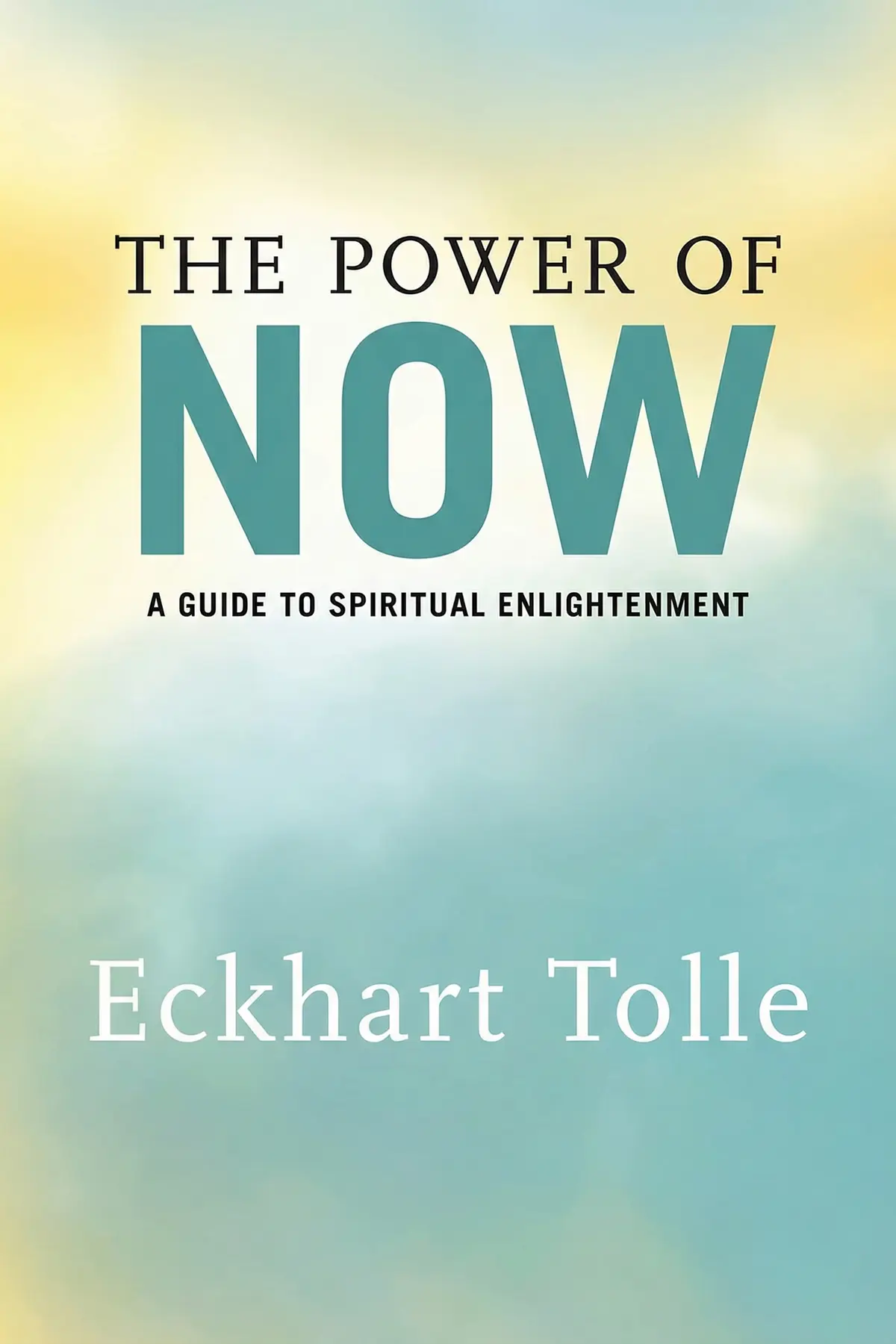
The Power of Now: A Guide To Spiritual Enlightenment
Eckhart Tolle
 English
 ไทย
Tolle argues that the ego, the mind's story of who we are, drives both personal unhappiness and humanity's violence, and shows how watching your thoughts and returning to the present brings peace.

1 min 03 sec
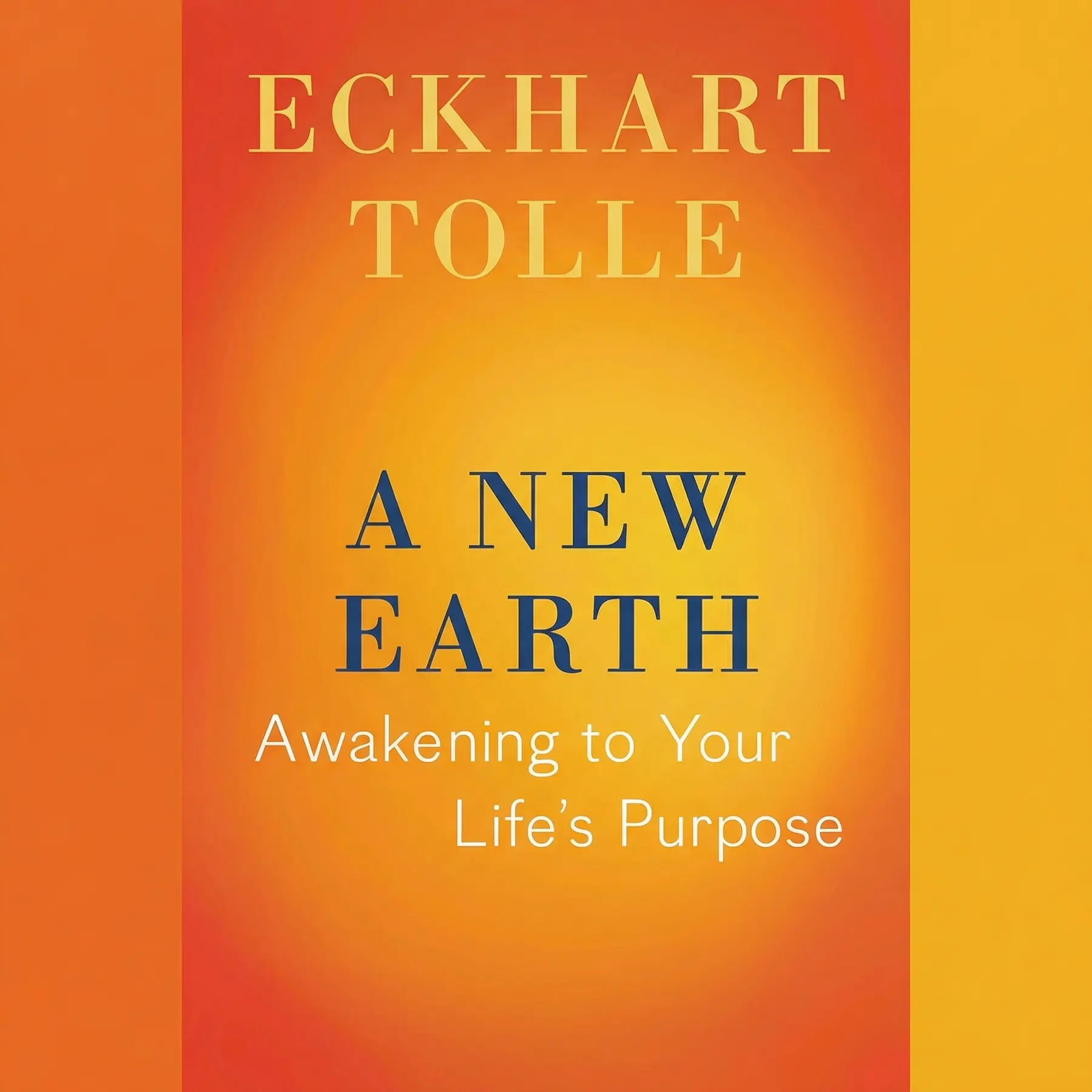
If your mind keeps replaying an old argument or racing ahead to tomorrow’s worries, Eckhart Tolle has a blunt diagnosis: the voice doing the replaying is not you. In A New Earth, the spiritual teacher argues that the ego, a story the mind tells about who we are, drives both private unhappiness and the violence people inflict on each other and on the planet. Ancient traditions named this madness long ago, he says, and no religion or political system has managed to cure it.
His remedy starts inside one person. Recognize that your true self is the awareness watching your thoughts, drop what the mind keeps dragging in from the past and the future, and return to the present moment, where peace is always waiting. Change that, Tolle argues, and you begin to change the world. Along the way come two Zen monks on a muddy road, a woman talking to herself on a subway, and a simple test for whether a goal serves you or your ego.
1 min 43 sec
Ancient Hindu, Buddhist and Christian teachers each gave humanity’s trouble a different name. Tolle sees them describing one illness, visible in twentieth-century massacres and in the irritation of an ordinary morning, and he traces it to a single place.
1 min 55 sec
Communism promised a fairer society and the great religions preached kindness, yet both ended up feeding the cruelty they opposed. Tolle explains what every reformer overlooked, and why the stakes are now higher than ever.
1 min 52 sec
A college student on a subway judged a stranger talking angrily to herself, then heard his own voice. That moment of embarrassment became the start of a different way of relating to every thought.
1 min 53 sec
Two Zen monks meet a woman on a muddy road, and only one of them is still troubled five hours later. Their story, and a pair of ducks, show where peace actually lives.
1 min 49 sec
Raising children, being the best, even helping the homeless can all leave a person empty or secretly proud. Tolle distinguishes two kinds of purpose and shows why only one of them is safe from loss.
1 min 43 sec
Taxes, laundry and driving tests will not disappear from your life. Tolle offers a strict rule for facing them, a warning about success, and a practice that takes only a few seconds.
1 min 14 sec
Tolle’s book makes an unusual claim about scale. A regime that killed a quarter of its own people and a monk who stewed for five hours over an act of kindness are, in his view, showing the same illness at different sizes. Both come from the ego, the story the mind tells about who we are, and both ease when we stop mistaking that story for ourselves. That is why he ties a calmer mind to a safer world. For a species facing the choice to evolve or die, personal peace becomes part of the cure.
The practice he offers is small enough to start on the way to work. Catch one thought today and watch it from the outside, the way a young student once caught his own words on a subway. When an old hurt starts to replay, set it down and swim off like the ducks. Check whether a goal you are chasing needs other people to fail or to keep needing you. And when a task feels unbearable, accept it fully or stop, then breathe slowly and feel the air reach your fingers.
Tanzan set the woman down on the far side of the road. Tolle’s whole book is an invitation to do the same.
Violence, greed and damage to the planet seem to follow humanity through every age, and many people carry a smaller version of the same unrest in their own heads. Eckhart Tolle argues that both have one cause: the ego, the mental story we mistake for who we are. Hindu, Buddhist and Christian traditions all named this dysfunction, he says, yet religious teachings were distorted by later followers, and communism failed because its leaders never changed their own consciousness. Tolle's answer begins with noticing that your real self is the awareness that observes your thoughts. From there he shows how the ego clings to old hurts through the Zen story of Tanzan and Ekido, why outer goals such as a career or raising children eventually disappoint, and why the inner purpose of awakening matters more. Readers get a short set of practices for daily life: letting go of the past the way fighting ducks do, meeting every task with acceptance or enjoyment, staying humble and returning to the present through a few deep breaths.
Overthinkers who replay old arguments and worries and want a way to step out of the loop.
Professionals chasing career goals who sense that success alone has not brought contentment.
Readers drawn to Buddhist, Hindu and Christian ideas who want them joined into one practical view of the mind.
Born Ulrich Leonard Tölle in 1948 in Lünen, Germany, Eckhart Tolle was a doctoral student at Cambridge University in 1977 when he experienced what he calls a spiritual awakening and gave up his studies. He later became a spiritual teacher. His books include The Power of Now, published in 1997, Stillness Speaks and the picture book Guardians of Being, with A New Earth appearing in 2005. He draws on Zen Buddhism, Christian mysticism, Sufism and Hinduism without belonging to any religion, and lives in Vancouver.
Eckhart Tolle
Listeners find the work enlightening and rich with wisdom, supporting their spiritual expansion and understanding of life’s inner workings. They also characterize it as a life-altering experience that reshapes their perspective, praising its clear delivery and noting it deserves repeat listening. Furthermore, the material provides deep, thought-provoking insights, and listeners value its soul-healing nature for bringing tranquility and joy into their lives.
This book is a massive shift in perspective that I didn't know I needed until I was halfway through the first chapter. Tolle has this incredible way of deconstructing the human ego that feels both surgical and deeply compassionate. I found the concept of the 'pain-body' particularly enlightening, as it gave me a vocabulary for those heavy, reactive emotions that usually just feel like 'me.' To be fair, some of the phrasing is a bit abstract, but if you allow yourself to sit with the words rather than just racing to the end, the soul-healing qualities are undeniable. It’s not just a manual for spiritual growth; it’s an invitation to stop fighting reality. I’ve started practicing the conscious breathing exercises he suggests, and the sense of peace it brings to my workday is remarkable. It’s the kind of wisdom you want to read over and over.
Show morePicked this up during a really rough patch in my life and it served as a genuine lifeline. Truth is, I was skeptical of the whole Oprah endorsement thing at first, but the depth of insight here is staggering. Tolle explains how our identification with material things and social roles creates a prison of suffering. His writing style is gentle yet firm, almost like a meditation in book form. I especially appreciated the sections on 'inner-body' awareness, which helped me ground myself when my anxiety was spiraling. It makes you look at life differently, shifting the focus from 'what am I getting' to 'how am I being.' While some might find his tone a bit repetitive, I think the repetition is necessary to break through the noisy mental habits we all have. Truly life-changing if you're open to it.
Show moreWow, just wow. I’ve read a lot of self-help books, but this one actually feels like it’s operating on a different frequency. The way Tolle describes the shift from an ego-based consciousness to a state of presence is nothing short of brilliant. It’s one of those rare books that makes you stop every few pages just to breathe and absorb the weight of what was said. I found his thoughts on parenting—treating children as equals in essence rather than subordinates—to be particularly moving and eye-opening. The book offers a type of soul-healing that is hard to find in modern literature. If you're looking for deep wisdom that makes you think about your place in the universe, this is it. It has brought a newfound sense of peace to my life that I didn't think was possible through just reading.
Show moreFew books actually manage to alter the way you perceive the mundane tasks of daily life. This one did. Suddenly, doing the dishes or walking to the car becomes an opportunity for presence rather than just a chore to get through. Tolle’s wisdom is timeless, and he manages to strip away the dogma from spiritual teachings to get to the core of what it means to be alive. I found the sections on the 'unmanifested Source' to be deeply comforting. It’s a book about soul-healing and finding happiness that isn't dependent on external circumstances. I’ve recommended this to all my friends because it really does make you look at the world with fresh eyes. It’s one of those rare, life-changing reads that you’ll want to revisit whenever you feel lost.
Show moreAs someone who struggles with constant overthinking, Tolle’s breakdown of the ego was genuinely helpful for my mental health. He manages to synthesize complex theological ideas into something that feels universally relevant without being bogged down by dogma. I loved the parts about finding purpose in the present moment rather than constantly chasing some future goal that will supposedly make us happy. Got to say, though, the middle section on the 'pain-body' felt a bit long-winded and some of the terminology is definitely 'New Age' heavy. It’s a lot to digest. However, the practical advice on non-attachment and non-judgment is gold. It’s a solid guide for anyone looking to bring more happiness and presence into their daily routine. I’ll definitely be keeping this on my nightstand for quick reminders.
Show moreThe chapter on parenting alone makes this worth the price of admission for me. Tolle’s advice on giving children 'space to be' really changed how I interact with my kids on a daily basis. I’m giving it four stars instead of five because the prose can be a bit 'woo-woo' at times, and he occasionally drifts into these strange pseudo-scientific explanations for human behavior that didn't quite land. But looking past that, the core message about the 'new earth' arising from individual consciousness is powerful stuff. He challenges you to stop seeking your identity in your possessions or your social status, which is a tough but necessary pill to swallow. It’s definitely a slow read, but the insights are worth the effort. It’s enlightened writing for a very noisy world.
Show moreAfter hearing so much hype about this, I finally dove in, and I have to admit it’s a lot better than I expected. Tolle has a deep understanding of theology and philosophy, and he uses it to explain why humans are so prone to conflict and misery. His perspective on the 'ego' as a mental construct is incredibly well-articulated. I particularly liked the distinction he makes between 'enthusiasm' and 'wanting'—it changed how I view my career goals. In my experience, you have to be in the right headspace to appreciate this book; if you’re looking for a quick fix, you’ll be disappointed. It’s a slow burn that requires reflection. Not every chapter hit home for me, but the overall message of inner peace is something I think everyone could benefit from.
Show moreEver wonder why certain people treat spiritual texts like the literal gospel? I struggled with this one. On one hand, Tolle makes some excellent points about how we let our past define us and how the ego creates unnecessary drama in our relationships. That's all great. But on the other hand, the writing is incredibly dense and he repeats himself constantly. It felt like a 300-page version of a concept that could have been a long essay. He talks a lot about 'Being' and 'presence,' but sometimes it feels like he’s just telling you to stop thinking entirely, which isn't always practical in the real world. The chapter on 'egoic collectives' was interesting but felt a bit disjointed from the rest of the book. It’s fine, but I don't think it's the revolutionary masterpiece people claim.
Show moreFrankly, a lot of what Tolle discusses here is just basic mindfulness packaged in a very dense, often circular prose. Don't get me wrong, there are some great nuggets of wisdom about non-judgment and the dangers of the ego, but you have to wade through a lot of 'enlightened' babble to find them. The book is quite long-winded, and I found myself skimming some of the more abstract sections. To be fair, I think his respect for various religious leaders like Buddha and Jesus adds a nice layer of credibility to the text. It’s a decent enough guide for spiritual growth, but I don't think it's quite the revolutionary manual it's made out to be. It’s okay, just be prepared for a lot of repetition and some very 'out there' concepts.
Show moreLook, I really wanted to like this, but it felt like a total rehash of everything he already said in The Power of Now. Frankly, it’s a lot of New Age mumbo-jumbo wrapped in flowery language. He spends hundreds of pages telling you that nothing matters except the 'now,' but he never really explains how to function in a society that requires planning and memory. It’s easy to say 'don’t attach to things' when you're a famous author, but for the rest of us, that’s just not how life works. He calls the ego 'schizophrenic' and tells us our life stories are delusions. To be honest, I found it more depressing than inspiring. I don't see what the big deal is, other than the fact that Oprah pushed it so hard. It’s boring and repetitive.
Show moreEckhart Tolle argues that the ego, a mental story we mistake for our true self, causes both personal unhappiness and the violence humans inflict on one another and the planet. He sees this dysfunction named in Hinduism, Buddhism and Christianity. His remedy is to recognize that the real self is the awareness observing our thoughts, and to return to the present moment, where he says peace is always available.
For Tolle, the ego is the stream of thoughts, feelings and opinions we usually call I, propped up by achievements, background and possessions. He calls it a construct, a story about ourselves, and blames it for our discontent, insecurity and anxiety. The true self, in his account, is the awareness that can watch that stream from outside, something he grasped after hearing himself speak aloud on a subway.
Outer purpose is what you do, such as earning money, building a career or raising children. Tolle warns that it depends on changing circumstances and will eventually disappoint, as when grown children leave home. Inner purpose is shared by everyone: to awaken, separating awareness from thought. He adds that even noble work, like activism for homeless people, can be driven by ego if the motive is praise or superiority.
Start by observing your thoughts instead of identifying with them. When an old hurt keeps replaying, let it go, as Tanzan did with the woman he carried and as ducks do after a fight. Meet tasks like taxes or laundry with acceptance or enjoyment, and stop if you can manage neither. Tolle also recommends two or three deep breaths to reconnect with the aliveness of your body.
It suits people who overthink, replay arguments or worry about the future, and professionals who have reached outer goals without feeling content. Readers curious about how Hindu, Buddhist and Christian teachings describe the mind will find them joined into one view. Its practices are simple enough to try the same day, from watching a single thought to taking a few slow breaths.


Daniel Goleman

Marianne Williamson

Deepak Chopra

Alcoholics Anonymous World Services


Pico Iyer
AUDIO SUMMARY AVAILABLE
Get the key ideas from A New Earth by Eckhart Tolle, plus 5,000+ more nonfiction titles.