

14 min 58 sec
Available in: English
 ไทย
EnglishไทยA Return to Love: Reflections on the Principles of a Course in Miracles
Shows how to recognize the fear behind everyday unhappiness and replace it with love, using simple spiritual practices for work, difficult relationships, forgiveness and empathy that require no particular religion.
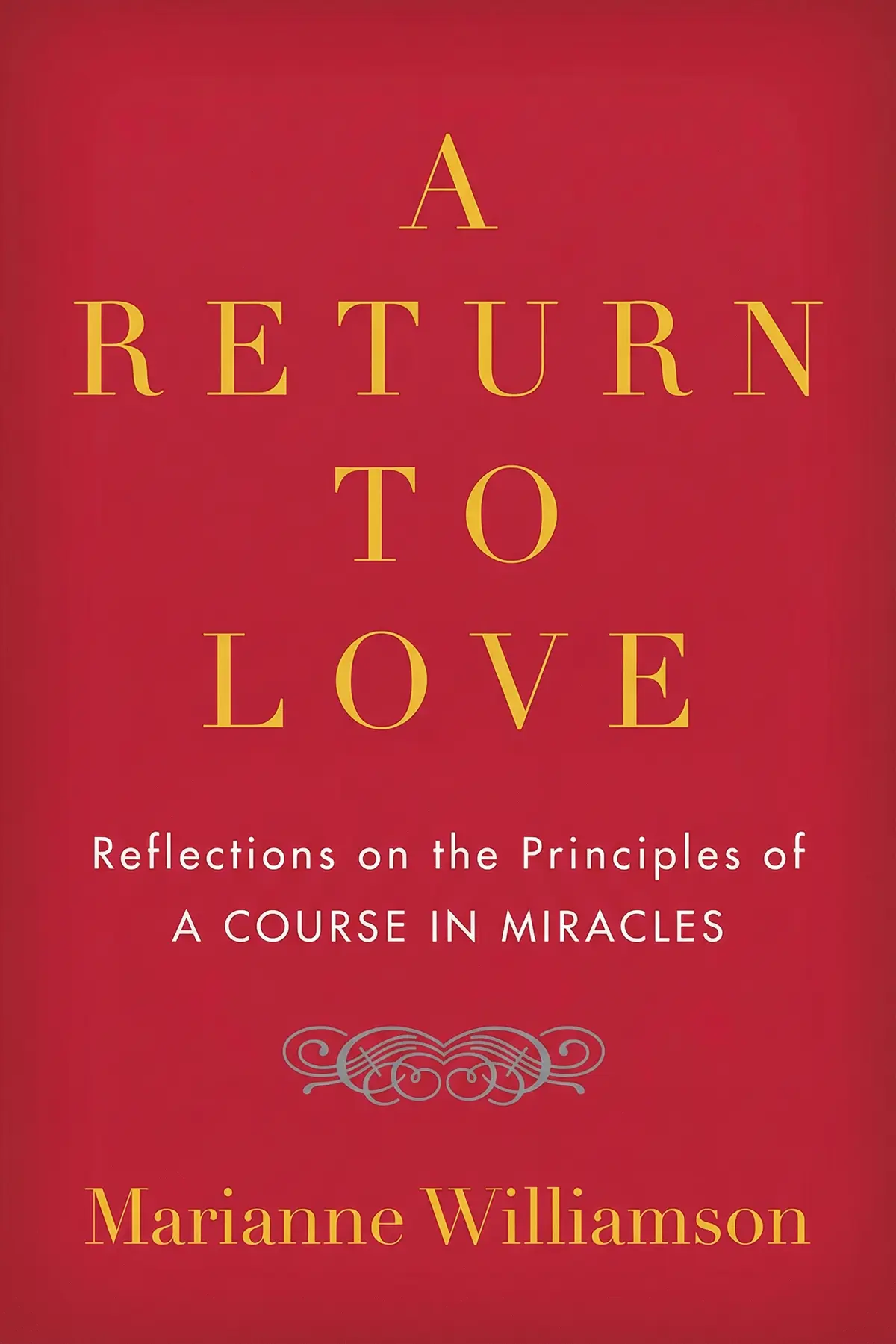
Table of Content
1. Introduction
1 min 01 sec
If fear runs your days, from the constant bad news to the guarded way you meet strangers, Marianne Williamson thinks you have mistaken a habit for reality. In A Return to Love, she argues that nearly every kind of unhappiness, from illness and grief to guilt and anxiety, grows out of fear. Its cure, she says, is a love so large that many people call it God.
Williamson insists you need no particular religion to use this idea. You only need to accept that minds are linked, the way Carl Jung described a collective unconscious, and then let that shared love do the steering. Her whole case rests on one claim: when you stop defending yourself and surrender to love, your work, your relationships and your old wounds begin to heal.
What follows is a handful of simple practices for doing that, from a question to ask in a tense moment to a gift that can help release a grudge held for much of a lifetime.
2. Spot the fear hiding behind everyday unhappiness
1 min 50 sec
Most people would say their worries come from real problems: money, health, other people. Williamson traces them somewhere else, to a lesson taught so early that hardly anyone notices they learned it.
3. See yourself as part of one shared mind
1 min 47 sec
A separate body makes each of us feel like an island. Williamson argues that this feeling is a misreading, and her alternative changes how a word many people avoid can be understood.
4. Letting go of control makes you stronger
1 min 48 sec
People who hit rock bottom and turn to God are often dismissed as desperate. Williamson sees something else in that moment, and she turns it into a two-step practice anyone can try.
5. Turn any job into meaningful work
1 min 55 sec
A promotion can arrive and still leave you empty. Williamson explains why, and she uses her own time in a poorly paid job to show where real purpose at work is found.
6. Ask one question that softens hard relationships
1 min 51 sec
Days of travel with her mother left Williamson’s already troubled relationship with her badly strained. In the middle of Venice, one silent question changed how she saw her, and it works on betrayal too.
7. Forgive by giving what you never received
1 min 41 sec
A man had resented his father for years over presents that never came. Williamson’s advice to him sounds backward at first, yet it shows a way out of any long-held grudge.
8. See the old pain behind someone's cold behavior
1 min 55 sec
A stranger at a hair salon seemed set on making the wait unpleasant. What Williamson learned minutes later changed her whole afternoon, and it points to why punishment so often fails.
9. Conclusion
1 min 10 sec
Williamson’s book comes down to a choice made over and over: answer the moment with fear, or answer it with love. Fear, as she describes it, is learned early and fed daily, and it builds walls between people who, in her view, share one mind. Love takes the walls down. The waitress serving tables, the daughter crossing a square in Venice and the son urged to send presents to a father who never gave him any are all invited to make that same choice.
Her book asks for no particular religion. It asks for a willingness to stop steering everything alone. You can begin tomorrow morning, as she suggests. Instead of grabbing a to-do list or an affirmation first, just request guidance for the day ahead, and trust that the shared mind understands what serves your good and the good of the world. Later, when someone grates on you, ask how love would see them. And when an old hurt returns, answer it with a gift.
Williamson’s wager is that each of these small acts returns you to where you began, part of a sea of love you never actually left.
About this book
What is this book about?
Many people live braced for harm. They compete at school, fight for jobs and guard themselves against strangers, until fear becomes the background of every thought. Marianne Williamson argues that this fear, more than any outside event, is the root of illness, grief, guilt and anxiety. Her answer is love, understood as a force so large that many cultures call it God. Drawing on Carl Jung's idea of a collective unconscious, she describes everyone as part of one shared mind. She holds that surrendering to it is a source of strength, and that no church membership is required. From there she turns the idea into practice. She shows how to treat any job, even waiting tables, as a mission to improve the world. She offers a single question that softens a tense relationship and describes giving gifts as a way to dissolve an old grudge. She also explains how empathy can break a cycle of suffering, from a hair salon to the prison system. Readers get a calm, concrete set of habits for meeting each day with love instead of defense.
Book Information
Who it's for
Worn down by worry
People worn down by constant worry who want a spiritual practice without joining a church.
Stuck in empty jobs
Professionals stuck in jobs that feel empty and looking for a sense of purpose at work.
Holding an old grudge
Anyone carrying an old grudge against a parent, partner or friend and ready to let it go.
About the Author
Marianne Williamson
Marianne Williamson was born in Houston, Texas, in 1952 and began her career in ministry, leading the Church of Today, a Unity congregation in Warren, Michigan. She became widely known through frequent appearances on Oprah Winfrey's show. She founded Center for Living in 1987 and Project Angel Food, a Los Angeles meals program, in 1989, and co-founded the Peace Alliance. A Return to Love, published in 1992, reached the New York Times bestseller list. She later ran for Congress and twice sought the presidency.
Ratings & Reviews
Ratings at a glance
What people think
Listeners describe this work as an engaging experience that transforms their life view and aids in prioritizing love over fear. Because the writing style is accessible and straightforward to follow, listeners value how clearly it breaks down the concepts of "A Course in Miracles." Listeners say the book fosters a sense of inner peace and clarity, while one listener mentions its effectiveness in moving their mindset away from insecurity.
Top reviews
Amelia
Wow. This book arrived exactly when I needed it, offering a profound shift in how I view my own anxieties. Williamson has this uncanny ability to take dense, esoteric concepts from 'A Course in Miracles' and translate them into something that feels deeply personal and immediately applicable. In my experience, most spiritual guides feel like they are talking down to you, but her voice is that of a companion who has walked through the fire and found a way to stay cool. I loved the central premise that we aren't actually seeking more love, but rather removing the barriers we've built against it. It sounds simple, almost too simple, but applying it to daily interactions has brought me a level of peace I didn't think was possible in our chaotic world. My only minor gripe is the occasional repetitive nature of the middle chapters, though I suppose some truths bear repeating until they finally sink in.
Show moreDream
Finally got around to reading the source of that famous 'Deepest Fear' quote, and I'm blown away by the depth beyond that one passage. Most people think Nelson Mandela said it, but it’s all Marianne. This book isn't just about feeling good; it’s about a radical restructuring of the mind. She challenges you to move from a place of constant insecurity to a position of inner resolve, which she calls being a 'miracle worker.' To be fair, the terminology is heavily Christian—words like Holy Spirit and God are everywhere—but the meaning behind them is much more universal and inclusive than traditional dogma. It helped me realize that my external searching for happiness was just a form of idolatry. Since finishing, I’ve felt a noticeable shift in my relationships. I’m reacting less and listening more. It’s truly a classic of the genre for a reason.
Show moreSom
Marianne Williamson has this incredible way of making high-concept spirituality feel like a conversation with a wise friend over coffee. I’ve read a lot of self-help books, but this one actually stuck because it focuses on a mindset shift rather than a checklist of things to do. The way she defines 'miracles' as just a shift in perception is so empowering. It takes the pressure off. You don't have to change the world; you just have to change how you look at it. I particularly loved the anecdotes about her own failures and her 'canned' jokes because they made her feel human and relatable. It’s not about being perfect. It’s about returning to a state of love every time we inevitably stumble. This book is a beacon of hope for anyone feeling lost in the darkness of their own thoughts.
Show moreSam
As someone who has struggled with a deep-seated sense of insecurity for years, this book provided a radical new framework for self-perception. It’s not just about 'self-love' in the way we usually think of it. It’s about recognizing a divine spark within ourselves that exists regardless of our achievements or failures. Williamson’s writing is captivating and helps you reach a place of quiet resolve. I love her point about how we are more afraid of our light than our darkness. That single idea has changed how I approach my career and my creative projects. The book is heavily focused on the power of thought, which might seem simplistic to some, but in practice, it’s the hardest work there is. If you are ready for a total mental reset, this is the manual you’ve been looking for. Truly life-changing stuff.
Show moreRungrat
After hearing so much about Williamson's work in the news, I wanted to go back to where it all started with this 90s classic. It lives up to the hype. The book is essentially a guide on how to be a more compassionate, centered human being in a world that rewards aggression and fear. I appreciated the anecdote about the rabbits being petted; it’s a beautiful illustration of how love has tangible, measurable effects on our well-being. The prose flows easily, and while it gets a bit repetitive toward the end, the core message remains vital. She reminds us that forgiveness isn't for the other person; it’s for our own sanity. We are the ones who suffer when we hold onto grievances. If you're tired of feeling angry and reactive, this book offers a very clear, albeit challenging, path out of that cycle.
Show moreLily
Ever wonder how to actually apply those 'Course in Miracles' concepts without getting lost in the dense text? Williamson acts as the perfect interpreter here, bridge-building between high-concept spirituality and our messy, everyday lives. She really digs into the idea that fear is just an illusion, a kind of mass hallucination we've all agreed to participate in. While I found her writing style incredibly accessible and smooth, I have to be honest: the section on physical illness was a bit hard to swallow. Suggesting that terminal diseases or chronic pain are purely manifestations of a lack of love feels a bit reductive and, frankly, dangerous if taken too literally. However, if you can look past those dated 90s New Age tropes, the psychological insights on forgiveness and ego are pure gold. It’s a solid 4-star read for anyone looking to quiet their inner critic.
Show moreEleni
Picked this up for a book club and was pleasantly surprised by the accessibility of the prose. I usually find 'New Age' stuff a bit too airy, but Williamson anchors her theories in real-world scenarios like work stress and relationship drama. The distinction she makes between the ego and the soul is one of the clearest I’ve ever read. Our ego wants guarantees and judgments, while the soul just wants to experience life. That hit home for me. I did find the organizational scheme a bit wandering at times, and she flips between calling God a 'mystic force' and a 'person' which was slightly confusing. Still, the underlying message is powerful enough to carry the book. It’s a great read if you’re looking to transition from a life governed by anxiety to one governed by intention.
Show moreArnav
The truth is, even if you aren't particularly religious, there's a lot of psychological gold to be found in these pages. I struggled initially with the heavy Christian terminology—it felt a bit triggering given my background—but once I realized she was using those words as metaphors for universal truths, I could really connect with the message. The section on relationships was a standout for me. She talks about how we use people to fill a void that only we can fill ourselves. It’s a tough pill to swallow but a necessary one. My only real criticism is that she sometimes oversimplifies serious medical issues by attributing them to 'lovelessness.' It’s a bit of a leap. Regardless, the book is a masterclass in shifting your internal dialogue from one of constant critique to one of acceptance and peace.
Show moreClaire
To be fair, while the core message of choosing love over fear is beautiful, some of the specific examples felt dated and a bit misguided for a modern audience. I picked this up because a friend mentioned it was life-changing, but I found myself rolling my eyes at the 'love is the only reality' mantra when applied to systemic issues. It feels very hippie-dippie in a way that ignores the complexity of human suffering and the reality of mental health struggles. Look, I appreciate the optimism, and the prose is undeniably poetic, but suggesting that a cancer patient should write a letter to their disease felt reprehensible to me. There are some fantastic nuggets of wisdom regarding forgiveness and letting go of the ego's need for control, but you definitely have to sift through a lot of fluff to find them. It’s an okay primer for spiritual seekers, but take it with a grain of salt.
Show moreDarawan
Not what I expected at all, especially considering how much people rave about it. The tone is incredibly preachy, bordering on the evangelical, which was a huge turn-off for someone like me who prefers a more secular approach to personal growth. She claims that love is the answer to every single problem in the world, which sounds lovely on a Hallmark card but falls flat when you consider the actual complexity of life. It feels like she’s trying to define God for everyone, and I’m just not comfortable with that level of spiritual authority coming from someone who is basically just summarizing someone else's work. The 'Course in Miracles' stuff is just too 'out there' for me. If you enjoy being told that your problems are basically just hallucinations because you aren't praying enough, then this is for you. Otherwise, skip it.
Show moreQuestions about this book
What is the main idea of A Return to Love by Marianne Williamson?
Williamson argues that fear lies beneath most unhappiness, from illness and grief to guilt and anxiety, and that society teaches this fear from school onward. Her remedy is love, which she treats as another name for God. Drawing on Carl Jung’s collective unconscious, she describes all people as part of one shared mind, and says surrendering to that love brings guidance, healing and lasting happiness.
Do you need to be religious to use A Return to Love?
No, according to Williamson. She acknowledges that many people are uncomfortable with the word God because of negative associations with organized religion. In her view, God and love are two words for the same thing, so believing in love is enough. What matters is being aware of this shared force and being willing to let it guide you, whatever name you give it.
How does Marianne Williamson suggest forgiving someone?
She recommends kind gestures toward the person who hurt you. She advised a man who resented his father for never giving him presents to start sending his father gifts, since a grudge keeps you feeling like a victim. She also suggests living in the present through meditation, because each new moment offers a fresh start, and asking to see the world as a child does.
What does A Return to Love say about work and purpose?
Williamson says the ego pushes people toward status and power, which may bring promotions but not happiness. Everyone shares a mission to make the world better, and any job can serve it. As a poorly paid cocktail waitress, she realized every customer was a chance to bring some joy. She also argues that a kind attitude often matters more in interviews than an impressive résumé.
How can I apply A Return to Love in daily life?
Start each morning by asking to be guided through the day instead of writing lists or repeating affirmations. When someone causes you grief, ask what God would do or how God would see them, as Williamson did with her mother in Venice. When someone is cold or rude, consider what past pain they may be shielding, and respond with empathy.
Readers also enjoyed

A Force for Good: The Dalai Lama's Vision for Our World
Daniel Goleman


A New Earth: Awakening to Your Life’s Purpose
Eckhart Tolle

Abundance: The Inner Path to Wealth
Deepak Chopra

Aflame: Learning from Silence
Pico Iyer

Alcoholics Anonymous
Alcoholics Anonymous World Services

All My Knotted-Up Life: A Memoir
Beth Moore
Autobiography of a Yogi
Paramahansa Yogananda
Be Here Now
Ram Dass
AUDIO SUMMARY AVAILABLE
Listen to A Return to Love in 15 minutes
Get the key ideas from A Return to Love by Marianne Williamson, plus 5,000+ more nonfiction titles.
- 5,000+ titles
- Listen as much as you want
- 7-day free trial
- Cancel anytime









